If you are managing a distributed team in 2026, you already know the struggle: “Did they see my message?” “What time is it in London?” “Why are we having a meeting to update a status that could have been an email?” Remote work has shifted from a temporary necessity to a strategic advantage, but for many companies, the toolkit hasn’t kept up with the ambition.
You cannot run a global, asynchronous team with software built for an open-plan office where everyone works 9-to-5. The best project management software for remote teams today acts as your digital headquarters—a place where work happens even when half the team is asleep. It bridges the gap between a developer in Tokyo and a designer in Toronto without forcing either to attend a 3 AM Zoom call. In this guide, we dive deep into the top 7 tools that are actually “remote-first,” prioritizing asynchronous workflows, AI automation, and global collaboration to help you cut the noise and get work done.
| Category | Top Pick | Why It Wins |
| Best All-in-One | ClickUp | Replaces Docs, Chat, and Tasks in one app. |
| Best for Visuals | Monday.com | Intuitive dashboards that reduce status meetings. |
| Best for Devs | Linear | Keyboard-first design built for speed and code. |
What Makes a PM Tool “Remote-First” in 2026?
A standard to-do list won’t cut it anymore. In 2026, “remote-first” means the software actively bridges the physical and temporal gaps between your team members. It is not just about tracking tasks; it is about replacing the “tap on the shoulder” with smarter, less intrusive signals that respect everyone’s focus time. We are looking for tools that understand time zones natively, reduce meeting fatigue through integrated video/voice features, and use AI to handle the administrative “digital exhaust” so your team can focus on deep work. The modern remote stack must move beyond simple lists and become a “source of truth” that documents decisions, context, and outcomes automatically, ensuring that no one is left out of the loop just because they weren’t in the room when a decision was made.
| Feature | Why It Matters for Remote Teams |
| Async Communication | Integrated voice notes and screen recording (Loom-style) inside tasks to give feedback without a live meeting. |
| AI Agents | “Agentic AI” that auto-assigns tasks, predicts delays, and summarizes long comment threads so you catch up in seconds. |
| Time Zone Intelligence | Automatically converting deadlines to the viewer’s local time and showing “active/asleep” status to prevent 3 AM pings. |
| Workload Visibility | Dashboards that show who is drowning in work and who has capacity, preventing remote burnout before it happens. |
Asynchronous Communication Features
The “quick sync” is dead. Modern tools now integrate native video recording and voice notes directly into task comments. This allows you to give complex feedback with tone and nuance without forcing a developer in Tokyo to wake up for a 3 AM Zoom call. It shifts communication from “real-time interruption” to “thoughtful response,” which is the cornerstone of high-performance remote cultures.
AI-Driven Workflows
We are past simple automation. The top tools now feature AI Agents that can draft subtasks, predict project delays based on historical velocity, and even summarize long comment threads. This is crucial for remote workers who wake up to 50+ notifications; AI gives them the “TL;DR” immediately, saving hours of reading time every week and ensuring critical updates aren’t missed in the noise.
Global Visibility & Time Zone Management
Who is online right now? When is the deadline really due? Remote-first tools handle time zone math automatically. If you set a due date for 5 PM EST, your colleague in Berlin sees it as 11 PM CET. This eliminates the “I thought it was due end of day my time” excuse and aligns expectations globally without anyone having to do mental math.
The Top 7 Project Management Software for Remote Teams
Choosing the right software depends heavily on your team’s size and “flavor” of work (e.g., creative vs. engineering). A tool that works perfectly for a marketing agency might be a nightmare for a software development house. Below, we’ve ranked the tools that are dominating the remote landscape in 2026, moving from all-in-one powerhouses to specialized agile tools. These selections are based on their ability to handle distributed workflows, their integration of AI, and their focus on reducing the friction of remote collaboration.
1. ClickUp: The Best All-in-One Powerhouse

ClickUp has aggressively evolved into the “Everything App” for remote work. In 2026, their focus on “ClickUp Brain” (their AI neural network) sets them apart. It connects your tasks, docs, and people, allowing you to ask questions like, “What did Sarah work on last week?” and get an instant, cited answer. It effectively removes the need for separate wiki software like Notion or Google Docs because everything lives right next to the task itself.
- Why it wins for remote: You don’t need to leave the app. Whiteboards for brainstorming, Docs for SOPs, and Chat are all built-in. This reduces context switching, which is the #1 productivity killer for remote workers. The “Everything View” gives founders a bird’s-eye view of every project across the company without needing to click into ten different folders.
| Feature | Details |
| Best For | Startups wanting to replace Jira, Slack, and Docs. |
| Pricing | Free Forever; Paid starts at ~$7/user/mo. |
| Top Remote Feature | AI Brain: Instant answers from your docs/tasks. |
| Pros | Massive feature set, highly customizable views. |
| Cons | Steep learning curve; can feel “cluttered.” |
2. Monday.com: Best for Visual Collaboration
Monday.com shines in making data look friendly. For a remote team, this visual language is crucial. When you can’t see your team working, a color-coded dashboard that instantly shows “Stuck” (in red) or “Done” (in green) gives you peace of mind without having to micromanage. It is particularly strong for marketing, creative, and operations teams who need to see the “flow” of work rather than just a list of tickets.
- Why it wins for remote: Their “Workload View” is a mental health lifesaver. You can see exactly who is overloaded and who has capacity, preventing remote burnout before it happens. Plus, the automations are intuitive enough for anyone to set up—for example, automatically notifying a Slack channel when a status changes to “Client Review.”
| Feature | Details |
| Best For | Marketing, Creative, and Ops teams. |
| Pricing | Free (2 seats); Paid starts at ~$9/user/mo. |
| Top Remote Feature | Workload View: Visualizes team capacity instantly. |
| Pros | Beautiful interface, 200+ templates, easy automation. |
| Cons | Time tracking/Gantt charts locked behind expensive tiers. |
3. Asana: Best for Strategic Alignment
Asana is less about “ticking boxes” and more about “moving the needle.” Their “Goals” feature links individual tasks to company-wide objectives (OKRs). For a remote employee sitting alone in a home office, seeing how their small coding task contributes to the company’s Q3 revenue goal provides essential motivation and context. It helps bridge the disconnect that often happens when teams aren’t physically together.
- Why it wins for remote: “Smart Status” uses AI to draft status updates for project managers, pulling data from completed tasks to highlight risks automatically. This saves you from writing those weekly “what’s the status?” emails and ensures that leadership has visibility into blockers without needing to interrupt the team.
| Feature | Details |
| Best For | Mid-sized companies focused on Goals/OKRs. |
| Pricing | Free (15 users); Paid starts at ~$11/user/mo. |
| Top Remote Feature | Smart Status: AI-generated progress reports. |
| Pros | Clean, calm UI; excellent “Portfolios” for managers. |
| Cons | Expensive per user; dependency management is basic. |
4. Basecamp: Best for Calm, Async-First Cultures
Basecamp is the contrarian of this list. They don’t have Kanban boards or Gantt charts in the traditional sense. Instead, they focus on message boards and “Hill Charts.” Their philosophy is that real work happens when you aren’t interrupted, making it perfect for teams who hate “hustle culture.” It encourages long-form writing over quick chats, which leads to better documentation and clearer thinking.
- Why it wins for remote: It forces you to write. Instead of a chaotic Slack channel where decisions get buried, Basecamp uses Message Boards for long-form discussions. This promotes thoughtful, documented decision-making—the gold standard for remote ops. The “Automatic Check-ins” feature replaces daily standups by asking “What did you work on today?” at a scheduled time.
| Feature | Details |
| Best For | Agencies & teams valuing deep work/writing. |
| Pricing | $15/user or $299/month flat fee (unlimited users). |
| Top Remote Feature | Message Boards: Replaces chat for big decisions. |
| Pros | Simple, flat pricing; encourages healthy culture. |
| Cons | Rigid workflow; no sprints or advanced reporting. |
5. Linear: Best for High-Performance Engineering Teams
If your remote team consists mostly of developers, skip the others and get Linear. It is designed to be keyboard-first (you rarely need a mouse). It creates a “rhythm” for remote engineering teams through its “Cycles” (sprints) feature, keeping everyone aligned without constant meetings. It strips away the bloat of traditional project management tools to focus purely on speed and code execution.
- Why it wins for remote: Speed and clarity. It links deeply with GitHub/GitLab, so task status updates happen automatically when code is merged. The “Triage” inbox helps remote PMs sort through incoming bugs quickly. It essentially runs itself once you set up the workflows, allowing developers to stay in their “flow state.”
| Feature | Details |
| Best For | Software startups and engineering teams. |
| Pricing | Free tier available; Paid starts at ~$8/user/mo. |
| Top Remote Feature | Cycles: Automated sprint cadence for remote devs. |
| Pros | Blazing fast, beautiful dark mode, keyboard shortcuts. |
| Cons | Not for non-tech teams (Marketing will hate it). |
6. Jira: Best for Agile Software Development
Jira remains the industry standard for large-scale software development. While it has a reputation for being complex, the 2026 updates have streamlined the interface considerably. For remote enterprises running strict Scrum or Kanban methodologies, Jira provides the robust reporting needed to track velocity across distributed teams. It is the only tool on this list that can handle complex enterprise compliance and massive scale.
- Why it wins for remote: The “Async Sprint Planning” features allow team members to estimate story points on their own time, rather than sitting in a painful 2-hour planning poker meeting. The sheer number of integrations means it plugs into virtually every other tool your remote team uses, from design to deployment.
| Feature | Details |
| Best For | Large Enterprises & Agile Dev Teams. |
| Pricing | Free (10 users); Paid starts at ~$8/user/mo. |
| Top Remote Feature | Async Planning: Estimate points without meetings. |
| Pros | Unmatched reporting, customizable workflows, scalable. |
| Cons | Can feel slow/bloated; requires setup time. |
7. Trello: Best for Lightweight Task Management
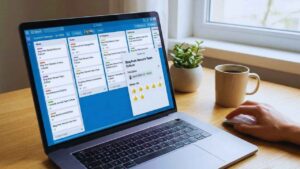
Sometimes simple is better. Trello invented the digital Kanban board, and it remains the easiest tool for small remote teams to pick up and use immediately. It’s visual, tactile, and doesn’t require an instruction manual. For teams that just need to know “what is being worked on right now,” Trello offers the lowest barrier to entry.
- Why it wins for remote: Power-Ups. You can add a “Time Zone” power-up to see when your card assignee is online, or a “Voting” power-up to let the remote team democratically decide on features asynchronously. It adapts to your workflow rather than forcing you to adapt to it.
| Feature | Details |
| Best For | Small teams, freelancers, content calendars. |
| Pricing | Generous Free tier; Paid starts at ~$5/user/mo. |
| Top Remote Feature | Power-Ups: Add time zones/voting to cards. |
| Pros | Zero learning curve, visual, fun to use. |
| Cons | Struggles with complex dependencies or large projects. |
Critical Buying Guide: Choosing the Right Tool for Your Remote Stack
Selecting software is like choosing an office building for a remote team. You aren’t just buying features; you are buying a workflow and a culture. Before you swipe your credit card, you need to understand your team’s DNA. Do they crave structure, or do they need freedom? Are they “writers” who prefer documentation, or “visual thinkers” who need boards? The wrong tool can actually slow down a remote team by adding unnecessary friction or creating “notification fatigue,” so use the matrix below to guide your decision.
| Factor | What to Look For |
| Sync vs. Async | If you work “follow the sun” (global), you need strong documentation tools (ClickUp/Basecamp). If you work 9-5 together, visual boards (Monday/Trello) work well. |
| Tech Savviness | Don’t force a complex tool like Jira on a creative marketing team. Use Monday or Asana instead to avoid “tool rejection.” |
| Integration Stack | If you live in Slack, ensure the PM tool has a 2-way sync (allows you to update tasks from Slack). |
| Budget | Consider the “per user” cost. Tools like ClickUp and Basecamp offer flat or bundled pricing that scales better for startups. |
Synchronous vs. Asynchronous Needs
Does your team work “9-to-5” in the same time zone, or are you distributed globally?
- Same Time Zone: You can get away with tools like Trello or Monday.com where live updates are frequent and visual.
- Global/Async: You need ClickUp or Basecamp where documentation and context are king. If a decision is made while you are sleeping, the tool must capture the why, not just the what.
Scalability & Pricing Hidden Costs
Most tools look cheap ($10/month), but “Guest” seats and “Observer” licenses can add up.
- Look for “Guest Access” policies. Can you invite a freelancer for free? Monday.com and Asana often charge for these, while ClickUp offers generous guest seats.
- Check for “Enterprise” gatekeeping. Some tools hide essential security features (like SSO) behind their most expensive plans.
The “Learning Curve” Factor for Global Teams
In a remote environment, you cannot sit next to a new hire and walk them through the software. The tool must be intuitive enough to be self-taught.
- Low Learning Curve: Trello, Basecamp, Monday.com.
- High Learning Curve (Requires Training): Jira, ClickUp.
- Tip: If you choose a complex tool, create a “How We Use [Tool]” video guide as part of your remote onboarding process.
Final Thoughts
In 2026, your project management software for remote teams isn’t just a utility; it’s your office building. It defines your culture, your speed, and your team’s happiness. If you choose a tool that creates friction, your remote culture will suffer. If you choose one that enables flow, your distributed team can outperform any co-located competitor.
If you are a small, scrappy startup, ClickUp or Linear will give you the most power for your dollar. If you run a creative agency where visuals matter, Monday.com is the clear winner. And if you just want everyone to calm down and focus, Basecamp is the answer. Don’t let tool fatigue slow you down. Pick the one that fits your communication style—not just your budget—and start building.