Your procurement team probably spends hours digging through spreadsheets. They try to figure out where money goes and which suppliers actually perform well. Many companies face this exact struggle right now. They watch their budgets leak away while their teams waste time on manual work that a computer could handle in seconds. The frustration builds because you lack clear visibility into your spending patterns and supplier performance.
Here is the good news. Companies that use Procurement Analytics cut their spending by up to 20 percent while making faster, smarter decisions. This data-driven approach transforms how organizations manage their supply chains. It turns raw numbers into actionable insights that actually move the needle.
You will discover how to spot cost-saving opportunities, manage supplier relationships better, and build a supply chain that runs smoothly.
What is Procurement Analytics?
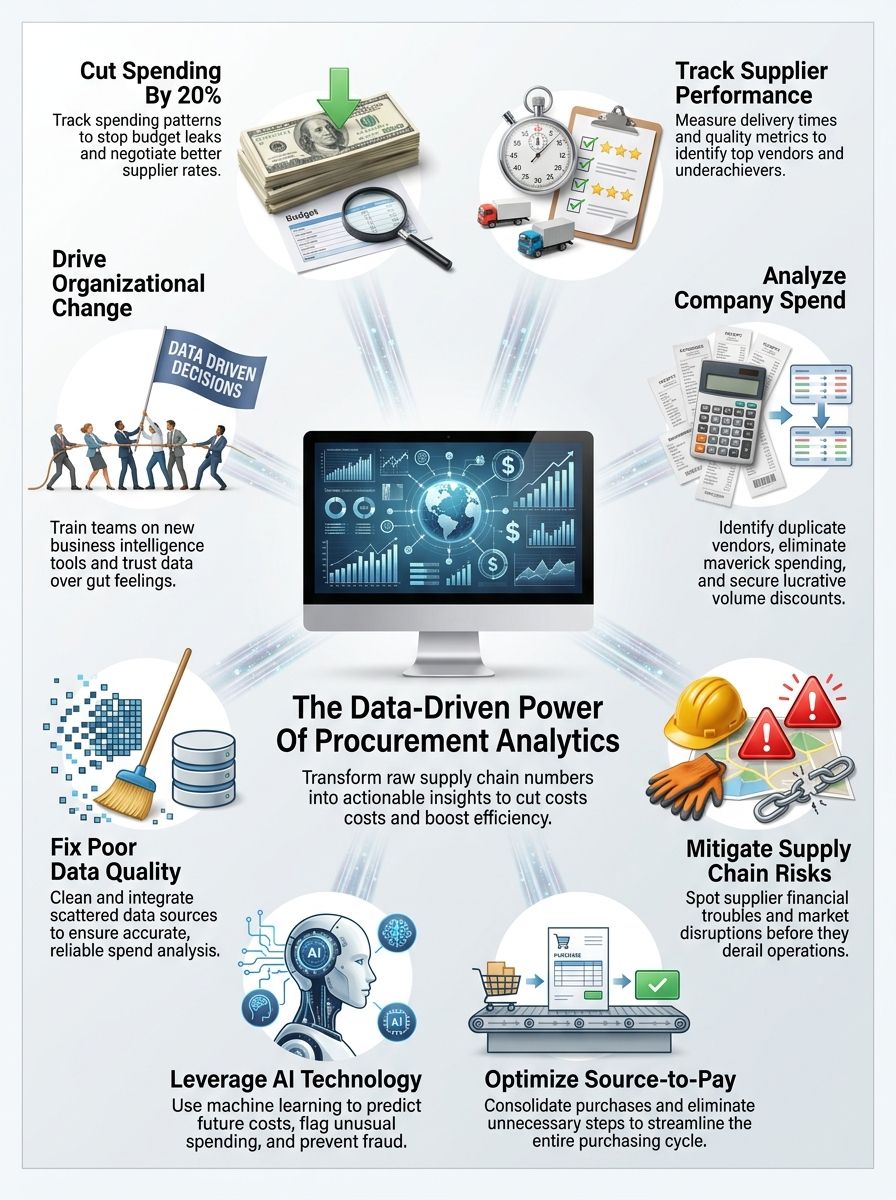
Procurement analytics pulls data from your supply chain and turns it into actionable insights. This approach combines information from spending records, supplier performance, market trends, and contract details. It creates a complete picture of your procurement operations.
The United States market is growing fast. A 2026 Fortune Business Insights report projects the US procurement analytics market will reach $1.54 billion this year alone.
Companies use business intelligence tools and data visualization to spot patterns and identify savings opportunities. They make smarter decisions about where they buy goods and services. Instead of relying on gut feelings, procurement teams now access real-time metrics.
A massive shift is happening right now. Mordor Intelligence reports that risk analytics is the fastest-growing segment in 2026, growing at a 25.95 percent rate as US companies prioritize supply chain resilience.
This data-driven approach relies on several core components:
- Spend analysis: This forms the backbone, breaking down every dollar your company spends with suppliers.
- Performance metrics: These numbers reveal which vendors deliver on time, maintain quality standards, and offer competitive pricing.
- Risk assessment tools: These flag potential problems like supplier financial instability or market volatility before they disrupt your operations.
- Decision-making analytics: These help procurement teams move beyond guesswork to base their choices on concrete evidence.
Strategic sourcing decisions become easier when you have concrete data showing which categories offer the most savings potential. This transformation has become essential for staying competitive today.
The Evolution of Procurement Analytics
Procurement analytics transformed from simple spreadsheet reports into powerful systems. These systems predict future trends and guide smart choices. Organizations now pull data from many sources, blend it together, and use machine learning to spot patterns humans would miss.
From traditional reporting to advanced analytics
Organizations used to rely on basic spreadsheets and static reports to track spending. These old methods showed what happened in the past, but they could not predict future trends.
Teams spent hours pulling data from different systems, then combining it manually. Mistakes happened often. Decision-makers got reports that were already outdated by the time they read them.
This slow, reactive approach left money on the table. It also missed supply chain risks entirely. Today, business intelligence tools and spend analysis software transform how companies see their procurement data.
Advanced analytics now reveal patterns that spreadsheets could never show. Procurement Tactics recently shared a 2026 statistic showing that 80 percent of companies have completely digitized these processes. They use automated platforms to streamline workflows and reduce errors.
Here are the key shifts driving this evolution:
- Predictive alerts: Systems now warn you about a delay before it happens.
- Real-time dashboards: Leaders get instant visibility into spending and market trends without waiting for end-of-month reports.
- Prescriptive recommendations: The software actually suggests the best actions to take based on current data.
Companies shift from asking what happened to asking what they should do next. This transformation drives cost reduction and enables strategic sourcing decisions that stick.
Integration of predictive and prescriptive analytics
Predictive analytics looks ahead. It shows you what might happen in your supply chain before it actually does. Your team can spot supplier risks, forecast demand swings, and catch cost overruns coming from a mile away.
This forward-looking approach transforms procurement strategy. It moves teams from reactive firefighting into proactive planning. Prescriptive analytics takes things further by telling you exactly what actions to take.
It does not just predict a problem. It recommends the best solution based on your specific business goals and market trends. Together, these two approaches create a powerful combination.
A 2026 report from Ardent Partners noted that nearly 25 percent of procurement teams made AI technologies a top strategy for this exact reason. Spend analysis becomes sharper when you layer predictive and prescriptive capabilities on top of it.
Data-driven insights separate companies that thrive from those that merely survive in today’s competitive landscape.
Your business intelligence tools can now recommend which suppliers to partner with. They suggest how to optimize contracts and point out where cost reduction opportunities actually hide. Performance metrics improve because you follow data-backed guidance.
Risk management gets stronger, too, since you catch supply chain disruptions early. This integration turns raw data into actionable intelligence that shapes every sourcing decision your company makes.
Key Benefits of Procurement Analytics
Procurement analytics transforms how companies spend money and manage suppliers. It gives leaders real facts instead of guesses. Smart data analysis cuts costs, speeds up operations, and helps teams make choices that actually stick.
Improved decision-making
Data analytics transforms how companies make choices about spending and suppliers. Leaders gain clear visibility into procurement operations through performance metrics and business intelligence tools.
Real-time dashboards show exactly where money goes, what suppliers deliver, and which categories need attention. This transparency cuts through confusion and guesswork. Teams spot problems fast, seize opportunities quicker, and avoid costly mistakes.
Strategic sourcing decisions become sharper when leaders have solid numbers backing them up. A 2025 Gartner study highlighted that organizations implementing cognitive procurement capabilities report a 15 to 20 percent improvement in forecast accuracy.
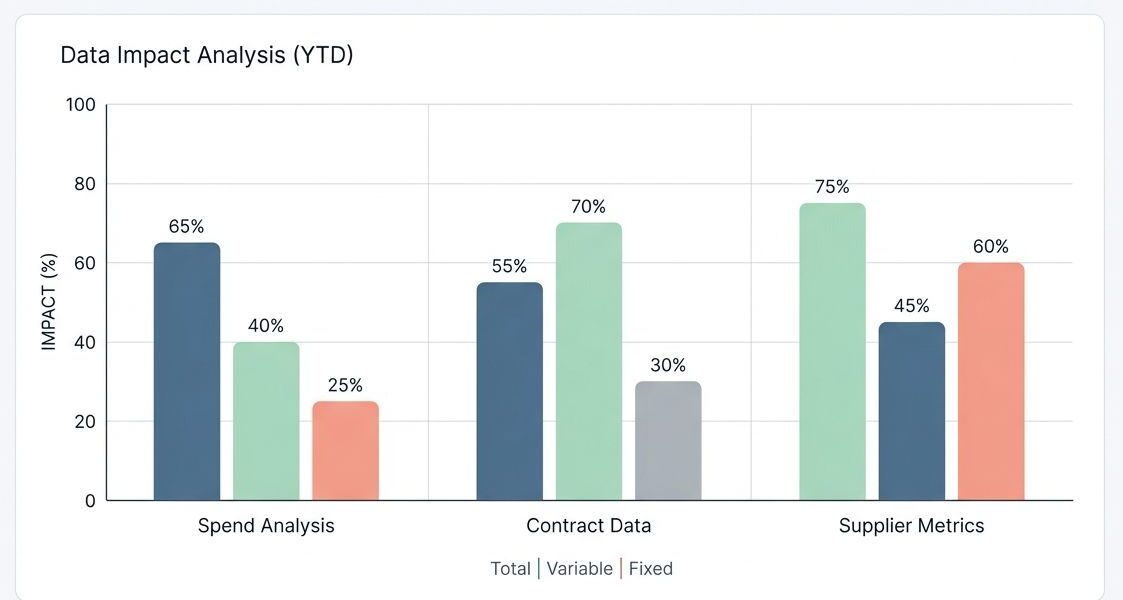
To give you a clear picture, here is how different data types improve specific decisions:
| Data Type | Decision Impact | Expected Result |
|---|---|---|
| Spend Analysis | Consolidating vendors across departments | Identifies bulk discount opportunities |
| Contract Data | Flagging auto-renewals early | Prevents unwanted subscription costs |
| Supplier Metrics | Comparing on-time delivery rates | Reduces production delays |
Actionable insights emerge from data visualization, giving procurement teams the power to act with confidence. Managers compare supplier performance side by side, track contract terms, and measure results against goals.
Operational efficiency jumps when procurement professionals use decision-making analytics to streamline processes. The transformation from gut-feel purchasing to data-driven procurement creates real competitive advantages.
Enhanced cost savings and efficiency
Better decisions lead straight to your wallet. Procurement analytics transforms how organizations spend money. Companies cut costs dramatically when they track spending patterns across all departments.
Smart analysis reveals where money leaks happen, what suppliers charge too much, and which contracts need renegotiation. Your team spots these problems fast, then acts on them. Cost reduction becomes real when you measure everything.
Spend analysis tools show exactly where your cash goes. According to 2025 research by EY, implementing structured category management can deliver 10 to 15 percent in direct cost savings. You hit these numbers by taking a few key actions:
- Finding duplicate purchases: You catch when different departments buy the same software subscriptions separately.
- Consolidating orders: You group smaller purchases together to negotiate better volume discounts.
- Spotting price creep: You easily identify when a vendor slowly increases prices over multiple invoices.
Efficiency jumps up because your team stops wasting time hunting for information. They access reports instantly. Operational efficiency improves when procurement teams work faster and smarter.
Strategic sourcing gets sharper with data visualization. Your team sees supplier performance metrics clearly, compares options side by side, and picks winners. Market trends appear in your reports automatically, so you spot price changes early.
Business intelligence tools connect all your data sources, so nothing falls through the cracks. Your organization moves faster, spends less, and sleeps better at night. These results compound over time, making your bottom line much stronger.
Better supplier performance management
Supplier performance management transforms how companies track vendor success. Organizations collect data on delivery times, quality metrics, and cost efficiency to spot top performers and underachievers.
Analytics tools pull this information together. They make it simple to see which suppliers meet your standards and which ones fall short. You gain clear visibility into supplier behavior, helping you make smarter choices.
This data-driven approach cuts through guesswork and puts facts front and center. Measuring specific metrics gives you real power in negotiations.
A 2025 Spendflo report highlighted how focusing on specific KPIs can create rapid improvements. To get these results, you should track these key areas:
- On-Time, In-Full (OTIF): This measures if the supplier delivered the exact quantity ordered on the promised date.
- Defect Rates: This tracks the percentage of products that fail to meet quality standards upon arrival.
- Lead-Time Adherence: This checks if the supplier consistently meets the agreed-upon processing and shipping times.
- Compliance Rates: This ensures the supplier follows your specific billing and contractual rules.
Your team can identify cost reduction opportunities by comparing suppliers side by side. Supply chain efficiency jumps when you know exactly how each partner performs.
Strategic sourcing becomes easier, too, because you can match the right supplier to the right project based on solid evidence. This shift helps procurement teams operate with total confidence.
Types of Procurement Analytics
Procurement analytics comes in several forms. Each one tackles different business problems to help you spend smarter and source better.
Spend analysis
Spend analysis breaks down where your company actually spends its money across all categories and vendors. Your team gathers procurement data from invoices, purchase orders, and contracts, then organizes it to reveal patterns.
You see which suppliers get the most business, what products cost the most, and where waste hides. This data-driven approach transforms scattered spending into clear, visual reports.
Business intelligence tools make this easier by sorting through millions of transactions fast. For example, modern platforms like Ignite can centralize this data automatically. They help teams save up to 80 percent of their time on reporting, according to 2025 industry benchmarks.
Your organization gains serious advantages from spend analysis. By tracking this data closely, you can:
- Identify duplicate vendors doing similar work across different departments.
- Consolidate purchases to get maximum volume discounts from your best partners.
- Eliminate maverick spending that bypasses approved suppliers completely.
Performance metrics show which vendors deliver value and which ones drain your budget. Cost reduction becomes achievable when you see exactly where money flows. This foundation sets the stage for supplier management strategies that drive real results.
Supplier performance analysis
Supplier performance analysis tracks how well your vendors deliver results. Your company measures metrics like on-time delivery rates, quality scores, and cost competitiveness. This data-driven approach reveals which suppliers meet your standards and which ones fall short.
You gain clear visibility into supplier management through performance metrics that matter most to your business. Real-time dashboards show you exactly where each vendor stands, so you make smarter decisions about future partnerships.
Strong supplier relationships drive operational efficiency across your entire supply chain. Analytics tools help you identify top performers who consistently deliver quality goods on schedule.
To analyze suppliers effectively, many pros use these specific methods:
- Balanced Vendor Scorecards: These combine quality, speed, and cost into a single, easy-to-read grade.
- Supplier Self-Assessments: Asking vendors to rate their own innovation and responsiveness often highlights hidden communication issues.
- Automated KPI Tracking: This pulls delivery data directly from your warehouse system to remove human bias.
By analyzing supplier data regularly, your team catches issues early and addresses them head-on. This proactive approach saves money, reduces delays, and builds trust with your best vendors.
Contract management analytics
Contract management analytics helps your team track every agreement your company makes. These tools pull data from contracts and show you what is really happening with your deals. You see payment terms, renewal dates, and performance obligations all in one place.
This visibility stops contracts from falling through the cracks. Your team catches missed opportunities and avoids costly mistakes before they happen.
The financial impact is massive. According to recent research from Deloitte and DocuSign in 2025, poor contract management costs businesses a staggering $2 trillion per year globally.
Data visualization makes contract insights easy to understand. Dashboards display key metrics so anyone can spot trends without digging through paperwork. You learn which contracts deliver real value and which ones drain your budget.
Performance metrics reveal supplier compliance and contract performance over time. Tools like Concord use advanced algorithms to flag risky clauses or upcoming renewals automatically. This transforms raw contract data into actionable decisions that drive cost reduction.
Sustainability and CSR analytics
Beyond tracking contracts and their terms, companies now turn their attention to sustainability and corporate social responsibility metrics. Procurement analytics reveals how your supply chain impacts the environment, labor practices, and community welfare.
Organizations measure carbon footprints across suppliers, track ethical sourcing compliance, and monitor waste reduction efforts. Data visualization tools transform raw sustainability data into clear reports that stakeholders can understand.
These performance metrics show which suppliers meet environmental standards and which ones need improvement. Recent data from a 2025 KPMG survey shows that 80 percent of companies will include ESG factors in their procurement decisions by this year.
Cost reduction often pairs with green initiatives. Your business intelligence systems capture CSR data from multiple sources and combine it with spend analysis to identify risks. You can specifically look for:
- Carbon footprint tracking: Monitoring emissions data across your logistics partners.
- Ethical sourcing compliance: Ensuring factory partners adhere strictly to safe labor standards.
- Waste reduction efforts: Spotting excessive packaging costs that harm both the environment and your budget.
Supplier management teams use these insights to partner with vendors who share your values. Strategic sourcing decisions now include sustainability scores alongside price and quality factors. This approach transforms procurement strategy into a force for positive change.
Data Sources in Procurement Analytics
Your procurement data lives in multiple places, from your internal systems to the market information flowing around you. Smart organizations pull from both sources to get the complete picture they need.
Internal procurement data
Your organization sits on a goldmine of internal procurement data. Purchase orders, invoices, contract terms, and supplier scorecards live inside your systems right now. This information tells the real story of how your company spends money and which suppliers deliver results.
Spend analysis pulls this data together to show spending patterns across departments, categories, and time periods. You spot waste fast and find maverick spending that flies under the radar.
Performance metrics extracted from internal records reveal which suppliers meet deadlines and offer competitive pricing. The most valuable internal data points usually come from these specific sources:
- Enterprise Resource Planning (ERP) systems: These track the core financial transactions and inventory movements.
- Accounts Payable (AP) vouchers: These verify what you actually paid versus what was contracted.
- Procurement Cards (P-Cards): These reveal small, decentralized purchases made directly by employees.
This data becomes the foundation for strategic sourcing decisions that cut costs and boost operational efficiency. Internal procurement data also powers risk management strategies that protect your supply chain.
Decision-making improves when leaders see facts instead of guesses. The metrics you gather from internal sources reveal cost reduction opportunities that competitors miss.
External and market data
Internal procurement data tells only half the story. External and market data completes the picture, giving your organization the full view it needs to make smart decisions. Market trends shift constantly, so companies must look beyond their own walls.
External data sources include commodity prices, supplier financial health reports, industry benchmarks, and competitive intelligence. These inputs fuel your spend analysis and supplier management efforts.
Market data reveals what competitors pay for similar goods, which suppliers dominate specific categories, and where costs are headed. For example, in 2026, companies rely heavily on external tracking for tariff updates and ESG compliance data to navigate supply chain volatility.
To understand the difference, consider how these sources work together:
| Data Source Type | Examples | Primary Benefit |
|---|---|---|
| Internal Data | Invoices, POs, Contracts | Shows exactly what you are spending today. |
| External Data | Commodity indices, Tariff news | Shows what you should be spending tomorrow. |
By combining internal procurement data with external market insights, your team gains a massive strategic advantage. This blend of information transforms raw numbers into actionable intelligence.
Use Cases of Procurement Analytics
Procurement analytics transforms how companies make smart choices about where they buy products and services. Real organizations use data insights to spot supply chain risks, cut costs, and build stronger supplier relationships.

Strategic sourcing and category management
Strategic sourcing lets companies buy smarter, not just cheaper. Your team analyzes spending patterns, identifies the best suppliers, and negotiates better deals across different product categories.
Data-driven insights reveal where money goes, which vendors perform well, and what opportunities exist for cost reduction. Business intelligence tools help you spot trends in the market and compare supplier performance metrics.
Category management takes strategic sourcing further by organizing purchases into groups like IT, marketing, or facilities. Each category gets its own performance metrics, risk assessment, and optimization plan. Your team examines supplier management closely within each group.
In 2026, leading organizations use AI agents to analyze internal spend data alongside external market signals. This helps them build and evolve category strategies dynamically, rather than relying on static annual plans.
Spend analysis shows which categories drain your budget most, helping you focus energy where it matters. The result is that companies cut costs significantly while building stronger relationships with top-performing vendors.
Risk management in supply chains
Supply chain disruptions hit companies hard, and data-driven risk management stops problems before they start. Procurement analytics tools scan your supply chain for weak spots, vendor issues, and market shifts.
You spot supplier financial troubles early. You catch geopolitical risks that could halt production. This proactive approach transforms risk assessment from guesswork into science.
A 2024 Expense to Profit report noted that 57 percent of companies experience significant improvements in risk management by using advanced analytics and machine learning. To get these results, focus on catching these common risks:
- Single-source dependencies: Analytics can flag if a critical component is only available from one factory.
- Financial instability: External data feeds can alert you if a key supplier misses a debt payment.
- Geopolitical shifts: Real-time alerts warn you about sudden tariff changes or regional conflicts affecting shipping routes.
Your team acts fast when threats emerge, cutting losses and keeping operations smooth. Supplier management gets sharper when you layer analytics into your risk strategy.
Performance metrics reveal which vendors deliver on time and stay financially stable. Supply chain resilience improves when you understand your risks deeply, and operational efficiency gains follow naturally.
Optimizing the source-to-pay (S2P) process
Organizations transform their source-to-pay process through data-driven insights. Procurement analytics reveals where money flows, which suppliers deliver value, and where waste hides.
Companies analyze spending patterns across all categories, identify maverick buying that drains budgets, and consolidate purchases with top performers. Real-time dashboards show procurement teams exactly what they spend, on what, and with whom.
The pressure to optimize this process is intense. A 2026 Ardent Partners survey revealed that 71 percent of Chief Procurement Officers list cost savings as their absolute top priority for S2P technology this year.
Strategic sourcing decisions improve dramatically when analytics guide the way. Teams use performance metrics to rank suppliers by several key factors:
- Quality of goods received.
- Delivery speed and consistency.
- Long-term financial reliability.
Procurement professionals leverage business intelligence to negotiate better contracts, reduce redundancy, and eliminate unnecessary steps. These improvements strengthen the entire supply chain while setting the stage for advanced technologies.
Tools and Technologies Driving Procurement Analytics
The right software and tools transform raw procurement data into actionable insights that drive smarter purchasing decisions and bigger savings.
BI tools and spend analysis software
Business intelligence tools and spend analysis software form the backbone of modern procurement analytics. These platforms collect data from across your supply chain, then transform raw numbers into clear, actionable insights.
Data visualization features help procurement teams spot spending patterns, identify cost-saving opportunities, and track supplier performance at a glance. Modern solutions fit different business needs perfectly.
| Software Name | Best Known For | Key 2026 Feature |
|---|---|---|
| Coupa | Comprehensive Spend Control | Cloud-native AI deployments |
| SAP Ariba | Enterprise Integration | Deep ERP financial connections |
| Ignite | Fast Analytics & Reporting | Connecting fragmented AP data |
Teams can generate custom reports in minutes rather than weeks. This means faster decision-making and quicker responses to market changes.
Spend analysis software goes beyond simple reporting by revealing where your money actually flows. It flags duplicate vendors, highlights contract compliance issues, and uncovers maverick spending.
Business intelligence platforms connect procurement data with financial systems. They create a complete picture of operational efficiency and cost reduction opportunities across the entire organization.
Emerging AI and machine learning capabilities
AI and machine learning tools now transform procurement analytics into something powerful. These technologies spot patterns that humans miss in massive datasets. Algorithms learn from past spending decisions and predict future costs with striking accuracy.
A recent Deloitte survey highlighted that 22 percent of Chief Procurement Officers plan to invest more than $1 million annually in Generative AI by 2025. They know this technology is essential for staying competitive.
Your team saves hours on manual analysis work. Machine learning models identify supplier risks before problems happen. They flag unusual spending patterns that might signal fraud or waste.
These advanced tools provide several massive advantages:
- Automated PO matching: Intelligent systems match purchase orders with invoices instantly, cutting human errors.
- Demand forecasting: AI reviews historical data to predict exactly how much inventory you will need next quarter.
- Contract risk scoring: Machine learning scans legal documents to flag non-standard clauses without needing a lawyer to read every line.
Organizations deploy AI to optimize the source-to-pay process from start to finish. The technology learns continuously, getting sharper with each transaction it processes.
Your procurement team shifts from reactive problem-solving to strategic planning that drives real results. Advanced business intelligence platforms now make this level of sophistication accessible to companies of all sizes.
Challenges in Implementing Procurement Analytics
Organizations face real obstacles when they put procurement analytics into action. Read on to discover how smart companies overcome these hurdles.
Data quality and integration issues
Bad data kills good decisions. Your procurement team collects information from many sources, like spreadsheets, vendor systems, legacy platforms, and manual entry points.
Each source speaks a different language, uses different formats, and follows different rules. You end up with duplicate records, missing values, conflicting numbers, and outdated information scattered everywhere.
This mess makes spending analysis nearly impossible. To fix this, you need to watch out for these common data traps:
- Missing Vendor IDs: When suppliers are entered under multiple names, it ruins your volume discount calculations.
- Siloed Contract Data: Keeping agreements in a separate drive means your software cannot automatically warn you about expiring terms.
- Outdated Pricing: Failing to connect external commodity data leaves you paying yesterday’s high prices.
Integration headaches multiply fast if you ignore these traps. A 2025 EY survey found that nearly all large companies deploying AI reported some risk-related financial loss, often due to flawed outputs from poor data integration.
Your supplier management data lives in one place while your contract information hides in another. Pulling everything together for performance metrics takes forever, and mistakes slip through the cracks. Poor data quality directly damages your operational efficiency.
Companies that fix these issues first see real transformation. They enjoy faster reporting and better risk assessment across their supply chain.
Change management within organizations
Shifting your organization’s mindset to procurement analytics takes real effort. Your teams must learn new tools, adopt fresh processes, and trust data-driven insights over gut feelings.
Resistance pops up everywhere, from procurement staff worried about job security to finance teams comfortable with old reporting methods. A 2024 Gartner survey revealed a startling fact. Only 14 percent of procurement leaders feel they have adequate talent to meet the future needs of their function.
Smart leaders address these fears head-on by showing how analytics makes work easier, not harder. Training programs help employees gain confidence with business intelligence platforms and spend analysis software.
You can build momentum by taking a few simple steps:
- Celebrate early wins: Highlight when a team member finds unexpected cost reduction opportunities using the new software.
- Provide targeted training: Help your staff get certifications in Microsoft Power BI or Certified Analytics Professional (CAP) programs to build their skills.
- Create feedback loops: Set up a system where employees can share concerns and suggest improvements without fear of judgment.
Start small with pilot projects in one category or supplier segment, then expand as people see real results. Performance metrics tied to the new analytics approach signal that leadership takes this seriously.
When procurement teams understand how decision-making analytics improve their daily work, adoption accelerates naturally. The organizations that succeed view change as continuous, not a one-time event with a finish line.
Wrapping Up
Procurement analytics transforms how companies spend money and manage suppliers. Organizations that adopt data-driven insights gain real competitive advantages. They cut costs, reduce risks, and make smarter choices faster. The shift toward business intelligence in procurement is an absolute requirement for modern teams.
Companies that measure performance metrics and track spending patterns stay ahead. Those who ignore this trend fall behind their competitors. Your procurement strategy should evolve with market trends and emerging technologies. Start small if needed, but start now.
Pick one area, like spend analysis or supplier management, and build from there. Machine learning and artificial intelligence will keep improving your decision-making capabilities. The tools exist. The data exists. What matters most is taking action today to transform your supply chain operations and operational efficiency for tomorrow.
Frequently Asked Questions (FAQs)
1. What is procurement analytics, and why does it matter today?
Procurement analytics uses your purchasing data to help you make smarter and more cost-effective buying choices. It matters today because 2025 market reports show that US companies using advanced analytics can achieve cost reductions of up to 15 percent. By turning raw numbers into clear strategies, these tools help teams spot trends, negotiate better deals, and avoid expensive mistakes.
2. How do businesses use a data-driven approach in procurement?
Companies connect their scattered spending data to find buying patterns and fix slow parts of their process. Today, many teams use tools like SAP Ariba Category Management, which features generative AI to automatically categorize transactions and flag pricing variations. With these insights, leaders can quickly bargain better with suppliers and cut the time needed to prepare sourcing strategies by up to 60 percent.
3. Can procurement analytics really save money?
Yes, it absolutely can! A late 2025 report by CPO Rising shows that for every new dollar brought under data-driven management, companies see savings of 6 to 12 percent during the initial contract period. By tracking spending habits closely, you can quickly spot the unmanaged purchases that quietly drain your budget and plug those leaks fast.
4. Is using procurement analytics hard for small teams?
Not at all, because modern cloud-based platforms like Procurify and Precoro are built specifically for small businesses to automate workflows and spot savings right out of the box, requiring zero advanced technical skills to set up.