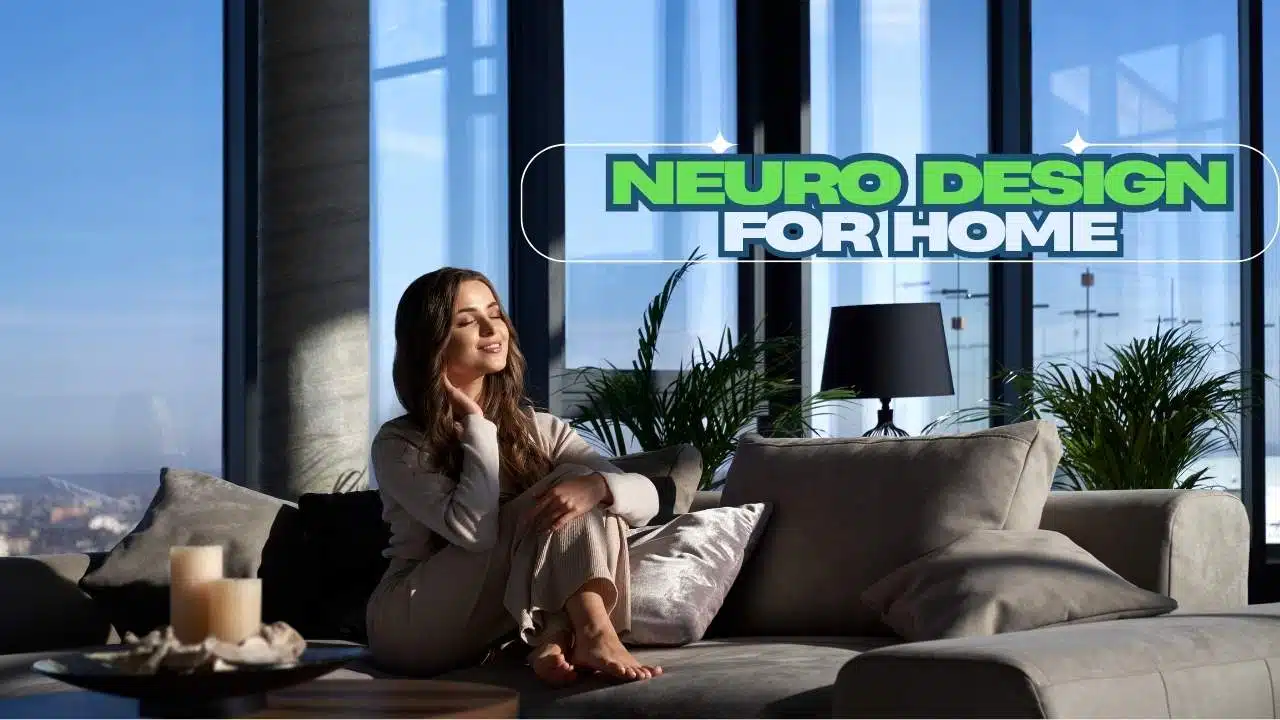
Walk into one room, and you feel calm. Step into another, and your shoulders tighten for no clear reason. That quiet, invisible shift is exactly what neuro design for home is about.
It looks at how every choice in your interior design speaks to your brain and nervous system. Not just what looks “nice”, but what actually helps you sleep, focus, relax, and feel safe.
Why “Neuro Design” Is Suddenly Everywhere
In recent years, people have started to notice something simple but powerful: the way a home is designed can support mental health, or slowly drain it.
More time at home, remote work, and rising stress levels pushed many of us to ask new questions:
- Why do some rooms make it easier to concentrate?
- Why is it harder to sleep in certain spaces?
- Why does clutter feel like pressure?
Instead of guessing, designers began turning to the neuroscience of interior design. They started using research about the brain, environment, and behaviour to shape homes that feel better, not just look better.
This is where neuro design comes in. It connects interior design, psychology, and even neuroaesthetics in home design to create spaces that actively support wellbeing.
What Is Neuro Design, Really?
At its core, neuro design is the use of brain science to guide design decisions.
It started in fields like marketing and digital product design. Experts studied how layout, colours, and patterns influence attention and decision-making. Over time, architects and interior designers began applying the same ideas to physical spaces, including homes.
You will often see neuro design linked with three related fields:
- Neuroaesthetics – how the brain responds to beauty, art, and visual patterns.
- Neuroarchitecture – how buildings and spaces affect emotions, stress, and cognition.
- Environmental psychology – how surroundings influence behaviour and mood.
For a homeowner, it helps to simplify all of this: Neuro design means shaping your home so it works with your brain, not against it. It is not about a specific style. It is about how a space makes you feel and function.
How Your Home Talks to Your Brain
Your brain never stops reading your environment. Even when you think you are ignoring a room, your senses are still busy:
- Light hits your eyes and tells your body when to be alert or sleepy.
- Colours send emotional signals before you have time to think.
- Sounds and echoes change your stress level.
- Textures and materials influence comfort and calm.
- Smells trigger deep memories and associations.
This constant stream of information shapes mood, energy, focus, and stress.
A few key systems are always at work:
- Stress response: Clutter, harsh lighting, or constant noise can keep your stress system “on”. Over time, that leads to tension and mental fatigue.
- Reward system: Warm light, natural materials, and familiar objects can activate comfort and pleasure, making you feel safe and grounded.
- Memory and association: A scent, a colour, or a family object can instantly pull you back to a time or place, shifting how you feel in seconds.
When a home is poorly designed, it can quietly contribute to anxiety, poor sleep, or “brain fog”. When it follows neuro design for home principles, it becomes a partner in your well-being.
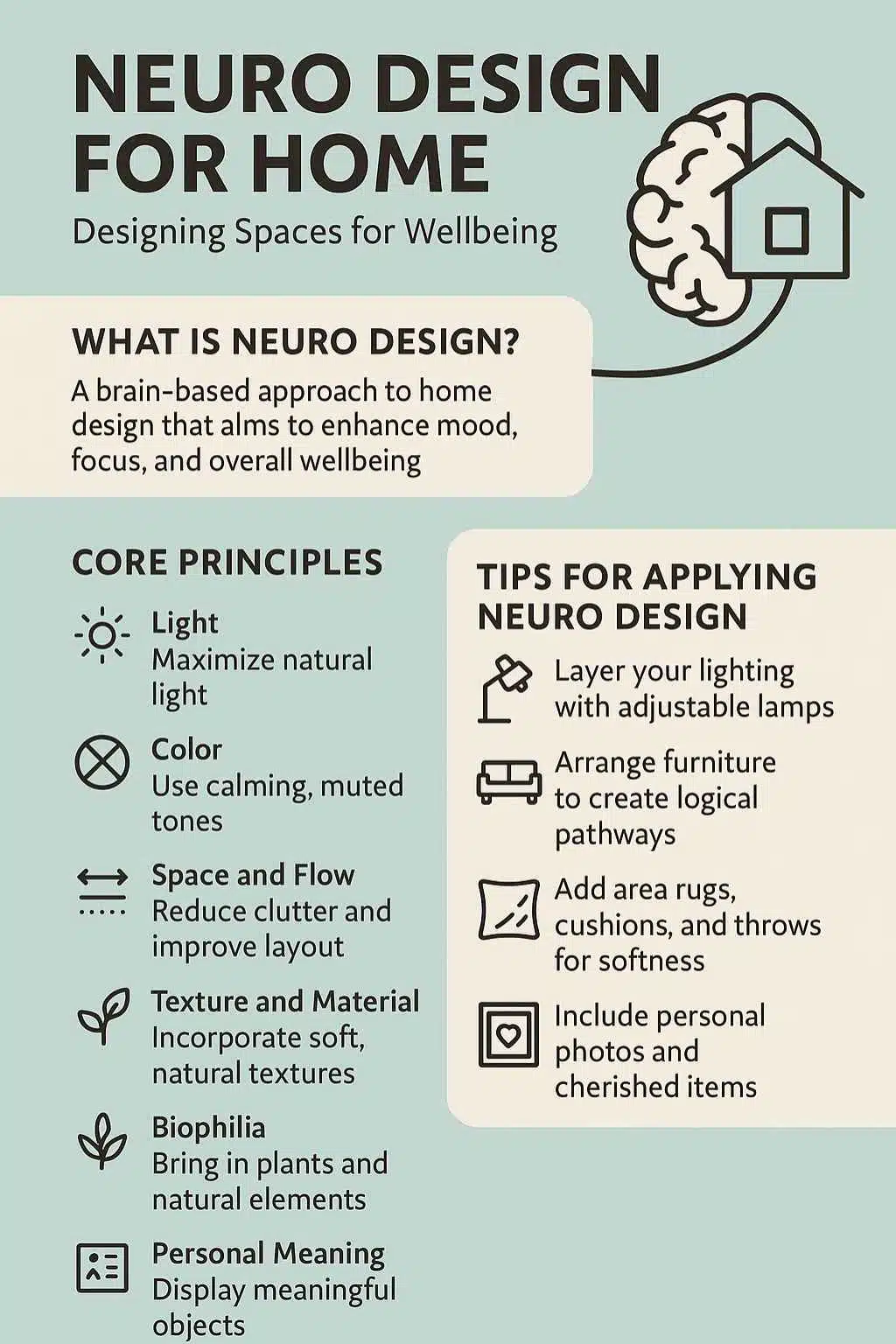
The Core Principles of Neuro Design for Home Interiors
Think of neuro design as a set of levers you can adjust: light, colour, space, texture, sound, nature, and personal meaning.
1. Light: Design for Your Circadian Brain
Light is one of the most powerful tools in sensory design for wellbeing. Your brain uses light to manage your circadian rhythm – the cycle that controls sleep, energy, and hormones.
Key ideas:
- Maximise natural light by day
Open curtains, keep windows clear, and use mirrors to reflect daylight deeper into rooms. - Match the light temperature to the time of day
- Morning and daytime: cooler, brighter light helps you feel alert.
- Evening: warmer, softer light signals your brain to unwind.
- Layer your lighting
Combine overhead lights with floor lamps, table lamps, and wall lights. That lets you create different “moods” depending on the time and activity.
When you plan neuro design for the home, light is always the first place to look.
2. Colour: Emotional Shortcuts for the Brain
Colour is a fast emotional language. The brain reacts to colour before you can explain why.
Common patterns (which you can adapt to your own taste):
- Soft blues and greens often feel calming and restful.
- Warm neutrals (beige, sand, clay tones) tend to feel safe and cosy.
- Yellows and soft oranges can bring warmth and energy to social spaces.
- Strong reds and very saturated tones can be stimulating, even stressful, if overused.
But there is no single “correct” palette. Personal history and culture matter. A colour that calms one person might feel dull or sad to another.
A practical approach:
- Choose a calm base palette for large surfaces (walls, floors, big furniture).
- Add bolder colours in small doses (cushions, art, throws).
- Use calmer, more muted tones in bedrooms and focus areas.
- Reserve stronger colours for spaces where energy and conversation matter, like dining rooms or creative corners.
This is how you use colour both as aesthetics and as part of mood-boosting home decor.
3. Space and Flow: Reducing Cognitive Load
Your brain likes clarity. When a room is cluttered or poorly laid out, it has to work harder to process everything. That adds to mental fatigue.
Neuro design and neuroarchitecture, and wellbeing pay close attention to:
- Visual clutter
Too many objects, open shelves, and random items make a room feel “noisy”. Closed storage, simple surfaces, and intentional displays help. - Clear circulation paths
Try to keep walking routes open and intuitive. When you move through a room without dodging furniture or piles, your body feels more at ease. - Zoning
Use rugs, lighting, and furniture placement to mark clear zones: a reading corner, a work area, a social area. Your brain loves it when each zone has a simple purpose.
Good flow reduces friction. It turns daily routines into smooth, low-stress experiences.
4. Texture and Material: Calm You Can Touch
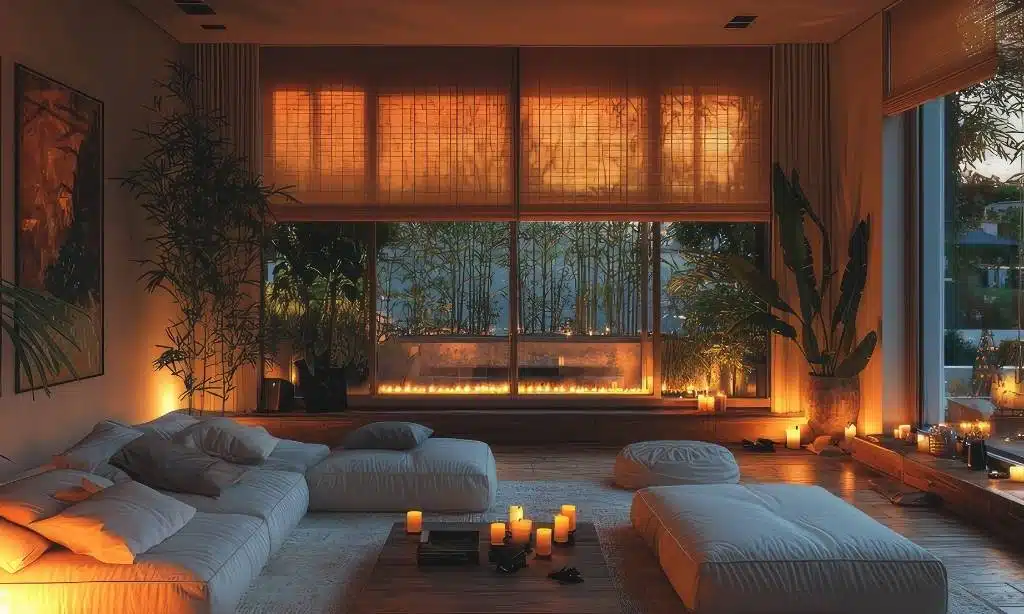
Texture is a quiet but powerful part of neuro design for the home. The way surfaces feel against your skin tells your nervous system a lot.
- Soft fabrics, natural fibres, and rounded edges often feel safe and nurturing.
- Hard, cold, or very shiny surfaces can feel sharp or clinical if not balanced.
- A mix of textures adds interest without visual chaos: smooth walls, a chunky rug, linen cushions, and a wooden coffee table.
Where possible, lean into natural materials – wood, stone, cotton, wool. They connect the home more closely with the natural world, which supports biophilic interior design and mental health.
5. Sound and Acoustics: Quieting Invisible Stress
Noise is one of the most underestimated stress triggers at home. Echoey rooms, street sounds, and constant background noise make it harder to relax or focus.
Neuro design addresses sound through:
- Soft furnishings – rugs, curtains, cushions, upholstered furniture all absorb sound.
- Acoustic elements – bookshelves, wall panels, and even strategically placed plants can help break up echo.
- Conscious soundscapes – in some spaces, gentle music or nature sounds can be more calming than silence.
If a room feels “loud” even when nobody is talking, you may be feeling your acoustics, not your mood.
6. Biophilia: Bringing Nature Indoors
Humans evolved in natural environments, not concrete boxes. That is why biophilic interior design and mental health are so strongly linked.
You can bring biophilic elements into your home through:
- Live plants (even a few well-chosen plants can change the whole feel of a room).
- Views of trees, sky, or water.
- Natural materials and finishes that echo outdoor textures.
- Patterns that mimic nature, like leaves, waves, or fractal designs.
Even in a small apartment with limited light, you can still use nature-inspired colours, artwork, and materials to create that connection.
7. Personal Meaning: Design for Your Unique Brain
Neuro design is not only about light levels and colour charts. It is also about personal meaning.
Your brain responds strongly to:
- Family photos and heirlooms.
- Objects linked to big life moments.
- Cultural symbols that echo your identity.
A home with no personal story can look perfect but feel empty. A neuro-designed home combines calm, clear spaces with a curated selection of meaningful items. Not everything needs to be on display. Choose what truly matters and give it space to breathe.
Room-by-Room: Applying Neuro Design in Your Home
Now let’s translate these principles into practical ideas for each major area.
Living Room: Social Brain, Safe Base
The living room is where many people relax, connect, and often multitask.
Consider:
- Seating layout
Arrange seating to encourage eye contact and conversation. Avoid layouts where everyone faces a screen but not each other. - Light
Use flexible lighting. Brighter for gatherings or work. Softer, warmer for evenings and movies. - Balance stimulation and calm
You can have art, books, and decor, but balance them with simple surfaces and quiet corners.
Think of the living room as your emotional anchor. It should feel open, welcoming, and safe.
Bedroom: Your Recovery Room
The bedroom is the heart of home wellness. Sleep is when the brain repairs, processes memories, and regulates your emotional balance.
For a neuro design bedroom:
- Aim for a darker, cooler, quieter space at night.
- Use calming colours and soft textures.
- Avoid bright screens before sleep. If you keep devices in the room, dim them.
- Keep clutter away from the bed. If you must store items, use closed storage.
A bedroom designed with neuro design for home principles is one of the most effective investments in long-term mental health.
Home Office or Study Corner: Focus, Not Fatigue
Even if you do not have a separate office, a small focus zone matters.
Key ideas:
- Place your desk where you get natural light without glare on the screen.
- Keep your background relatively simple to reduce distraction during calls.
- Use colours and decor that feel clear and purposeful, not sleepy.
- Add one or two soothing elements (a plant, a piece of art, a soft rug) to reduce tension.
This is where the neuroscience of interior design meets productivity. The goal is to support focus without creating a harsh or sterile environment.
Kitchen and Dining: Appetite, Connection, Ritual
Kitchens and dining spaces are about nourishment on many levels.
For these spaces:
- Use warm, welcoming tones that support appetite and conversation.
- Make daily tools easy to reach to reduce decision fatigue.
- Keep counters as clear as possible and use smart storage.
- Use lighting that can shift from bright (cooking) to softer (dining).
Rituals matter here. Morning coffee corners, family dinner setups, and clean, inviting tables all support emotional stability.
Entryway and Transitional Spaces: Emotional Gateways
The entryway is the first and last emotional message your home gives you each day.
To align it with neuro design for home:
- Keep it tidy and simple.
- Add a small element that signals welcome: a plant, a warm light, or artwork you love.
- Organise essentials (keys, bags, shoes) so you are not met with chaos.
Hallways and other transitions between rooms should feel clear, not cramped or dark. They act like mental “buffers” between different modes of living.
Neuro Design on Any Budget
You do not need a full renovation to bring neuro design into your home. Small changes can be surprisingly powerful.
Low-Cost Tweaks
- Declutter one surface or one corner at a time.
- Rearrange furniture to improve flow and sightlines.
- Swap harsh bulbs for warmer or dimmable options.
- Add affordable plants, cushions, or throws for texture and calm.
Medium Investments
- Paint key walls to adjust the emotional tone of a room.
- Upgrade curtains and rugs to improve acoustics and light control.
- Add better storage to hide visual clutter.
Larger Projects
- Open up spaces to increase natural light and air flow.
- Integrate built-in storage to simplify daily life.
- Add architectural features like skylights, indoor courtyards, or green walls where possible.
Every budget has room for the science of home wellness design. The priority is to think in terms of the brain, not just the catalogue.
Common Myths and Mistakes About Neuro Design
As neuro design for the home becomes more popular, so do misunderstandings.
Myth 1: “Neuro Design Means Minimalism”
Minimalism can support calm, but neuro design is not about empty rooms. It is about fit. A richly decorated space can still follow neuro design principles if it feels coherent and not overwhelming.
Myth 2: “There Is One Perfect Colour or Layout for Everyone”
Brains are different. Culture, age, personal history, and taste all matter. Research shows trends, not strict rules. Neuro design offers guidelines, not rigid formulas.
Myth 3: “If It Looks Good, It Works”
Many homes are styled for photos, not for daily life. If a space is pretty but uncomfortable, hard to use, or stressful to maintain, it fails at neuro design. Function, feeling, and aesthetics must work together.
Myth 4: “You Must Renovate Everything”
Neuro design is a process. The most powerful changes often come from small, thoughtful adjustments repeated over time.
How to Start a Neuro Design Makeover
You do not have to transform your home overnight. Start with a simple, evidence-based approach.
Step 1: Audit How Your Home Makes You Feel
Walk through each room and ask:
- Do I feel calm, neutral, or tense here?
- What is the first thing my eyes land on?
- What sounds, smells, or textures do I notice?
You can even rate each room from 1 to 10 for calmness, focus, or comfort.
Step 2: Pick One Room and One Problem
Maybe you sleep poorly. Perhaps you cannot focus on your study area. Or you feel stressed every time you enter the kitchen.
Select one room and one main issue. Then decide which design lever is most relevant: light, colour, clutter, sound, or layout.
Step 3: Make One Change at a Time
Neuro design is easier to manage when you test changes:
- Try decluttering one wall or surface.
- Move your desk near a window.
- Add a warm lamp beside your sofa.
- Introduce plants to a dull corner.
Live with each change for at least a week. Notice any shifts in sleep, mood, or energy.
Step 4: When to Call a Professional
If you are planning major renovations or struggling with complex needs, a designer or architect familiar with neuro design or neuroarchitecture and wellbeing can help. They can align structure, materials, and systems with your well-being goals.
The Future of Neuro Design at Home
As research grows, neuro design for the home is moving from niche concept to everyday practice.
Future homes may:
- Use smart lighting and sensors to adapt to your body’s clock.
- Adjust temperature, sound, or even scents based on stress levels.
- Analyse your habits and suggest layout or routine adjustments that support health.
Just as energy-efficient design became normal, designing for brain health and emotional well-being is likely to become a standard expectation.
Quick FAQs About Neuro Design for Home
Is neuro design scientifically real or just a buzzword?
Neuro design is grounded in established fields like neuroscience, environmental psychology, and neuroaesthetics. The term is new, but many underlying ideas have decades of research behind them.
Can I use neuro design principles in a rental?
Yes. Focus on movable elements: lighting, textiles, colours (if painting is allowed), furniture layout, plants, and storage solutions.
Do I need a big budget to benefit from neuro design?
No. Some of the most effective steps – decluttering, rearranging furniture, changing bulbs, adding plants – are low-cost.
How is neuro design different from feng shui?
Feng shui comes from traditional Chinese philosophy and energy flow concepts. Neuro design is based on modern neuroscience and psychology. Both focus on harmony between people and their spaces, but they use different frameworks.
Can neuro design really help with stress and focus?
It cannot replace medical care or therapy, but it can remove many environmental triggers that worsen stress or reduce concentration. A well-designed home supports whatever wellbeing practices you already follow.
Final Thoughts: Your Home as a Partner in Wellbeing
Your home is not just a backdrop for your life. It is an active player.
Every ray of light, every colour choice, every sound and texture speaks to your brain. Neuro design for home is the practice of listening to that conversation – and then gently rewriting it in your favour.
You do not have to chase perfection. Start small. Adjust your light. Clear a surface. Add a plant. Warm up a corner.
Over time, these choices turn your home into something more than a collection of rooms. They turn it into a living system that supports how you work, rest, recover, and grow.