For the first time in its history, Netflix has used generative artificial intelligence (AI) to enhance the production of one of its original shows. The groundbreaking implementation was featured in the upcoming Argentine sci-fi thriller El Eternauta, a highly anticipated series based on the acclaimed 1950s graphic novel by Héctor Germán Oesterheld and Francisco Solano López.
The show’s production included a particularly complex visual sequence: a building collapse in Buenos Aires. Instead of relying solely on traditional VFX techniques that require time-intensive rendering and large teams of visual effects artists, Netflix utilized generative AI to execute the scene more efficiently. This move enabled the studio to cut production time significantly, reduce overall costs, and maintain high-quality visual output.
This marks a major technological milestone for Netflix, representing its shift toward integrating AI not only in user-facing recommendation systems but also in the actual creative process of content production.
A Strategic Decision to Enhance Visual Storytelling
The building collapse scene—featured in episode six of El Eternauta—was originally projected to be too expensive to render using standard CGI. Instead, the production team at Eye Line Studios, Netflix’s in-house VFX unit, chose to experiment with AI-generated visuals. The result: a seamless and immersive scene completed in a fraction of the time and at a fraction of the budget.
The use of AI in this instance was strategic. By allowing AI tools to handle a high-complexity visual task, the creative team could focus on narrative coherence and visual storytelling without compromising scale or quality. The goal was not to bypass artistic involvement but to extend the studio’s capabilities within budget limitations.
Netflix confirmed that this scene is not just a test, but a final visual sequence delivered to viewers as part of the finished product. It signals a future where AI could be increasingly embedded into production pipelines, especially for high-concept genres like science fiction, where visual effects often play a central role.
AI as a Creative Tool, Not a Replacement
Netflix’s leadership, including Co-CEO Ted Sarandos, emphasized that AI is being used to support—not replace—visual effects professionals. Rather than eliminating jobs, the intent is to allow artists and engineers to work faster and with greater creative freedom. By integrating AI into specific points in the pipeline, VFX teams can focus more on storytelling, design, and animation quality while AI manages repetitive or time-consuming aspects.
This collaborative vision is echoed by Eye Line Studios, which sees AI as a powerful assistant that enhances productivity without compromising artistic control. Their approach reflects a broader industry trend: using AI to speed up creative workflows, especially in television and film projects with tight deadlines and growing viewer expectations for cinematic-quality visuals.
El Eternauta: A Perfect Match for Innovation
The choice of El Eternauta as the testing ground for AI-powered VFX was no coincidence. The series features apocalyptic and dystopian themes, including toxic snowfall, alien invasions, and urban destruction. These elements provide ample opportunity for large-scale digital sequences that traditionally require enormous production budgets.
Netflix’s Argentina-based production team had the challenge of portraying a wide-scale disaster across familiar Latin American landscapes. Thanks to AI, scenes like the collapsing building were made possible without sacrificing realism or scale. This approach allowed the production to remain within budget while still delivering a high-impact visual narrative.
Industry Reaction and Ethical Concerns
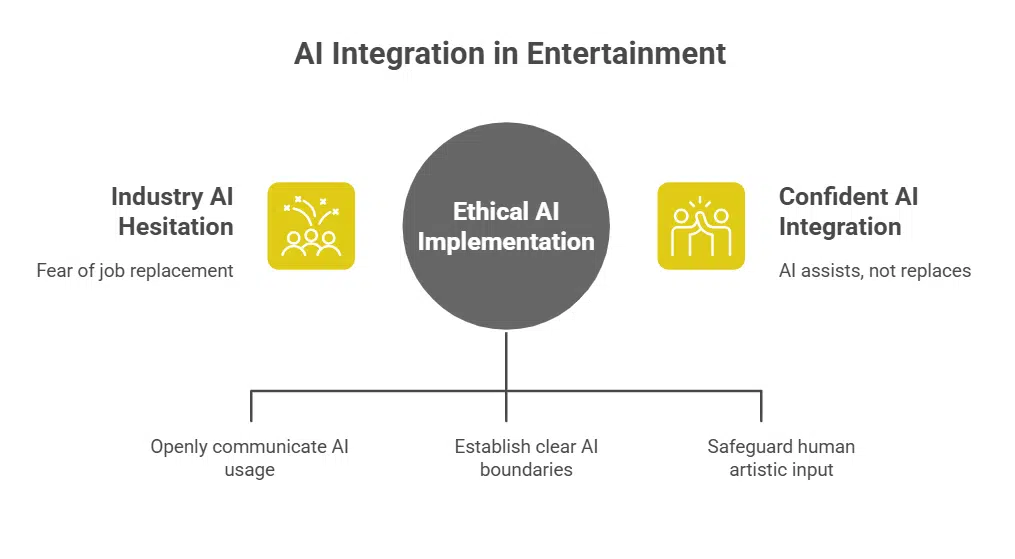
Netflix’s AI breakthrough comes at a time when the entertainment industry remains cautious about the use of artificial intelligence. Just two years ago, in 2023, both the Writers Guild of America and the Screen Actors Guild went on strike, in part due to concerns over how AI might affect creative control and job security in the industry.
Labor unions and visual effects artists have long expressed skepticism about AI’s role in film and television, particularly when studios pursue automation for cost savings. In response to these concerns, Netflix has made it clear that generative AI is not being used to replace human labor but to extend what’s possible with existing resources.
Still, industry experts continue to call for transparency, ethical guidelines, and creative rights protections as AI becomes a larger part of the production ecosystem.
Netflix’s Broader Use of AI Technology
Beyond VFX, Netflix has already been leveraging AI in various areas of its business model. One of the most familiar uses is personalized content recommendations, which are powered by machine learning algorithms trained to analyze user behavior, viewing history, and preferences.
The company is also expanding AI applications to automated ad production—a new revenue stream as the platform embraces ad-supported tiers—and voice-activated search functions. These tools allow users to navigate Netflix more intuitively by speaking commands like “show me romantic comedies set in the 1990s.”
According to internal sources, Netflix is investing heavily in building a more AI-driven content ecosystem—from content creation to user engagement. Future developments could include AI-assisted script development, dubbing, and even synthetic voiceovers for localization.
A Glimpse Into the Future of Streaming Production
Netflix’s success with the generative AI scene in El Eternauta may become a blueprint for future content production models. Instead of replacing traditional production teams, AI can be embedded into specific stages of the pipeline to speed up workflows and unlock new levels of visual fidelity—even for mid-budget international projects.
This milestone proves that high-impact visual effects are no longer limited to billion-dollar blockbusters. With the right AI tools, studios can now create premium-grade content that is more affordable, more scalable, and more accessible for global audiences.
As more platforms explore similar strategies, the debate about AI’s role in Hollywood will continue—but Netflix has made it clear that, for now, AI is a creative ally, not a disruptor.