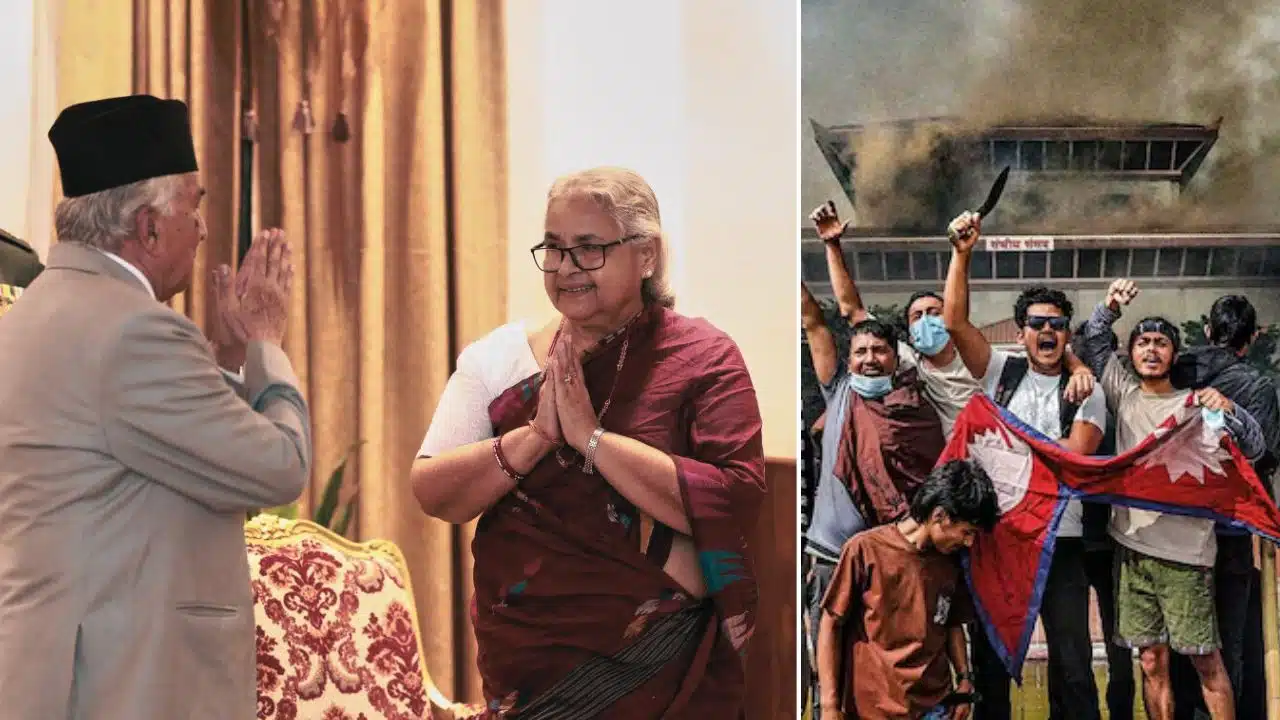
Nepal has been thrust into one of its most turbulent moments in recent years after a week of widespread unrest left the nation shaken. The crisis began when authorities imposed a sudden ban on popular social media platforms, a move that sparked outrage among young Nepalis who already felt disconnected from the country’s political leadership. The protests, quickly branded as a “Gen Z uprising,” escalated into violent clashes between demonstrators and security forces.
The demonstrations spread rapidly across the country, with thousands of young people pouring into the streets of Kathmandu and other major cities. Initially peaceful rallies soon descended into deadly confrontations. Security forces deployed live ammunition, rubber bullets, and tear gas to disperse the crowds, leading to at least 51 confirmed deaths and more than 1,300 injuries. The scale of the violence marked the worst political upheaval Nepal has experienced in years.
Prime Minister Oli Resigns Under Pressure
As the protests intensified, public anger focused on Prime Minister K.P. Sharma Oli, who had already faced criticism over corruption allegations, governance failures, and the erosion of civil freedoms. Under growing pressure from both the streets and political rivals, Oli resigned on September 9, 2025. His departure was seen as an attempt to calm the unrest, but demonstrations continued until further steps were taken by Nepal’s leadership.
Appointment of Sushila Karki as Interim Prime Minister
In an unprecedented political move, President Ramchandra Poudel appointed Sushila Karki, the former Chief Justice of Nepal’s Supreme Court, as the head of an interim government on September 12. Her appointment is historic—she is now the first woman to serve as Prime Minister in the country’s history.
Karki’s selection came after two days of intense backroom negotiations between the president, army chief Ashok Raj Sigdel, and representatives of the youth-led movement. Leaders of the protests demanded a figure who could be seen as neutral, credible, and independent of party politics. Karki’s background in the judiciary and reputation for integrity positioned her as an acceptable choice to both the protesters and Nepal’s political establishment.
Parliament Dissolved, Elections Announced
Alongside the appointment, President Poudel announced the dissolution of the House of Representatives, the lower chamber of Nepal’s parliament. In a decisive step to end the political deadlock, fresh parliamentary elections were scheduled for March 5, 2026. The decision was presented as a path toward restoring legitimacy and stability, allowing the people of Nepal to elect a new government after the violent crisis.
Return to Fragile Calm
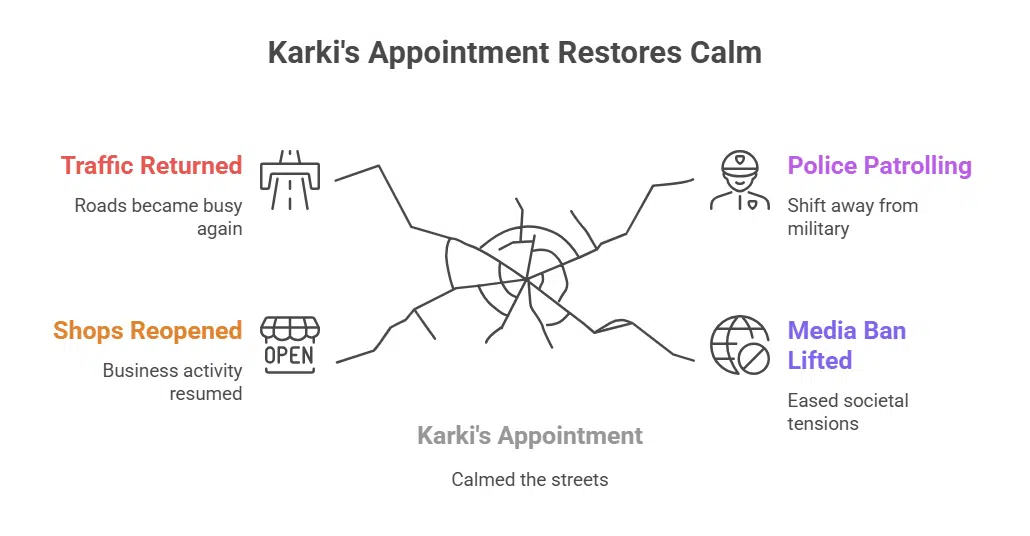
The announcement of Karki’s appointment and the election timeline gradually restored calm to the streets. Shops reopened, traffic returned to major roads, and police began patrolling with batons instead of rifles, signaling a shift away from military-style crackdowns. The lifting of the controversial social media ban, which had been the initial spark for the uprising, also helped ease tensions.
Still, many observers caution that the calm is fragile. The memory of the bloodshed remains raw, and questions about accountability for the deaths and injuries have yet to be addressed. Protest leaders continue to call for justice and systemic reforms to root out corruption and political malpractice.
Regional and International Reactions
Nepal’s southern neighbor India expressed support for the new interim administration. New Delhi emphasized its commitment to Nepal’s peace, stability, and prosperity, and welcomed the return of order after days of chaos. China, which also shares a border with Nepal, has remained more cautious in its response but has quietly observed developments given its economic and strategic interests in the Himalayan nation.
Meanwhile, international human rights organizations have urged the Nepalese government to investigate the excessive use of force by security personnel during the protests. Reports of detainees and incidents of police brutality have drawn condemnation from rights groups, which stress that accountability will be vital to prevent further unrest.
Longstanding Instability in Nepal
The latest upheaval adds to Nepal’s long history of political turmoil since the monarchy was abolished in 2008. The transition to a republic was meant to usher in stability, but instead the country has experienced frequent changes in leadership and near-constant power struggles between political parties.
Economic challenges have fueled the frustration of Nepal’s younger population. With limited job opportunities at home, millions of Nepali citizens seek employment abroad, particularly in the Middle East, South Korea, and Malaysia. The heavy reliance on remittances has left the domestic economy vulnerable, while political corruption has deepened public disillusionment.
Constitutional and Political Debate
The president’s decision to dissolve parliament has already sparked controversy. Some legal experts and opposition groups argue that the move undermines democratic norms and could set a dangerous precedent for bypassing elected representatives. While supporters defend the step as necessary to restore order and pave the way for credible elections, critics see it as unconstitutional.
This debate is likely to continue as the interim government works to prepare for the March 2026 elections. The outcome of those elections will be crucial in determining whether Nepal can break its cycle of instability or whether the pattern of unrest and fragile coalitions will persist.