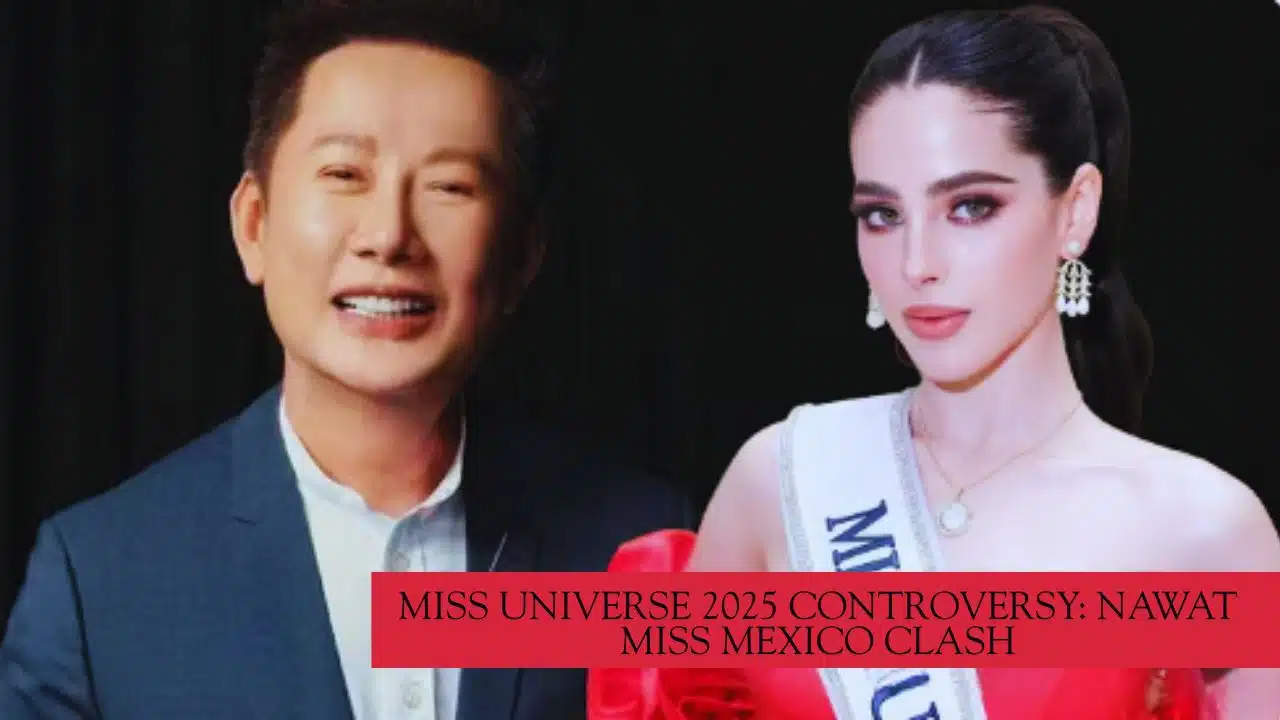
The 74th Miss Universe pageant, scheduled for November 21, 2025, at Impact Challenger Hall in Pak Kret, Nonthaburi, Thailand, has been thrust into the spotlight not for its glamour but for a shocking controversy involving pageant executive Nawat Itsaragrisil and Miss Mexico Fátima Bosch. This incident, which occurred during a pre-event livestream, has highlighted deep-seated issues within the Miss Universe Organization (MUO) regarding respect, leadership, and the treatment of women in what is supposed to be an empowering platform.
Over the past week, the fallout has included walkouts, public apologies, and organizational reforms, drawing widespread media attention and sparking global conversations about dignity in pageants. Based on reports from credible outlets like BBC, Entertainment Weekly, People, and Sky News, this expanded timeline provides a detailed account of the events, the key players, and the broader implications.
The Incident Unfolds: A Livestreamed Clash That Shocked the World
The controversy erupted on November 4, 2025, during a routine orientation and sashing ceremony at a luxury hotel in Bangkok, attended by approximately 130 contestants from around the globe. Nawat Itsaragrisil, who holds multiple roles including executive director of Miss Universe Thailand, president of Miss Grand International, and vice president for Asia in the MUO, was addressing the delegates about their responsibilities to promote the host country through social media posts and photo shoots. These activities were mandatory to showcase Thailand’s culture, landmarks, and hospitality ahead of the main event.
In the midst of his speech, Itsaragrisil singled out Fátima Bosch, accusing her of deliberately skipping a group photo shoot organized for promotional purposes. He claimed she was acting on instructions from her national director in Mexico to undermine the event, stating that her refusal was “damaging” to the pageant’s image and Thailand’s reputation as a gracious host. Bosch, seated among her peers, calmly attempted to defend herself, explaining that she had complied with all rules and had participated in similar activities earlier. However, Itsaragrisil interrupted her repeatedly, escalating the tone by calling her a “dummy” or “dumbhead”—terms he later disputed but which were widely reported in the viral video footage.
The confrontation intensified as Bosch stood her ground, responding firmly, “Because I have a voice. You are not respecting me as a woman.” Itsaragrisil then ordered security personnel to escort her out of the room, threatening that any contestant who supported her or left with her would face disqualification from the competition. Undeterred, Bosch exited the venue in tears, and a significant number of delegates—estimated at over a dozen, including the reigning Miss Universe 2024, Victoria Kjær Theilvig from Denmark—followed in a powerful show of solidarity. The entire exchange was captured live on the official Miss Universe Facebook page, where it quickly amassed millions of views, shares, and comments from shocked fans worldwide.
Outside the hotel, Theilvig addressed supporters gathered nearby, her voice trembling as she said, “We have respect for everyone, but this is not how things should be handled. To trash another girl is beyond disrespectful.” The walkout not only disrupted the ceremony but also amplified the incident’s reach, with social media platforms like Instagram, TikTok, and X (formerly Twitter) flooded with clips, memes, and hashtags such as #RespectMissMexico and #MissUniverseWalkout. Pageant enthusiasts and women’s rights advocates condemned the scene as emblematic of outdated power dynamics in the industry, while some Thai media outlets defended Itsaragrisil by framing it as a cultural misunderstanding over promotional obligations.
Who Is Fátima Bosch? The Resilient Advocate from Mexico
Fátima Bosch Fernández, 26, from Villahermosa in the state of Tabasco, Mexico, is no stranger to the spotlight or adversity in the pageant world. Born into a family with strong ties to education and community service, Bosch pursued a degree in communications before entering pageants as a way to amplify her advocacy for women’s empowerment, access to education, and mental health awareness in underserved regions of Mexico. Her journey began in 2018 when she won the prestigious Flor de Oro title, a regional beauty contest that catapulted her into national attention. However, her path to Miss Universe Mexico was not smooth; she faced intense competition and personal challenges, including balancing her career as a model and influencer with her volunteer work.
In September 2025, Bosch was crowned Miss Universe Mexico amid a highly contentious national final in Mexico City. The audience booed her victory, and several fellow contestants publicly expressed disappointment, believing a rival from another state deserved the title due to perceived biases in judging. Undaunted, Bosch addressed the backlash in a post-coronation interview with Us Weekly en Español, declaring, “Nothing and no one will take this crown from me.” She has since used her platform to promote initiatives like scholarships for young women in Tabasco, where she is the first representative to win this honor. Bosch’s poised demeanor and advocacy focus have earned her a dedicated following, with over 500,000 Instagram followers who rallied behind her during the controversy.
Following the incident, Bosch broke her silence in a heartfelt Instagram video and Spanish-language interviews, emphasizing her commitment to the pageant despite the humiliation. “Your director was not respectful,” she said. “He called me dumb. But I did everything right; I followed the rules and was kind to everyone.” She highlighted the importance of the platform for empowered women, adding, “I came here to make my voice heard—it’s stronger than ever. I have things to say on the 21st, and I’m not going to back down.” Mexico’s President Claudia Sheinbaum also weighed in, praising Bosch as a “symbol of women’s rights” and defending her right to speak out against mistreatment, which further elevated the story’s international profile.
Who Is Nawat Itsaragrisil? The Veteran Pageant Figure Under Fire
Nawat Itsaragrisil, 52, is a prominent Thai television personality and entrepreneur whose career spans over two decades in media and beauty pageants. He first gained fame in the early 2000s as a host of popular travel and lifestyle shows on Thai networks, where his charismatic on-screen presence helped him build a loyal audience. In 2007, Itsaragrisil transitioned into the pageant industry, starting as an executive for Miss Thailand World before founding his own successful franchises, including Miss Grand International in 2013 and Miss Grand Thailand. These events have grown into major regional competitions, attracting sponsors and contestants from across Asia.
By 2022, Itsaragrisil’s influence expanded globally when he was appointed as the Asia vice president for the MUO and executive director for Miss Universe Thailand, roles that involve overseeing logistics, promotions, and host country preparations. His Instagram bio proudly lists these titles, along with his work in event production and philanthropy through his organizations. However, critics have long accused him of a demanding, authoritarian style, with past reports of tense backstage dynamics at his events. The November 4 incident marked a breaking point, as his public outburst was seen as crossing professional boundaries, especially in a setting meant to foster unity among diverse women.
Responses and Apologies: A Wave of Regret and Organizational Action
In the immediate aftermath, Itsaragrisil launched what some media dubbed an “apology tour.” On November 5, he posted a video on social media expressing remorse, saying, “If anyone was feeling not good, if anyone was not comfortable, if anyone was affected, I do apologize to everyone.” The following day, at a packed press conference in Bangkok, he broke down in tears, sobbing dramatically as he pleaded for forgiveness from Bosch, the contestants, and the public. “I am a human who can feel hurt. This issue has dragged me down to this point. I understand and I apologize,” he said, insisting he had used the word “damage” rather than “dumbhead” and urging journalists to review the footage. He attributed his reaction to the immense stress of coordinating a high-stakes international event under tight deadlines and financial pressures.
The MUO responded swiftly and decisively. On November 5, President Raúl Rocha Cantu released a video statement condemning Itsaragrisil’s actions as “public aggression and humiliation” and a “serious abuse” that violated the organization’s core values of respect and dignity for women. Rocha expressed “great indignation” over the incident, particularly the involvement of security to intimidate Bosch, and announced that Itsaragrisil’s participation in the 2025 pageant would be severely restricted or eliminated entirely. “I will not allow the values of respect and dignity toward women to be violated. Nawat, you need to stop,” Rocha declared, emphasizing the host’s duty to support and uplift delegates rather than berate them.
Bosch, meanwhile, has maintained a dignified stance, using the platform to reinforce her message of empowerment. In follow-up posts, she thanked the outpouring of support from fans, fellow contestants, and even international leaders, stating, “I’m here to give a voice to all the women who fight every day and to represent my country with pride. I’m committed to that.” The solidarity from peers like Theilvig has been particularly notable, with many delegates sharing stories of their own experiences with high-pressure pageant environments.
Change in Leadership: Restructuring Amid Turmoil
This scandal has laid bare longstanding fractures within the MUO, exacerbated by a significant leadership transition just weeks before the pageant. On October 29, 2025, the organization announced Mario Búcaro as its new CEO, effective immediately, replacing Anne Jakrajutatip, who had resigned on June 20 amid a major restructuring at JKN Global Group, the Thai media conglomerate that co-owns the Miss Universe brand. Jakrajutatip, a trailblazing transgender entrepreneur who acquired a majority stake in the pageant in 2022 for $14 million, faced mounting challenges during her tenure. These included financial woes, such as JKN’s reported debts exceeding $200 million, regulatory scrutiny from Thailand’s Securities and Exchange Commission over alleged mismanagement, and internal power struggles that led to her abrupt departure.
Búcaro, a 58-year-old former diplomat from Guatemala with a distinguished career in international relations, steps into the role with a reputation for diplomacy and inclusivity. He previously served as Guatemala’s ambassador to Israel, Mexico, and several Latin American countries, and joined the MUO in 2023 as vice president for international relations. Under his leadership, the organization has emphasized global outreach, diversity, and ethical standards, initiatives that now seem urgently needed. Búcaro has already signaled a focus on contestant welfare, stating in his appointment announcement, “We are committed to fostering an environment of fairness, respect, and empowerment for all participants.” This change is viewed by insiders as a stabilizing force, especially as the pageant navigates the controversy’s aftermath and prepares for its broadcast on networks like Telemundo, The CW, and international affiliates.
Broader Implications: Rethinking Respect in Pageants
The Nawat-Bosch incident has transcended the pageant world, igniting broader debates about gender dynamics, cultural sensitivities, and the evolution of beauty competitions in the 21st century. Critics, including feminist organizations and media analysts, argue that such public shaming undermines the MUO’s stated mission of “The Power of Love,” a theme for 2025 that promotes compassion, inclusivity, and female solidarity among its 130 participating nations. The event’s estimated global audience of 500 million amplifies these concerns, with many questioning whether pageants can truly empower women if organizers model disrespectful behavior.
On a positive note, the controversy has spotlighted Bosch’s resilience and the unity among contestants, potentially inspiring reforms like mandatory sensitivity training and clearer protocols for handling disputes. Itsaragrisil’s emotional apologies, while polarizing—some saw them as genuine, others as performative—have humanized the fallout, reminding observers of the high-stakes pressures involved in hosting such spectacles. As the pageant progresses with preliminary events, national costume shows, and the grand finale hosted by comedian Steve Byrne alongside former winners Dayanara Torres and R’Bonney Gabriel Nola, featuring performances by artists like Omar Harfouch and Jeff Satur, the focus remains on redemption and celebration. The MUO has reaffirmed its dedication to a safe, respectful environment, but the lasting impact will depend on tangible changes that honor the dignity of all involved.
The information is collected from BBC and The New York Times.