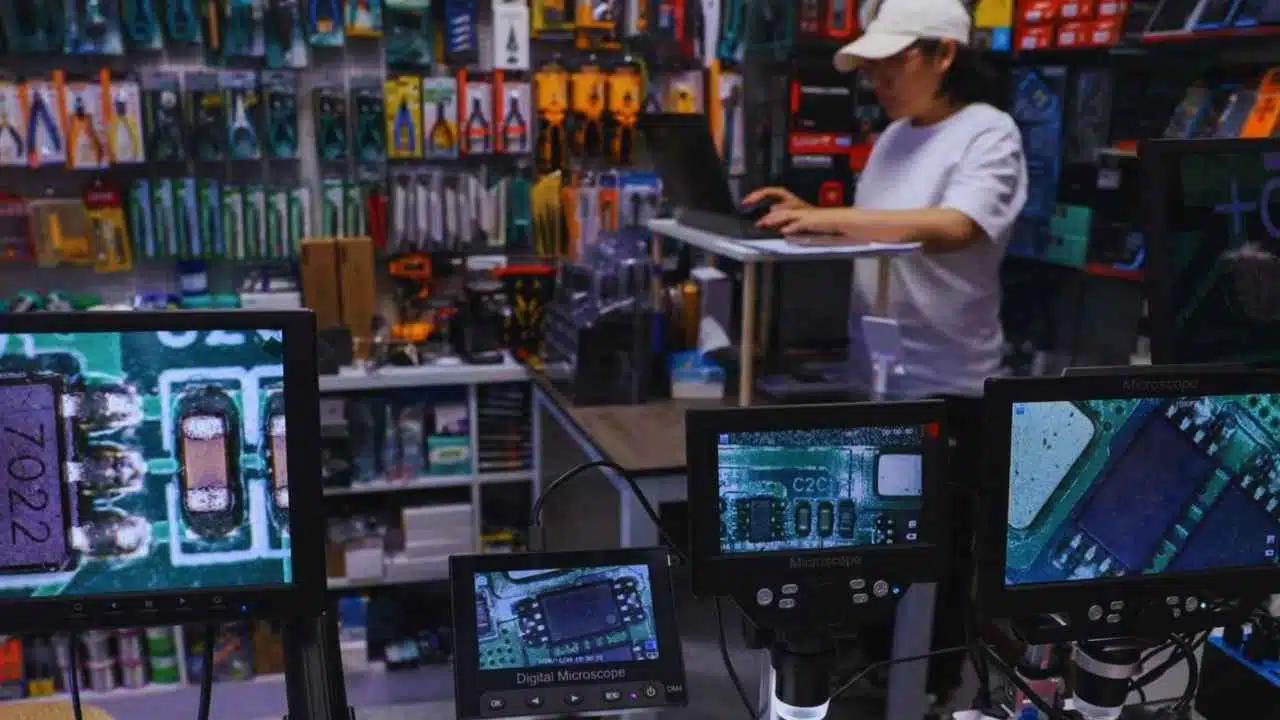
Memory chip prices surge as AI data centers buy more DRAM and NAND per server, while premium HBM capacity stays tight—pushing costs higher for PCs, phones, and enterprise hardware.
What’s Happening Now In The Memory Market?
Memory has entered a new price upswing going into 2026. The change is showing up in both large-buyer contract deals and spot activity, with the strongest pressure tied to server-grade DRAM and AI-focused supply chains.
This cycle looks different from past rebounds. In earlier years, memory pricing often moved mainly with consumer demand for PCs and smartphones. Now, AI infrastructure is the main driver. Data centers are consuming more memory per system, and the fastest-growing part of the market—AI accelerators—pulls in specialized memory products that are harder to ramp quickly.
Even when consumer demand stays flat, the memory market can still tighten because AI systems use a high “memory-per-compute” ratio. That means the industry can face rising prices without a classic consumer electronics boom.
Here’s a quick map of the memory segments most affected and why:
| Memory Segment | Where It’s Used Most | Why Prices Feel Pressure | Who Gets Hit First |
| Server DRAM (DDR5/DDR4) | AI servers, cloud servers | Higher memory per server; steady data center buildout | Cloud/enterprise buyers, server OEMs |
| HBM (High-Bandwidth Memory) | AI accelerators and high-end GPUs | Specialized packaging; limited suppliers; long qualification cycles | AI chip supply chain, hyperscalers |
| NAND Flash (SSD storage) | Data centers, laptops, phones | Enterprise SSD demand + controlled supply | SSD vendors, PC makers, OEMs |
| Mobile/PC DRAM | Smartphones, PCs | Capacity shifts toward higher-margin server/HBM | Phone and laptop brands |
Why AI Is Driving Demand So Fast?
AI workloads are unusually memory-hungry. Training large models and serving them to millions of users requires moving and storing huge amounts of data at high speed. That pushes two demands at once:
- More DRAM in servers: Modern AI servers are built with large memory pools to feed CPUs and GPUs efficiently and to keep systems balanced.
- More storage throughput: Data pipelines, model checkpoints, and fast retrieval push more data center SSD demand, which supports NAND usage.
The biggest structural change is that AI hardware does not scale linearly. As organizations deploy more compute, they often increase memory even faster to prevent bottlenecks. If compute is the “engine,” memory is the fuel system—and AI needs a lot of fuel delivered quickly.
HBM makes that “fuel system” even more critical. AI accelerators depend on HBM because it can deliver extremely high bandwidth close to the GPU/accelerator package. It is not a drop-in replacement for standard DRAM. It is a different product with different manufacturing steps, a more complex supply chain, and stricter qualification needs.
That matters for pricing because demand is hitting the most constrained parts of the memory ecosystem at the same time:
- More server DRAM content per rack
- More enterprise SSD demand for data-heavy AI pipelines
- A race for limited HBM supply for high-end accelerators
In plain terms: AI is pulling on the “premium” end of memory, and the tension spreads to the rest of the market.
Why Supply Can’t Expand Overnight?
Memory supply is not just “make more chips.” The constraints sit in multiple layers, and each layer has its own bottlenecks.
1) Capacity takes time
Adding meaningful wafer capacity and qualifying it for high-volume output typically takes years, not months. Even when suppliers invest, the new output arrives gradually.
2) Product mix is shifting
Suppliers tend to prioritize higher-margin products during strong cycles. When server DRAM and HBM bring better returns, capacity can move away from lower-margin segments. That can tighten availability for consumer-grade DRAM or certain NAND configurations—even if total industry output rises.
3) Advanced packaging is a real bottleneck
HBM is not only a “silicon” story. It’s also a packaging and stacking story. The specialized processes needed for HBM can become a choke point even if there are enough wafers.
4) Qualification and reliability standards slow the ramp
Large data center buyers require stable quality and predictable delivery. That means suppliers can’t simply flood the market quickly without passing strict validation and long-term reliability expectations.
5) Inventory strategies amplify swings
When buyers expect prices to rise, they often pull purchases forward. That can create a self-reinforcing cycle: tighter near-term supply → higher prices → more urgency to lock supply → even tighter near-term supply.
A helpful way to see the “why now” is through a simple timeline of how this cycle builds:
| Stage | What Happens | Market Effect |
| AI buildouts accelerate | More GPUs and AI servers ship | Memory content per server rises |
| HBM demand spikes | Premium memory becomes strategic | Suppliers prioritize high-end output |
| Packaging constraints bite | HBM scaling lags demand | Tightness spreads to DRAM ecosystem |
| Buyers lock contracts early | Procurement shifts forward | Near-term supply tightens further |
| Device makers face higher input costs | PC/phone BOM costs rise | Retail pricing pressure grows |
Who Pays For Higher Memory Prices And Where It Shows Up?
Higher memory prices move through the tech economy in layers. The first impact is usually on the largest buyers, then it spreads to device makers, and finally it reaches consumers.
Data centers and cloud providers
Large buyers often negotiate contracts and manage supply planning quarters ahead. If prices rise, they may still buy because AI capacity is revenue-critical. But higher memory costs raise the “all-in” price of deploying AI clusters, which can influence how quickly projects expand and how costs are passed through to customers.
Server makers and enterprise IT
For server OEMs, memory is a major line item. When DRAM prices rise, server costs rise. Enterprises then face larger refresh budgets. Some respond by:
- Extending hardware life cycles
- Reducing configuration upgrades
- Standardizing fewer SKUs
- Negotiating longer supply deals to stabilize costs
PCs and laptops
PCs are sensitive to memory swings because mid-range devices compete heavily on price. If RAM and SSD costs rise, brands often choose between:
- Raising retail price
- Cutting RAM/storage in base models
- Reducing promotions and discounts
- Absorbing costs with lower margin (hard to sustain)
Smartphones and consumer devices
Phones include both DRAM and NAND, and price pressure can lead to:
- Slower adoption of higher storage tiers
- More “step-up pricing” for 256GB/512GB models
- Fewer deep discounts during key shopping seasons
- Greater focus on premium models where margins can absorb costs
Gaming, creator PCs, and “performance” segments
These segments tend to use higher RAM and faster SSDs. They can feel price increases earlier because they use more memory per device and often rely on higher-spec components.
It’s also important to note what consumers may notice first:
- The same price, but less RAM/storage in the base model
- The same specs, but higher price
- Fewer promotions, bundles, or seasonal markdowns
What To Watch Next And What Comes Next In 2026?
This memory upswing could last longer than a typical rebound because it is tied to an ongoing infrastructure shift. The next phase depends on whether supply expansion can catch up with AI-driven demand—and how aggressively buyers keep building.
Here are the most practical signals to watch in 2026:
- HBM scaling progress: If premium memory supply expands smoothly, it can relieve the tightest part of the chain. If not, scarcity stays “systemic.”
- Server DRAM contract direction: Server DRAM often sets the tone. If contracts keep rising quarter to quarter, pressure can persist across the market.
- NAND discipline and enterprise SSD demand: If suppliers maintain controlled output while data center SSD demand grows, NAND prices can remain firm.
- Device configuration changes: Watch whether mainstream phones and laptops stop increasing base RAM/storage as quickly. That can signal cost pressure.
- Retail behavior: If discounts become shallower and “upgrade tiers” get more expensive, consumer impact is spreading.
What this means for most readers is straightforward AI is now a major force in memory pricing. Even if you never buy an AI GPU, the memory that AI systems consume affects the same supply network that feeds everyday electronics.
If AI buildouts continue at the current pace, 2026 may bring a world where memory is treated less like a commodity and more like strategic infrastructure—especially at the high end. That shift can keep pricing elevated, reduce bargain cycles, and reshape how devices are built and sold.