In the near future, every individual on the planet will experience a momentary loss of one second from their time.
A recent study suggests that the actions of humans are having an impact on the timing of certain events, as the melting of polar ice is causing shifts in the Earth’s rotation and affecting the concept of time.
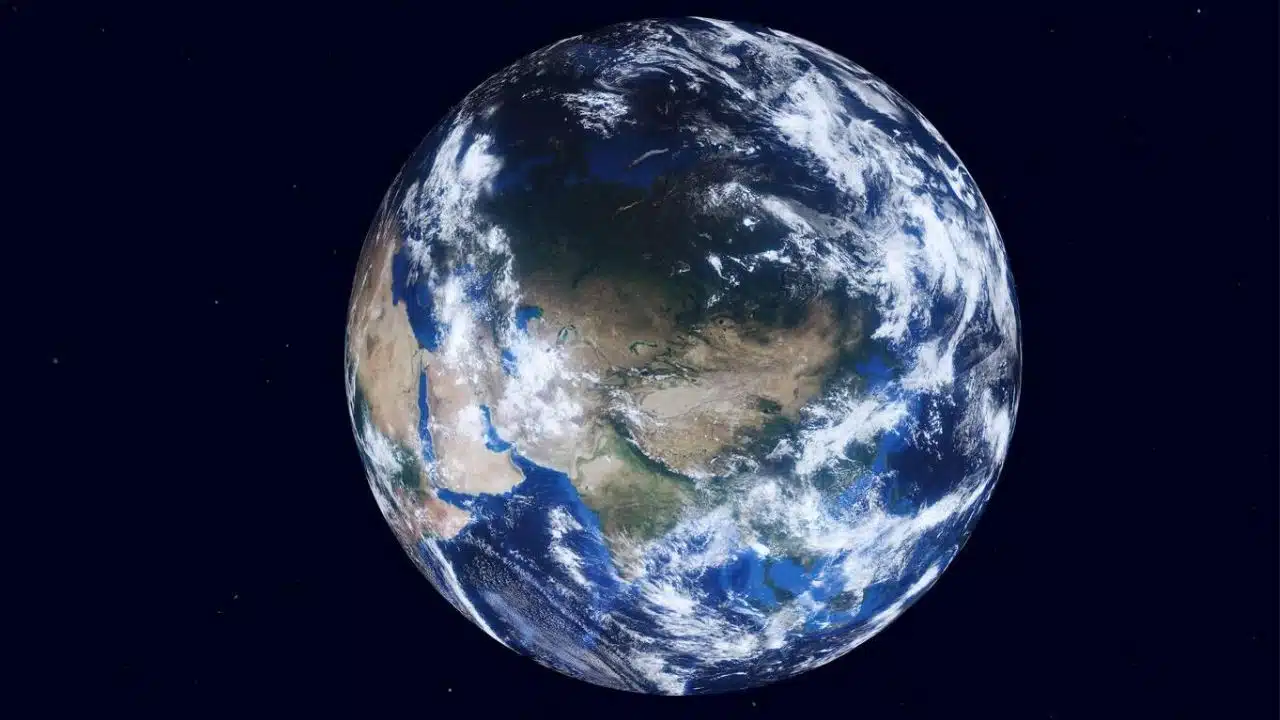
The hours and minutes that shape our daily lives are determined by the natural rotation of our planet. However, the rotation is not constant and can undergo slight changes, influenced by various factors such as Earth’s surface and molten core.
Occasionally, the world’s clocks need to be adjusted by a “leap second” due to these almost undetectable changes. Although it may sound insignificant, this adjustment can have a significant impact on computing systems.
Many seconds have been accumulated throughout the years. However, there has been a recent shift in the Earth’s rotation, as it is now accelerating due to alterations in its core. For the very first time, a second will have to be removed.

According to Patrizia Tavella, a member of the Time Department at the International Bureau of Weights and Measures in France, the addition or testing of a negative leap second has never been done before. This lack of precedent raises concerns about the potential problems it could create, as mentioned in an article accompanying the study.
However, the timing of this event is being impacted by the effects of global warming, as stated in a study published in the journal Nature on Wednesday. According to the report, the melting polar ice is causing a delay in the leap second, pushing it from 2026 to 2029.
According to Duncan Agnew, a professor of geophysics at the University of California San Diego and the author of the study, understanding the impact of global warming is crucial in predicting future developments in global timekeeping.
Prior to 1955, the definition of a second was based on a precise fraction of the Earth’s rotational period in relation to the stars. Next came the age of highly accurate atomic clocks, which provided a significantly more reliable method of measuring a physical second.
Starting from the late 1960s, coordinated universal time (UTC) became the standard for setting time zones worldwide. UTC relies on atomic clocks while also staying synchronized with the Earth’s rotation.
However, due to the non-constant rotation speed, the two timescales gradually drift apart. Occasionally, a “leap second” needs to be added to realign them.
Over time, the Earth’s rotation has been primarily influenced by the friction caused by the tides on the ocean floor, resulting in a gradual slowdown.
According to Agnew, the melting polar ice, which is primarily caused by the burning of fossil fuels by humans, has emerged as a noteworthy factor in recent times. As the ice melts into the ocean, meltwater naturally flows from the poles towards the equator, contributing to a gradual slowdown in the Earth’s rotation.
Ted Scambos, a glaciologist at the University of Colorado Boulder who was not involved in the study, compares the process to a figure skater gracefully spinning with their arms extended above their head. As the individual lowers their arms towards their shoulders, their rotation gradually decelerates.
According to Agnew, the polar ice melt has had a significant impact on the rotation of the Earth, which is quite remarkable and unprecedented. It’s truly fascinating how human beings have managed to alter the rotation of the Earth.
However, the report suggests that processes in the Earth’s core also play a role in global timekeeping, in addition to the impact of melting ice on the Earth’s spin.
The planet’s liquid core rotates autonomously from its solid outer shell. According to Agnew, the solid shell is currently speeding up in order to maintain momentum as the core slows down.

There is limited knowledge about the activities occurring approximately 1,800 miles beneath the Earth’s surface, and the reason behind the fluctuating speed of the core remains uncertain. “It’s inherently unpredictable,” Agnew remarked.
However, the study indicates that the Earth’s rotation is accelerating, despite the slowing effect caused by the melting of polar ice. It appears that the world will soon need to subtract a second for the first time.
“A second may not seem significant,” Agnew remarked, “but computing systems designed for tasks like stock exchange transactions require precision down to a thousandth of a second.”
While most computer systems are equipped with software to perform addition, only a limited number possess the ability to perform subtraction. Computers will require reprogramming by humans, which may introduce the possibility of error.
“It was unexpected that the Earth would accelerate to the extent that the addition of a leap second might become necessary,” Agnew stated.
According to Scambos, a glaciologist from the University of Colorado Boulder, the study reveals a significant finding. It highlights that the changes originating from the Earth’s core are currently surpassing the trends in ice loss from the poles, despite the recent acceleration in ice loss.
“It’s a concerning moment for certain computer applications,” he told, but for the majority of individuals, life will continue as normal.
Agnew sees the findings as a valuable resource for helping people understand the impact of human activities on the planet.
“The fact that a significant amount of ice has melted to the point where it has measurably affected the Earth’s rotation is truly remarkable. It highlights the magnitude of the situation and emphasizes its importance.”