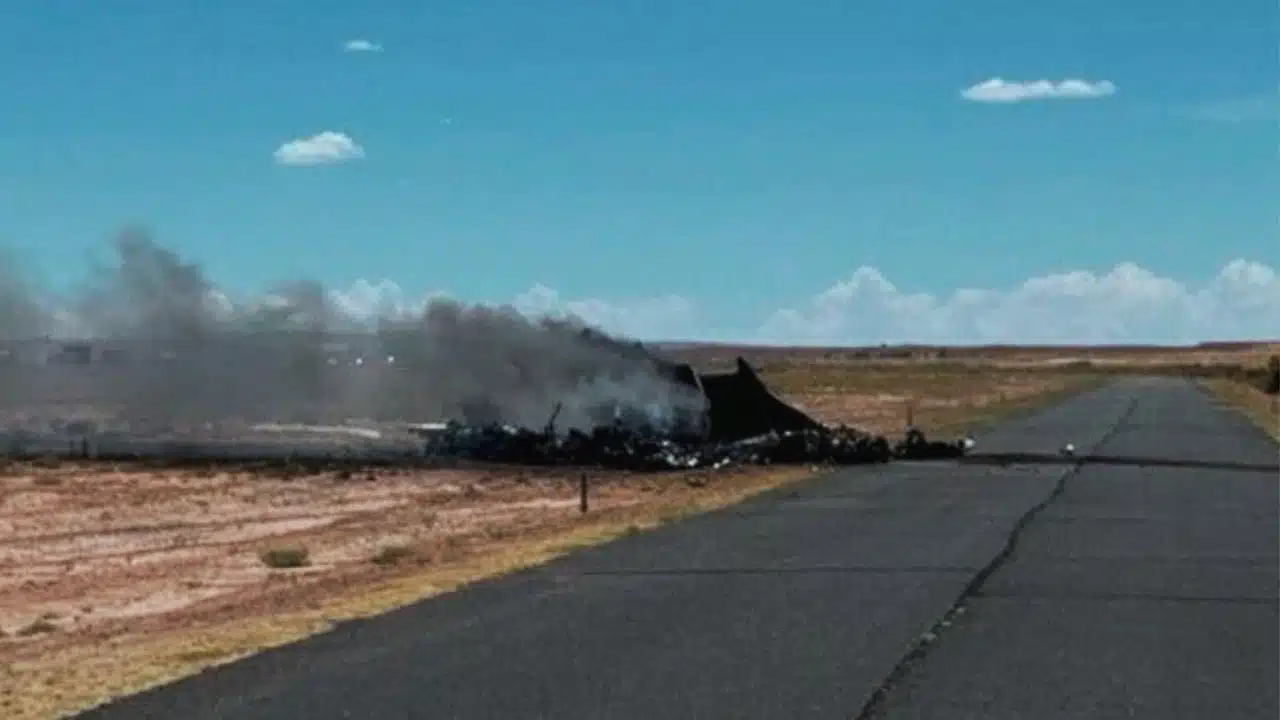
A devastating accident unfolded on Tuesday, August 6, 2025, as a medical transport aircraft crashed and caught fire while attempting to land near the airport in Chinle, Arizona. The aircraft was operating on the territory of the Navajo Nation—the largest Native American reservation in the United States—and all four people on board were killed in the crash.
The aircraft, a twin-engine Beechcraft King Air 300 owned and operated by CSI Aviation, departed from Albuquerque, New Mexico, earlier in the day with a medical mission to retrieve a critically ill patient from the Chinle Comprehensive Health Care Facility, a hospital operated by the Indian Health Service (IHS). This hospital serves as a primary healthcare provider for remote areas of the Navajo Nation, where access to trauma or specialized care is extremely limited.
The crash occurred just before the plane could land, resulting in a massive fire and immediate fatal consequences for the two pilots and two medical crew members. Local authorities and emergency responders were alerted to the presence of smoke rising near the airfield at around 12:44 p.m. local time.
Flight Details and Purpose
The Beechcraft King Air 300 is a popular aircraft model used in medical evacuation and transport missions due to its compact size, speed, and ability to land on smaller airstrips. On this mission, the aircraft was traveling approximately 300 miles (or 483 kilometers) northeast from Albuquerque to Chinle with the purpose of transporting a patient in critical condition back to a more equipped facility in New Mexico for advanced treatment.
CSI Aviation, which specializes in medical and government aviation services, confirmed the flight was contracted to provide urgent patient transport—a common need in the Navajo Nation, where hospitals are often distant from each other and lack the necessary resources for major medical interventions.
Fatalities and Emergency Response
Sadly, all four people onboard died in the crash. This included both flight crew members and two healthcare providers—individuals who had dedicated their lives to responding to emergencies and saving others. Their names were not immediately released, as authorities waited to notify the next of kin.
Upon receiving reports of thick black smoke at the Chinle airport, first responders from tribal emergency services, fire departments, and law enforcement arrived quickly at the scene. However, by the time they reached the crash site, the aircraft was already fully engulfed in flames. The blaze was eventually brought under control, but there were no survivors found.
Authorities noted that the patient scheduled for transport was not on the aircraft at the time of the crash. Details regarding the patient’s identity, condition, or current location were not disclosed as of Tuesday evening.
Investigation and Safety Measures
The Federal Aviation Administration (FAA) and the National Transportation Safety Board (NTSB) are leading a joint investigation into the cause of the accident. While preliminary findings are typically released within a few weeks, full investigations involving technical assessments, pilot history, maintenance logs, weather conditions, and onboard equipment functionality can take several months.
Investigators will examine factors such as mechanical failure, pilot error, or potential environmental conditions that may have contributed to the crash. The plane’s flight data and cockpit voice recorders—if available—will be crucial for understanding what occurred in the moments before impact.
CSI Aviation has stated it is fully cooperating with federal investigators and will assist in any way necessary to uncover the cause of the tragedy. The company expressed deep sadness and offered condolences to the families and communities affected.
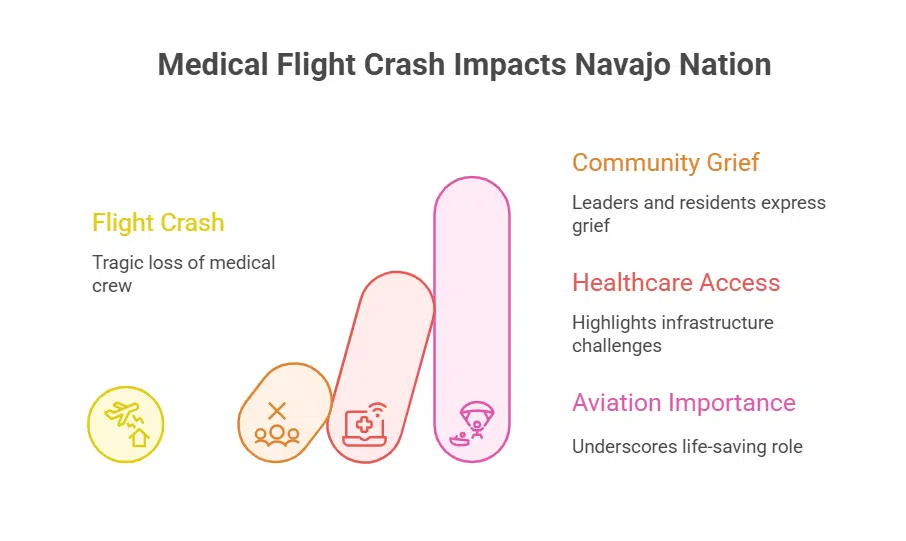
The loss has reverberated throughout the Navajo Nation, a community that deeply respects the role of healthcare and aviation professionals who serve in high-risk, life-saving capacities. Leaders and residents alike have expressed grief and solidarity in honoring the lives lost.
Medical flights are critical to healthcare operations in the Navajo Nation due to its vast geography and limited access to specialized medical facilities. The reservation spans about 27,000 square miles across Arizona, New Mexico, and Utah—an area larger than the state of West Virginia. Many remote communities within this area rely heavily on air ambulances to receive timely and often life-saving care.
Chinle, located in the north-central part of the Navajo Nation, is one of the areas where the tribe has invested in small airstrips to improve emergency response logistics. The Chinle Airport is one of several that the tribal government owns and maintains to support healthcare access and transportation needs in rural areas.
This tragic crash draws attention to both the bravery of medical flight crews and the ongoing infrastructure challenges faced by rural tribal healthcare systems. It also highlights the critical role that aviation plays in saving lives across underserved populations.
Historical Context and Safety Concerns
Medical transport crashes, while uncommon, are often fatal due to the high speeds, mission urgency, and remote locations involved. According to the NTSB, air ambulance crashes have occurred in various parts of the U.S. over the past decade, sparking concerns over safety regulations, equipment standards, and pilot training specific to emergency flights.
Earlier in 2025, a medical flight crashed in Philadelphia, killing eight people. In that incident, investigators found that the plane’s cockpit voice recorder had malfunctioned, limiting the available data for understanding what happened. The aviation community continues to push for improved monitoring systems and stricter maintenance protocols to prevent such tragedies.
The Beechcraft King Air series, including the 300 model involved in this crash, is widely used around the world for both civilian and medical missions. While generally considered reliable, the aircraft’s performance in high-altitude or mountainous terrain can present challenges—factors that may be evaluated in this case, given the geographic landscape of northern Arizona.
Continuing Support and Tributes
Tributes have been pouring in from across the Navajo Nation and beyond. Community members, healthcare workers, and aviation partners are mourning the loss of those who died while performing a selfless mission. Local spiritual leaders are expected to hold prayer ceremonies in honor of the deceased.
In addition to emotional support for families, tribal and federal agencies are likely to review current protocols and aviation safety measures for future missions. Resources may also be directed toward psychological support for hospital and emergency staff affected by the incident.
The plane crash near Chinle marks a heartbreaking moment for both the Navajo Nation and the larger emergency medical community. Four individuals lost their lives while on a mission to help another—a reflection of the quiet heroism that underpins emergency care work in remote and underserved regions. Investigations will continue, but the tragedy serves as a powerful reminder of the sacrifices made by those who dedicate their careers to saving lives, often in dangerous and unpredictable conditions.