Have you ever watched a game and seen fans crying, screaming, or praying as if their lives depended on it? It can feel a little strange if you don’t quite get how a single player can move an entire city to tears.
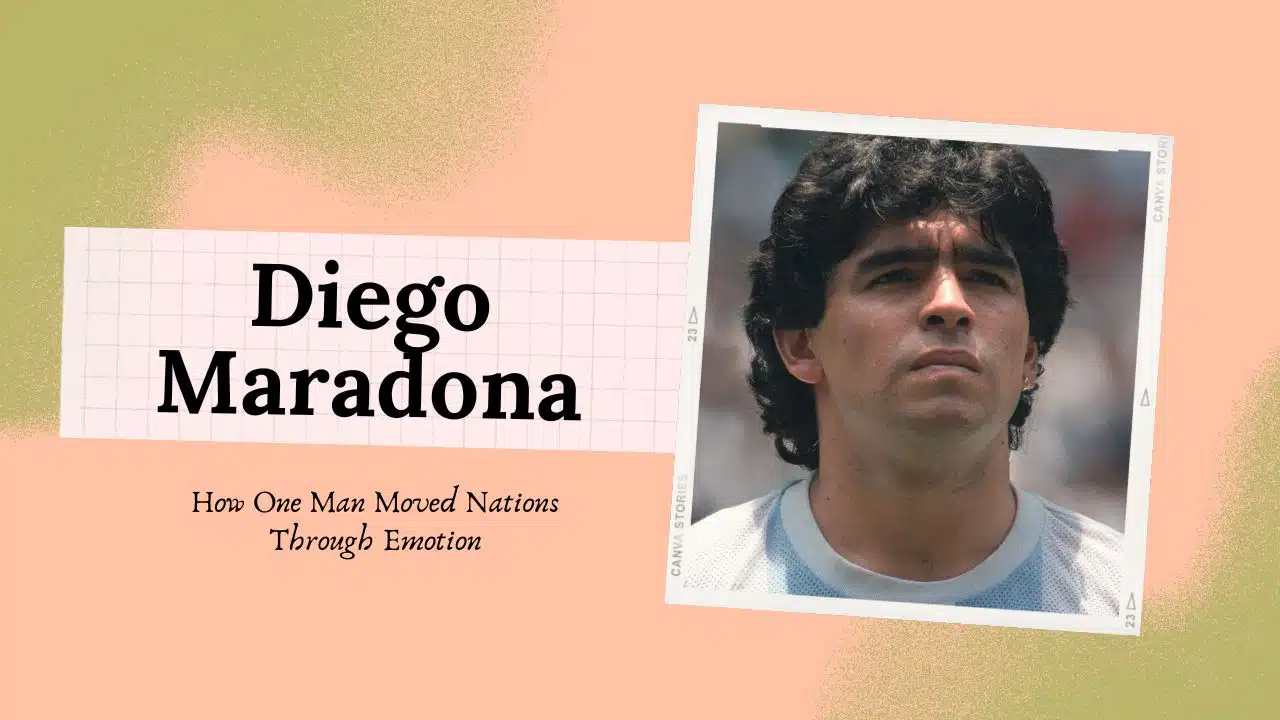
You see, Diego Maradona wasn’t just a soccer legend who played for teams like S.S.C. Napoli and the Argentina national team. Today is his 65th birth anniversary. Happy birthday Diego Maradona.
He was a symbol. This isn’t just about famous moments like the “Hand of God” goal in the 1986 World Cup. It’s about why that moment meant so much to people from Buenos Aires to Naples.
Let’s walk through this story together. It might just change how you see heroes.
The Symbolism of Maradona
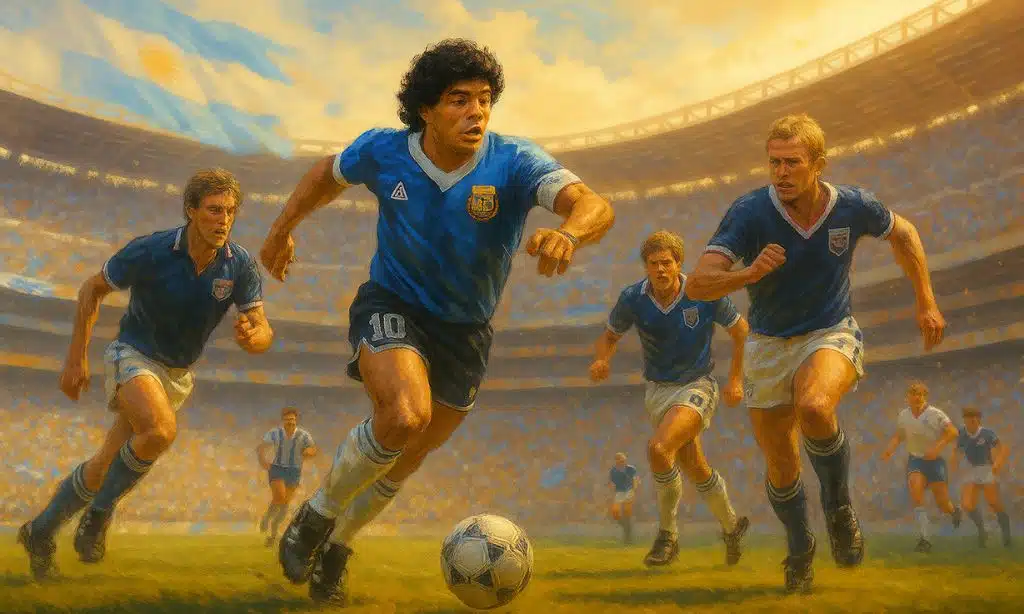
Diego Maradona was more than a soccer legend; he was a myth in motion. To his fans, his feet weren’t just kicking a ball, they were painting hope on the field. His most famous moments, like the “Hand of God” goal, turned stadiums like San Paolo into places of worship.
Why is Maradona seen as a divine figure in sports?
For so many, especially in Naples and Argentina, Maradona was practically a saint. Fans don’t just call him a legend; they painted his face on murals with halos and gave him the nickname “D10S,” a blend of the Spanish word for God (“Dios”) and his jersey number.
The Italian art critic Vittorio Sgarbi famously compared Maradona’s mastery with a soccer ball to Caravaggio’s genius with a paintbrush. It shows you how people saw true art in his movements. He took a struggling S.S.C. Napoli, a team that had never won a Serie A title, and led them to victory not once, but twice, in 1987 and 1990.
He delivered miracles for a city that felt overlooked and forgotten. That’s why they built shrines and even a dedicated church, the Iglesia Maradoniana, in his honor. His life became about something much bigger than soccer.
What is the cultural significance of the “Hand of God”?
The “Hand of God” goal wasn’t just a clever, illegal move. It was a moment of rebellion. On June 22, 1986, when Maradona scored that goal against England in the World Cup quarter-finals, it was only four years after the Falklands War, a painful military defeat for Argentina at the hands of the British.
For many Argentinians, this goal felt like cosmic justice. It was a sly, brilliant act of defiance against a more powerful opponent. Maradona himself famously said the goal was scored “a little with the head of Maradona and a little with the hand of God.”
This single moment captured his entire persona: part trickster, part divine genius. That’s why you see it painted on walls in the Quartieri Spagnoli in Naples and all across Buenos Aires. It’s more than a goal; it’s a piece of folklore.
The Church of Maradona
In a small city in Argentina, people gather not for traditional saints, but to honor their soccer hero. Here, fans light candles next to his jersey and chant his name, celebrating a different kind of faith born on the soccer pitch.
How did the Maradonian Church originate and what are its rituals?
The Maradonian Church, or Iglesia Maradoniana, was started with a mix of serious passion and good humor. It was founded in the city of Rosario, Argentina, on October 30, 1998, by a group of fans, including Hernán Amez and Alejandro Verón, who wanted to celebrate their hero’s birthday.
Their rituals are wonderfully unique and deeply tied to his life story.
- Baptism: New members are “baptized” by re-enacting the “Hand of God” goal.
- Holidays: They celebrate “Christmas” on Maradona’s birthday, October 30th. Their “Easter” falls on June 22nd, the anniversary of the day he scored both the “Hand of God” and the “Goal of the Century” against England.
- Naming: It’s a common practice for devoted followers to name their sons Diego.
- Pilgrimages: Many members dream of visiting sacred sites, like the Quartieri Spagnoli in Naples or the stadiums where he played for Boca Juniors.
What are the “Ten Commandments” of Maradona worship?
Followers of the Church of Maradona live by ten playful commandments that honor Diego’s spirit. They blend a love for soccer with lessons from his beautifully complicated life.
- The ball is never stained.
- Love football above all else.
- Declare your unconditional love for Diego and the beauty of football.
- Defend the Argentina shirt.
- Spread the news of Diego’s miracles throughout the universe.
- Honor the temples where he played and his sacred shirts.
- Don’t proclaim Diego as a member of any single team.
- Preach and spread the principles of the Church of Maradona.
- Make Diego your middle name.
- Name your first son Diego.
How are celebrations and symbolic acts performed in the Church of Maradona?
Celebrations are full of life and emotion, happening in cities from Argentina to Naples. They are a mix of party, ceremony, and remembrance.
On his birthday, October 30th, you’ll find streets filled with pickup soccer games, barbecues, and fans sharing stories of his greatest plays. People display their personal “relics” at home, things like old S.S.C. Napoli scarves, tickets from San Paolo Stadium, or signed photos.
Lighting candles at his murals is a common ritual. In Naples’ Quartieri Spagnoli, locals and tourists still leave flowers and blue-and-white ribbons by the giant mural painted by Mario Filardi in 1990. It’s a living tribute to the man who gave them so much pride.
Maradona’s Influence in Naples
For Neapolitans, Maradona was more than a player; he was their champion. He arrived in a city struggling against poverty and prejudice and made it the capital of Italian soccer. His image is still woven into the very fabric of the city.
How did Maradona become a hero for the working class in Naples?
When Diego Maradona arrived at S.S.C. Napoli on July 5, 1984, he was greeted by 75,000 fans at San Paolo Stadium. The club paid a world-record fee of over $10 million to sign him, a massive investment for a southern Italian team.
At the time, Italy had a huge economic and cultural divide. Wealthy northern cities often looked down on the south, and Naples faced high unemployment and crime. Maradona, who grew up in a shantytown in Buenos Aires, immediately identified with the city’s underdog spirit.
By leading Napoli to its first-ever Serie A title in 1987, he did the impossible. He defeated the powerful northern teams like Juventus and A.C. Milan. For the people of Naples, it wasn’t just a sporting victory; it was social redemption. He made them feel like champions.
What role do murals, shrines, and cultural identity play in Naples?
In Naples, Maradona is everywhere. His face gazes from murals in the Spanish Quarter (Quartieri Spagnoli), where art and daily life blend together. The famous 1990 mural on Via Emanuele de Deo has become an official pilgrimage site, a place where people come to feel close to him.
You can find makeshift altars all over the city.
- The famous Bar Nilo has a small shrine that includes what the owner claims is a lock of Maradona’s hair in a rotating case.
- On Via San Gregorio Armeno, the street famous for its Christmas nativity scenes, artisans sell figurines of Maradona right alongside saints and angels.
These tributes are a powerful part of the city’s identity. They show how faith, soccer, and local pride are all tangled together. For Naples, Maradona is not just a memory; he is a permanent part of their soul.
Maradona’s Flawed Sainthood
People watched Maradona make huge mistakes, yet they still called him a saint. In fact, his followers often loved him more for his flaws, because his struggles made his greatness feel even more human.
How were Maradona’s personal struggles accepted by his followers?
Diego Maradona’s life was an open book. His battles with drug addiction were public, leading to a 15-month ban for cocaine use in 1991 that ended his time at Napoli. Yet, his fans never abandoned him.
Instead, they embraced his imperfections. Many in Naples saw his struggles as a reflection of their own city’s fight against its demons. His pain and his mistakes didn’t disqualify him from being a hero; they made him one of them.
Followers of the Maradonian Church see his flawed life as a core part of his story. They believe his suffering made him more holy, not less. It’s a story of redemption, not perfection, which is something that resonates deeply with people who face their own daily hardships.
Why did his imperfections make him more relatable?
Maradona’s struggles made him feel real. He wasn’t some distant, perfect celebrity; he was a tragic hero. His story fits into the philosophical ideas of Nietzsche’s “The Birth of Tragedy,” where the chaotic, emotional, and flawed (Dionysian) spirit often feels more true to life than the orderly and perfect (Apollonian) one.
Maradona was pure Dionysian energy. His wild genius on the field and his chaotic life off it were two sides of the same coin. This made him incredibly relatable to working-class fans in Naples and Argentina, who understood that life is often messy and unpredictable.
His “Hand of God” goal and his public battles show that heroes don’t have to be perfect. Sometimes, they are just beautifully, tragically human.
The Emotional Impact of Maradona’s Legacy
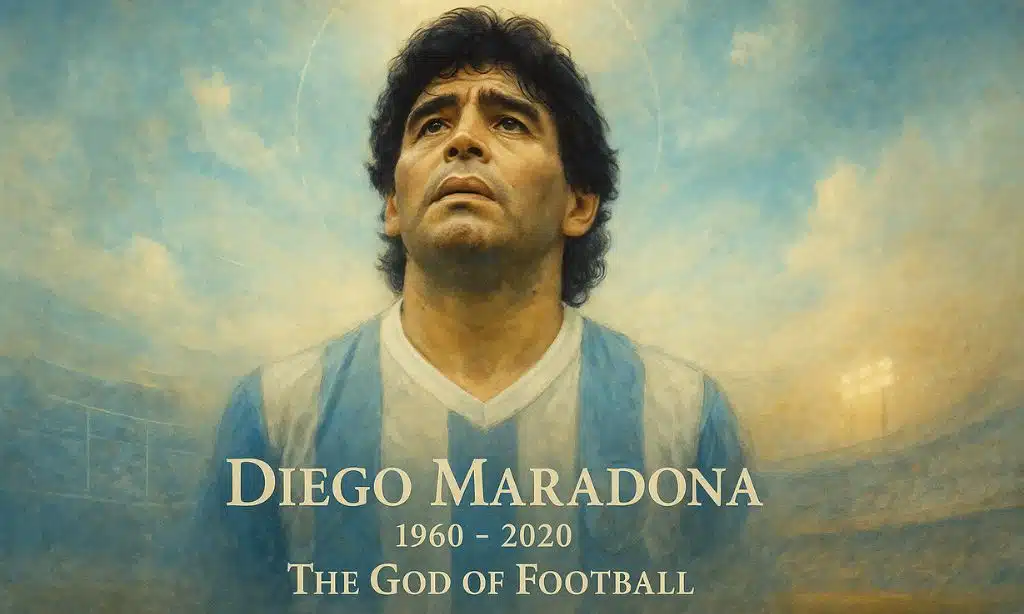
The fire that Maradona lit still burns brightly in the hearts of fans everywhere. Decades later, his name still brings out a powerful mix of joy, pride, and nostalgia, from the streets of Buenos Aires to the stands of San Paolo Stadium.
What were the moments of magic that went beyond sports?
The magic of Maradona was in moments that felt bigger than soccer. In the 1986 World Cup match against England, just four minutes after the “Hand of God,” he scored the “Goal of the Century.” He dribbled past five English players, running more than half the length of the field.
The legendary Argentinian commentator Víctor Hugo Morales screamed on air, “Cosmic kite! What planet did you come from?”
That’s what it felt like to watch him: like witnessing something not of this world. Those moments turned city walls into canvases and stadiums into cathedrals. They were flashes of pure genius that made people believe in the impossible.
How does Maradona connect with fans around the world?
Maradona’s story continues to connect with new generations. His face is a global symbol of rebellion and genius, appearing in street art and on banners from Buenos Aires to Naples.
His spirit was a huge part of Argentina’s 2022 World Cup victory. Fans and players, including Lionel Messi, constantly invoked his memory, believing his energy was with them on the field. That victory was seen by many as a tribute to him.
Through social media and timeless video clips, his legend is shared with millions who never saw him play live. The stories, the goals, and the passion keep growing, ensuring his legacy will never fade.
Takeaways
Diego Maradona was a force of nature who stirred up hope in both Argentina and Naples. His feet didn’t just win games; they carried the dreams of people who felt forgotten.
From the lively Quartieri Spagnoli to the roaring stadiums, fans saw more than a legend. They saw a flawed, brilliant neighbor who stumbled and soared just like they did.
He left behind murals, memories, and a powerful belief that even an underdog can have their day. That is the art of his belief. He moved nations simply by making every single fan feel like they mattered.
FAQs on Maradona and The Art of Belief
1. How did Diego Maradona inspire whole nations through soccer?
As a soccer legend for clubs like Boca Juniors and S.S.C. Napoli, Diego Maradona’s genius made people believe in the impossible. His leadership of the Argentina national team to win the 1986 World Cup provided a sense of pride and redemption for the country, especially after the Falklands War. He transformed teams and lifted the spirits of entire nations with his passion.
2. What is “the Hand of God” and why do people still talk about it?
“The Hand of God” was Maradona’s controversial first goal against England in the 1986 World Cup quarter-final, scored with his hand in the 51st minute of the match.
3. Why do people compare Lionel Messi and Maradona so often?
Both are Argentine icons who wore the legendary number ten shirt for the Argentina national team, but the debate intensified after Lionel Messi finally won the World Cup in 2022. For years, Maradona’s 1986 victory was the key achievement Messi had not matched. Now, fans compare their different paths to winning football’s greatest prize.
4. How did places like Quartieri Spagnoli and San Paolo Stadium shape Maradona’s story?
In Naples, the Quartieri Spagnoli is covered in murals of Maradona, celebrating him for leading S.S.C Napoli to its first-ever Serie A titles in 1987 and 1990. The city’s adoration was so complete that after his death, they officially renamed the San Paolo Stadium to Stadio Diego Armando Maradona in his honor. These places became permanent symbols of his impact on the city.
5. Did struggles like drug addiction affect how people see Maradona today?
Yes, his public battles with drug addiction are part of his complex legacy, but they don’t overshadow his triumphs or his role as a defiant hero. He challenged powerful institutions like the Catholic Church, and his life mirrored the chaotic brilliance described in Nietzsche’s “The Birth of Tragedy.” As the Spanish player Iniesta once implied, watching Maradona was witnessing pure art, flaws and all.