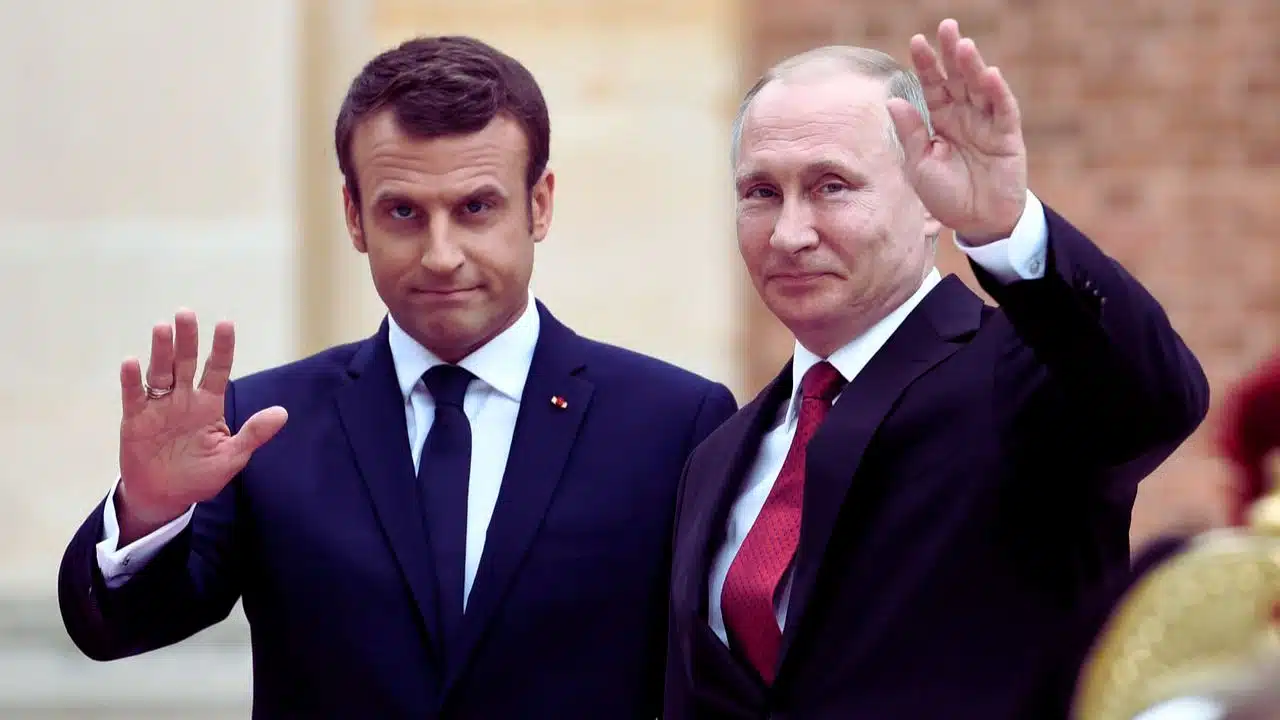
France has said no Macron-Putin talks are currently planned, despite recent public signals from Paris and Moscow suggesting openness to renewed dialogue on Ukraine.
France’s position: no call planned
French presidency officials said there has been no recent exchange between President Emmanuel Macron and President Vladimir Putin, and there is currently no plan for a telephone call.
The same message also ruled out, for now, any plan for Macron to travel to Moscow.
The clarification came after days of heightened attention to Macron’s remarks about the usefulness of re-opening a channel to Putin as diplomacy around Ukraine intensifies.
Paris has framed any potential contact as something that must not undercut Ukraine or Europe’s broader coordination, stressing transparency with Kyiv and European partners when considering any dialogue with Moscow.
French messaging in recent days has therefore moved in two steps: first, welcoming the idea of renewed contact in principle, then stressing that no concrete leader-to-leader conversation is scheduled.
What Macron said publicly
Macron indicated that Europeans and Ukrainians should help shape the framework for any renewed discussions with Moscow, rather than leaving diplomatic initiative solely to U.S.-Russia contacts.
He also argued that dialogue could become necessary and useful if ongoing efforts fail to secure a durable peace, linking any outreach to a broader European position.
Russia’s position: readiness to talk, if Paris wants it
The Kremlin signaled that Putin is ready to engage in dialogue with Macron, describing such contact as positive if there is mutual political will.
Russian messaging has emphasized that Putin remains open to explaining Russia’s position in direct conversation, while placing the next step implicitly on France’s willingness to proceed.
Russian officials have also pushed back on certain negotiating formats discussed in parallel diplomatic tracks, including suggestions of a trilateral U.S.-Russia-Ukraine format being actively prepared.
A parallel pressure point: the Vinatier case
Separate from the Ukraine diplomacy track, Moscow has referenced an offer or proposal to France concerning French researcher Laurent Vinatier, who has been imprisoned in Russia since 2024, adding another sensitive issue to the bilateral agenda.
French and Russian signals on leader-level dialogue have therefore unfolded alongside a consular and legal dispute that can complicate or accelerate contacts, depending on political calculations.
Why the mixed signals matter now
France and Russia are navigating a moment where public statements about openness to dialogue can test diplomatic space without committing to immediate leader-level negotiations.
Paris’ clarification that no call is planned suggests French officials are trying to manage expectations at home and among allies, even while keeping the option of dialogue available under defined conditions.
Moscow’s readiness message, meanwhile, allows Russia to project willingness to talk while continuing to insist that any movement depends on Western political choices and acceptable formats.
The episode also reflects how European leaders are weighing engagement tools—pressure, support for Ukraine, and selective diplomacy—at a time when multiple diplomatic tracks have been reported, including talks or contacts taking place outside Europe.
In that context, Paris’ emphasis on transparency with Kyiv signals a concern that bilateral contacts could be portrayed as side-deals unless carefully coordinated.
Key timeline and positions
The Macron-Putin channel has been intermittent since Russia’s full-scale invasion of Ukraine, with periods of frequent calls early in 2022 and long gaps afterward.
Recent signals of renewed openness came after Macron publicly discussed the utility of talking again, followed by the Kremlin indicating Putin’s readiness, and then the Élysée stating no call is scheduled.
| Date (2025) | Event | What was said / signaled |
| Dec 18–20 | Macron publicly raises the option of renewed dialogue | Macron says it may become useful to talk again and that Europe should shape the framework. |
| Dec 20–21 | Kremlin signals readiness | Kremlin spokesperson says Putin is ready for dialogue if there is mutual political will. |
| Dec 26 | France rules out imminent contact | Élysée says no recent exchange, no call planned, and no trip to Moscow planned. |
Positions table (as stated publicly)
| Issue | France (Élysée / Macron) | Russia (Kremlin) |
| Whether talks are imminent | No call planned for now; no Moscow visit planned. | Putin ready to talk if Paris wants; readiness framed as positive. |
| Conditions for any dialogue | Must be transparent with Zelensky and European partners; goal is durable peace. | Emphasizes political will and direct dialogue; resists some proposed formats. |
| Broader diplomacy context | Europe should not be sidelined in negotiation frameworks. | Signals openness while managing negotiation formats and pace. |
Final thoughts
Any shift from signals to an actual Macron-Putin call would likely be preceded by clearer coordination messages from Paris about format, objectives, and alignment with Kyiv and key European partners.
If leader-level talks remain off the table, diplomatic engagement may continue through intermediaries and parallel tracks, with both sides using public statements to shape leverage and expectations.
The treatment of the Vinatier case, and whether Moscow pursues it as a confidence-building step or bargaining issue, may also influence the political climate around any future contact.