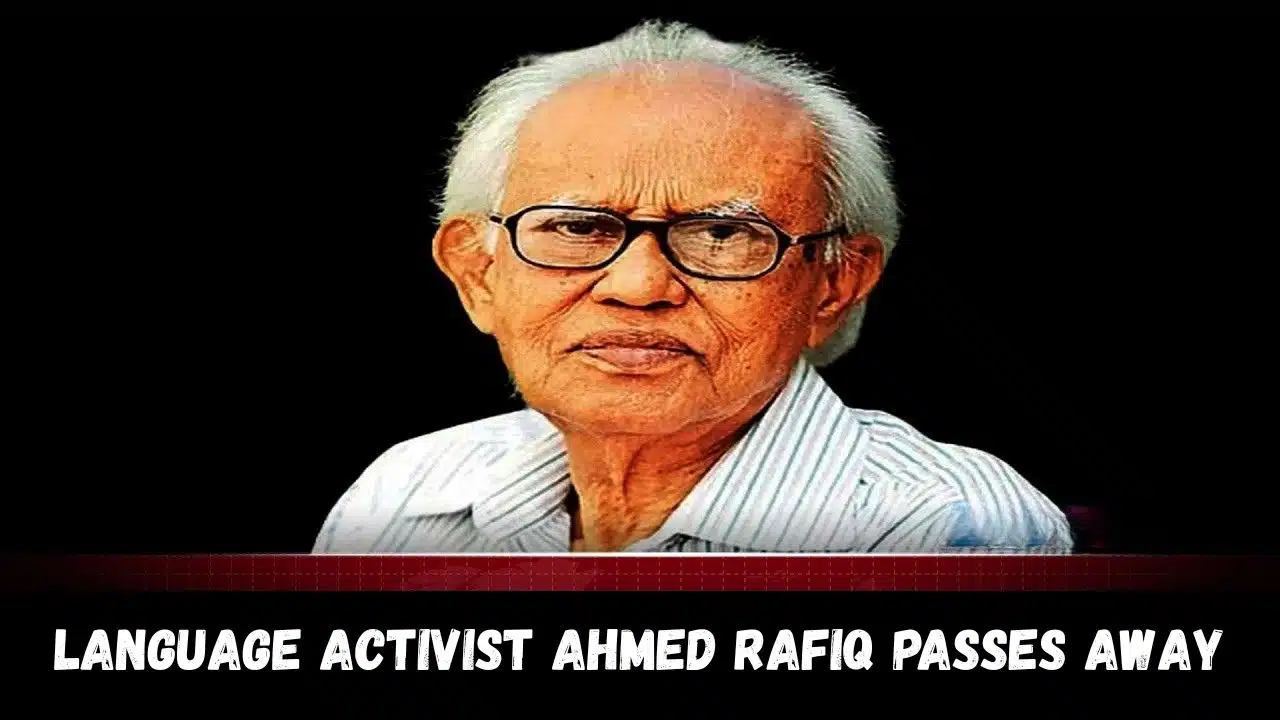
Dr. Ahmed Rafiq, a towering figure of the 1952 Language Movement, a distinguished writer, and one of Bangladesh’s most revered researchers on Rabindranath Tagore, has passed away. He died of age-related complications at BIRDEM General Hospital in Dhaka on Thursday night, October 2, 2025. He was 96.
Dr. Rafiq, who was also a physician by training, breathed his last at approximately 10:12 PM, a cultural activist present at the hospital confirmed. He had been suffering from a multitude of health issues, including chronic kidney disease, diabetes, and Parkinson’s disease, and was recently placed on life support. His death marks the departure of one of the last living architects of the movement that cemented the identity of the Bengali nation.
A Life Dedicated to Language and Literature
Born on September 12, 1929, in Shahbazpur of Brahmanbaria, Ahmed Rafiq’s life was a testament to his twin passions: the cultural identity of his people and the pursuit of knowledge. His journey as an activist began during his time as a medical student at Dhaka Medical College, a hub of student politics and intellectual ferment in the late 1940s and early 1950s.
A Pivotal Role in the 1952 Language Movement
During the historic Language Movement, which demanded Bengali be made a state language of then-Pakistan, Dr. Rafiq was a prominent student organizer. As a third-year medical student, he played a crucial role in coordinating activities and maintaining liaison between students of Dhaka Medical College, Dhaka University’s Fazlul Huq Hall, and other institutions. His activism was so significant that in 1954, an arrest warrant was issued against him, making him the only student from Dhaka Medical College to be singled out in such a manner.
In an interview with bdnews24.com in February 2023, Dr. Rafiq reflected on the core demand of the movement. “My only regret is the slogan: ‘Use Bangla at all levels,’ has not been put into action,” he said, lamenting that the goal of embedding Bengali in all spheres of national life, from higher education to the courts, remained unfulfilled.
A Scholar and Physician
Despite completing his MBBS degree in 1958, Dr. Rafiq chose a life of letters over a medical practice. His literary career began with the publication of his first book of essays, Shilpo Songskriti Jibon (Art, Culture, and Life), in 1958. This set him on a path that would see him become one of the country’s most respected intellectuals.
His scholarship was vast, but his most profound contributions were in the field of Rabindra research. He authored and edited over 100 books, with a significant portion dedicated to analyzing the life and works of Nobel laureate Rabindranath Tagore. His expertise was recognized on both sides of the Bengal border.
Table 1: Major Awards and Recognitions
| Award/Title | Year | Awarding Body |
| Bangla Academy Literary Award | 1979 | Bangla Academy |
| Ekushey Padak | 1995 | Government of Bangladesh |
| Rabindratattacharya (Tagore Scholar) | 2011 | Tagore Research Institute, Kolkata |
| Bangla Academy Rabindra Award | 2011 | Bangla Academy |
Official Responses and Tributes
As of the time of publication, official statements from the highest offices of the government were still awaited. However, the news of his death has sent ripples through the nation’s cultural and intellectual communities, with many expected to pay homage in the coming days. The Ministry of Cultural Affairs had previously provided financial assistance for his treatment in August 2025, acknowledging his immense contribution to the nation.
Expert Analysis: A Bridge Between Activism and Intellect
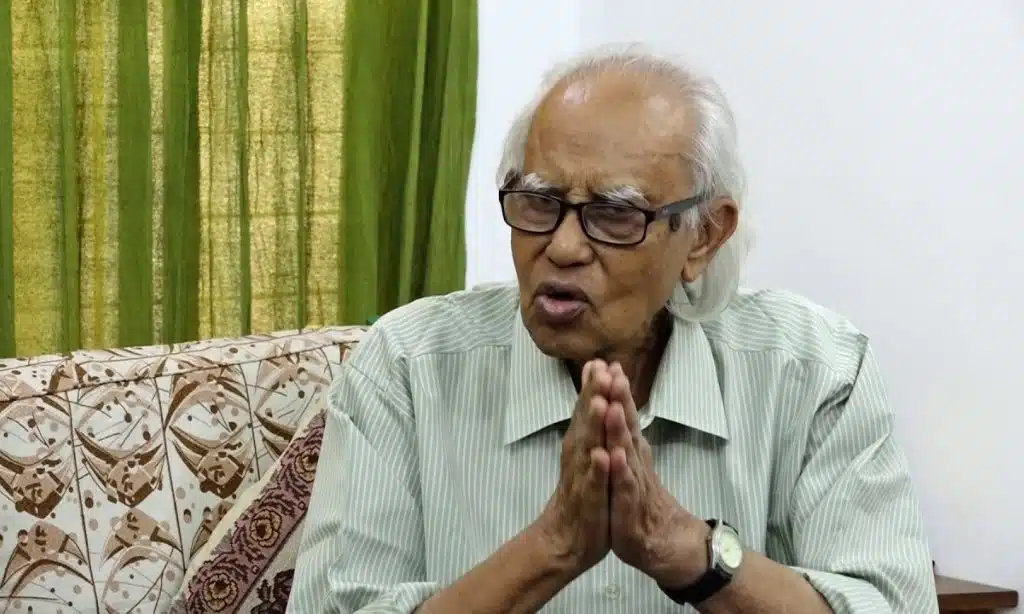
Intellectuals remember Dr. Ahmed Rafiq not just for his role in 1952 but for his lifelong commitment to the ideals that the movement represented. He was a bridge between the fiery activism of his youth and the quiet, scholarly dedication of his later years.
His work on Tagore was particularly significant. In a country where Tagore’s legacy has often been a subject of political and cultural debate, Dr. Rafiq’s research provided a scholarly foundation for understanding the poet’s universal humanism and its deep roots in Bengali culture. His receiving the ‘Rabindratattacharya’ title from the Tagore Research Institute in Kolkata is a testament to his cross-border influence and acceptance as a leading authority.
Impact on the Nation
The passing of Dr. Ahmed Rafiq is more than the loss of an individual; it is the severing of a direct link to a foundational moment in Bangladesh’s history. He was not just a participant but an intellectual guide who articulated the philosophical underpinnings of the language movement. His life’s work served as a constant reminder of the cultural and linguistic principles upon which the nation was built.
For generations of writers, researchers, and activists, he was a source of inspiration and a figure of unwavering integrity. Having lived a simple life in a rented apartment in Dhaka, childless after his wife’s passing in 2006, he was surrounded by his vast collection of books, which he considered his greatest wealth.
What to Watch Next
The nation will now look to how Dr. Ahmed Rafiq is memorialized. Plans for his burial and any national mourning are expected to be announced shortly. Cultural organizations, including the Bangla Academy, of which he was a fellow, are likely to hold commemorative events to honor his life and work. The focus will also be on the preservation and promotion of his extensive literary and research works for future generations.
Dr. Ahmed Rafiq’s life spanned a transformative period of Bengali history, and he was an active agent in shaping it. From the streets of Dhaka in 1952 to the quiet solitude of his study, he championed the Bengali language and its rich literary heritage. As the nation mourns, it also reflects on a legacy of courage, intellect, and profound love for the mother tongue. His departure leaves a void that will be difficult to fill, but his work will continue to inspire and guide the cultural conscience of Bangladesh for years to come.