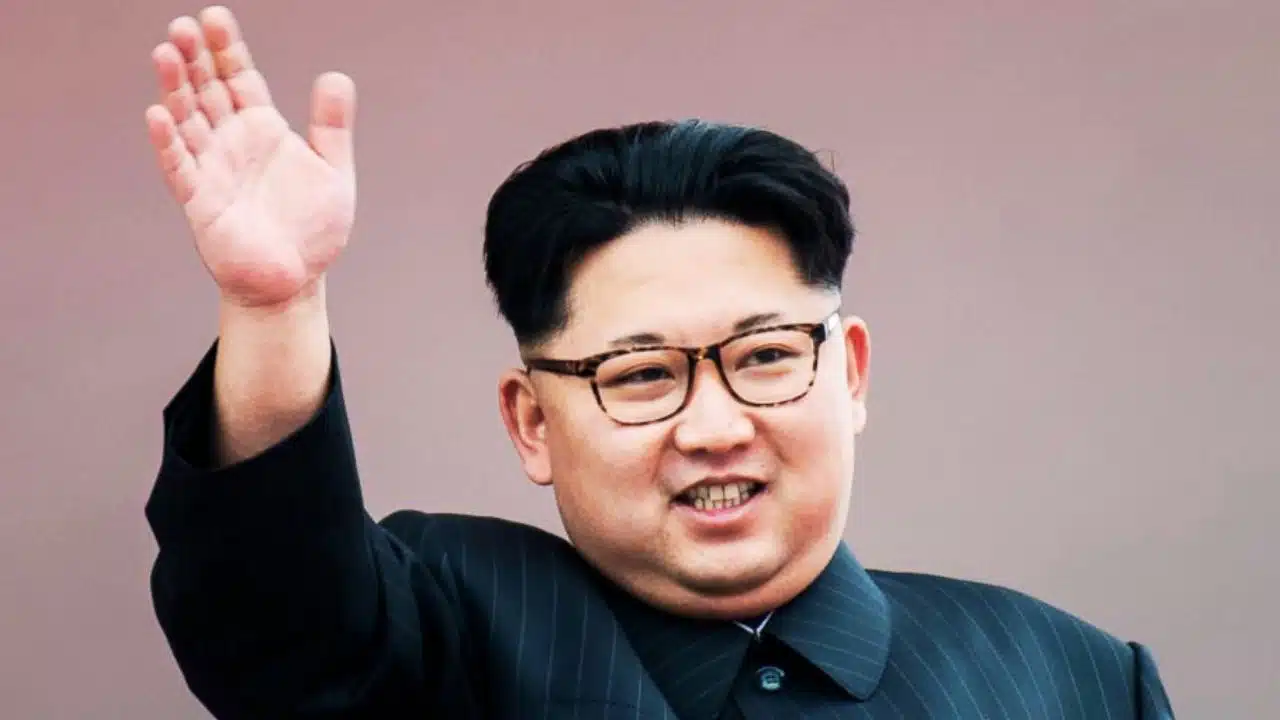
North Korean leader Kim Jong Un has begun a rare foreign trip by boarding his armored train in Pyongyang and heading toward Beijing. According to North Korea’s state-run news agency, the leader is accompanied by top aides, including Foreign Minister Choe Son Hui, and other senior officials. His arrival in the Chinese capital marks the start of an event that could reshape diplomatic alignments across Asia. The visit itself is historically significant, as it is the first time in Kim’s 14 years of rule that he is attending a major multilateral event abroad.
South Korea’s National Intelligence Service confirmed that Kim’s special train crossed into Chinese territory early Tuesday morning. He is expected to reach Beijing later in the day, where Chinese authorities have prepared tight security and high-level protocol, reportedly equivalent to the standards applied for visiting Russian President Vladimir Putin. This level of recognition demonstrates the importance Beijing is placing on Kim’s presence.
Parade Symbolizing a New Axis
The central event of Kim’s visit is China’s massive military parade at Tiananmen Square on Wednesday. The occasion is being held to commemorate the 80th anniversary of the end of World War II and China’s victory over Japanese aggression. Around 26 world leaders are attending, making it one of the largest such gatherings in recent years.
What sets this parade apart is the attendance of three leaders who are often described as challengers to the U.S.-led international order: Xi Jinping, Vladimir Putin, and Kim Jong Un. While all three have previously held bilateral discussions among themselves, this is the first time they will be present together at the same multilateral platform. Even without a formal three-way summit, the symbolism of their presence sends a powerful message about shifting global alliances.
The parade itself is expected to showcase China’s newest military hardware, including hypersonic missiles, drones, and advanced intercontinental ballistic systems. Military analysts see the display as an opportunity for Beijing to project its growing military strength and its vision of a new global order not dictated by Western powers.
Kim’s Diplomatic Priorities
For Kim Jong Un, this trip is a chance to strengthen his international standing and ease North Korea’s long-running isolation. His foreign policy in recent years has leaned heavily toward Russia. South Korean intelligence assessments suggest that North Korea has sent approximately 15,000 troops to Russia since late 2024 to support its war in Ukraine. Out of those, about 2,000 are believed to have been killed in combat. In addition, Kim has reportedly agreed to send construction workers and demining specialists to Russia’s Kursk region, with the first group of about 1,000 personnel already deployed.
By supporting Moscow militarily, Kim has been able to secure economic assistance, energy supplies, and possible access to Russian military technologies. At the same time, relations with China have cooled in recent years due to sanctions and diplomatic friction. His attendance at the Beijing parade signals an effort to mend ties with China, which remains North Korea’s largest trading partner and its most vital source of food and fuel aid.
Possible Bilateral and Trilateral Engagements
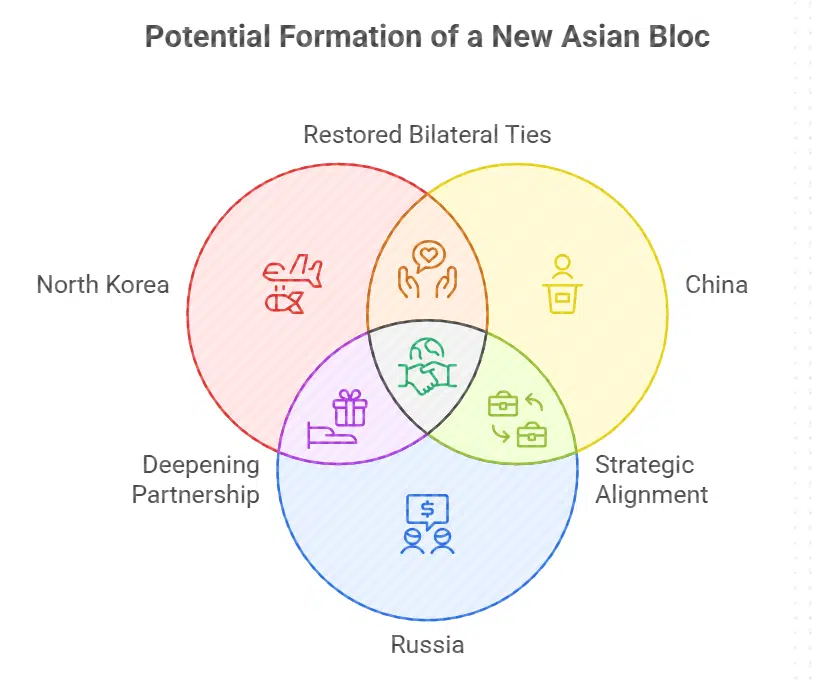
While no official trilateral summit has been confirmed, there is strong speculation that Kim may hold bilateral meetings with both Xi and Putin during his stay. South Korean lawmakers briefed by the intelligence service were told that Kim could stand alongside Xi and Putin on the main platform at Tiananmen Square during the parade. He is also expected to attend diplomatic receptions and cultural events, giving him opportunities to interact with other world leaders.
Kremlin officials have suggested that a meeting between Kim and Putin is under consideration. If it occurs, it would further deepen North Korea’s growing partnership with Russia. Analysts are also watching closely to see whether Kim secures a bilateral meeting with Xi, which would mark a major step in repairing the once-close China–North Korea relationship. A trilateral encounter with Xi and Putin would be unprecedented and could mark the beginning of a more formalized bloc opposed to U.S. policies in Asia and beyond.
North Korea’s Expanding Global Voice
Since aligning more visibly with Russia, North Korea has broadened its diplomatic activities beyond the Korean Peninsula. Its foreign ministry has issued statements on conflicts in the Middle East and on rising tensions in the Taiwan Strait, framing the country as part of a wider anti-U.S. coalition. By attending the Beijing parade, Kim aims to reinforce that North Korea is not merely a regional actor but a participant in global geopolitical debates.
This expanded engagement comes as the United States and South Korea, under President Donald Trump and President Lee Jae Myung respectively, have both expressed interest in restarting dialogue with Pyongyang. North Korea, however, has so far avoided direct engagement and instead continued to prioritize strengthening its nuclear and missile programs.
Renewed Focus on Weapons Development
Kim’s foreign visit has not slowed his country’s push for new weapons. Just before leaving for China, he visited a missile research facility where scientists are developing a new propulsion system for what state media called a “next-generation” intercontinental ballistic missile. Analysts believe this refers to a missile capable of carrying multiple nuclear warheads, designed to penetrate U.S. missile defense systems.
This development highlights North Korea’s dual strategy: while seeking international recognition and partnerships with countries like Russia and China, it is also accelerating its own defense capabilities to deter the United States and its allies.
Why This Visit Matters
Kim Jong Un’s trip to Beijing represents more than participation in a ceremonial parade. It is a calculated diplomatic move aimed at breaking out of isolation, leveraging his growing ties with Russia, and restoring his relationship with China. The convergence of Kim, Putin, and Xi in Beijing signals to the world the possibility of a more coordinated challenge to U.S. influence.
The visit also demonstrates how North Korea is maneuvering to secure its regime’s survival and influence in a rapidly changing global environment. For Kim, standing side by side with Xi and Putin at a globally televised event offers both symbolic legitimacy and practical opportunities to secure economic and military support.