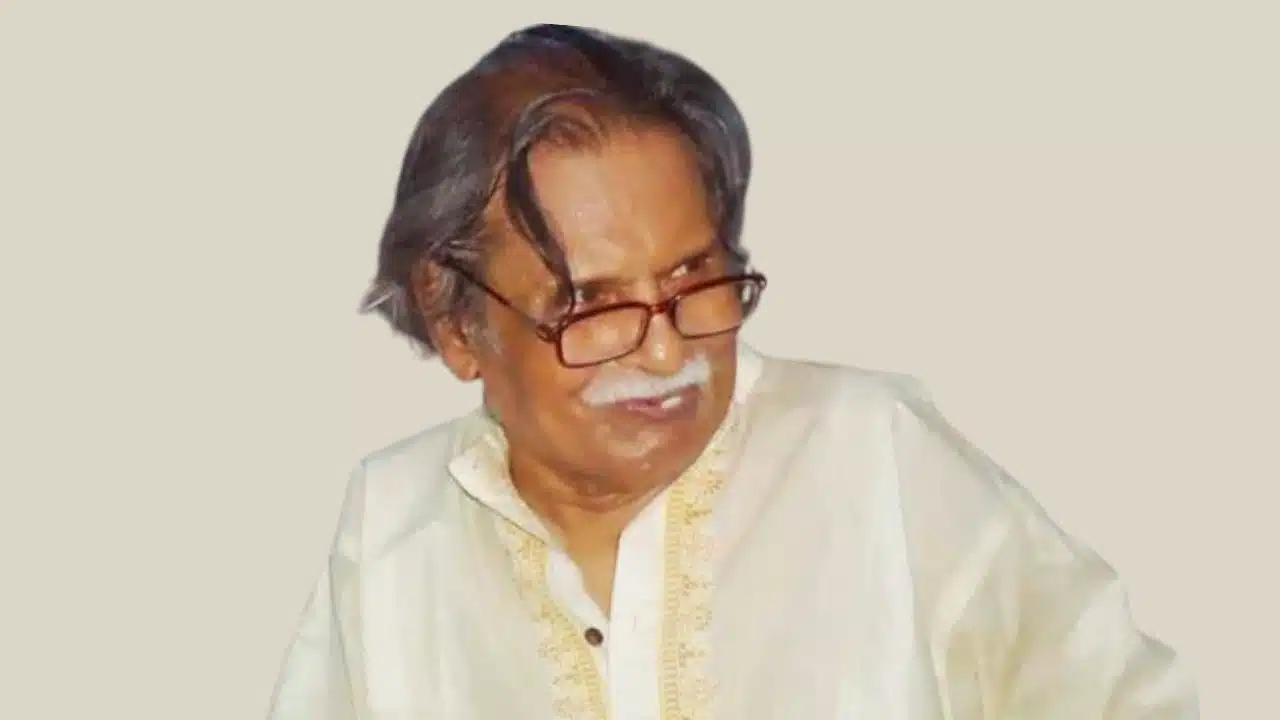
Today marks the 89th birth anniversary of renowned educationist, writer, and cultural activist Jatin Sarker (1936–2025), whose lifelong dedication to knowledge, equality, and social justice left an indelible mark on Bangladesh’s intellectual and cultural history.
Born on 18 August 1936 in Chandapara village of Netrokona, Sarker rose from humble beginnings to become one of the most respected teachers and public intellectuals of his time. He passed away just days before this milestone, on 13 August 2025, at the age of 88, leaving behind a legacy celebrated by students, scholars, and cultural workers across the country.
A Life Devoted to Education
Jatin Sarker began his teaching career in 1957 at Ashulia College, later joining the Bangla Department of Nasirabad College, Mymensingh, where he taught for nearly four decades until his retirement in 2002. Known for his clarity of thought, commitment to truth, and deep compassion for students, he earned the reputation of a “teacher of teachers.”
Even after retirement, Sarker remained an active mentor, inspiring young writers and cultural activists to think critically about history, politics, and society.
Literary Contributions of Jatin Sarker
Over his lifetime, Jatin Sarker authored more than 35 books covering history, literature, politics, and culture. His most notable works include:
-
Pakistaner Janmo-Mrityu Darshan
-
Bangladesher Kavigan
-
Bangaleer Samajtantrik Oitijya
-
Sanskritir Sangram
These writings not only offered a critical view of Bangladesh’s political journey but also traced the nation’s cultural roots and socialist traditions. His book Pakistaner Janmo-Mrityu Darshan won the Prothom Alo Book of the Year Award (2005).
Cultural and Political Engagement
Beyond the classroom and books, Jatin Sarker was a committed activist. As a Marxist intellectual, he was deeply involved with Bangladesh Udichi Shilpigoshthi, serving as its central president for two terms. He frequently spoke against social injustice, communal politics, and authoritarian rule, advocating for progressive cultural movements.
His activism, however, came at a cost. In 1976, Sarker was arrested and detained for 18 months because of his political beliefs, a period that further strengthened his resolve to stand for justice and freedom of thought.
Awards and Recognition of Jatin Sarker
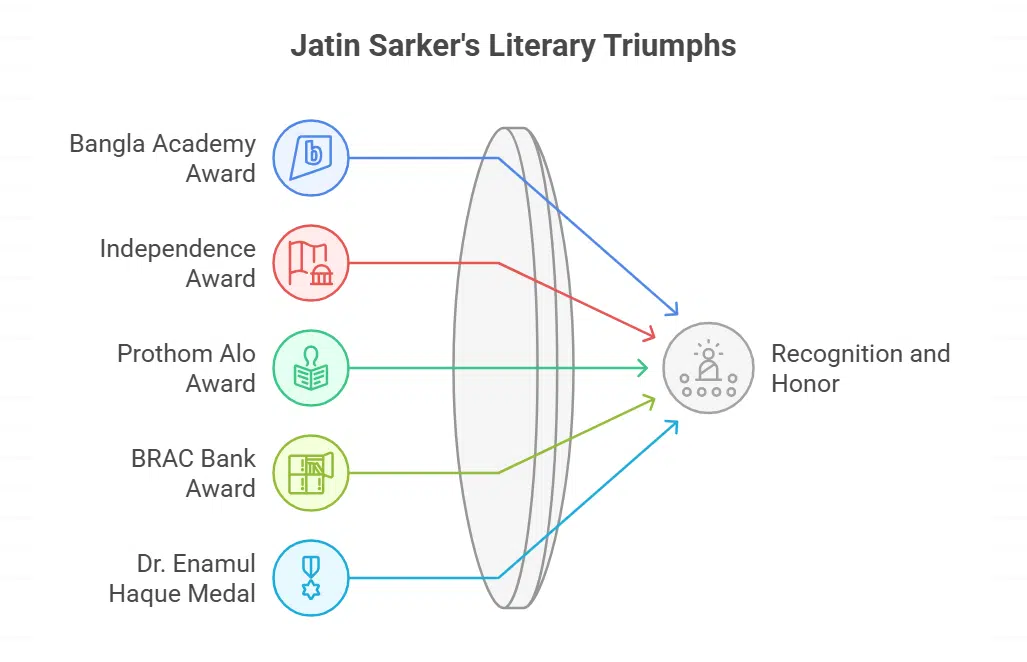
Throughout his career, Jatin Sarker received some of Bangladesh’s highest honors, including:
-
Bangla Academy Literary Award (2008)
-
Independence Award (2010) for contributions to education
-
Prothom Alo Book of the Year (2005)
-
BRAC Bank–Samakal Literary Award (2017)
-
Dr. Enamul Haque Gold Medal, Khalekdad Chowdhury Literary Award, Moniruddin Yusuf Literary Award, among others
These recognitions cemented his place as one of Bangladesh’s most influential intellectuals.
His Passing and Legacy
On 13 August 2025, only days before his 89th birthday, Jatin Sarker breathed his last at Mymensingh Medical College Hospital following complications from a femoral neck fracture. He was given a farewell with deep respect, with his body placed at the Udichi office for public homage before being taken to Netrokona for final rites.
Cultural groups, students, and admirers across the nation continue to remember him as a fearless defender of knowledge and a guiding light in the struggle for cultural identity and justice.
Remembering Him at 89
As Bangladesh marks his 89th birth anniversary, tributes have poured in from across the country. Scholars note that his writings remain relevant in 2025, particularly at a time when issues of freedom, equality, and cultural identity continue to dominate national discourse.
For many, Jatin Sarker’s birthday is not just a remembrance of a life lived but also a reminder of unfinished struggles. His students and followers say the best way to honor him is to carry forward his mission: promoting knowledge, fighting injustice, and nurturing a society rooted in human dignity and progressive thought.
In Summary
On his 89th birth anniversary, Jatin Sarker is remembered as more than an educationist—he was a cultural warrior, a fearless critic, and a guiding mentor. His voice continues to echo in Bangladesh’s classrooms, cultural organizations, and among generations inspired by his unwavering belief in justice and equality.