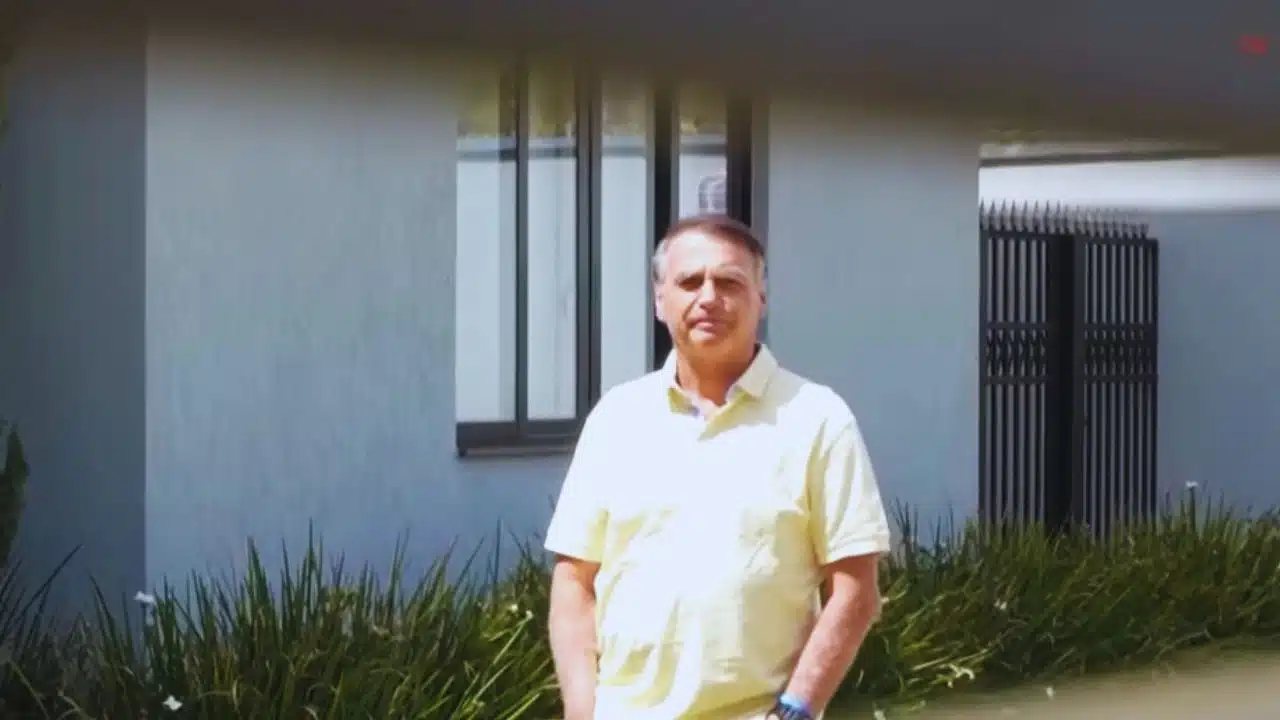
Jair Bolsonaro, Brazil’s former president, has been taken into custody after the country’s Supreme Court ruled that he posed a “concrete flight risk” while serving house arrest for his conviction in a failed coup plot. The dramatic development intensifies an already historic legal and political crisis surrounding the 70-year-old ex-leader, who was sentenced to more than 27 years in prison for attempting to overturn the 2022 presidential election results.
Bolsonaro had remained under house arrest during ongoing appeals, but newly uncovered evidence—combined with recent actions observed by authorities—prompted Justice Alexandre de Moraes to order his detention as a preventive measure. According to the ruling, Bolsonaro’s behaviour suggested he was preparing to escape before any final decision on his sentence could be issued.
The court revealed that Bolsonaro attempted to tamper with his electronic ankle monitor using a soldering iron. Although Bolsonaro insisted he never intended to remove the device, investigators said the attempted breach, combined with other intelligence, indicated a coordinated plan to flee. Officials also highlighted a political rally that Bolsonaro’s son, Senator Flávio Bolsonaro, had called outside his father’s home. The gathering, described by supporters as a prayer vigil, was interpreted by authorities as an opportunity for chaos that could allow Bolsonaro to escape unnoticed.
Justice Moraes stated that the monitoring centre provided information showing the former president’s “intention to break the electronic ankle bracelet to ensure success in his escape,” emphasising that the crowd expected outside his home could “facilitate” such an attempt. He also pointed out that Bolsonaro has a documented history of discussing potential asylum through foreign diplomatic missions. With the U.S. Embassy located just 13 kilometers from his residence in Brasília, Moraes concluded that the risk was immediate and credible.
Bolsonaro was transferred to a police station in Brasília, where he is expected to attend a custody hearing. Meanwhile, his legal team submitted a fresh request to the Supreme Court asking that he be allowed to serve his entire sentence under house arrest, arguing that he requires frequent medical treatment for recurring lung infections and other chronic health problems.
This arrest marks the latest chapter in Bolsonaro’s extensive legal troubles. He was found guilty of leading a conspiracy aimed at staying in power after losing the 2022 election to Luiz Inácio Lula da Silva. Supreme Court justices determined that Bolsonaro actively supported a plan that included potential assassinations of Lula, Vice President Geraldo Alckmin, and even Justice Moraes himself—who is overseeing his trial. The plot ultimately collapsed after the armed forces’ top commanders refused to support it, allowing Lula’s peaceful inauguration on 1 January 2023.
Yet, instability followed shortly after. On 8 January 2023, thousands of Bolsonaro supporters stormed Brazil’s Congress, the Supreme Court, and the presidential palace, seeking to overturn Lula’s victory. Over 1,500 people were arrested. The court later ruled that Bolsonaro had incited the rioters and intended to use the resulting turmoil to justify military intervention to reinstall him in power.
Bolsonaro’s legal fallout has been severe. Alongside his 27-year prison sentence, he has been banned from holding public office until 2060—effectively ending any chance of a political comeback. His lawyers denounced the ruling as “absurdly excessive,” while Bolsonaro himself labelled the case a “witch hunt,” claiming it is designed to prevent him from running in future elections.
International repercussions have also emerged. Bolsonaro’s prosecution and conviction have drawn strong reactions from foreign political figures, including U.S. President Donald Trump, who has publicly criticised Brazil’s judiciary. Trump responded by imposing a 50% tariff on Brazilian imports, escalating diplomatic tensions between the two countries.
For now, Bolsonaro’s fate lies with the courts as they weigh both his appeal and the new request for leniency due to his health. His arrest signals that the judiciary intends to enforce strict control over his movements, given the severity of his conviction and concerns he may try to seek asylum abroad. The next steps in the legal process—and Bolsonaro’s custody hearing—will determine whether he remains detained or returns to house arrest under stricter surveillance.