Ever wonder how robots are suddenly showing up everywhere, from the operating room to the local farm?
It feels like one day we’re just reading about this stuff in sci-fi, and the next, it’s a reality. It can be tough to keep up with which companies are truly leading the pack.
You’re probably looking for a simple way to spot the next big thing before everyone else does.
That’s where Israel’s tech scene comes in. It’s buzzing with robotics startups that are completely rethinking how things get done. For example, one company has built a robotic platform that helps surgeons perform incredibly delicate eye surgeries, which is a massive leap forward for doctors and patients.
I’ve put together a list of 10 Israeli robotics startups to watch in 2025 and beyond. These are the companies that stand out for their clever ideas in automation, artificial intelligence, and industry-changing applications. Whether you’re interested in robotics investment or just love seeing cool new inventions, you’ll find some amazing stories here.
Let’s take a look together!
Key Takeaways
- ForSight Robotics (founded 2020, Tel Aviv) is a pioneer in ophthalmic surgery, creating the ORYOM platform to perform procedures like cataract surgery with robotic precision.
- MOV.AI (established 2016) provides a “robot brain” with its Robotics Engine platform, making it easier for factories to deploy autonomous mobile robots without needing a team of programmers.
- Arbe Robotics (founded 2015, Tel Aviv) is now a publicly traded company (NASDAQ: ARBE) that developed a high-resolution 4D imaging radar, a critical sensor for improving the safety of self-driving cars.
- Tevel Aerobotics Technologies uses AI-powered flying robots to pick fruit, helping farms solve labor shortages and reduce food waste.
- NakAI Robotics Ltd. (launched 2021, Holon) builds autonomous robots that clean ship hulls to remove marine buildup, which can improve a ship’s fuel efficiency by over 10%.
ForSight Robotics
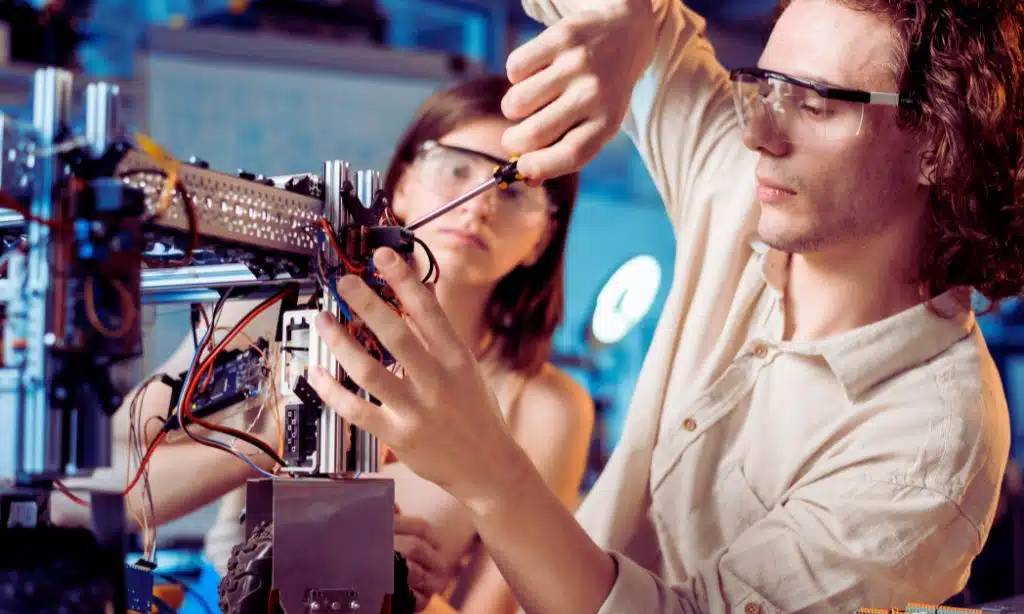
ForSight Robotics is using artificial intelligence and robotics to make eye surgery more precise and accessible. Their technology gives surgeons a steady hand, helping them perform complex procedures more safely.
Revolutionizing eye surgery with precise robotic platforms
Founded in 2020 in Tel Aviv, this startup has already made huge waves. The company built ORYOM, the world’s first robotic platform for ophthalmic surgery, designed to handle widespread diseases like cataracts, which affect over 20 million people in the U.S. alone.
The system uses advanced robotics and AI to achieve a new level of precision, automating the delicate maneuvers required in eye surgery. This helps surgeons work more efficiently and safely, opening the door to better care for millions.
Their groundbreaking work has attracted serious attention. In 2022, ForSight Robotics secured $55 million in Series A funding led by the Adani Group and other existing investors like Eclipse Ventures. This support is helping them bring world-class surgical treatment to more communities around the globe.
MOV. AI
MOV.AI creates the software that powers smart mobile robots, and it’s completely changing the game for automation in warehouses and factories. Let’s see how they do it.
Developing operating systems for autonomous mobile robots
Established in 2016, MOV.AI is a Tel Aviv-based company that developed the Robotics Engine Platform. Think of it as the brain for autonomous mobile robots (AMRs), allowing them to operate smoothly in industrial environments.
The platform provides everything needed for deployment, from mapping and navigation to integrating with other factory systems. One of its standout features is its compatibility with the open-source Robot Operating System (ROS), which gives developers incredible flexibility.
With backing from investors like NFX and Viola Ventures, MOV.AI is making automation accessible. Companies no longer need a dedicated team of robotics experts to get their AMRs up and running. This software handles the complex parts behind the scenes, allowing businesses to improve efficiency without the usual headaches.
Arbe Robotics
Arbe Robotics builds next-generation radar sensors for self-driving cars. Their technology helps vehicles “see” their surroundings in high definition, which is a critical step toward making autonomous driving safe and reliable.
Innovating 4D imaging radar for autonomous vehicles
Founded in 2015, this Tel Aviv company has become a key player in the automotive industry. Arbe developed a 4D imaging radar that provides ultra-high resolution, allowing it to distinguish between stationary objects like a guardrail and moving objects like a pedestrian, even in bad weather.
This advanced perception is a huge leap over traditional radar systems. Their technology helps vehicles make better decisions in real-time to prevent accidents, a challenge that has been a major hurdle for autonomous driving.
Arbe is no longer just a startup, it went public in 2021 and now trades on the Nasdaq under the ticker ARBE. With backing from over thirty investors, including 360 Capital Partners, its radar is seen as a vital component for achieving truly safe, hands-free driving.
Tevel Aerobotics Technologies
Tevel Aerobotics creates flying robots that can pick ripe fruit right from the tree. These autonomous drones use AI and computer vision to make harvesting faster and more efficient for farmers.
Pioneering flying autonomous robots for fruit harvesting
Founded in 2016, Tevel has developed a unique solution to a global problem, farm labor shortages. Their Flying Autonomous Robots (FARs) are equipped with intelligent cameras that can identify the type, ripeness, and quality of fruit before gently picking it with a suction-powered arm.
These robots work in groves of apples, oranges, avocados, and more, helping farmers manage the harvest with a smaller crew. This is a game-changer during peak season when finding enough workers is often a struggle.
BladeRanger Ltd.
BladeRanger Ltd. uses specialized drones to clean solar panels, ensuring they operate at peak efficiency. Their technology combines powerful cleaning with smart data analytics to boost renewable energy production.
Utilizing cleaning drones and analytics for solar panel efficiency
Founded in 2008, BladeRanger is a veteran in the robotics space, operating out of Ramat Gan, Israel. The company’s PLEA (Photovoltaic Loitering Electrical Apparatus) drones are designed to clean solar farms with incredible skill, using high-pressure jets to remove dirt and grime.
But it’s not just about cleaning. The drones also collect data, allowing solar farm operators to monitor the health of their panels and track energy output. This combination of robotic maintenance and analytics helps maximize every bit of sunlight.
By automating the cleaning process, BladeRanger reduces the need for manual labor, which can be both costly and dangerous on large solar installations. It’s a smart way to make green energy even greener and more efficient.
Airobotics
Airobotics has developed fully automated “drone-in-a-box” systems that collect and analyze aerial data for industrial sites. Their technology makes complex inspections and monitoring safer and more efficient.
Delivering fully automated drone solutions for data capture
Founded in 2014, this company has created the Optimus System, a robotic platform that allows drones to operate 24/7 without a human pilot. The system includes an automated base station that handles drone launch, recovery, and battery swapping.
This technology is a perfect fit for demanding industries like mining, construction, and public safety. For example, a mine can use the system to automatically survey stockpiles and monitor site security, all without putting employees in potentially hazardous areas.
In a major milestone, Airobotics was acquired by Ondas Holdings (NASDAQ: ONDS) in 2022. The move integrated Airobotics’ autonomous drone technology with Ondas’ wireless communication systems, creating a powerful combination for industrial data solutions.
Skyline Robotics
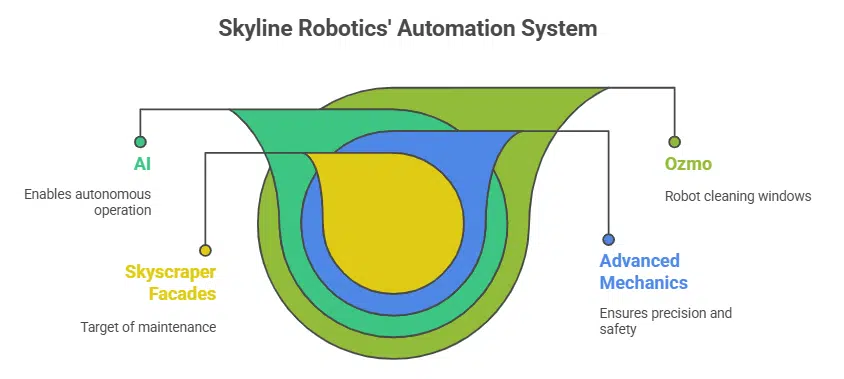
Skyline Robotics is taking on the dangerous job of cleaning skyscraper windows with a little help from a robot named Ozmo. Their system uses AI and advanced mechanics to automate facade maintenance on the world’s tallest buildings.
Automating building facade maintenance and window cleaning
Founded in 2017, this Tel Aviv startup is making building maintenance safer and more efficient. Their flagship robot, Ozmo, combines artificial intelligence, machine learning, and computer vision to clean windows on high-rise buildings.
Ozmo uses LIDAR to scan a building’s surface and create a precise cleaning path. Its robotic arms, which are modeled after human arms, can handle the entire job without putting a single person at risk on scaffolding high above the ground.
The company has already landed major partnerships, including with real estate giant SL Green Realty Corp. in New York City. Experts estimate that Ozmo can work up to three times faster than traditional cleaning crews, saving building owners time and money while dramatically improving worker safety.
RobotAI
RobotAI is giving industrial robots the gift of sight. Their software uses 3D computer vision to help machines identify and interact with objects with far greater accuracy, streamlining work on the factory floor.
Enhancing 3D vision perception for industrial robotics
Founded in 2018 in Haifa, RobotAI has developed a clever way for machines to “see” better. Their software uses a standard RGB camera, the kind you might find in a smartphone, to deliver precise 3D object detection and tracking.
This approach avoids the need for expensive and complex 3D sensors, making advanced automation more affordable for businesses. The technology is perfect for tasks like:
- Bin picking: Robots can identify and grab specific parts from a mixed container.
- Quality control: Machines can spot tiny defects on a fast-moving assembly line.
- Sorting: Automated systems can quickly sort different products for packaging.
Backed by BIND Open Innovation Platform and other investors, RobotAI is making industrial robots smarter and more adaptable. Their software helps reduce errors and increase productivity in manufacturing and logistics.
NakAI Robotics Ltd.
NakAI Robotics is bringing smart automation to the maritime industry with robots that clean and inspect ship hulls. This technology helps shipping companies save fuel and reduce their environmental footprint.
Advancing autonomous hull cleaning and inspection systems
Launched in 2021, this Holon-based company has created a robot that works like an autonomous underwater vehicle. It attaches to a ship’s hull and removes biofouling, the buildup of marine life like algae and barnacles that creates drag.
A cleaner hull means less resistance in the water. According to maritime studies, removing biofouling can improve a ship’s fuel efficiency by more than 10%, a significant saving for an industry that consumes millions of tons of fuel annually.
The process is much faster and safer than sending human divers to do the job. By automating hull maintenance, NakAI Robotics is helping the shipping industry become more cost-effective and environmentally friendly one vessel at a time.
Hyper Food Robotics Ltd.
Hyper Food Robotics is building the kitchen of the future. They design fully autonomous restaurants inside shipping containers, using robots to prepare fast food with incredible speed and consistency.
Perfecting robotic systems for fast-food automation
Founded in 2019, this Tel Aviv company has created a “restaurant-in-a-box” concept. Their 40-foot container kitchens are equipped with robots that can manage every step of the food preparation process, from cooking to assembly.
The system is powered by sensors and the Internet of Things (IoT) to ensure every order is made perfectly, day or night, with almost no human intervention. This solution directly addresses major challenges in the food service industry, including labor shortages and the need for consistent quality.
A single automated kitchen can operate 24/7, making it a highly efficient solution for fast-food brands looking to expand their footprint or streamline their operations. It’s a glimpse into a future where your next burger might be made entirely by bots.
Emerging Trends in Israeli Robotics
The innovation in Israel doesn’t stop with just ten companies. Powerful trends in AI, healthcare, and agriculture are pushing the entire industry forward and creating exciting new possibilities.
Integration of AI in robotics for adaptive solutions
Artificial intelligence is the secret sauce for many of these startups. Companies are using machine learning and computer vision to create robots that can learn and adapt to their surroundings in real time.
For example, RGo Robotics has developed a perception engine that acts as the “eyes and brain” for mobile robots, allowing them to navigate complex and dynamic environments. This kind of AI-driven intelligence is what allows a robot to tell the difference between a person and a forklift in a busy warehouse.
These adaptive solutions are making robots safer, smarter, and more useful than ever before.
Expansion into agricultural, medical, and industrial sectors
Israeli robotics is branching out into nearly every major industry. In agriculture, companies like DailyRobotics are developing strawberry harvesters to automate one of the most labor-intensive crops.
In the medical field, PathKeeper Surgical is providing surgeons with a real-time GPS-like system for spinal procedures, improving accuracy and patient outcomes. And in warehouses, Caja Robotics has created goods-to-person systems that make fulfilling e-commerce orders faster and more efficient.
From construction sites to laundry services, these startups are finding new ways to apply robotics to solve real-world problems.
Takeaways
Israeli robotics startups, from ForSight Robotics to MOV.AI, are a great example of how bright ideas can create world-changing technology. These companies are building machines that see better, move smarter, and handle jobs from picking fruit to cleaning ships.
Artificial intelligence is woven into their work, making robots more adaptable in our factories, farms, and hospitals.
Investors are definitely paying attention as these inventions create new opportunities across the globe. So, don’t be surprised if the next big leap in automation comes from a small tech lab in Israel.
FAQs about Israeli Robotics Startups
1. What makes Israeli robotics startups stand out in 2025 and beyond?
Israeli robotics startups shine because they draw talent from elite military tech units and top universities like the Technion, turning complex challenges into practical solutions. This sharp focus is why the number of active robotics companies grew 26% between 2017 and 2023, easily outpacing the broader tech sector. Their ability to rapidly innovate keeps them at the forefront of the industry.
2. Which fields do these top 10 Israeli robotics companies focus on?
These companies target high-impact areas, including healthcare, where ForSight Robotics is developing platforms for eye surgery, and agriculture, where Beewise uses robotic beehives to protect bee colonies. In logistics, a key player is Fabric, which has raised over $300 million for its automated micro-fulfillment centers that speed up online deliveries.
3. How are these startups changing the global robotics scene?
They are setting new global standards for innovation, which is proven by major acquisitions like Medtronic buying surgical pioneer Mazor Robotics.
4. Why should investors keep an eye on Israeli robotics firms now?
Investors should pay attention because the ecosystem is exceptionally well-funded and supported, with Israeli tech companies raising $10.1 billion since late 2023. Furthermore, government organizations like the Israel Innovation Authority provide grants that help new startups commercialize their ideas more quickly.