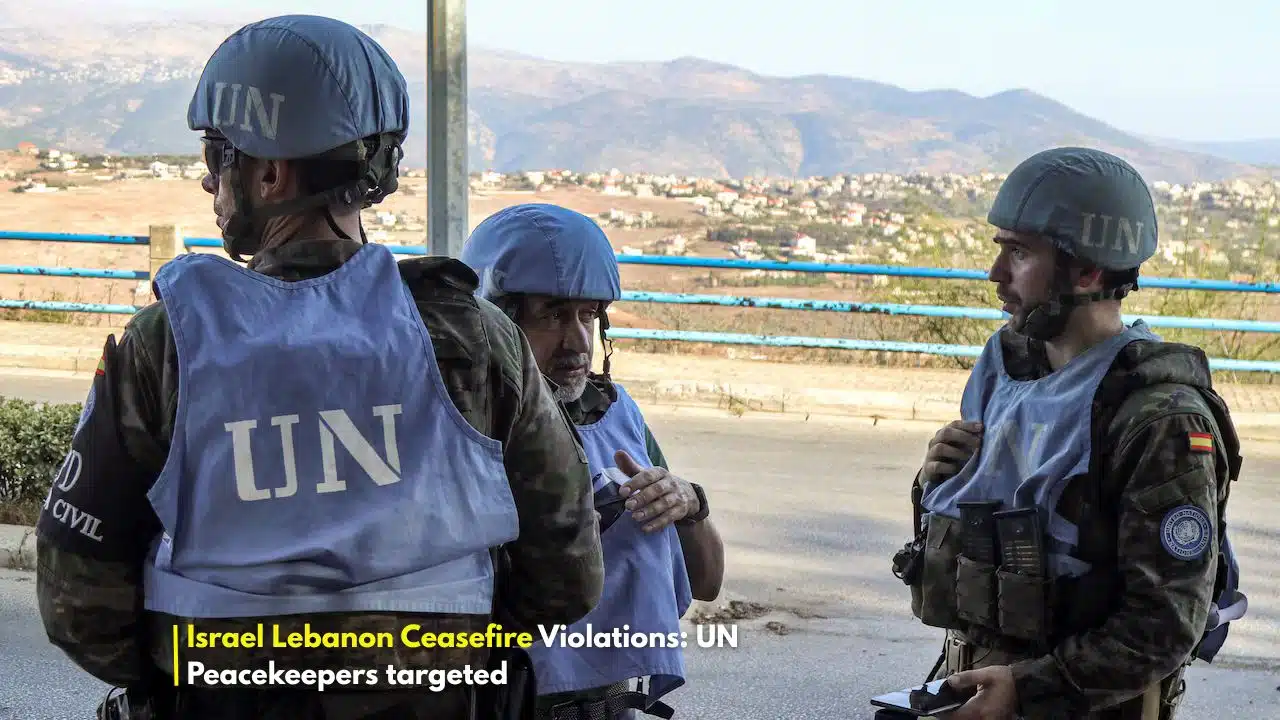
Tensions along the fragile Blue Line spiked dangerously on Sunday after the United Nations Interim Force in Lebanon (UNIFIL) reported that an Israeli Merkava tank opened fire on a peacekeeping patrol. The incident, which occurred near a disputed Israeli outpost inside Lebanese territory, marks the most significant flare-up between the Israel Defense Forces (IDF) and the UN mission since the November 2024 ceasefire, threatening to unravel the year-old cessation of hostilities.
Quick Take: The Latest Escalation
- The Incident: On Sunday, Nov. 16, 2025, an IDF tank fired heavy machine-gun rounds that landed approximately five meters from UN peacekeepers on foot patrol in southern Lebanon.
- The Response: The IDF cited “poor weather” and “misidentification,” claiming soldiers fired warning shots at what they believed were suspects. UNIFIL has rejected this, labeling it a “serious violation” of Resolution 1701.
- The Context: Despite a ceasefire signed in November 2024, Israeli troops remain in five strategic positions inside Lebanon, missing a February 2025 withdrawal deadline.
- Safety Status: No peacekeepers were injured; the patrol withdrew safely after a 30-minute standoff.
A ‘Close Call’ in the Buffer Zone
According to a terse statement released by the UN mission early Monday, the incident took place in the Al-Hamames area, a sector where friction has remained high despite the official end of the major Israel-Hezbollah war last year.
Peacekeepers were conducting a routine foot patrol near an Israeli military position that remains on the Lebanese side of the 2000 Blue Line withdrawal boundary. UNIFIL reports state that an IDF Merkava tank trained its weapons on the group and fired bursts of heavy machine-gun fire. The rounds impacted just meters from the “Blue Helmets,” forcing them to dive for cover in the rough terrain.
“The peacekeepers took cover and immediately contacted the Israeli forces through UNIFIL liaison channels to halt the firing,” the UNIFIL statement read. “They were able to withdraw safely about 30 minutes later after the tank retreated.”
IDF Response: ‘Weather and Misidentification’
The Israeli military issued a counter-statement late Sunday, acknowledging the firing but denying malicious intent. The IDF said troops had spotted “two suspects” in the area and, hampered by “poor weather conditions” and low visibility, fired warning shots to distance them.
“The IDF emphasizes that no deliberate fire was directed toward UNIFIL soldiers, and the matter is being handled through official liaison channels,” the military spokesperson said. The army added that upon review, the “suspects” were confirmed to be UN personnel.
This explanation has done little to quell diplomatic anger. Sources within the mission, speaking on condition of anonymity, noted that UN movements are coordinated in advance and that the patrol was clearly marked.
A Fragile Ceasefire Under Strain
This shooting is not an isolated event but a symptom of a stalled peace process. The conflict, which escalated into a ground invasion in October 2024, nominally ended with a U.S.-brokered ceasefire agreement on November 27, 2024.
Under the terms of that deal, Israel was scheduled to complete a full withdrawal from southern Lebanon by February 18, 2025. However, nine months past that deadline, the IDF maintains a physical presence at five “tactical nodes” south of the Litani River. Israel argues these positions are necessary to prevent Hezbollah—whose leadership was decimated in late 2024—from rebuilding its infrastructure near the border.
By The Numbers: The Cost of Stability
The UN mission faces an increasingly precarious environment.
| Metric | Statistic | Source/Date |
| Current Troop Level | ~10,000 Peacekeepers | UNIFIL (Nov 2025) |
| Contributing Nations | 48 Countries | UNIFIL (Nov 2025) |
| 2024 War Death Toll | 4,047+ (Lebanon) | Lebanon Ministry of Health (Ref. Jan 2025) |
| Ceasefire Violations | 98+ (IDF presence outside auth. zones) | UN Sec-Gen Report (Aug 2025) |
The specter of October 2024 still hangs over the mission. During that period, five peacekeepers (from Indonesia and Sri Lanka) were injured when IDF tanks fired at observation towers and cameras at the Naqoura headquarters. Those attacks drew condemnation from contributing nations including Italy, France, and Spain. The recurrence of tank fire near peacekeepers a year later suggests that the operational rules of engagement remain dangerously loose.
International Reaction
Diplomatic channels are already active. The Italian government, a major contributor to the force, is expected to summon the Israeli ambassador for clarification, echoing similar moves made during the 2024 crisis.
France, which holds the pen on Lebanon at the UN Security Council, has previously warned that the safety of peacekeepers is “non-negotiable.” In a statement following a similar (though non-kinetic) confrontation in August 2025, the French Foreign Ministry reiterated that “Resolution 1701 must be respected by all parties, which includes the full withdrawal of Israeli forces from Lebanese soil.”
Jean-Pierre Lacroix, the UN Under-Secretary-General for Peace Operations, has repeatedly urged both sides to utilize the Tripartite mechanism (meetings between IDF, Lebanese Army, and UNIFIL) to resolve disputes rather than resorting to warning shots.
What to Watch Next
- The Diplomatic Fallout: Will the UN Security Council convene an emergency session regarding the continued Israeli presence past the February deadline?
- Hezbollah’s Move: While significantly weakened, remnant Hezbollah cells often use such violations to justify their own sporadic rocket fire.
- Troop Contributor Pressure: Countries like Indonesia and Ireland may pressure the UN to harden its posture or demand better security guarantees from Israel.
Conclusion
Sunday’s incident in Al-Hamames serves as a stark reminder that a signed piece of paper is not the same as peace. With Israeli tanks still on Lebanese soil and “weather” cited as a reason for near-miss engagements, the Blue Line remains one of the most volatile frontiers in the Middle East.