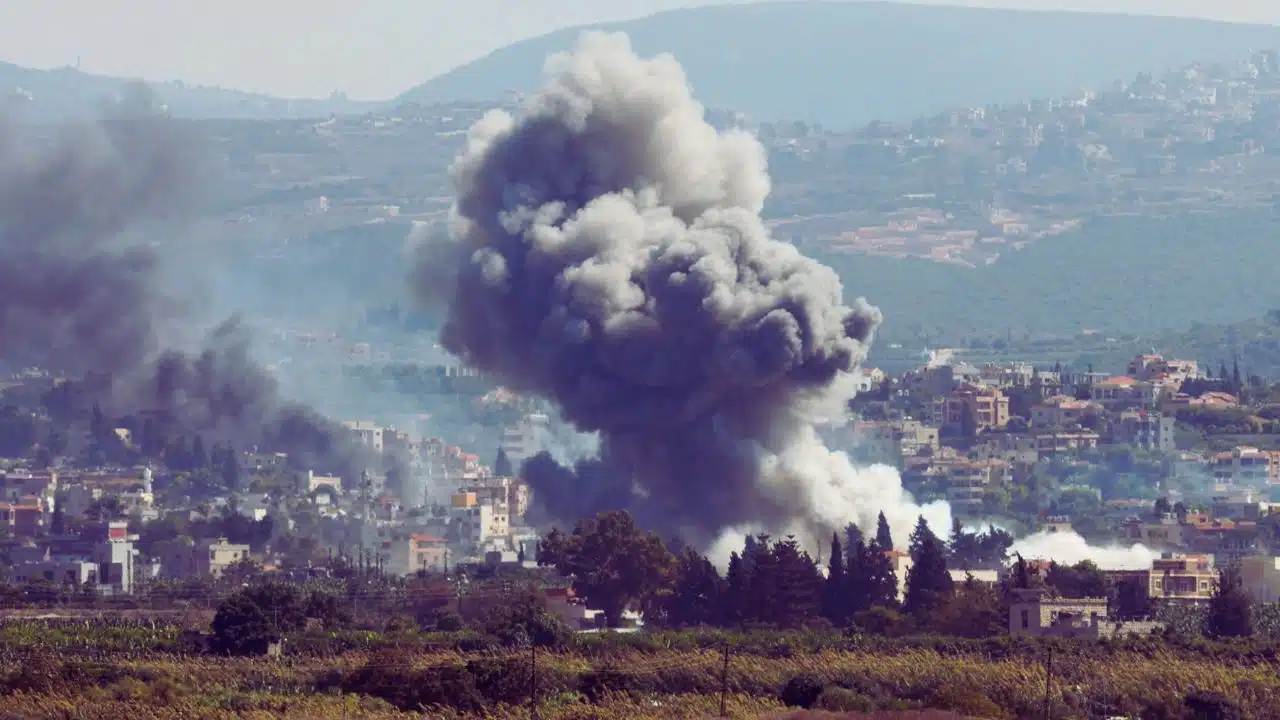
On Thursday, the Israeli military carried out a new wave of air-strikes in several towns in southern Lebanon from the Mediterranean coast to areas near the Lebanese-Israeli border. These strikes followed evacuation warnings to residents in towns such as Aita al-Jabal, Tayr Debba and Al-Tayyiba. According to the IDF, the targets were military infrastructure used by Hezbollah, including weapons storage facilities embedded within civilian-populated areas. Lebanon’s health ministry reported that one person was wounded in the strikes.
The military said the action was taken because Hezbollah has been rebuilding its capabilities despite a U.S.-brokered ceasefire agreement established nearly a year ago. Because of this alleged re-armament, the Israeli government indicated it would not tolerate Hezbollah restoring its strength and threatening Israeli security.
Evacuations, Target Zones and Operational Details
Prior to executing the strikes, the Israeli military issued warnings to residents in the identified villages to move a safe distance away from structures marked as military targets. The buildings were described as having been constructed or repurposed by Hezbollah inside civilian hubs. The locations targeted ranged from as close as 4 km to about 24 km north of the Israeli border, reflecting the proximity of military-civilian overlap in the region. Smoke plumes were visible and evacuations were undertaken by Lebanese civil-defence teams in cooperation with state authorities.
The strikes were unusual for their intensity and for the fact that evacuation notices had been sent. This suggests a more deliberate targeting strategy aimed at limiting civilian casualties while addressing what Israel sees as a looming threat.
The Ceasefire and Disarmament Pressure
A ceasefire between Israel and Hezbollah came into effect in November 2024 after more than a year of active combat. Among its terms were the disarmament of non-state armed groups in southern Lebanon, deployment of the Lebanese army in that region, and withdrawal of Israeli troops from some contested positions. However, Israel contends that Hezbollah has failed to comply fully by continuing to rebuild arms caches and infrastructure.
Simultaneously, the Lebanese government, led by Prime Minister Nawaf Salam, held a cabinet session in Beirut to review a plan by the Lebanese military to disarm Hezbollah and other armed non-state groups. Information Minister Paul Morcos said the government commended the army’s progress despite what it described as continuing Israeli hostilities. President Joseph Aoun criticised the air-strikes as undermining any genuine negotiation between Lebanon and Israel.
Civilian Impact and Regional Risks
While the military claims precision targeting, the use of military assets within civilian areas raises significant humanitarian concerns. The evacuation notices reflect the acute risk for local residents, many of whom have had to leave homes, schools and neighbourhoods in recent years due to the conflict. Even a single wounded person underscores the threat to civilian life and livelihoods, especially in a region recovering from war.
The combination of ongoing strikes, the presence of Hezbollah infrastructure in populated zones, and the Lebanese army’s efforts to assert control creates a volatile mix. There is a growing risk that a miscalculation or a retaliatory strike could lead to a broader escalation. The fragile nature of the ceasefire adds to the uncertainty.
What to Monitor Going Forward
Key dynamics to watch include:
-
How rapidly the Lebanese army advances in removing non-state armed infrastructure in southern Lebanon.
-
Whether Hezbollah changes its posture—either scaling back military activities or doubling down on resistance.
-
The durability of the ceasefire, especially if Israeli strikes increase in frequency or scope.
-
The humanitarian outcomes for residents in border towns: displacement, damage to property, disruption to daily life.
The recent Israeli air-strikes across southern Lebanon represent a marked escalation in the standoff between Israel and Hezbollah. By explicitly targeting areas near the border and asserting that Hezbollah is rebuilding its military capacity, Israel is signalling a lower tolerance for the group’s activity. At the same time, Lebanon is under pressure to control armed groups within its territory while criticising Israel’s aggressive tactics. For civilians in southern Lebanon, the cycle of warnings and strikes means persistent instability and risk. In this high-stakes environment, the path to peace remains fragile and the margin for error small.