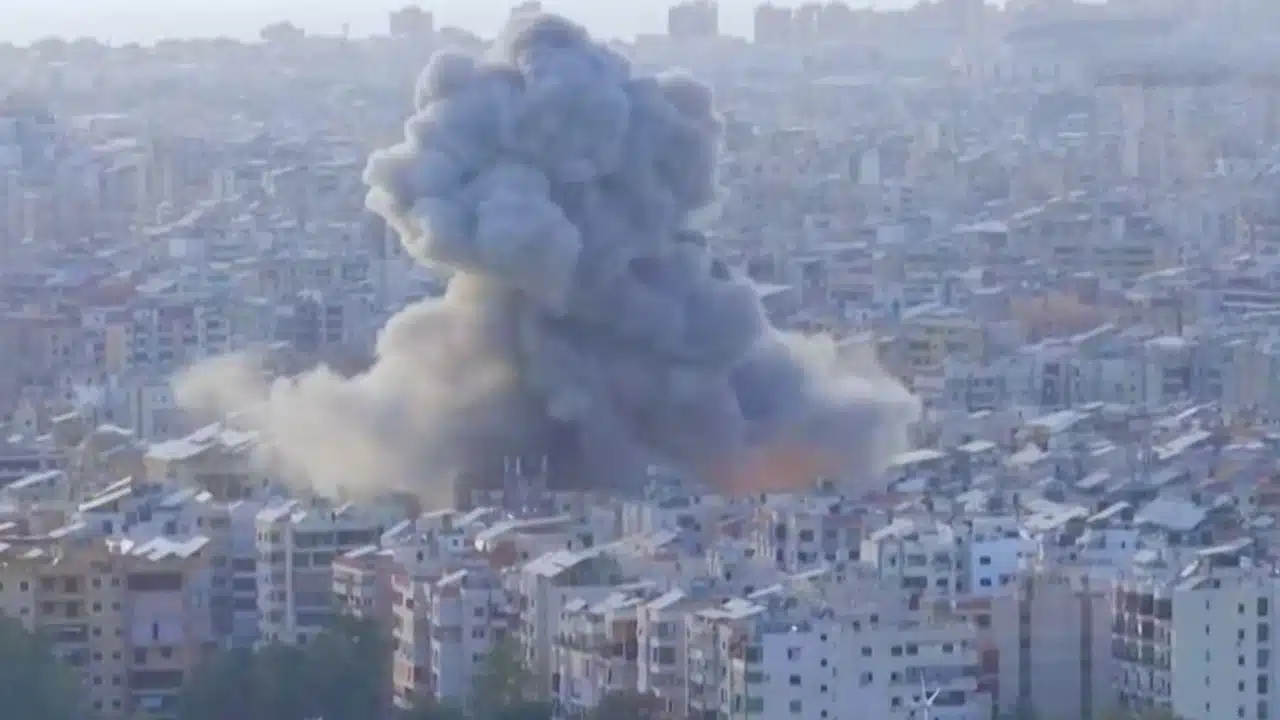
On Sunday, Israel conducted an air strike targeting Beirut’s southern suburbs, specifically a building in the Hadath neighborhood that Israeli officials said was being used by the Iranian-backed militant group Hezbollah.
According to a statement from the Israel Defense Forces (IDF), the target was a facility where “precision-guided missiles” were being stored—posing what they described as a “direct threat to the State of Israel and its civilians.” The military said it took precautions by issuing an evacuation order to nearby residents before carrying out the strike.
Live video streamed by Reuters captured dramatic scenes of thick, black smoke billowing from the hit structure hours after the Israeli army warned residents to vacate the area. Witnesses reported hearing a series of loud explosions that shook nearby neighborhoods.
Lebanon’s Civil Defence agency later confirmed that no casualties were recorded in the immediate aftermath. Emergency responders managed to extinguish the resulting fire, although the building suffered extensive damage.
Lebanon’s Leadership Condemns the Attack, Urges International Intervention
In response to the air strike, Lebanese President Joseph Aoun issued a strong condemnation. In a statement posted on social media platform X (formerly Twitter), the Lebanese Presidency accused Israel of violating the terms of the ceasefire agreement brokered in November 2024.
The United States and France, as guarantors of the cessation of hostilities agreement, must assume their responsibilities and compel Israel to immediately cease its attacks,” the statement read.
President Aoun warned that continued Israeli aggression would “expose the region to real threats to its security and stability,” calling on international powers to act swiftly to prevent a dangerous escalation.
Foreign Minister Abdallah Bou Habib also spoke out, labeling the airstrike “an unacceptable violation of Lebanon’s sovereignty and a direct challenge to international diplomatic efforts to maintain peace.
Ceasefire Strains Under Daily Violations
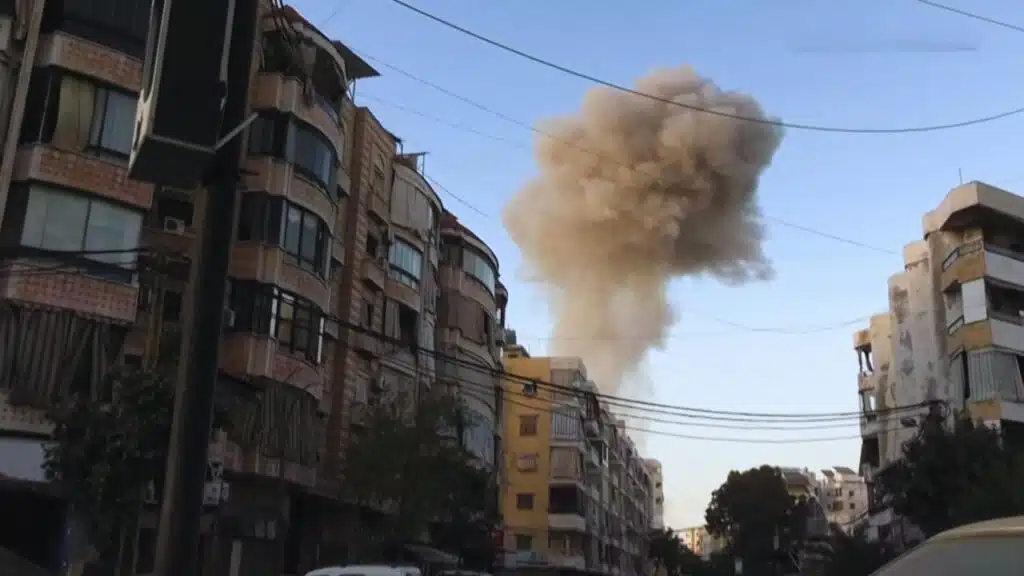
The latest strike marks the first time in nearly a month that Israel has targeted Beirut’s Dahieh district, a stronghold of Hezbollah, although smaller strikes and surveillance missions have continued almost daily elsewhere.
The ceasefire, negotiated with the help of the United States and France, officially ended months of cross-border conflict between Israel and Hezbollah. However, tensions have remained high, with both sides accusing each other of breaching the fragile truce.
Western officials speaking anonymously to BBC and Reuters indicated that Hezbollah has largely adhered to the ceasefire’s conditions, avoiding major provocations.
In contrast, they noted that Israel has conducted numerous airstrikes and drone surveillance missions inside Lebanese territory, actions that Lebanese officials and Hezbollah have criticized as violations of the agreement.
An Israeli government spokesperson, however, defended the country’s actions, emphasizing that the military retains the right to neutralize imminent threats. We will not allow Hezbollah to use southern Beirut—or any part of Lebanon—as a safe haven for terror operations,” the spokesperson said.
Netanyahu’s Office Defends Military Action
In a separate statement, Israeli Prime Minister Benjamin Netanyahu’s office reiterated Israel’s stance on Hezbollah, describing the group as a growing security threat.
“Israel will not allow Hezbollah to grow stronger,” the Prime Minister’s Office said.
“The Dahiyeh neighborhood in Beirut will not serve as a sanctuary for terrorists. Any infrastructure storing weapons for attacks against Israel will be considered a legitimate target.”
The Israeli military said that storing missiles in civilian areas violates not only the ceasefire understandings but also international humanitarian law, which prohibits the use of civilians as human shields.
Regional and International Reactions
The international community has expressed growing alarm at the potential unraveling of the truce.
Jeanine Hennis-Plasschaert, the United Nations Special Coordinator for Lebanon, took to X to voice concern, writing that the latest Israeli strike “generated panic and fear of renewed violence among those desperate for a return to normalcy.
She urged all parties to “halt any actions that could further undermine the cessation of hostilities understanding,” warning that escalating tensions could plunge the region into another cycle of conflict.
France’s Foreign Ministry issued a carefully worded statement, calling for “all sides to exercise the utmost restraint” and reiterating that “the peace and security of civilians must be the absolute priority.
Meanwhile, U.S. Secretary of State Antony Blinken said in a press briefing that Washington was “closely monitoring” the situation and urged adherence to the ceasefire deal but stopped short of directly criticizing Israel.
Background: Hezbollah’s Role and Israel’s Security Concerns
Hezbollah, formed during the Israeli occupation of Lebanon in the 1980s, remains a dominant military and political force in Lebanon. Backed by Iran, the group maintains an arsenal that Israeli intelligence estimates includes over 150,000 rockets and missiles.
Israel views Hezbollah as one of its most formidable threats, capable of launching widespread attacks on Israeli cities. The group’s military buildup, particularly its acquisition of more accurate, longer-range missiles, has been a major source of concern for Israeli policymakers.
Over the past year, cross-border skirmishes between Israel and Hezbollah escalated significantly, culminating in the full-blown confrontation that the November ceasefire sought to contain.
Despite the agreement, sporadic incidents—including Israeli air strikes and Hezbollah threats to retaliate—have kept tensions simmering. Analysts warn that one miscalculation by either side could easily trigger a larger war.
Beirut Residents React with Fear and Uncertainty
Sunday’s strike sowed new fear among residents of Beirut, especially those living in the southern suburbs. Many recalled the devastating 2006 Lebanon War between Israel and Hezbollah, which left thousands dead and vast areas of Beirut in ruins.
“I thought we were past this nightmare,” said Mariam Khalil, a Hadath resident, speaking to Al Jazeera. Now we are living in fear again, every day.”
Business owners in the area reported closing their shops early amid rumors of further attacks. Some families packed essential belongings, preparing for the possibility of evacuation.
With political dialogue stalled and international diplomacy struggling to keep pace with unfolding events, ordinary Lebanese citizens are once again caught in the crossfire of broader regional hostilities.
The Information is Collected from BBC and NYTimes.