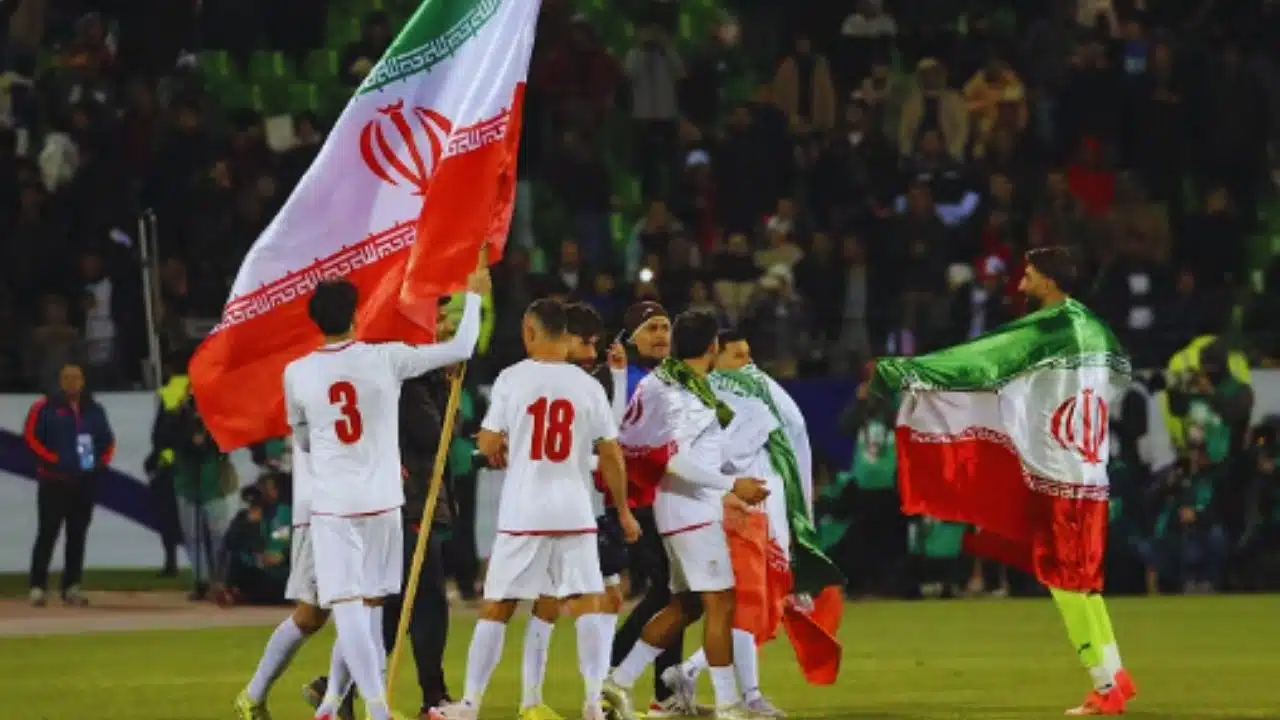
The Iranian Football Association (FFIRI) has declared that it will not attend the upcoming draw for the 2026 FIFA World Cup, which is set to take place in Washington, D.C. The announcement came after several members of the Iranian delegation were denied visas by the United States, a situation Iran says undermines the spirit of global sporting events.
FFIRI spokesman Amir Mahdi Alavi confirmed on state television that the federation has officially notified FIFA of its decision. He emphasized that Iran views the restrictions as political interference rather than a sports-related matter. According to Alavi, the refusal of entry for key officials made participation impossible, and the federation cannot accept conditions it considers discriminatory or unfair. His remarks stressed that world football events are meant to bring nations together, not amplify political disputes.
Reports inside Iran indicate that among those denied entry is Mehdi Taj, the president of FFIRI. Iranian media say Taj’s visa rejection was a major factor behind the federation’s decision because the president traditionally plays an essential role in representing the national association at official FIFA events. The refusal has been perceived in Tehran as both disrespectful and contradictory to the international principles that govern major sports tournaments.
The visa problem arises under the existing U.S. travel restrictions placed on Iranian citizens. Though the United States allows certain exceptions for sports delegations participating in global events, the process remains selective, and obtaining approval is not guaranteed. U.S.–Iran relations have been strained for more than four decades, ever since the two countries cut diplomatic ties in 1980, and this tension often affects mobility and exchanges even in non-political fields such as sports.
Visa Restrictions and Their Impact on Supporters and Federation Delegates
The current U.S. travel policy means not only Iranian officials but also Iranian fans could be barred from entering the country for the World Cup. As it stands, regular Iranian supporters would not be allowed to travel to the United States to watch their team compete in the 2026 tournament. Fans from Haiti—another nation subject to similar limitations—face the same issue, raising concerns that entire fanbases may be excluded from attending one of the world’s largest sporting spectacles.
Despite these restrictions, the rules do make specific allowances for athletes, coaches, and necessary support personnel. According to the U.S. presidential executive order governing the travel ban, individuals who are directly involved in major global sports events can be exempted. This includes national team players and coaching staff, meaning Iran’s squad will still be able to enter the United States to participate in their matches. However, this exception does not extend automatically to federation officials or ordinary fans.
The Iranian federation argues that this inconsistency places them at a disadvantage. While the players may be able to compete, federation leaders and technical administrators—who are essential for logistical, strategic, and diplomatic duties—could be blocked from traveling. Iranian officials say this undermines equal participation and weakens the integrity of the event, since all national football associations should have the same ability to send their leadership teams.
Additionally, Iranian commentators have expressed frustration that the visa process is vulnerable to political shifts. They warn that if visa decisions continue to be influenced by political considerations, other major sporting events could face similar obstacles. Several Iranian sports analysts insist that FIFA must intervene to ensure that host nations provide reliable and neutral access for all participating countries. Without this assurance, they argue, conflicts between political policies and the global nature of sports will continue to escalate.
Iran’s World Cup History and the Road Ahead for 2026
The 2026 tournament will mark Iran’s fourth consecutive World Cup appearance and the country’s seventh overall. Over the years, Team Melli has earned a reputation for disciplined defense and strong teamwork, even though it has yet to reach the knockout stage. Iran’s appearances have produced memorable matches, including two high-profile encounters with the United States. In the 1998 World Cup in France, Iran achieved a historic 2–1 victory over the U.S., a result celebrated widely back home. In 2022, during the group stage in Qatar, the United States won 1–0, evening the rivalry on the world stage.
The 2026 World Cup will be jointly hosted by the United States, Canada, and Mexico, with the opening match scheduled for June 11. The final is set to take place at the New York–New Jersey Stadium on July 19. The expansion of the tournament to 48 teams has generated excitement globally, but Iran’s latest dispute introduces uncertainty into its participation. While Iran has not threatened to withdraw from the competition entirely, the federation’s decision to skip the draw raises questions about the country’s next steps if the visa situation remains unresolved.
Sports observers say the upcoming months will be crucial. FIFA is expected to engage with U.S. authorities and the Iranian federation to find a resolution that allows all teams to be treated fairly. Diplomatic factors may play a significant role, and the outcome could influence how future World Cups are managed when political tensions intersect with international sporting commitments.
Despite the challenges, Iran’s national team is preparing for the tournament with optimism, focusing on training and maintaining continuity. Fans inside Iran hope that, even if they cannot travel, their support will be felt throughout the competition. But for now, the uncertainty surrounding visas and diplomatic considerations remains a major storyline leading into the 2026 World Cup.