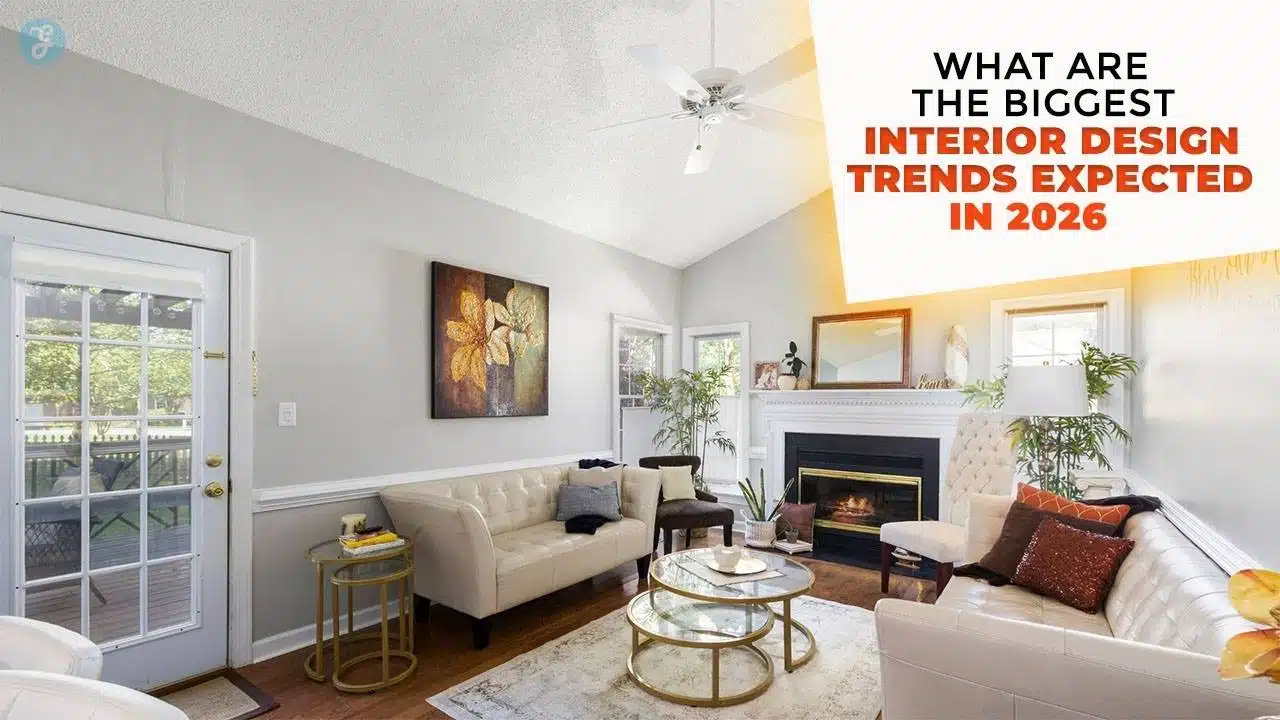
Interior design trends 2026 point to a clear shift in how people want to live. Instead of showpiece rooms, homeowners now ask for spaces that feel personal, practical, and emotionally steady. Color, texture, technology, and layout all move in that direction.
At the same time, the biggest interior design trends 2026 do not rely on radical reinvention. They refine ideas that have been building for several years: sustainability, wellness, warmth, and individuality. The result is a more grounded, human-scale vision of the future of interior design.
Why Interior Design Trends 2026 Matter for Homes and Cities
From trend fatigue to intentional living
Design trends once turned over quickly. A color or style appeared on social media, saturated feeds, then vanished. By 2026, that cycle feels tired. People live with the consequences of those trends in real rooms, and many are reluctant to repeat the pattern of fast furniture and disposable decor.
Interior design trends 2026 respond to this fatigue. They emphasize long-term value rather than instant novelty. Materials age well. Color palettes feel rooted in nature. Furniture invites use, not just admiration. The goal is not to chase a look, but to support a lifestyle that prioritizes comfort, calm, and connection.
How research is reading the mood of homeowners
Trend forecasts now blend data from paint brands, design platforms, retailers, and professional bodies. Their findings align around a few themes. Homeowners want spaces that:
-
feel warm rather than clinical
-
support mental and physical well-being
-
lighten their environmental impact
-
reflect individual stories instead of generic staging
Interior design trends 2026, therefore, act as a barometer of broader cultural priorities. They highlight how households negotiate work, rest, care, and community under one roof.
Color First: The New Palettes Driving Interior Design Trends 2026
Earthy vibrancy and warm khaki as the new neutrals
One of the clearest home decor trends 2026 appears in color. The cool gray era is firmly over. In its place, designers describe “earthy vibrancy”: palettes built around ochres, olive greens, muddy blues, clay tones, and rich browns. These hues reference soil, bark, stone, and dusk skies. They bring depth but stay soothing rather than loud.
Within that story, a single shade stands out: warm khaki. This soft, slightly browned neutral now replaces stark white and flat greige on many shortlists. It reads as calm and heritage-inspired, and it works with both bright accents and muted schemes. On walls, warm khaki wraps a room in a gentle, diffused glow, especially when combined with natural wood and textured fabrics.
Warm neutrals, in general, grow more complex. Instead of pure beige, tones skew toward biscuit, latte, sand, and mushroom. The effect is layered and comforting. These colors make a natural base for interior design trends 2026 because they partner easily with both modern and traditional pieces.
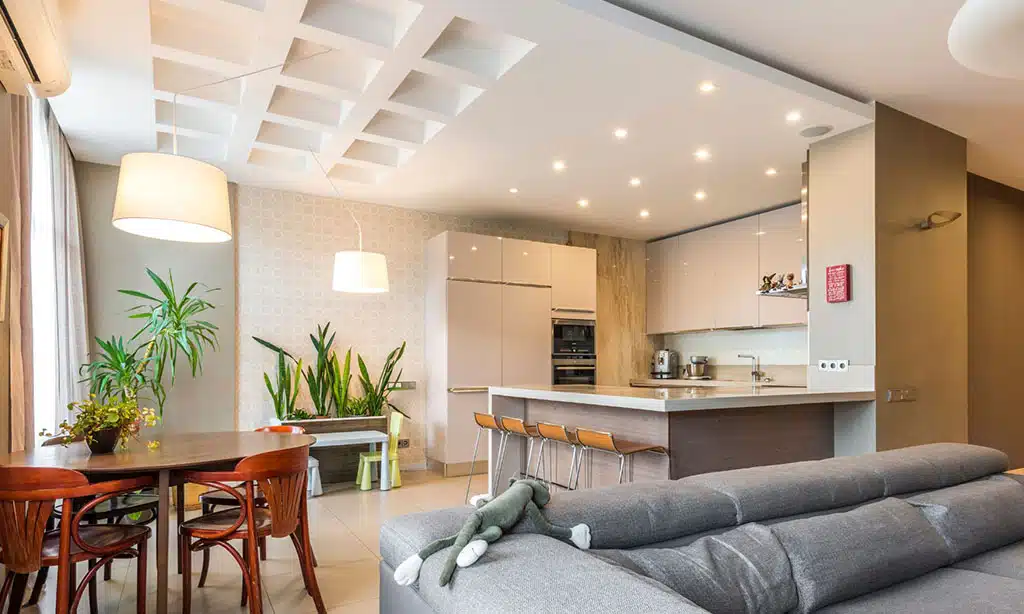
Teals, plums, and mellow reds: saturated yet calming statements
Alongside those grounded neutrals, richer hues emerge as key players. Deep teals, stormy blue-greens and jade-like tones appear in living rooms, kitchens and bedrooms. They give a sense of depth and quiet drama without feeling flashy.
Plum, mulberry and wine tones also gain ground. Used on upholstery, cabinetry or accent walls, they offer a more nuanced alternative to primary reds. These colors sit well with brass, walnut and stone, reinforcing the move toward “grown-up” saturation.
Soft, mellow reds and dusty terracottas continue the story. They echo handmade tiles, clay vessels and sun-baked brick. Paired with off-white plaster, linen and warm woods, they support the broader mood of gentle vibrancy rather than high-contrast graphics.
Taken together, these palettes show that color trends linked to interior design trends 2026 favor emotion. They aim to soothe, center and ground, rather than to shout.
Texture, Shape, and Tactility: How Home Decor Trends 2026 Feel
Curved furniture, soft sculptural forms, and cocooning silhouettes
The future of interior design feels softer in silhouette. Curved sofas, rounded armchairs and coffee tables with softened corners are now standard in many new collections. Arches appear in joinery, doorways and shelving. Even rugs echo gently organic shapes.
These curves do more than follow a fad. They change how people move through a room. Without sharp corners, spaces encourage lingering and conversation. Low, deep seating creates a cocooning effect, ideal for reading, streaming or napping. Sculptural lighting and ceramics build on this, adding organic lines overhead and on surfaces.
Mixed materials, from stone and timber to metal and glass
Another strong trend within interior design trends 2026 is material mixing. Rather than matching sets, designers pair stone with timber, metal with linen, glass with rattan. A kitchen can combine veined stone worktops, warm wood cabinetry, and brushed metal hardware, grounded by a clay-colored tile floor.
This layered approach adds depth without clutter. It lets homeowners balance industrial and organic elements, polished and raw finishes. The key is contrast with harmony: glossy against matte, cool against warm, smooth against tactile.
Tactile fabrics and layered lighting as everyday luxury
Tactility is central. Bouclé, chenille, chunky knits, wool blends, and textured weaves remain popular, but they now share space with cottons, linens, and velvets that feel sturdy and long-lasting. Instead of overt logos, quiet luxury relies on how a fabric feels to the hand.
Lighting follows the same logic. Layered schemes—ambient, task, and accent—replace single overhead fixtures. Wall lights, table lamps, and small spotlights work together to wash walls, highlight artwork, and create pools of intimacy. The aim is not drama for its own sake, but everyday livability. Light becomes another way to regulate mood at home.
Sustainability at the Core of Interior Design Trends 2026
Circular design, upcycling, and low-impact materials
Sustainability is no longer a separate category; it sits at the core of interior design trends 2026. Circular design principles gain real traction. More brands highlight furniture designed for disassembly, recycled content and repairable components. Homeowners increasingly ask about provenance and lifecycle, not just price and look.
Natural materials such as solid wood, cork, wool, hemp, and stone gain value because they age gracefully and can often be renewed rather than replaced. Recycled glass, reclaimed timber, and low-VOC finishes move from niche to mainstream discussion. Cabinets get refaced instead of being discarded. Tiles and sanitaryware are chosen for durability rather than short-term fashion.
Local craftsmanship, vintage, and antiques over fast furniture
At the same time, interest in vintage, antiques, and locally crafted pieces grows. Pre-loved furniture offers character and reduces environmental impact. One-off finds—a mid-century chair, a carved chest, hand-thrown ceramics—anchor rooms that might otherwise feel too generic.
Artisanship plays a role here. Hand-woven textiles, small-batch pottery, metalwork and woodwork connect interiors to local culture and skills. This focus on craft supports a slower consumption model. Instead of replacing a whole room overnight, homeowners build collections over time. That mindset aligns with both sustainability goals and the broader desire for personality-rich spaces.
Wellness and Biophilic Design: Homes as Restorative Environments
Biophilic design: daylight, views and planting as essentials
Biophilic design—integrating nature into interiors—is not new, but interior design trends 2026 give it sharper definition. It now moves beyond potted plants. Designers pay more attention to:
-
maximizing natural light with larger openings and translucent treatments
-
framing views of trees, sky or gardens where possible
-
using natural materials that show grain, texture and variation
-
choosing colors drawn from foliage, stone and water
Green walls, window-side seating and indoor gardens appear in both homes and apartments, scaled to context. Even in compact spaces, a mix of leafy plants, herbs and small trees softens the boundary between inside and out.
Cozy wellness spaces, quiet zones and spa-like bathrooms
Wellness also shapes layout. Small “retreat” corners emerge in living rooms and bedrooms: a comfortable chair, low light, a shelf of books or records, perhaps a diffuser or small fountain. These are not decorative vignettes; they function as decompression points.
Bathrooms lean into spa cues. Soft lighting, tactile tiles, benches in showers, warm metallics and generous storage all contribute to a calmer experience. Natural stone or stone-effect finishes, timber details and neutral palettes reinforce the sense of sanctuary.
Across the home, acoustic comfort becomes another key measure. Rugs, curtains, upholstery and acoustic panels help absorb noise, which is especially important in open-plan or urban settings.
Quiet Luxury Meets Maximalism: Two Sides of Home Decor Trends 2026
Quiet luxury and subtle sophistication: fewer pieces, better quality
Quiet luxury remains influential. In this approach, rooms rely on proportion, quality and restraint rather than obvious status symbols. Surfaces stay largely clutter-free, but not sterile. A limited number of well-made pieces carry the space: a solid wood dining table, a beautifully upholstered sofa, a hand-knotted rug.
Colors lean warm and neutral. Hardware and lighting favor understated finishes like brushed brass, bronzed metal or patinated nickel. Joinery details—slim frames, shadow gaps, inset handles—whisper rather than shout. The overall effect feels composed and enduring, resisting the urge to redecorate every season.
Personality-first eclecticism and curated maximalist rooms
Running in parallel, however, maximalism regains confidence. Designers describe 2026 interiors as more expressive, layered, and story-driven. Pattern mixing, bold color, and curated collections come back, but in a thoughtful way.
Walls might hold gallery-style art clusters. Shelves combine books with objects collected over time. Patterned rugs, striped textiles, and floral prints sit together, but share a controlled palette. Vintage and contemporary pieces mingle: a sleek sofa with a carved cabinet, a modern lamp atop an antique side table.
The link between quiet luxury and maximalism is curation. Both styles encourage editing. The difference lies in visibility. Quiet luxury hides more and simplifies. Maximalism celebrates display. Interior design trends 2026 make room for both, depending on personality and context.
Smart, Seamless Tech and the Future of Interior Design
Hidden smart home tech and adaptive lighting
Technology continues to shape the future of interior design, but the visual language changes. Instead of prominent screens and devices, smart systems now aim to disappear into the architecture.
Key developments include:
-
integrated lighting that responds to time of day and activity
-
discreet sensors for climate, air quality, and security
-
motorized shades and drapery controlled by apps or voice
-
audio systems built into ceilings or furniture
Designers increasingly treat technology as infrastructure. They plan cable routes, control hubs and access points early, then wrap them in cabinetry or walls so that the room reads as calm and uncluttered. The result is a home that behaves intelligently without flooding the eye with gadgets.
Data-driven personalization, AI tools, and virtual visualization
Behind the scenes, digital tools also change how interiors are conceived. Artificial intelligence and advanced visualization help designers and homeowners test layouts, color schemes, and material combinations before committing.
Virtual staging and 3D walkthroughs make it easier to understand scale and proportion. Data on energy use, daylight, and thermal comfort can guide decisions about insulation, shading, and window placement. While these technologies may not appear in photographs, they underpin many of the interior design trends of 2026, enabling spaces that feel more finely tuned to their occupants.
Layouts for Real Life: Hybrid, Multifunctional and Small-Space Living
Hybrid living: work, play, and rest in the same footprint
The boundary between work and home remains blurry. Interior design trends 2026 respond with hybrid layouts rather than ad-hoc fixes. Workstations integrate into joinery that doubles as storage or display. Pocket offices hide behind sliding doors. Dining tables accept power outlets and cable management so they can shift between meals and laptops with minimal disruption.
In larger homes, secondary living spaces appear: media dens, playrooms, hobby studios. In smaller homes, hybrid solutions become more precise: a fold-down desk in a hallway niche, a window seat that hides filing drawers, a kitchen island that doubles as a meeting spot.
Micro-zones, flexible furniture, and modular storage
Instead of large, single-use rooms, micro-zones break open spaces into functional pockets. A corner can host a reading chair and lamp. A small wall section can carry a slim console for keys and mail. Under-stair areas transform into pantries, desks, or pet zones.
Furniture design supports this flexibility. Modular sofas reconfigure for guests. Nesting tables tuck away when not needed. Lightweight stools circulate between rooms as side tables or extra seating.
Storage plays a quiet but essential role. Built-ins reach higher, using vertical space. Under-bed and under-sofa solutions keep visual clutter down. Clear organizational systems—labelled baskets, drawer dividers, rail systems—help maintain the sense of calm that so many of the home decor trends 2026 aim to achieve.
How to Read Interior Design Trends 2026 Without Chasing Fads
Interior design trends 2026 reveal a clear narrative. Homes are warming up, both visually and emotionally. Surfaces grow more tactile. Color palettes lean into earthy, restorative tones. Technology recedes from view while gaining sophistication. Sustainability shifts from marketing tagline to design baseline.
For homeowners and professionals alike, the key is to distinguish between enduring shifts and short-term aesthetics. Earthy neutrals, quality materials, good daylight, comfortable acoustics, and thoughtful layouts will outlast any single accessory trend. Warm khaki walls or a teal sofa can be updated with textiles and art over time, but a well-planned floor plan or robust joinery will keep working for years.
The biggest interior design trends 202,6, therefore, act less like rules and more like lenses. They encourage people to ask different questions: How does this space support my health? How long will this material last? What story does this object tell? If those questions guide decisions, the future of interior design is likely to feel not only stylish but genuinely livable.
Final Thought
Interior design trends 2026 point toward a calmer, more intentional way of living. Homes become warmer, more tactile, and more personal, with color, materials, and layout all reflecting a desire for comfort and emotional balance. Sustainability strengthens its place at the center of design, while technology becomes quieter and more seamless. At the same time, individuality shapes every space, whether through quiet luxury or expressive maximalism. Together, these trends show a future built on longevity, livability, and personal meaning—signals that the biggest interior design trends 2026 are not fleeting styles, but a thoughtful evolution in how people want to live.