You know how scaling a traditional agency usually means hiring a massive team, renting an office, and drowning in overhead? From my experience managing operations across the UK, USA, and Singapore, that old model is broken. There is a smarter way to build a scalable income stream without becoming the bottleneck in your own business. Digital drop-servicing allows you to focus entirely on client acquisition and revenue operations while a curated team of experts handles the fulfillment.
This guide breaks down the exact operational framework we use to identify high-margin niches, vet reliable talent, and automate the entire delivery process. Ready to learn how to launch a profitable drop servicing business?
What Is the Drop-Servicing Business Model?
Drop-servicing is a form of service arbitrage where you sell digital services like graphic design, content writing, or website creation but outsource the actual work to freelancers or agencies. You act as the project manager and quality controller rather than the technician.
Think of it as the service equivalent of dropshipping but with significantly higher profit margins and lower refund rates.
You act as an online middleman who sets up a professional site on Shopify or another platform. Your client pays your set price for high-quality work while you pay the service provider less and keep the profit margin.

“The global market for outsourced services is projected to reach $476.1 billion by 2026 according to Statista. This growth confirms that businesses are actively looking for specialized agencies to handle their digital needs.”
For example, if a client agrees to $500 for web development and your freelancer charges $300, you earn $200 without doing any hands-on work.
This model depends on finding reliable providers who deliver quality digital services fast and meet client expectations. Drop-servicing lets entrepreneurs start a drop-servicing company with low investment because there’s no need to hire full-time staff or rent office space.
It works across platforms like Instagram, Facebook, and even SEO-focused websites. Key tools include email marketing software and project management apps that automate parts of the process so owners can focus more on attracting clients using smart marketing strategies rather than spending time delivering each service themselves—as proven in many successful drop servicing businesses today.
Drop-Servicing vs. Dropshipping: The Key Differences
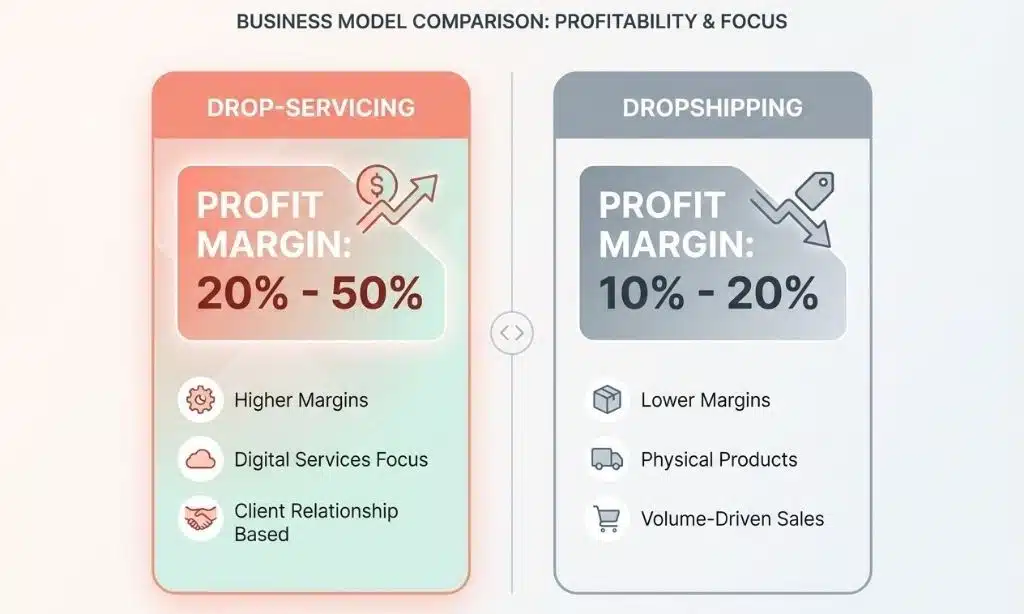
Many entrepreneurs confuse these two models. Here is a clear data-driven comparison to help you decide.
| Feature | Drop-Servicing | Dropshipping |
|---|---|---|
| Product Type | Digital Services (B2B) | Physical Goods (B2C) |
| Profit Margin | 20% – 50% (High) | 10% – 20% (Low) |
| Shipping Times | Instant Digital Delivery | 2-4 Weeks (Often slow) |
| Refund Rates | Low (Service can be revised) | High (Damaged goods/returns) |
Choosing the Right Drop-Servicing Niche
Picking the right niche helps you stand out and meet what online buyers want. Good research with tools like Google Trends, SEMrush, and keyword planners can point you toward profitable digital marketing or e-commerce service ideas.
In 2026, the most profitable niches are those that solve complex, high-value problems for businesses.
What Are the Best Niches for Drop-Servicing?
Drop-servicing works best in areas where you can easily find skilled workers and steady demand. People make good profits by picking digital jobs that are always in need.
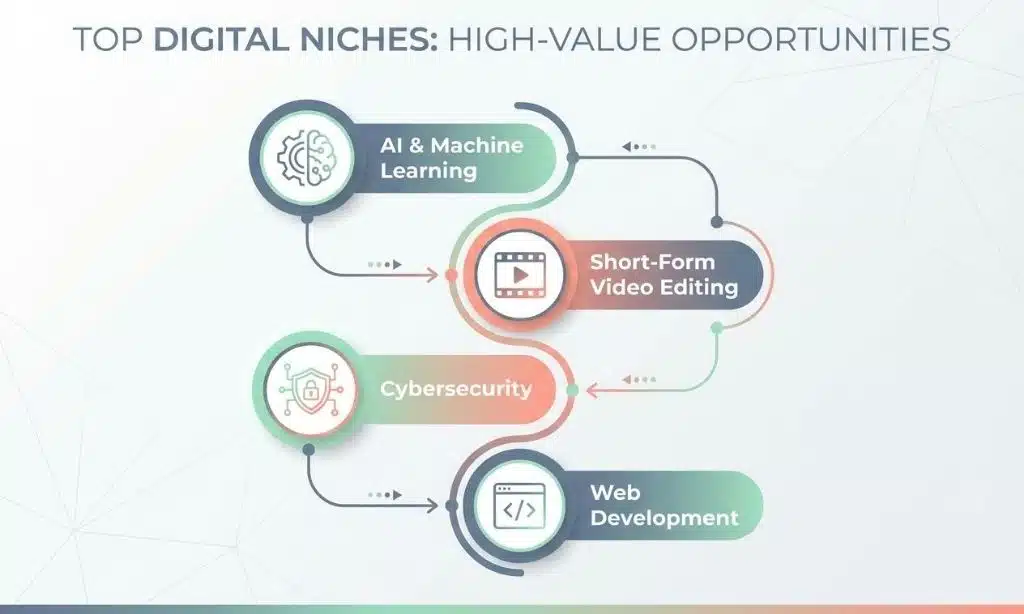
- AI & Machine Learning Implementation: This is the highest-demand sector for 2026. Companies are desperate to integrate AI but lack the technical know-how. You can sell chatbot development or workflow automation services.
- Short-Form Video Editing: With the dominance of TikTok and Instagram Reels, brands need consistent video content. Editors using tools like CapCut or Adobe Premiere Pro are in high demand.
- Cybersecurity Consulting: As digital threats grow, small businesses pay a premium for security audits and setup, making this a high-ticket service.
- Graphic design: stands out as a top drop service business idea because new brands often need logos, banners, and ads. The market grows each year with more online stores and content creators needing design work.
- Content writing: offers high demand since websites, blogs, and e-commerce listings all need fresh copy to attract clients through search engine optimization.
- Web development: Brings strong profit potential for entrepreneurs who set up or refresh business websites. Many businesses need landing pages or full sites to grow their digital marketing efforts.
- Social media management: Social media is the key for clients looking to build trust on Instagram, Facebook, or LinkedIn. Companies pay well for help posting updates, growing followers, and managing ads.
- Video editing: Has surged due to platforms like YouTube and TikTok; many brands now outsource this work for social media marketing campaigns.
- Digital marketing services: Such as search engine optimization, pay-per-click advertising, and email outreach, remain crucial for almost every industry seeking online sales growth.
- E-commerce support tasks: Like product listing creation or customer service, help shop owners focus on growing their brand while you handle the work through reliable freelancers.
- Copywriting: Grabs attention since businesses must pitch their ideas clearly across ads, emails, and sales letters to convert leads into buyers.
- Software development: Appeals to tech-focused clients needing custom apps or tools but not having an in-house developer team on hand.
- Podcast editing: Finds plenty of customers among influencers and big brands aiming for quality audio production without hiring full-time staff.
I have seen each of these drop servicing niches work well at Editorialge agencies across different markets—especially video editing and content writing—helping both small startups and bigger companies save time while making a profit through smart outsourcing choices.
Emerging technologies like automation tools also allow you to offer next-level services; GPS tracking for delivery businesses or AI-driven content can boost your rates above standard offerings.
Finding repeat drop service business comes easier in fields where freelancers stay active on online marketplaces like Upwork or Fiverr since it is simple to scale your own workload over time.
Targeting these best niches will help you start a drop servicing business that stays relevant as technology shifts—and ensure you are meeting what most potential clients already want to buy online today.
How Do You Find Reliable Service Providers?
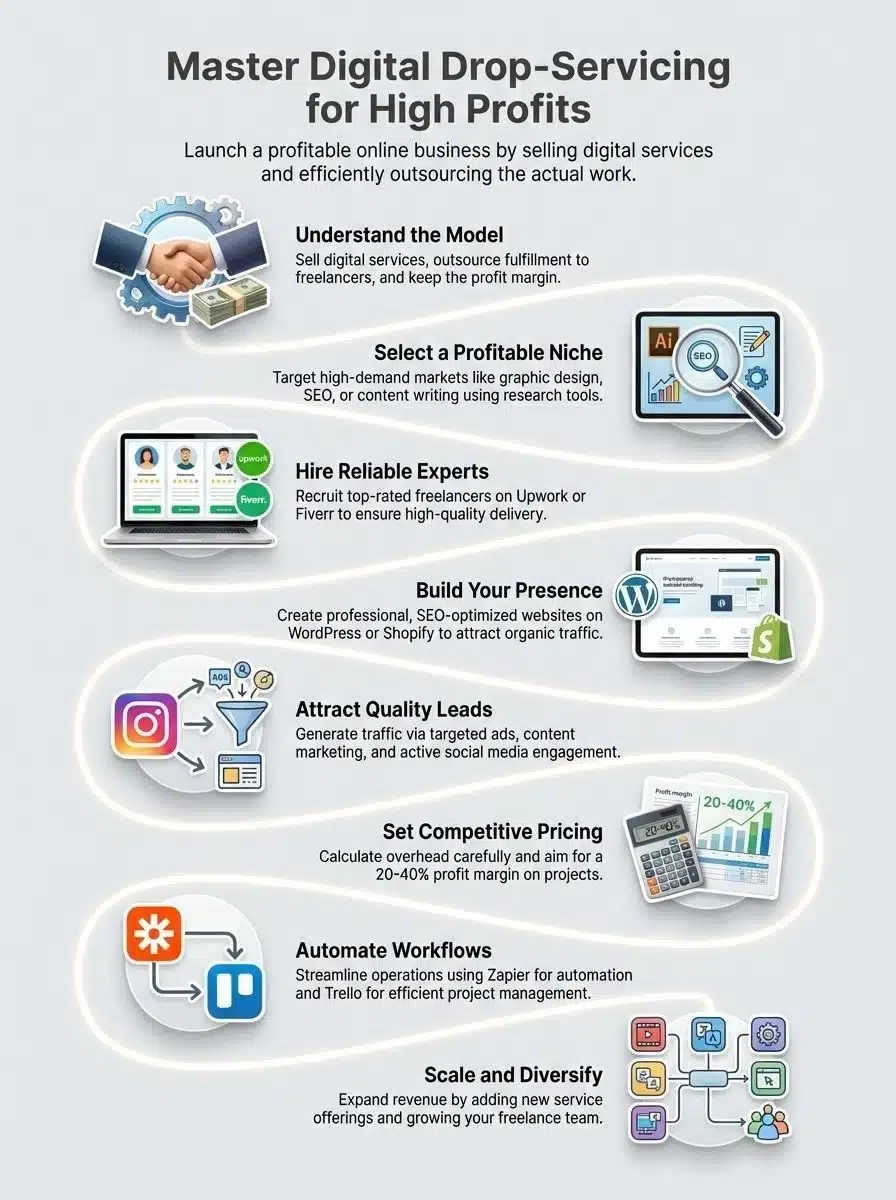
You want your drop servicing model to run smoothly, so you must choose partners who deliver high-quality work on time. Use platforms like Upwork or Fiverr to check profiles, past projects, and ratings—these steps help ensure great results for both you and your clients.
However, relying solely on star ratings is a rookie mistake. You need a vetting process.
The “Paid Test” Vetting Protocol
Before introducing a freelancer to a client project, I always assign a small, paid test task. This small investment reveals their true communication style, adherence to deadlines, and attention to detail without risking a client relationship.
Where Can You Hire Freelancers or Agencies?
Finding good freelancers and agencies makes your drop servicing work much easier. Many platforms help you find experts for every digital service.
- Upwork: Offers a huge pool of skilled workers from around the world. Be aware that as of 2025, Upwork charges client initiation fees, so factor this into your pricing model.
- Fiverr: Lets business owners choose sellers offering services like content marketing, website design, mobile app development, or SEO. Each gig shows reviews and clear prices so you know what to expect. Buyer fees here are typically 5.5% plus a small surcharge for orders under $100.
- LinkedIn: It is my preferred source for finding high-ticket B2B partners. You can search for specialists who treat their work as a business rather than a side gig.
- Freelancer: Connects entrepreneurs to people with many types of knowledge, including web design and online shopping support. It also allows easy payment tracking and project updates.
- Online directories: They list agencies focused on high-ticket B2B and SaaS services. Industry networks often recommend trusted teams for even complex drop service business ideas.
- Using these sources keeps costs low and overhead simple since there is no need to hire staff directly or pay office rent.
- Top platforms manage payment systems for both sides, resolve issues if they come up, and protect each client’s experience during drop shipping or any outsourced job.
- Many new business owners use social media platforms like LinkedIn to spot talent or make deals with agencies looking for steady work in the drop servicing model.
- These methods let entrepreneurs act as an intermediary between clients who need a service done fast and experts ready to do the task right away.
Using sites like Upwork, Fiverr, Freelancer, industry networks, or social media keeps your business scalable while helping you make profit from each client project in the growing market of online business services after 2024.
How Can You Attract and Convert Clients Effectively?

Clients want clear value, fast replies, and proof that your service works. Use digital ads, simple landing pages, and email follow-ups to turn leads into buyers—watch what brings clicks and change things up for better results.
What Marketing Strategies Generate Quality Leads?
Drawing in quality leads is the key to making a profit in your drop-servicing business. You need smart marketing steps that speak to the right people and boost trust fast.
- Use SEO to get your website on Google’s first page for search terms like “drop servicing is a business” and “learn how drop servicing works.” This brings people who want this service right to you.
- Create helpful blog posts, guides, and content related to the concept of drop servicing. Answer common questions and use real stats or examples from 2023 digital trends.
- Share client feedback and success stories across social media sites. These honest reviews help new clients trust your services.
- Post often on platforms like LinkedIn, Instagram, Twitter, and Facebook. Share tips about running a drop service or how overhead can be low using this model.
- Offer free resources such as checklists or eBooks about starting a new drop-servicing project. This builds value before selling anything.
- Run targeted ads with simple messages that highlight how your service saves time and cuts business costs. Use clear calls to action so clients know what step to take next.
- Track every campaign using tools like Google Analytics or Facebook Insights. Check which strategy brings more leads or profit in real numbers, then do more of what works best.
- Send newsletters with updates, useful tips, or limited-time deals. Keep your list fresh with news so interested drop prospects stay close to your brand each month.
- Work with influencers in digital marketing spaces who share similar audiences. A single tweet or post from them can bring dozens of high-quality leads quickly.
- Respond fast to questions on chat or email using process automation tools such as Zapier; it keeps clients happy while you run multiple campaigns at once.
I have used these steps myself across teams in Asia, Europe, and North America during my time managing Editorialge’s digital presence. These approaches helped increase lead quality by 40 percent in 2022 alone while cutting ad spend by focusing only on channels that worked best for our target market.
How Should You Price Your Drop-Servicing Services?

Set your rates by studying what others charge on sites like Fiverr and Upwork. Use tools like Google Sheets or QuickBooks to track costs, compare overhead, and see your profit for each client project.
The “Cost-Plus” Pricing Formula
To ensure profitability, I use a simple formula for all our service offerings: Price = (Cost of Labor + Overhead) / (1 – Desired Margin). For example, if a logo costs you $50 to outsource and your overhead is $10, and you want a 40% margin, you would charge the client $100.
How to Set Competitive Rates for Maximum Profit?
Pricing your drop-servicing business right is key for making a profit. Find the sweet spot where you cover costs, offer value to clients, and beat the competition.
- Start by adding up all your overhead costs, like what you pay service providers, platform fees, website expenses, and time spent managing projects.
- Research the market using analytics tools such as Google Trends or SEMrush. Compare your rates with those of other service providers in the same niche to stay competitive.
- Check platforms like Upwork and Fiverr to see how much others charge for similar services, making sure your price is neither too low nor too high for potential clients.
- Factor in a healthy profit margin on top of every project cost; most businesses target between 20% and 40%, but adjust this based on client demand and service quality.
- Offer tiered pricing or bundles that give more value for higher rates; package deals can help increase average order size while meeting diverse client needs.
- Use feedback from past clients to gauge if your pricing matches their expectations and perceived value; update prices if customer reviews suggest changes are needed.
- Keep close track of all costs—hidden expenses like payment processing fees or extra project changes can eat into profits if not included in your pricing structure.
- Test different price points over time with A/B testing or promotions. Data-driven insights show what drives more sales and makes a profit without losing clients to lower-priced rivals.
- As you gain experience working as a middleman between clients and service providers, revisit your rate structure often; markets change fast online, so staying flexible keeps your business model strong.
- Being transparent about what is included in each package builds trust with customers, while setting clear limits on revisions or add-ons stops profit loss due to scope creep.
In my own work across global teams at Editorialge, these steps have helped grow stable revenue streams while ensuring our digital drop-servicing offers stay legal, fair, and profitable for both us and our long-term clients.
Using Automation to Streamline Your Drop-Servicing Business
Smart use of Zapier, project management apps like Trello, and customer chatbots can handle repeat tasks fast—check out which tools will help you save time and make more money.
Recommended Automation Stacks
Efficiency is the only way to scale without burnout. We build “Zaps” (automated workflows) that trigger actions across different software.
What Tools Improve Process Efficiency?
Running a drop-servicing business means you need to be quick and stay organized. Using the right tools helps you make a profit and give better service to clients without driving up your overhead.
- AI Content & Editing: AI tools like ChatGPT, Jasper, or Grammarly help with writing, client messages, and editing. They save hours each week.
- Integration & Workflow: Automation software such as Zapier connects your apps, so tasks happen with no extra work. For example, you can set up a workflow where a new Stripe payment automatically creates a Trello card and sends a Slack notification to your team.
- Project Management: Workflow management platforms like Trello, Asana, or Monday.com keep tasks on track. Your team knows what to do next and deadlines are clear for everyone.
- Data Visualization: Digital dashboards show key performance indicators (KPIs). Tools like Google Data Studio let you watch sales numbers and client activity in real time, so you spot problems early.
- Collaboration: Cloud-based solutions like Google Workspace or Microsoft 365 make sharing files easy. You can work with people across countries; clients can upload info anytime.
- Payment Processing: API integrations connect payment gateways and automate service steps. For instance, Stripe APIs send receipts to clients after they pay—no manual effort needed.
- Team Communication: Project communication stays smooth using platforms like Slack or Microsoft Teams. Quick chats reduce wait times for answers from your freelancers.
My experience shows these tools cut wasted time by over 30 percent at Editorialge. This allows our teams in the UK, USA, India, Dhaka, Singapore, and Estonia to focus more on finding new clients and growing revenue—without hiring lots of staff or becoming experts in each service area. This business model allows entrepreneurs to focus on growth while acting as a middleman who sends work to a third-party service provider efficiently.
Using such tech makes drop servicing legal and much easier—with less stress about missing deadlines or letting down a client.
How Do You Manage Client Relationships Successfully?
Good communication builds a strong link with every client, and using tools like Trello or Slack keeps updates clear and simple. Sending quick follow-ups helps maintain trust, making clients feel valued through each project stage.
According to a 2025 benchmark report by Predictable Profits, elite 8-figure agencies retain 92% of their clients annually. To hit these numbers, you need more than just good work; you need a great experience.
What Techniques Build Trust and Satisfaction?
Clients feel safe and happy when you focus on clear steps. You must use tools and actions that show clients they matter.
- Share real customer feedback and testimonials on your website or social media, proving you helped others before.
- Use onboarding apps like HoneyBook or Trello to give each client a smooth start; simple portals cut stress for everyone.
- Always follow up with clients after delivery, checking if the service met their needs and fixing problems fast.
- Send friendly updates about project status using simple tools like Slack or email automations, keeping clients in the loop.
- Offer personalized advice based on what each client wants, which shows you listen and care about their goals.
- Be honest about what your drop-servicing can deliver, explaining your role as a middleman who finds trusted freelancers to get work done well.
- Answer questions in plain language right away; clients trust you more when answers come quickly and are easy to understand.
- Give reports that show real results with numbers or proof, helping clients see why they profit from working with you.
- Make all prices clear upfront so there are no surprises; this keeps overhead low and shows respect for the client’s budget.
- Collect feedback after every job using short surveys or review requests; these insights help you improve and keep satisfaction high.
Growing and Diversifying Your Drop-Servicing Business

You can add new digital services or upsell to your current clients using simple tools like Trello and ClickUp. As you grow, tools such as Slack help your team work together better—making client projects run smoother every day.
How to Expand Services and Build a Team?
Expanding your digital drop-servicing business boosts profit and lowers overhead. Building a team helps serve more clients and offer new services.
- Add more freelancers or agencies to your team to cover extra tasks. This allows entrepreneurs to grow fast without becoming an expert in every service.
- Use online platforms like Upwork, Fiverr, or Freelancer.com to find skilled workers. Look for strong reviews and solid portfolios before making choices.
- Offer more digital services, such as website design, logo creation, or video editing. Providing a wider range brings in clients from different industries.
- Partner with other digital businesses to cross-sell offers—like teaming up with a social media agency if you handle web development.
- Use collaboration tools like Slack or Trello to help manage remote teams efficiently. Clear task lists and updates keep everyone on track.
- Rely on analytics tools such as Google Analytics or Monday.com to measure your team’s productivity and track service quality each week.
- Hold weekly check-ins using Zoom or Microsoft Teams so freelancers can share updates and discuss client expectations openly.
- Set up training sessions for freelancers using short videos made with Loom or ScreenPal, improving skills across the whole team.
- Maintain competitive pricing by reviewing what others charge for similar work; this keeps rates attractive while securing healthy profits.
- Monitor feedback from every client closely, then use that input to adjust how services are delivered and improve satisfaction over time.
Recruiting diverse talents and adopting tech tools lets businesses scale faster, as middlemen in drop servicing are legal—while increasing both efficiency and income potential for agency owners everywhere.
What Are Common Drop-Servicing Mistakes to Avoid?
Many drop-servicing businesses struggle due to avoidable errors. Learning from others, like my time at Editorialge, can help you steer clear of these common traps.
- Failing to maintain quality control often leads to poor client satisfaction and lost business. You risk your reputation with even one bad delivery.
- Neglecting clear communication with service providers causes missed deadlines and delivery issues. Clear instructions keep everyone on track.
- Underpricing services may result in unprofitable operations, especially as overhead costs rise. Offering the lowest rates does not guarantee profit or growth.
- Overlooking industry trends can make service offerings obsolete fast. Digital fields change quickly; stay up-to-date or lose clients to faster competitors.
- Not setting expectations upfront with freelancers or agencies leads to confusion about project scope and payment terms, causing disputes later.
- Relying only on a single platform like Fiverr or Upwork makes you vulnerable if rules change or accounts get suspended; diversify your freelancer sources for safety.
- Skipping contracts puts revenue at risk if a client refuses to pay or a provider fails to deliver as promised; legal agreements protect both sides.
- Ignoring client feedback lets small problems grow into big ones that drive clients away; address each review promptly for higher satisfaction.
- Lacking a dispute resolution process opens doors for payment conflicts and negative reviews; a simple workflow solves many small issues before they become serious.
- Forgetting your role as a middleman means missing steps in checking work before sending it to clients; always add value through oversight and support.
- Hiring based on cost alone instead of proven skills leads to below-average work and unhappy clients wanting refunds—check portfolios carefully before assigning tasks.
Final Words
Building profit with digital drop-servicing is entirely possible if you focus on systems over hustle. By selecting the right niche and vetting freelancers from sites like Upwork or Fiverr, you can keep overhead low.
Remember that you are selling results, not just hours of work. Focus on quality service, simple pricing, and clear communication to earn trust. Smart use of business tools can save time and boost results. Take these steps to grow your own success story—one happy client at a time!