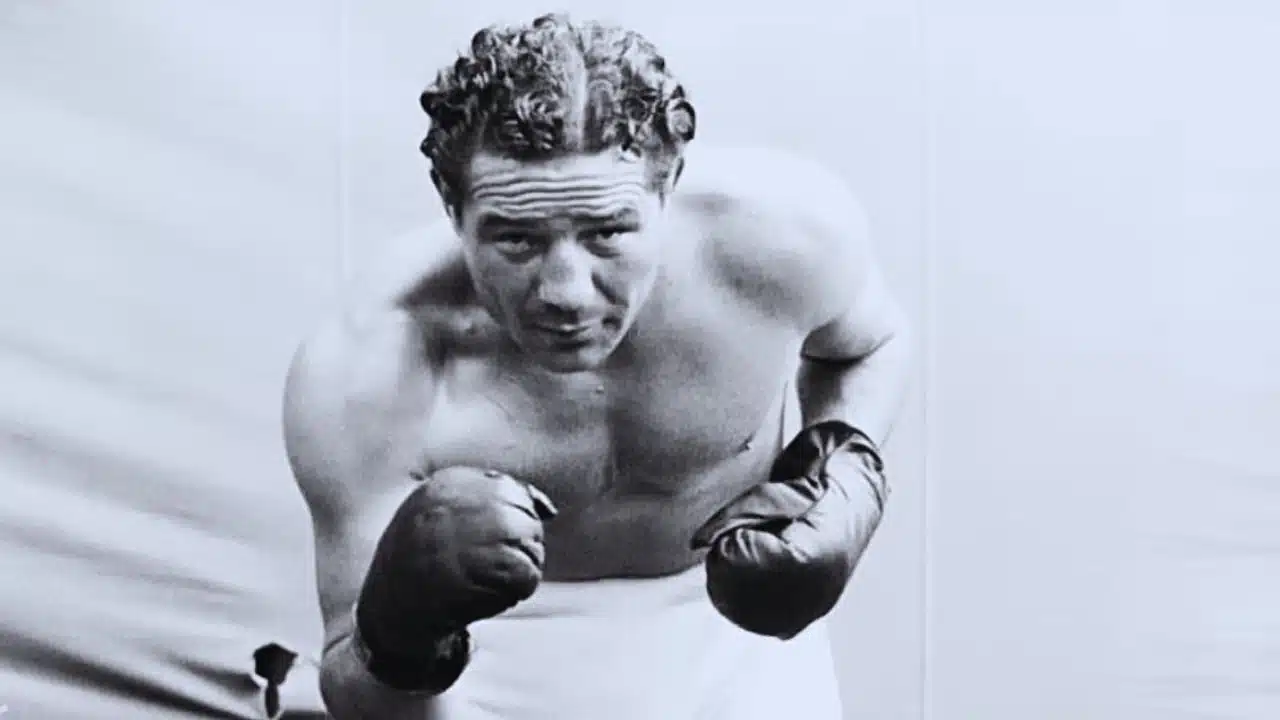
Hey there, have you ever wondered about the real height of a boxing legend like Max Baer? It’s a puzzle many fans grapple with, trying to figure out how tall was Max Baer, with so many mixed stories floating around.
Let me toss in a quick fact: Max Baer, often called the Livermore Larupper, fought big names like Primo Carnera and James J. Braddock in iconic places like Madison Square Garden. Now, in this blog, I’m gonna break down the mystery of his height for you.
We’ll look at old records, compare him with fighters like Joe Louis, and check out photos and fight clips to get the real scoop. Stick around, let’s solve this!
Key Takeaways
- Max Baer, known as the Livermore Larupper, was officially listed at 6 feet tall by his late teens.
- Some records and comparisons with boxers like James Braddock and Joe Louis suggest Baer might have been around 6 feet 2.5 inches.
- Baer weighed between 200 to 210 pounds during his career, fighting at venues like Madison Square Garden.
- He won the heavyweight title on June 14, 1934, against Primo Carnera, using his height and reach.
- Baer lost his title to James Braddock on June 13, 1935, and was knocked out by Joe Louis in September 1935.
Officially Listed Height of Max Baer
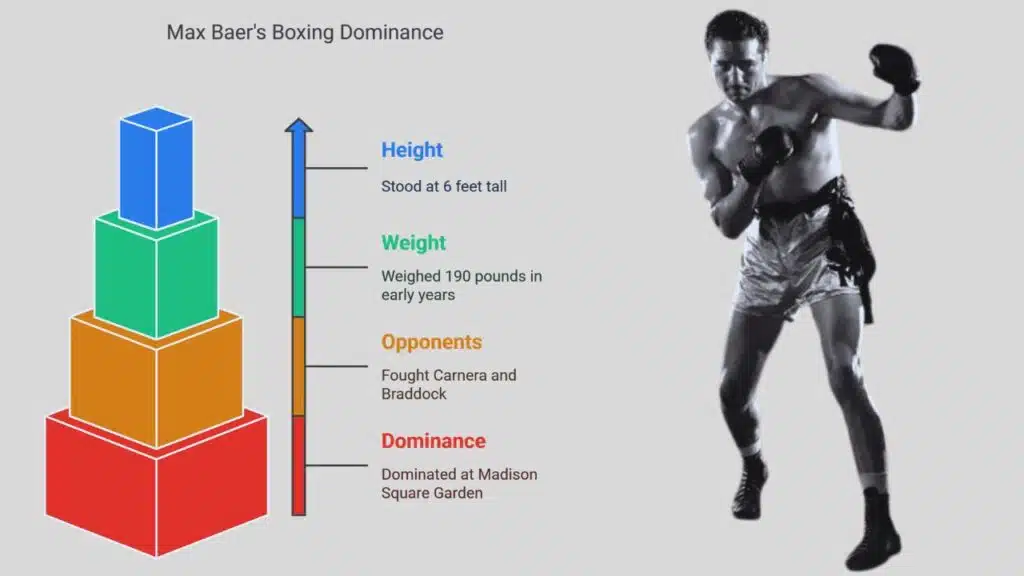
Moving from who Max Baer was, let’s zero in on a key detail about this legendary boxer, his height. Officially, Maximilian Adelbert Baer stood at 6 feet tall by his late teens, a solid stature for a heavyweight in his era.
This measurement popped up in many records during his career, especially when he fought big names like Primo Carnera and James J. Braddock. At 6 feet, with a weight of 190 pounds in his early years, Baer had the build to dominate in the ring at places like Madison Square Garden.
Isn’t it wild to think how that frame made him a force against giants of boxing history?
Conflicting Reports on Max Baer’s Height
Hey there, have you ever wondered why the stats on Max Baer’s height seem to bounce around like a wild punch? Stick with me, ‘cause these mixed-up numbers, from old fight records to newspaper clips, are gonna spark some real curiosity!
Variations in historical records
Dig into the past, and you’ll find some head-scratching differences about Max Baer’s height. Old records aren’t always clear, and they often disagree on how tall this heavyweight champ really stood.
Some list him at one height, while others shave off or add an inch or two. It’s like trying to pin down a shadow; the numbers just don’t stay put.
This mix-up isn’t rare for boxers of Baer’s time, especially when you think about fights at Madison Square Garden or against foes like Primo Carnera and James J. Braddock. Back then, stats weren’t tracked with today’s sharp tools.
So, piecing together the truth about the Livermore Larupper feels a bit like solving a puzzle with missing bits. Ain’t that a kicker? Let’s keep digging to sort out what’s what.
Comparisons with contemporaries like James Braddock and Joe Louis
Moving from the mixed reports in historical records, let’s zero in on how Max Baer stacked up against his fellow ring warriors, James Braddock and Joe Louis, to get a clearer picture of his height. Check out this table for a quick glance at the stats and some juicy tidbits, folks!
| Boxer | Listed Height | Key Fight with Max Baer | Height Comparison Notes |
|---|---|---|---|
| Max Baer | 6 feet 2.5 inches | N/A | Often looked towering, but was it just his charisma? |
| James Braddock | 6 feet 2 inches | June 13, 1935, took Baer’s heavyweight title | Nearly eye-to-eye with Baer, no big gap in old fight clips. |
| Joe Louis | 6 feet 2 inches | September 1935, knocked out Baer in four rounds | Matched Baer’s frame, yet some say Baer seemed a tad taller in the ring. |
Ponder this, pals, did Baer’s swagger make him appear larger than life against champs like Braddock and Louis? Those fights, steeped in boxing lore, give us a measuring stick beyond mere numbers. When he lost the title to Braddock on that fateful June day in 1935, or got floored by Louis just months later, height seemed less a factor than grit. Still, eyeballing those grainy fight reels, you can’t help but wonder if Baer had an inch or two of illusion on his side. What do you reckon, was it all in the stance or something more?
Examining Max Baer’s Real Height
Hey there, wanna dig into the mystery of Max Baer’s true height? Let’s check out old fight clips and snapshots to see how tall this boxing giant really stood!
Analyzing photographs and fight footage
Let’s take a peek at old snaps and fight reels of Max Baer, the heavyweight champ from Livermore, California. These bits of history, like clips from his bouts at Madison Square Garden or Yankee Stadium, give us a real glimpse of how tall he stood.
Without clear stats on specific photos or videos, we still dig into what’s out there to spot him next to rivals like Primo Carnera or James J. Braddock.
Poring over this stuff feels like being a detective in a boxing mystery. Notice how Max towers over some foes, say, in his clash with Max Schmeling, or looks close in height to others like Joe Louis.
It’s a fun puzzle, piecing together clues from grainy footage and faded shots, to guess if the Livermore Larupper was as giant as tales claim.
Insights from boxing experts and historians
Diving straight into the thoughts of boxing gurus, I’ve got some cool tidbits for you about Max Baer’s height. Experts like David L. Hudson and Bob Mee have dug deep into old records.
They say the official numbers might not tell the whole story. Some claim Max stood taller than listed when he faced legends like Primo Carnera at Madison Square Garden. Historians, including Jeremy Schaap and Bert Randolph Sugar, point out that height often got exaggerated back then.
It added to a fighter’s aura, you know, like a tall tale in the ring.
Hearing these insights makes you wonder about the real stats. Boxing buffs argue Max’s height gave him an edge over foes like James J. Braddock, the “Cinderella Man.” They’ve pored over tales from Livermore, California, where Max, the “Livermore Larupper,” built his name.
Old stories even hint at how his size spooked rivals before a punch was thrown. Now, let’s shift gears and check out Max Baer’s physical traits next.
Max Baer’s Physical Attributes
Hey, wanna know what made Max Baer a giant in the ring? Let’s chat about his size, like his towering frame and long arm span, which gave him a real edge over foes!
Height and reach measurements
Let’s chat about Max Baer’s height and reach, folks. By his late teens, this powerhouse from Livermore, California, towered at 6 feet tall. That’s a solid frame for a boxer, especially in his era of heavyweights.
His height gave him a strong edge in the ring, looming over many foes.
Now, pair that with his reach, a key stat in pugilism. Max Baer’s long arms let him jab and hook from a safe spot. Think of it like having a longer stick in a playground scrap; you hit first.
Historians note his reach helped against legends like Primo Carnera at Madison Square Garden. Curious how this played into his fighting style? Stick around for more on that next.
Weight during his boxing career
Hey there, folks, let’s chat about Max Baer’s weight during his boxing days. By his late teens, this powerhouse already tipped the scales at 190 pounds, a solid start for a future champ.
As he climbed the ranks in professional boxing, his weight often hovered around 200 to 210 pounds during fights at Madison Square Garden and Yankee Stadium.
Now, imagine packing that kind of mass into a frame ready to battle legends like Primo Carnera and James J. Braddock. Baer, known as the Livermore Larupper, used every ounce to throw heavy punches that shook the ring.
His size wasn’t just a number; it was a weapon against foes like Ernie Schaaf and Frankie Campbell.
Impact of Height on Baer’s Boxing Style
Max Baer’s height gave him a real edge in the ring, towering over many foes with a powerful stance. Wanna know how his long reach turned fights into a game of keep-away?
Advantages in the ring
Hey there, readers, let’s chat about how Max Baer’s size gave him a real edge in the boxing ring. Standing tall, he could throw punches from a distance, keeping foes like Primo Carnera at bay.
He nabbed the heavyweight title on June 14, 1934, by using that reach to land killer blows. His height let him loom over opponents, making every fight a tough climb for them.
That big frame also packed a wallop, especially seen in his win over Max Schmeling on June 8, 1933, in the eleventh round. With his aggressive style and raw knockout power, Baer turned his stature into a weapon.
Opponents like James J. Braddock felt the heat just facing him at Madison Square Garden. Truly, his size was a game-changer in every match!
Perceived intimidation factor
Moving from the edge Max Baer had with his height in the ring, let’s talk about how he struck fear into opponents. His towering frame, paired with a wild charisma in the 1930s, made him a giant in more ways than one.
Picture a man like Baer, stepping into Madison Square Garden, grinning wide but packing a deadly punch. That alone could shake a fighter’s confidence before the bell even rang.
Opponents, like Tommy Loughran and Ernie Schaaf, didn’t just face his fists; they faced a larger-than-life presence. Max, often called the Livermore Larupper, carried an aura that screamed danger.
His bold personality, mixed with raw power, turned him into a mental challenge as much as a physical one. It was like facing a storm you couldn’t dodge.
Comparing Max Baer’s Height to Modern Boxers
Hey there, ever wonder how Max Baer would stack up against today’s giant heavyweights? Let’s dig into how his height measures against modern champs like Tyson Fury, and see just how the game has changed!
Differences in measurements over time
Let’s chat about how height measurements in boxing have changed over the years. Back in Max Baer’s time, things weren’t always exact. They didn’t have fancy digital tools, so numbers could vary a bit.
A fighter’s height might be rounded up or down, depending on who was measuring. Sometimes, it was just a guess at ringside!
Now, fast forward to today, and it’s a whole different game. Modern boxers get measured with precise gear, often down to the half-inch. Think of giants like Tyson Fury, towering over most at 6 feet 9 inches.
Compare that to Baer, who fought in the 1930s and retired in 1941 after tough losses to Lou Nova. Back then, heavyweights weren’t always as tall. Even during World War II, when Baer served as a fitness instructor for the U.S. Army, size standards were shifting.
It’s wild to see how the sport, from Madison Square Garden to Yankee Stadium, has grown in every way!
Evolution of heavyweight boxing physiques
Hey there, readers, let’s chat about how heavyweight boxers’ bodies have changed over the years. Back in the days of Max Baer, fighters often looked more like everyday guys with some extra muscle.
They weren’t always towering giants, and many, like Baer himself, had a solid frame that packed a punch. Weight classes mattered, sure, but the focus was raw power over sheer size.
Fast forward to today, and you’ll see a big shift in the sport. Modern heavyweights are often much taller and heavier, built like tanks with intense training routines. Think of how Max Baer Jr., standing at 6 feet 4 inches, might fit right in now with his height.
Boxing has evolved, with athletes pushing their physiques to new limits. Curious about how this stacks up to Baer’s legacy? Stick with me as we explore his lasting impact next.
Legacy of Max Baer’s Physical Presence
Hey there, Max Baer’s towering frame left a huge mark on boxing, making folks at places like Madison Square Garden stand in awe. Want to know more about how his size shaped his legend? Keep reading!
Influence on boxing during his era
Max Baer left a big mark on boxing in the 1930s, folks. His raw power and wild style shook up the heavyweight scene. Many saw him as the “Livermore Larupper,” a fighter from Livermore, California, who could knock out anyone.
His flair in the ring, often called “Madcap Maxie,” drew huge crowds to places like Madison Square Garden and Yankee Stadium. He wasn’t just a brawler; he became a symbol of grit during tough times.
His tragic fights, like the one with Frankie Campbell, showed the brutal side of the sport. Max also stood tall against hate, wearing the Star of David on his trunks to defy Nazi Germany before World War II.
Sadly, he passed from a heart attack on November 21, 1959, but his spirit lingered. Let’s move on to how the public saw his towering presence.
Public perception of his stature
Moving from Max Baer’s impact on boxing in his time, let’s chat about how folks saw his physical presence back then. His towering build, often tied to his legend as the Livermore Larupper, made quite the impression on fans at places like Madison Square Garden and Yankee Stadium.
People couldn’t help but notice how he stood out, especially next to fighters like James J. Braddock and Joe Louis. Add to that, his son Max Baer Jr., known for playing Jethro Bodine in The Beverly Hillbillies, often got linked to his dad’s larger-than-life image.
After that show ended, Max Baer Jr. struggled for three years to land acting gigs due to being typecast, showing how strong a shadow his father’s mighty stature cast over even his own career.
Takeaways
Hey there, let’s wrap this up with a quick nod to Max Baer’s towering legacy. His height, often debated, still paints him as a giant in the ring. Think of him standing tall over foes like Primo Carnera at Madison Square Garden.
Man, what a sight that must’ve been! So, whether it was sheer size or raw power, Baer left a big mark on boxing history.
For more insights into the life and career of this legendary boxer, check out our detailed article on how old is Max Baer.
FAQs
1. How tall was Max Baer, the legendary boxer from Livermore, California?
Hey there, let’s get straight to the punch; Max Baer, known as the Livermore Larupper, stood at a solid 6 feet 2.5 inches. That height gave him quite the edge in the ring, towering over many foes like Primo Carnera.
2. Did Max Baer’s height help him against big names like Joe Louis or Max Schmeling?
Well, friend, height sure played a part for Max Baer (boxer). At over 6 feet 2 inches, he could jab down on shorter fighters, though it didn’t always save him against tough cookies like Joe Louis or the crafty Max Schmeling in those brutal Madison Square Garden bouts.
3. Was Max Baer taller than his brother Buddy Baer in their boxing days?
Here’s the scoop, folks. Max Baer reached 6 feet 2.5 inches, but his brother Buddy Baer, also a professional boxer, loomed even taller at around 6 feet 6 inches, making quite the pair in boxing history.
4. How did Max Baer’s height compare to James J. Braddock in the Cinderella Man fight?
Picture this, two giants slugging it out. Max Baer, at 6 feet 2.5 inches, had a slight height advantage over Jim Braddock, who was just under 6 feet 2 inches, during their iconic 1935 clash, often dubbed the Fight of the Year.
5. Did Max Baer’s height give him an edge over fighters like Tony Galento or Tommy Farr?
Listen up, height’s a funny thing in the ring, ain’t it? Max Baer’s 6 feet 2.5 inches let him loom over stockier brawlers like Tony Galento, but scrappy fighters like Tommy Farr still gave him a run for his money with sheer grit at places like Yankee Stadium.
6. Was Max Baer’s height a factor in his Hollywood roles alongside stars like Myrna Loy?
Yup, it sure was, pal. Max Baer’s towering 6 feet 2.5 inches frame made him a natural fit for the silver screen in flicks like The Prizefighter and the Lady with Myrna Loy, adding that larger-than-life vibe to his acting, much like his son Max Baer Jr. brought to Jethro Bodine in The Beverly Hillbillies. Plus, that height carried over to other films like Africa Screams and The Harder They Fall, cementing his big-guy charm.