Ever notice how your social media feed feels like it *gets* you? The shows, the songs, even the ads seem to know your taste better than your best friend. That’s not magic—it’s algorithms quietly shaping what you see, think, and *who you become* online.
Here’s a fact: Algorithms don’t just suggest content, they build an “algorithmic identity” for you based on every click, like, and scroll. This blog breaks down *how algorithms shape identity*, from Spotify Wrapped playlists to TikTok rabbit holes.
You’ll learn why your feed looks the way it does—and how to take back control. Keep reading if you’ve ever wondered who’s really calling the shots in your digital life.
Key Takeaways
- Algorithms create an “algorithmic identity” by tracking your clicks, likes, and watch time. Social media feeds show content that reinforces this digital persona over time.
- Filter bubbles and echo chambers trap users in narrow views. TikTok and Instagram push similar content, hiding opposing perspectives.
- Algorithms amplify biases by favoring divisive or engaging posts. Misinformation spreads faster as AI feeds users what they already believe.
- Data collection raises privacy concerns. Companies use personal info to target ads, shaping identities without consent.
- Teens face distorted self-perception due to curated feeds. Likes and comments act like mirrors, often twisting self-image.
How Algorithms Shape Identity

Algorithms feed you content that fits your likes and habits, slowly molding how you see yourself. They act like invisible hands, shaping tastes and opinions without you even noticing.
Personalized Content and Recommendations
Social media apps use artificial intelligence to shape what you see. They track your clicks, likes, and watch time to guess what keeps you hooked. The more you interact with dancing videos or political rants, the more they push similar stuff your way.
Over time, machine learning fine-tunes these suggestions like a playlist that knows your mood before you do.
These recommendation engines create an algorithmic version of “you.” It’s not just about showing posts—it builds a digital identity from scattered data points. If Instagram thinks you love fitness content because you liked three workout videos last week, prepare for endless gym selfies in your feed.
The flip side? Filter bubbles trap people in closed loops where all opinions sound the same. TikTok’s algorithm might show cat videos nonstop while ignoring news that challenges your views.
The Creation of Algorithmic Identity
Algorithms don’t just recommend content. They build versions of who you are online. Every click, like, or scroll feeds into a digital profile, shaping what you see next. This “algorithmic self” evolves without your direct input, turning personal identities into data points.
Think of it as a puzzle, pieced together by machines, often without your full awareness.
Platforms like Instagram or TikTok reinforce this by narrowing choices based on past behavior. The more you engage, the tighter the box around your interests becomes. Echo chambers amplify biases, making it hard to break free from curated ideas.
Over time, your online persona may drift further from your real self. The result? A fragmented identity, controlled more by code than by you.
Social Media and Self-Perception
Social media acts like a funhouse mirror, distorting how we see ourselves based on likes and comments. Algorithms feed us content that reinforces our online persona, blurring the line between who we are and what the platform thinks we should be.
The Social Media Mirror Effect
Social media acts like a digital mirror, reflecting back what teens think they should be. Algorithms serve up content labeled “for you,” making it feel personal and accurate. This shapes how young users see themselves, often twisting self-image without them realizing it.
The brain tricks itself into thinking curated feeds are true identity snapshots. Negative or extreme content gets ignored, but the rest sticks. Teens blame outside factors when algorithms misfire, never questioning the system itself.
Their online personas harden with each scroll, reinforcing narrow views of who they are.
The like button and recommendation systems play puppeteer here. They feed behavioral patterns while pretending to just respond to them. It’s a hall of mirrors where self-concepts grow rigid, and emotion regulation falters under algorithmic control.
Reinforcement of Online Personas
Algorithms constantly feed users content that matches their past likes and clicks. This creates a loop where your social media persona gets stronger with each scroll. If you frequently engage with fitness posts, for example, the algorithm pushes more workouts and diet tips your way.
Over time, this shapes how you see yourself online—and even offline. The more you interact, the tighter the box around your digital identity becomes.
Echo chambers thrive on repetition, drowning out voices that don’t fit the mold. Platforms favor flashy or divisive posts because they grab attention fast, pushing groupthink over diverse ideas.
Digital Bias and Its Impact
Algorithms push people into echo chambers, showing them only what aligns with their views. This narrows perspectives and deepens divisions over time.
Filter bubbles amplify biases by feeding users content that confirms what they already think. The cycle of exposure and reinforcement shapes opinions without balanced input.
Echo Chambers and Filter Bubbles
Social media algorithms feed you content based on what you already like or agree with. This creates echo chambers where you mostly see posts that match your views. Over time, this narrows your exposure to different ideas, making it easy to think everyone shares the same opinions as you.
The filter bubble effect pushes people deeper into ideological isolation by hiding opposing perspectives from their feeds.
These platforms also favor homophilic networks, meaning they connect users with others who think alike. As a result, conversations stay one-sided, and polarization grows stronger. Your digital identity gets shaped by limited input from a small circle of voices instead of diverse viewpoints breaking through algorithmic control.
Worse yet, these patterns reinforce biases without most users even noticing how their sense of self is being quietly molded by AI-driven suggestions every day.
Amplification of Pre-existing Biases
Algorithms don’t just show us content. They push what we already like, making our biases stronger. This keeps us stuck in echo chambers, where we only see ideas that match our own.
Over time, it becomes harder to question or change our views because alternative perspectives get buried.
Social media platforms use AI to analyze user behavior, feeding us more of what we interact with most. If someone leans toward certain opinions, the algorithm doubles down on similar content.
Sentiment analysis and behavioral economics play a role here, silently shaping self-identity without us noticing. The result? Misinformation spreads faster, and pre-existing beliefs grow louder, drowning out different voices.
Ethical and Privacy Concerns
Your data isn’t just collected—it’s used to tweak who you become online. Companies know more about your identity than your best friend, and that’s a privacy minefield.
Data Collection and Identity Manipulation
Social media platforms gather personal data, such as your likes and clicks, to create detailed profiles. These profiles influence what you encounter online, subtly shaping your thoughts and decisions without your awareness.
Algorithms rely on this data to predict behavior, often restricting individuals to narrow perceptions of themselves. Over time, the digital version of you may become increasingly disconnected from reality.
AI-driven tools worsen this issue by grouping users based on habits and biases. Ethical concerns surface when platforms prioritize profiting from manipulating identities over representing them authentically.
Your self-perception can become entangled in labels assigned by machines instead of humans. Privacy risks increase as companies exchange personal insights for targeted ads or suggest content that strengthens biased beliefs.
Gen Z faces these pressures daily while managing their digital identity.
Balancing Technology and Individual Autonomy
Algorithms influence what we see, shaping our choices and self-view without us realizing it. Personalized content creates an algorithmic identity, often sidelining our true preferences.
Ethical concerns grow as these systems collect data, manipulate decisions, and limit real autonomy.
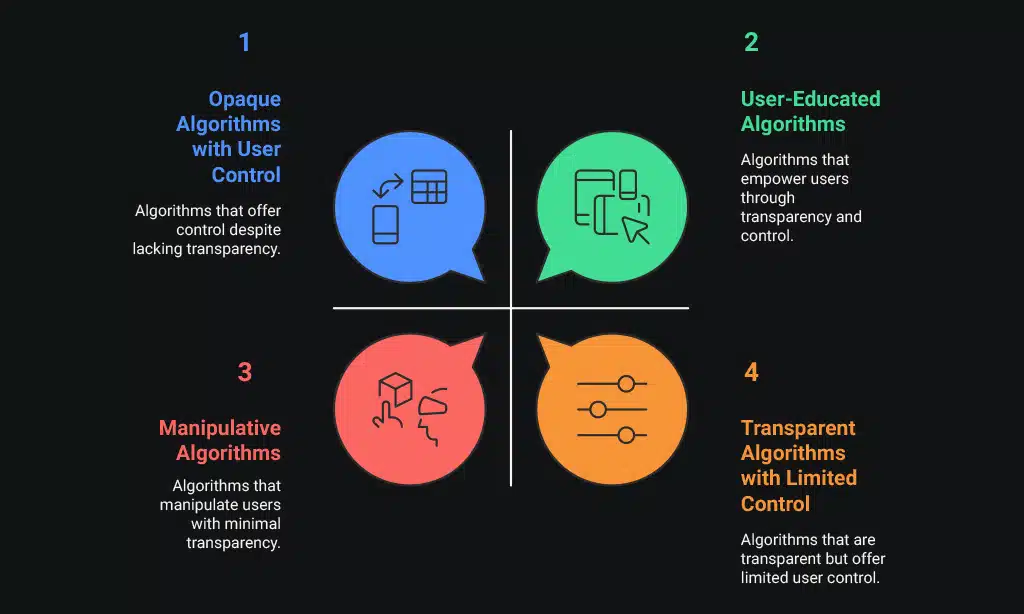
AI needs human oversight to keep user agency intact. Clearer algorithms and better user education help people understand their digital biases. Without balance, tech controls identity, making self-knowledge harder to reach.
Transparency and resilience against bias matter more than ever.
Takeaways
Our digital lives are shaped by invisible hands—algorithms feed us what we click but rarely what we need; they build walls around our views without us noticing; they turn likes into mirrors that distort who we really are; yet here’s hope—we can push back; watch what you share; question why certain posts pop up first—your mind isn’t just data points waiting be sorted into boxes labeled “target audience.” Stay curious beyond curated feeds because real growth happens outside comfort zones served neatly via notifications!
FAQs
1. How do algorithms shape our digital identity?
Algorithms control what we see online. They suggest posts, ads, and videos based on our past clicks. Over time, these algorithmic suggestions mold how we think, feel, and even see ourselves.
Yes. Social media feeds are shaped by artificial intelligence. Constant exposure to curated content can mess with feelings and self-worth. Many young people struggle with this digital bias.
3. What is the “algorithmic self”?
It’s the version of you that exists online. Your likes, shares, and searches feed into AI systems. These systems then define your digital identity, sometimes more than your real-life recollections do.
4. Should we worry about data privacy with AI recommendations?
Absolutely. Every click is tracked. Companies use this data to predict behavior. Without proper AI ethics, your private thoughts and habits could be exploited.
5. Can meditation or intuition fight algorithmic control?
Maybe. Meditation helps clear human consciousness. Trusting intuition over AI-generated suggestions might balance the self. But it’s tough when algorithms shape so much of our experience.