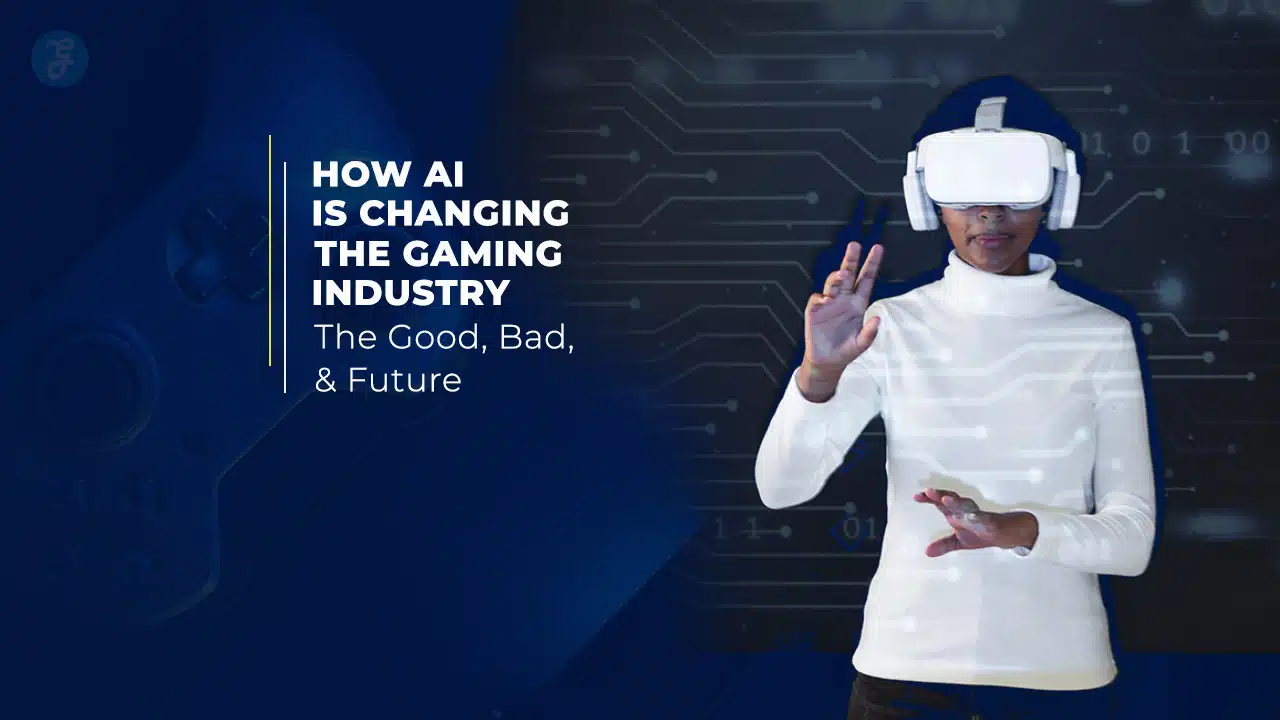
Artificial Intelligence (AI) is revolutionizing industries worldwide, and the gaming industry is no exception. From creating immersive experiences to redefining game development processes, AI is setting new standards for innovation.
However, like any technological advancement, it comes with its own set of challenges. This article delves into how AI is changing the gaming industry, highlighting its benefits, challenges, and what the future holds.
What is AI in the Gaming Industry?
AI, or Artificial Intelligence, refers to the simulation of human intelligence in machines. In the gaming industry, AI is used to enhance gameplay, design, and interactivity. By leveraging AI algorithms, developers can create smarter non-player characters (NPCs), realistic environments, and adaptive gameplay.
Key Applications of AI in Gaming
AI has a wide range of applications in gaming that fundamentally transform how games are created and experienced:
| Application | Description |
| NPC Behavior | AI-powered NPCs act intelligently, offering dynamic and lifelike responses. |
| Procedural Content Generation | Automates the creation of levels, maps, and quests. |
| Game Analytics | Tracks player behavior to provide personalized experiences. |
| Cheat Detection | Identifies and mitigates cheating in online games. |
| Realistic Graphics | AI enhances visual quality by generating realistic textures and animations. |
| Speech and Voice Recognition | Powers in-game voice commands and interactive dialogue. |
AI’s ability to simulate human-like behavior and automate complex tasks makes it an indispensable tool for developers and players alike.
The Positive Impacts of AI on Gaming
The Good: How AI Enhances the Gaming Experience
AI’s contribution to gaming has been transformative, making games more immersive, personalized, and interactive.
1. Smarter NPC Behavior
Gone are the days of predictable NPCs. With AI, NPCs can learn and adapt based on player actions, making gameplay more engaging and challenging. For example, in “The Last of Us Part II,” NPCs coordinate attacks and respond dynamically to the player’s strategies. Similarly, open-world games like “Red Dead Redemption 2” feature AI-driven NPCs with unique personalities and realistic daily routines.
2. Personalized Gaming Experiences
AI analyzes player behavior, preferences, and skill levels to tailor experiences. This ensures that gamers receive challenges suited to their capabilities, boosting engagement. Games like “FIFA” and “Call of Duty” use AI-driven matchmaking to pair players with similar skill levels. Additionally, AI can recommend in-game purchases or unlockables that align with individual playstyles, creating a more customized experience.
3. Advancements in Game Design
AI streamlines game development by automating complex processes like level design, texture generation, and animation. Developers can focus on creativity while AI handles repetitive tasks. Procedural content generation, for instance, enables the creation of vast, unique game worlds in titles like “No Man’s Sky.”
4. Enhanced Realism
AI-powered graphics rendering allows for hyper-realistic visuals, from lifelike facial animations to dynamic weather systems. Games like “Cyberpunk 2077” and “Horizon Forbidden West” utilize AI to push the boundaries of visual fidelity.
Table: Benefits of AI in Gaming
| Benefit | Impact |
| Improved NPC Interactions | Enhances realism and challenge in gameplay. |
| Customizable Difficulty | Ensures an enjoyable experience for players of all skill levels. |
| Faster Development Cycles | Reduces time spent on tedious tasks, accelerating game releases. |
| Hyper-Realistic Visuals | Creates visually stunning environments and characters. |
| Tailored Player Experiences | Boosts engagement through personalized content and challenges. |
The Challenges of AI in Gaming

The Bad: Challenges AI Brings to the Gaming Industry
While AI offers numerous advantages, it also introduces significant challenges that developers and players must navigate.
1. High Development Costs
AI integration requires advanced tools, skilled professionals, and substantial financial investment. Small and indie game studios often struggle to afford these resources, limiting their ability to compete. For example, creating an AI-powered adaptive gameplay system can cost millions in development and testing.
2. Ethical Concerns
AI raises ethical issues such as:
- Data Privacy: AI collects vast amounts of player data, raising concerns about security and misuse. Developers must ensure compliance with data protection regulations like GDPR.
- Addiction: Personalized gaming experiences can lead to compulsive gaming habits, particularly among younger audiences. Games that use AI to create addictive reward loops risk criticism from regulators and parents alike.
3. Job Displacement
Automation through AI can reduce the need for manual tasks, potentially leading to job losses in the industry. Artists, designers, and QA testers may face reduced demand as AI takes over tasks like texture creation and bug detection.
4. Unpredictable Behavior
AI systems can sometimes behave unpredictably, leading to glitches or unintended consequences in games. Developers must invest time in rigorous testing to avoid such issues.
Table: Challenges of AI in Gaming
| Challenge | Description |
| High Costs | Limits accessibility for smaller developers. |
| Privacy Issues | Risks related to data collection and security. |
| Job Losses | Automation may replace human roles in development. |
| Addiction Risks | Personalized gameplay can lead to unhealthy habits. |
| Unpredictable AI Behavior | Requires extensive testing to prevent game-breaking glitches. |
The Future of AI in Gaming
The Future: What’s Next for AI and Gaming?
The future of AI in gaming looks promising, with emerging technologies poised to redefine the industry.
1. AI-Driven Virtual Worlds
AI is expected to power expansive and dynamic virtual worlds where environments evolve based on player interactions. This could lead to unparalleled immersion. For instance, AI-driven ecosystems in games like “Minecraft” or “Elden Ring” could react and adapt to players’ actions in real-time, creating unique experiences for every playthrough.
2. Revolutionizing the Metaverse
As the Metaverse grows, AI will play a critical role in creating interconnected virtual spaces. AI-powered avatars capable of understanding and responding to natural language will enable seamless communication. Real-time translation and adaptive environments will make virtual worlds more accessible and inclusive.
3. Ethical AI Development
To address concerns, the industry is focusing on ethical AI practices. This includes transparent data usage policies, efforts to minimize negative impacts on mental health, and the promotion of healthy gaming habits. Developers are also exploring ways to make AI tools more accessible to smaller studios, leveling the playing field.
4. Integration with Emerging Technologies
AI will increasingly integrate with technologies like VR (Virtual Reality), AR (Augmented Reality), and blockchain. This will enable new possibilities, such as AI-guided VR adventures or blockchain-based virtual economies powered by intelligent systems.
Table: Future Trends in AI and Gaming
| Trend | Potential Impact |
| Dynamic Virtual Worlds | Offers players ever-changing, immersive environments. |
| AI in the Metaverse | Facilitates seamless virtual interactions and realism. |
| Ethical AI Practices | Ensures responsible innovation and data security. |
| VR and AR Integration | Enhances immersive experiences with intelligent virtual environments. |
| AI-Blockchain Synergy | Powers secure, intelligent virtual economies. |
Takeaways
AI is undeniably reshaping the gaming industry. From smarter NPCs to personalized experiences and AI-driven innovation, the benefits are immense. However, challenges like high costs and ethical concerns cannot be overlooked. By addressing these challenges, the gaming industry can harness AI’s potential to create revolutionary experiences while ensuring responsible development.
As we look to the future, it’s clear that AI will continue to play a pivotal role in gaming. The question is not whether AI will change gaming but how far its impact will reach. Players, developers, and regulators must work together to navigate this evolving landscape responsibly.