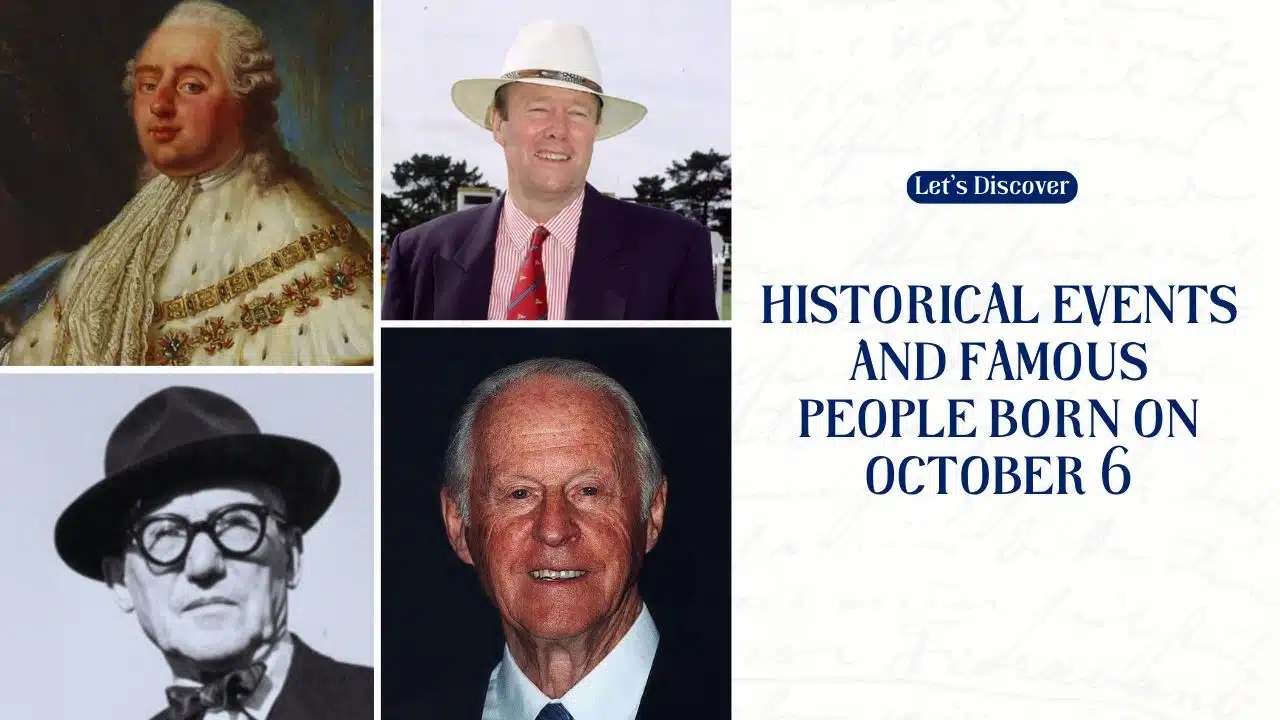
October 6 is a day that has seen many important events in history. It’s also the birthday of some very interesting people. In this article, we’ll learn about big things that happened on this day and about people who were born on October 6. From kings and wars to music and sports, this day has many stories to tell.
Historical Events of October 6
1789: Louis XVI Returns to Paris
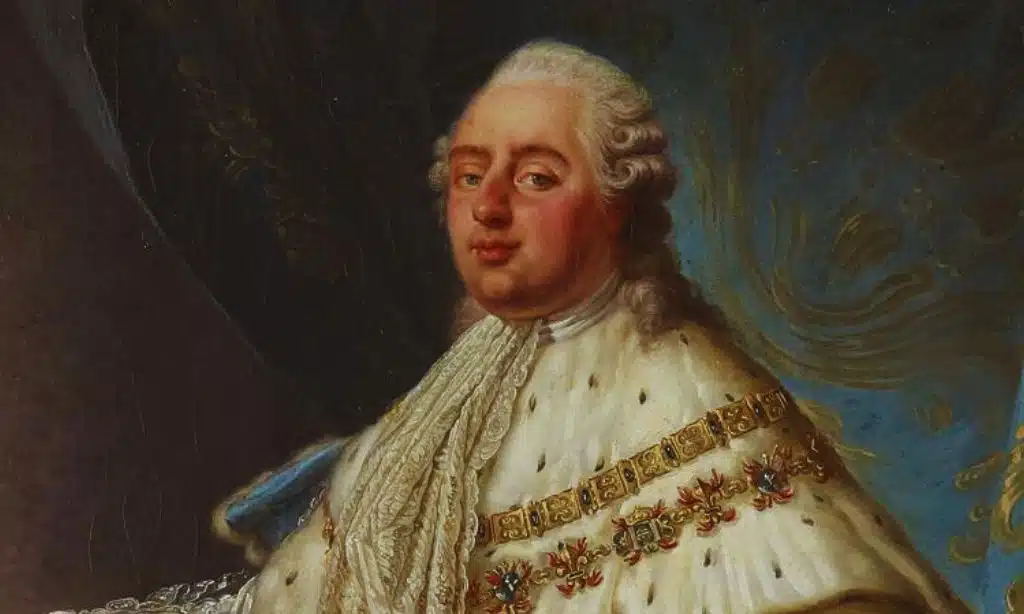
On October 6, 1789, something important happened during the French Revolution. King Louis XVI had to leave his fancy palace in Versailles and go back to Paris. This happened because many people in Paris were angry and hungry.
The day before, on October 5, a group of women had marched to Versailles. They were upset about the high price of bread. They made the king, queen, and their son go with them back to Paris.
This was a big moment in the French Revolution. It showed that the king didn’t have as much power as before. It was the beginning of big changes in how France was ruled.
1898: Gustav Mahler’s First Vienna Philharmonic Concert
On October 6, 1898, a famous music conductor named Gustav Mahler did something special. He led the Vienna Philharmonic orchestra for the first time. The Vienna Philharmonic is one of the best orchestras in the world.
Mahler was already known as a good conductor and composer. But leading the Vienna Philharmonic was a big deal. It showed that he was now one of the top musicians in Europe.
This concert helped make Mahler even more famous. He went on to write many great pieces of music that people still listen to today.
1939: Hitler’s Speech at the Reichstag
On October 6, 1939, Adolf Hitler, the leader of Nazi Germany, gave a big speech. This was during World War II, which had just started. Hitler was talking to the Reichstag, which was like Germany’s parliament.
In his speech, Hitler said Germany had beaten Poland. He also said he wanted peace with France and England. But we know now that he didn’t really mean it. He also talked about doing something about the “Jewish problem,” which was a scary thing to say.
This speech was important because it showed what Hitler was thinking. It helped other countries understand that Hitler was dangerous and that the war would probably get bigger.
1974: Emerson Fittipaldi Wins F1 World Championship
On October 6, 1974, a race car driver named Emerson Fittipaldi did something amazing. He won his second Formula 1 World Championship. Formula 1 is the highest level of car racing.
Fittipaldi was from Brazil. He drove for the McLaren team. In the last race of the year in the United States, he finished fourth. This was enough for him to win the championship by just 3 points.
This was a big deal because Fittipaldi was one of the first drivers from South America to be really successful in Formula 1. He helped make the sport popular in Brazil.
1979: Pope John Paul II Visits the White House
On October 6, 1979, something happened for the first time ever. Pope John Paul II visited the White House. He was the first Pope to ever do this.
The Pope met with President Jimmy Carter. They talked about important things like human rights and world peace. This visit was a big deal because it showed that the United States and the Catholic Church were becoming friendlier.
This visit helped start a tradition. Since then, other Popes have visited the White House too. It was an important moment in the relationship between the United States and the Vatican.
Famous Birthdays on October 6
Isaac Brock (1769-1812)
Isaac Brock was born on October 6, 1769. He was a British Army officer who became famous for defending Canada.
Brock fought in the War of 1812 between the United States and Britain. He led British and Canadian forces to several big wins. His most famous victory was capturing Detroit without a fight.
Sadly, Brock died in battle in 1812. But he is remembered as a hero in Canada. Many places in Canada are named after him.
Here’s a brief biography of Isaac Brock:
| Fact | Information |
|---|---|
| Born | October 6, 1769 |
| Birthplace | St. Peter Port, Guernsey |
| Died | October 13, 1812 |
| Known for | Defending Upper Canada in War of 1812 |
| Famous victory | Capture of Detroit |
| Nickname | “The Hero of Upper Canada” |
Le Corbusier (1887-1965)
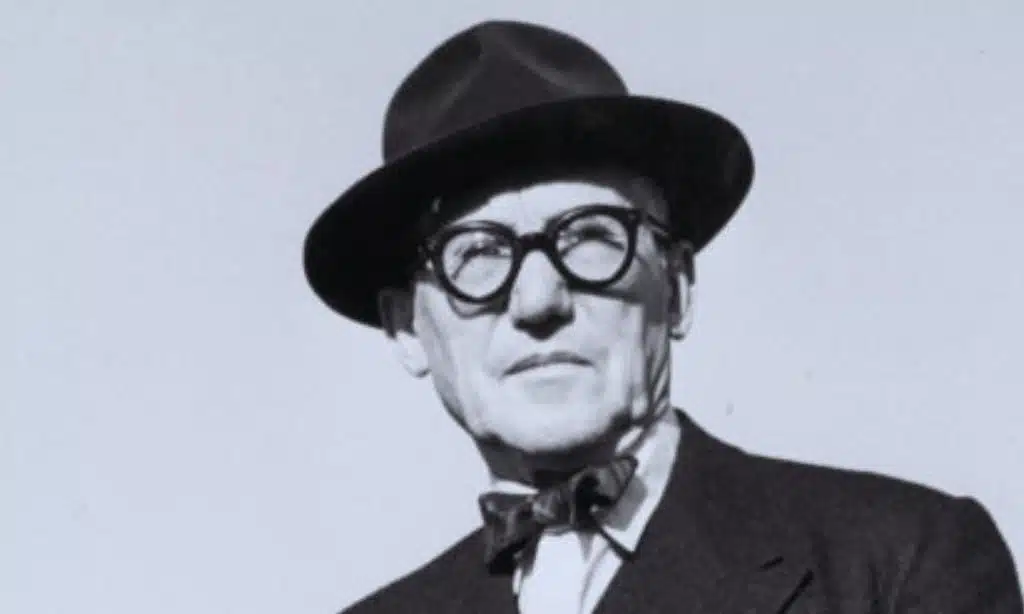
Le Corbusier was born on October 6, 1887. His real name was Charles-Édouard Jeanneret-Gris, but everyone called him Le Corbusier.
Le Corbusier was a very famous architect. He designed many important buildings around the world. He had big ideas about how cities should be planned and how houses should be built.
One of Le Corbusier’s famous ideas was that a house should be a “machine for living in.” This meant houses should be simple and practical. His ideas changed the way many architects think about buildings.
Here’s a brief biography of Le Corbusier:
| Fact | Information |
|---|---|
| Born | October 6, 1887 |
| Birthplace | La Chaux-de-Fonds, Switzerland |
| Died | August 27, 1965 |
| Known for | Modern architecture and urban planning |
| Famous works | Villa Savoye, Unité d’Habitation |
| Famous quote | “A house is a machine for living in” |
Thor Heyerdahl (1914-2002)
Thor Heyerdahl was born on October 6, 1914. He was a Norwegian explorer who went on many amazing adventures.
Heyerdahl’s most famous adventure was called the Kon-Tiki expedition. He and his friends built a raft and sailed it across the Pacific Ocean. They wanted to show that ancient people could have traveled long distances by sea.
Heyerdahl wrote books about his adventures that many people read. He also made movies about his trips. His work helped people learn more about how ancient cultures might have traveled and shared ideas.
Here’s a brief biography of Thor Heyerdahl:
| Fact | Information |
|---|---|
| Born | October 6, 1914 |
| Birthplace | Larvik, Norway |
| Died | April 18, 2002 |
| Known for | Kon-Tiki expedition |
| Famous books | “Kon-Tiki,” “Aku-Aku” |
| Major theory | Ancient cultural contact across oceans |
Richie Benaud (1930-2015)
Richie Benaud was born on October 6, 1930. He was an Australian cricketer who later became a famous cricket commentator.
Benaud was a great cricket player. He was the captain of the Australian team and led them to many wins. He was really good at bowling and batting.
After he stopped playing, Benaud became a cricket commentator on TV. He was known for his calm voice and smart comments about the game. Many people say he was the “voice of cricket.”
Here’s a brief biography of Richie Benaud:
| Fact | Information |
|---|---|
| Born | October 6, 1930 |
| Birthplace | Penrith, Australia |
| Died | April 10, 2015 |
| Known for | Cricket player, captain, and commentator |
| Playing career | 1952-1964 |
| Broadcasting career | 1964-2013 |
Tony Greig (1946-2012)
Tony Greig was born on October 6, 1946. He was a cricketer who played for England even though he was born in South Africa.
Greig was a tall player who was good at batting and bowling. He became the captain of the England team. But he got in trouble when he helped start a new cricket competition that many people didn’t like.
After he stopped playing, Greig became a cricket commentator. He was known for his excited way of talking about the game. Many people enjoyed listening to his commentary.
Here’s a brief biography of Tony Greig:
| Fact | Information |
|---|---|
| Born | October 6, 1946 |
| Birthplace | Queenstown, South Africa |
| Died | December 29, 2012 |
| Known for | England cricket captain and commentator |
| Playing career | 1967-1978 |
| Broadcasting career | 1979-2012 |
Takeaway
October 6 has been a day of big events and important births throughout history. We’ve seen how it was a day when kings moved, music was played, and important speeches were made. We’ve also learned about some very different people who were born on this day – from soldiers and architects to explorers and cricket players.
Each of these events and people has left a mark on our world. From Louis XVI’s return to Paris that changed France, to Le Corbusier’s buildings that changed cities, from Heyerdahl’s adventures that taught us about the past, to Benaud and Greig who helped people enjoy cricket, October 6 has given us a lot to think about.
Learning about history helps us understand our world better. It shows us how things have changed over time and how the actions of people in the past still affect us today. So next time October 6 comes around, remember all these interesting events and people!
References:
- Doyle, W. (1989). The Oxford History of the French Revolution. Oxford University Press.
- Franklin, P. (1997). The Life of Mahler. Cambridge University Press.
- Kershaw, I. (2008). Hitler: A Biography. W. W. Norton & Company.
- Hilton, C. (2005). Emerson Fittipaldi: Heart of a Racer. Haynes Publishing.
- Weigel, G. (1999). Witness to Hope: The Biography of Pope John Paul II. Harper Collins.
- Tupper, F. (1847). The Life and Correspondence of Major-General Sir Isaac Brock, K.B. Simpkin, Marshall & Co.
- Weber, N. F. (2008). Le Corbusier: A Life. Alfred A. Knopf.
- Heyerdahl, T. (1950). Kon-Tiki: Across the Pacific by Raft. Rand McNally.
- Benaud, R. (1998). My Spin on Cricket. Hodder & Stoughton.
- Greig, T. (2011). Tony Greig: A Reappraisal of English Cricket’s Most Controversial Captain. Pitch Publishing.