

You ever feel stuck, wondering how to cut down on energy waste in a world that guzzles power like a thirsty giant? Many folks in Brazil face this headache, with buildings sucking up tons of electricity, driving up costs and harming the planet.
It’s like trying to fill a leaky bucket, you pour in effort but see little gain. Imagine your office or home as a smart machine that saves cash and cleans the air, that’s the dream for green thinkers chasing carbon neutrality.
Brazil has doubled its energy demand since 1990, thanks to fast growth and more folks joining the middle class, pushing for smarter fixes like renewables and green energy. This blog explores 5 Green Buildings In Brazil Using Smart Energy Tech, showing how they tap solar power, smart grids, and energy management to boost efficiency and slash carbon intensity.
We’ll explore their tricks for renewable energy generation, helping you spot ways to green your own space or business, even if you’re a small enterprise eyeing competitive advantage.
You’ll get tips on beating energy woes with clean energy vibes.
Read on for the full scoop.
Key Takeaways
- Brazil’s energy demand doubled since 1990 due to fast growth and a bigger middle class.
- The National Electricity Conservation Program started in 1985 and saved 2.1% of total power use by 2013, equal to what 5 million homes use in a year.
- Federal Law 10,295 from 2001 sets strict energy standards and bans weak models to boost efficiency.
- Over 50 indigenous communities approved green projects that use solar panels and biogas for clean power.
- The National Energy Plan 2030 projects that efficiency steps could save 15.5 gigawatts of power over two decades.
Building 1: São Paulo Corporate Towers
São Paulo Corporate Towers stand tall in Brazil’s bustling city. This green building uses smart energy tech to cut down on power use. Picture a skyscraper that thinks for itself, like a wise old tree saving rain for dry days.
It aims for carbon neutrality with renewable sources all around. Energy efficiency shines here, thanks to artificial intelligence that controls lights and air. Folks in the digital economy love it for that low carbon footprint.
Market potential grows as buildings like this decarbonise the urban scene. Green infrastructure meets excellence in design for greater efficiencies. Think about environmental, social, and governance factors at play.
Small and medium-sized enterprises find subsidies helpful to join in. Data centres inside run on a renewable grid, pushing for zero carbon goals. Environmentalists cheer this step toward sustainable energy.
Building 2: Infinity Tower, São Paulo
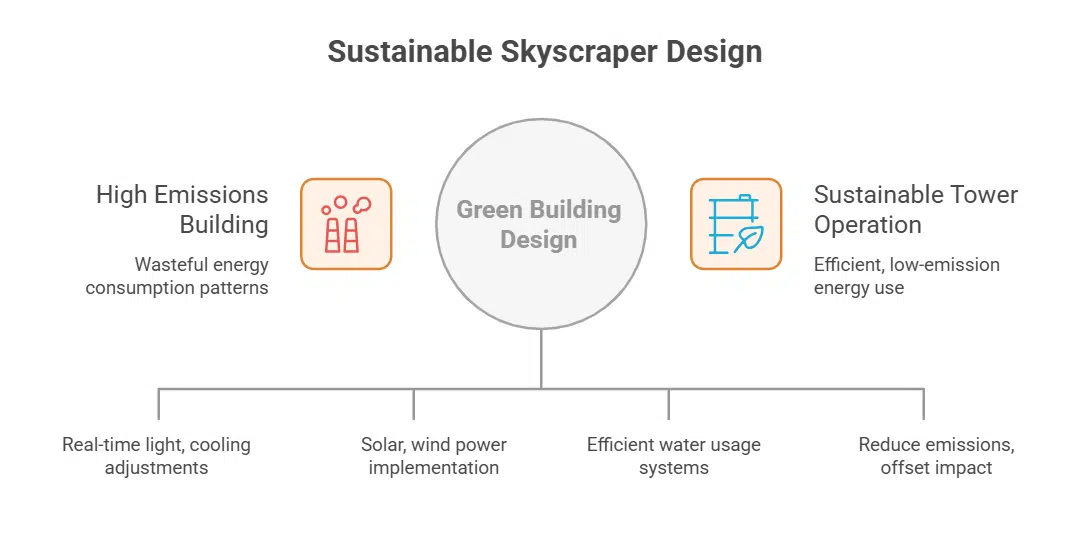
Infinity Tower stands tall in São Paulo, a shining example of green design. This skyscraper uses smart energy tech to cut waste and boost efficiency. Imagine this, folks, it’s like a wise old tree that knows how to save every drop of rain.
Builders integrated artificial intelligence (AI) to monitor lights and cooling systems in real time. That keeps energy use low, you see. The tower aims for carbon neutrality, slashing emissions like a pro.
It taps into market potential for green economic growth in Brazil. Small and medium-sized enterprises (SMEs) helped build its solar panels, proving local businesses can thrive.
Now, think about the International Finance Corporation (IFC) backing such projects. They see big wins in carbon pricing to encourage more like this. Infinity Tower’s systems recycle water and harness wind power, making it a leader.
Energy flows smart here, with sensors adjusting to the weather outside. This setup saves money and helps the planet, step by step. Brazil’s cities need more towers like this to fight climate change.
Building 3: Eldorado Business Tower, São Paulo
Eldorado Business Tower stands tall in São Paulo. This skyscraper uses smart energy tech to cut power use. Builders added solar panels on the roof. They catch sun rays all day. Lights turn off when rooms sit empty.
Air systems adjust based on people inside. You know, it’s like the building thinks for itself, saving bucks and the planet.
Folks see big market potential here for green tech in Brazil. The tower aims for carbon neutrality by 2030. Rainwater collection fills toilets and gardens. Wind turbines spin on high floors, making extra power.
Imagine working in a place that fights climate change, right? Tech like this boosts jobs and clean energy goals.
Building 4: Eco Berrini Tower, São Paulo
Eco Berrini Tower stands tall in São Paulo, a prime example of green design. Builders packed it with smart energy tech to cut waste and boost efficiency. Solar panels soak up the sun, powering lights and systems inside.
Rainwater collection keeps things running smooth, like a clever trick to save drops. This spot draws businesses eyeing the market potential for eco-friendly spaces.
Folks working there enjoy cooler air from advanced HVAC setups that learn and adapt. Sensors track energy use in real time, nipping problems in the bud. Imagine a building that thinks ahead, slashing bills like a sharp budget knife.
It fits right into Brazil’s push for cleaner cities, showing how tech turns towers into allies for the planet.
Building 5: Torre Santander, São Paulo
Torre Santander stands tall in São Paulo. This tower shows off top-notch ways to build green. It lines up with key ideas for eco-friendly structures, folks. Builders here mix in smart energy tools.
These boost the place’s green side and cut waste. Think of it like a wise old tree, soaking up sun to thrive. The tower joins Brazil’s push for clean power, such as solar panels that grab rays from the sky.
You see, it promotes cheap tricks to make buildings kinder to Earth. Less harm to the planet comes from these smart moves.
This spot follows fresh rules that save water and trees. Energy flows better, no doubt. Torre Santander helps Brazil step into a brighter, greener tomorrow. Imagine chatting with a friend about saving bucks on power bills, that’s the vibe here.
It plays a big part in the country’s shift to lasting ways. Smart systems keep everything running smooth, like a well-oiled machine.
Smart Energy Technologies Used in These Buildings
These green buildings in São Paulo pack a punch with smart energy tech that keeps things running smooth and green. Smart grids play a big role here, optimizing electricity flow like a traffic cop directing cars during rush hour.
They support solar energy distributed generation, letting buildings make their own power without wasting a drop. Take the São Paulo Corporate Towers, for instance; it uses building energy management systems, or BEMS, to monitor energy in real time and boost efficiency.
Folks, imagine your office knowing exactly when to dim the lights or crank up the AC, saving bucks and the planet. Brazil’s smart grids improve service quality, cut down on losses, and lower operational costs with modern tech in electricity distribution.
Regulations help too, allowing grid connection for small-scale distributed generation and rolling out ‘hourly tariffs’ to match usage with cost.
Solar photovoltaic panels pop up on roofs across these spots, like the Infinity Tower, turning sunlight into clean power faster than you can say “renewable.” Eldorado Business Tower taps into this, generating energy on-site and feeding extras back to the grid.
Research on biogas pushes things further, aiming for renewable natural gas production that could heat buildings without the fossil fuel guilt. Eco Berrini Tower integrates BEMS for that real-time edge, adjusting systems on the fly to slash waste.
Torre Santander joins the fun with smart grids that reduce losses, much like a well-oiled machine humming along. All this tech weaves together, making these buildings leaders in Brazil’s push for smarter energy.
Integration of Renewable Energy Sources
Brazil pushes hard for clean power in its green buildings. Take those São Paulo towers, they grab sunlight with solar photovoltaic panels. This setup cuts down on dirty energy use, you know, like flipping a switch to a brighter future.
Folks in over 50 indigenous communities even gave their nod to such projects, showing real teamwork. Plus, research examines biogas closely, turning waste into renewable natural gas for steady supply.
Laws back this up big time. Federal Law 10,295 from 2001 sets tough rules, banning weak models and demanding top performance. Pair that with the Brazilian Labeling Program since 1984, and you see labels guiding smart choices.
The National Electricity Conservation Program, started in 1985, saved 2.1% of all power in 2013. That matches what 5 million homes use in a year, talk about a win for the planet. Your office can run on sun and gas from scraps, that’s the magic happening here.
Use of Building Energy Management Systems (BEMS)
These green buildings in São Paulo rely on Building Energy Management Systems, or BEMS, to keep things running smooth. Like a smart coach watching every play in a game, BEMS tracks energy use in real time.
It spots waste right away and fixes it fast. Take the São Paulo Corporate Towers, for example; its system adjusts lights and air based on who’s inside, cutting power bills like a sharp knife through butter.
You know, it’s like having a helpful friend who reminds you to turn off the stove before you leave. Builders install sensors and software that talk to each other, making sure energy flows just right.
This setup boosts efficiency, and hey, it even makes the place feel more alive.
Folks often say BEMS acts as the brain of a building, always thinking ahead to save energy. In the Infinity Tower, it monitors heating and cooling around the clock, dodging those sneaky energy leaks that add up quick.
Imagine chatting with your house, “Hey, dim the lights,” and it listens. Systems like these use real-time data to tweak settings on the fly, promoting sustainability without much fuss.
Eldorado Business Tower benefits too, with BEMS handling ventilation smartly to keep air fresh and costs low. It’s empathetic tech, you see, understanding the needs of people and the planet alike.
Short tweaks here and there lead to big wins in green living.
Impact on Energy Efficiency and Sustainability
Brazil faces urgent needs to promote energy efficiency amid rising demands. Energy use in the country doubled since 1990, thanks to economic growth and a bigger middle class. Imagine, like a balloon filling up too fast, that surge puts pressure on resources.
The National Electricity Conservation Program started in 1985 and cut 2.1% of total power use by 2013. That savings matched what 5 million homes use in a year. Now, imagine green buildings stepping in like smart heroes, slashing waste with tech.
Projections from the National Energy Plan 2030 paint a bright picture; efficiency steps could spare 15.5 gigawatts of power over two decades. Brazil’s sustainability efforts shine through a national program that cuts carbon, saves forests, and creates green jobs.
New laws push for materials and tools that sip resources, building a greener future. You know, it’s like giving the planet a high-five, these changes make real waves in fighting climate woes.
Contribution to Brazil’s Environmental Goals
These green buildings support Brazil’s push for cleaner energy. They tie into programs like the Brazilian Labeling Program from 1984. Folks, imagine cutting waste like tossing out old, leaky buckets.
The National Electricity Conservation Program, started in 1985, plays a big role too. It saved 2.1% of all electricity used in 2013. That matches what 5 million homes use in a year.
Federal Law 10,295 from 2001 sets strict rules. It demands minimum energy performance standards and stops sales of weak models.
Projects here avoid building gas pipelines, which helps protect the Amazon rainforest. Over 50 indigenous groups gave their okay for such work. The Reservoir-to-Wire model boosts power output without big networks.
This cuts harm to nature, like a smart shortcut in a crowded city. Energy management systems in these towers make efficiency real. They help meet national goals, step by step.
Challenges in Scaling Smart Energy Tech
Brazil covers a huge area with diverse resources, and that makes it tough to spread smart energy tech everywhere. Picture trying to fit one shoe on over 200 million feet, each with its own shape.
Leaders struggle to build sustainable systems for all those citizens. Energy use has doubled since 1990, thanks to fast economic growth and a bigger middle class. This boom pushes demands sky high, like a balloon filling too fast.
Smart tech aims to cut waste, but scaling it up hits roadblocks. Costs soar in remote spots, where grids falter. Local rules vary by region, adding confusion. Workers need new skills, yet training lags behind.
Imagine a puzzle with pieces that don’t match. Brazil pushes for better energy use amid these rising needs, but the path twists.
Folks in Brazil chase green goals, yet hurdles pop up like weeds in a garden. Diverse landscapes mean solar panels work great in sunny spots, but flop in rainy zones. That diversity complicates uniform tech rollout.
Over 200 million people crave reliable power, straining old systems. Economic jumps since 1990 doubled consumption, fueling urgency for efficiency. Smart tools like building energy management systems promise savings, but upfront prices bite hard.
Small firms balk at investments, fearing slim returns. Empathy hits home, you know, when families face blackouts while tech sits unused. A dash of humor: it’s like owning a fancy car without gas money.
Integration falters in vast areas, where connections stay spotty. Leaders eye fixes, blending renewables to ease the load.
Takeaways
These green buildings in São Paulo show how smart tech can cut energy waste, like a clever friend who turns off lights you forgot. Picture the savings adding up, helping the planet one tower at a time, with renewable sources leading the charge.
You see, folks, adopting these ideas pushes Brazil toward cleaner goals, even if challenges pop up like weeds in a garden. Let’s cheer for more spots like these, making our world brighter and greener.
FAQs on Green Buildings In Brazil Using Smart Energy Tech
1. What makes these green buildings in Brazil stand out with their smart energy tech?
Picture this, like a tree soaking up sun without wasting a drop; these spots harness solar panels and sensors to cut energy use by half. They keep things cool, you know, without cranking up the AC all day.
2. Can you name a couple of those five green buildings in Brazil using smart energy tech?
Sure thing, the Eldorado Business Tower in São Paulo tops the list with its wind turbines spinning like tops. Then there’s the Ventura Corporate Towers, pulling tricks with rainwater collection to power lights. It’s like they’re playing a smart game against waste.
3. How does smart energy tech help the environment in these Brazilian green buildings?
It slashes carbon footprints, plain and simple.
4. Why should folks care about green buildings in Brazil that pack smart energy tech?
Hey, imagine your home acting like a wise old owl, saving bucks on bills while hugging the planet. These buildings show Brazil leading the charge, inspiring us all to think green. Plus, they’re proof that tech can be a real lifesaver for our world.






























