You write content, but Google still ignores your site. Ever wonder why some articles soar to the top while others are lost on page three? I know how frustrating that feels because I’ve seen it happen to great writers who simply missed a few specific signals.
Most people struggle with proving their real experience online, and that puts a lid on ranking higher in search results. Here is a truth: Google E-E-A-T factor to judge if your content deserves more eyes.
This blog post is packed with tips to help you show off what you know for better rankings. I am going to walk you through the exact steps I use, and I think you will be surprised at how easy it can be.
What is E-E-A-T?
E-E-A-T shapes how Google sees your site’s value and trust. While many site owners chase keywords, E-E-A-T is the real backbone of quality content online. It comes directly from Google’s “Search Quality Rater Guidelines,” a document of over 170 pages that human evaluators use to grade search results.
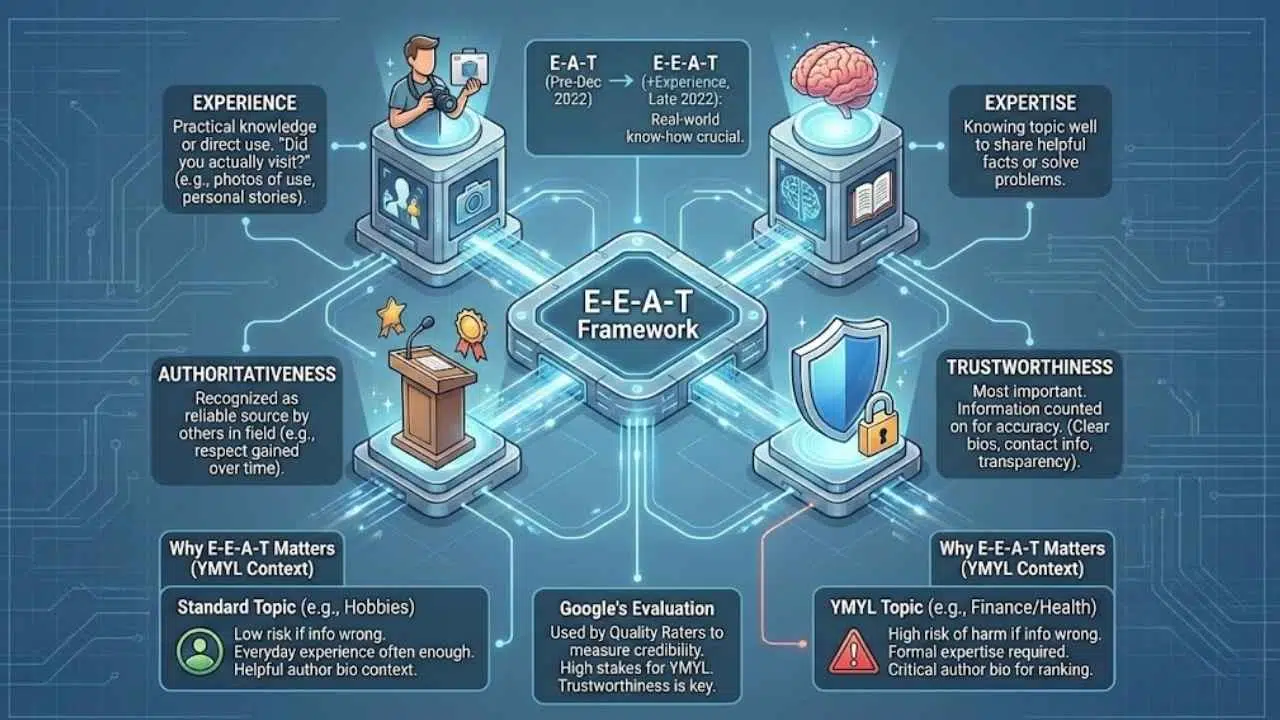
Definition of E-E-A-T: Experience, Expertise, Authoritativeness, and Trustworthiness
“E-E-A-T stands for Experience, Expertise, Authoritativeness, and Trustworthiness. Google uses this framework to measure content quality and credibility.”
Let’s break down the four pillars that make up this framework:
- Experience: This points to practical knowledge or direct use of a product or service. Did you actually visit the hotel you are reviewing?
- Expertise: This means knowing the topic well enough to share helpful facts or solve real problems.
- Authoritativeness: This is about being recognized by others as a reliable source in your field. Think of how doctors or teachers gain respect over time.
- Trustworthiness: This matters most. It shows users and Google that your information can be counted on for accuracy.
Since late 2022, Google has made “Experience” a key part of its guidelines so readers get honest tips from people who have actually done what they describe. This shift pushes website owners to highlight true stories, results, and proof that builds confidence with both search engines and people looking for help online.
The evolution from E-A-T to E-E-A-T
Google first introduced E-A-T to check if a website or an author knew what they were talking about and could be trusted. In December 2022, Google added another “E” for Experience to the evaluation guidelines. This change made it vital for creators to show not just book smarts but also real-world know-how.
Experience now means showing proof of actual use or direct involvement with a topic. For example, having pictures of yourself using a product or sharing personal stories matters more than ever before.
Adding this extra layer helps boost content quality and builds credibility in Google’s eyes. Case studies, detailed author bios with credentials, and user testimonials all count as strong evidence under the new approach. Google wants clear signals that information comes from people who have walked the walk so users get honest answers.
Why E-E-A-T Matters for SEO
Google wants helpful pages that people can trust, so it checks content for quality signals. This is especially true for topics Google calls “Your Money or Your Life” (YMYL). These are subjects like health, finance, or safety where bad advice could actually hurt someone.
How Google evaluates content quality
Search engines use the E-E-A-T framework to check content quality. This system helps them tell if a website or author can write with authority and accuracy about a topic. The stakes are high for YMYL pages.
| Feature | Standard Topic (e.g., Hobbies) | YMYL Topic (e.g., Finance/Health) |
|---|---|---|
| Risk Level | Low risk if info is wrong. | High risk of harm if info is wrong. |
| Required Proof | Everyday experience is often enough. | Formal expertise (degrees/citations) is required. |
| Author Bio | Helpful context. | Critical for ranking. |
Content that includes real examples or stories shows experience and increases credibility. Evaluation guidelines urge the use of strong author bios, supporting evidence, clear facts, and user-focused writing.
Helpful pages rank higher if they show reliability through consistent accuracy and transparency about sources or credentials. In late 2022, Google added “Experience” as an extra “E” to boost how much weight direct knowledge carries during search evaluation.
Pages that share detailed case studies or actual success stories help raise both trustworthiness and ranking potential without feeling cold. Consistent updates based on new facts also build user trust and signal expertise fast.
The role of trust in rankings
Trust is the most important member of the E-E-A-T family. Google uses trust to see if a content creator or website is reliable and credible. A page with strong trustworthiness helps users feel safe, which can boost rankings in search results.
For example, websites that show clear author bios, company details, and real contact information often rank higher. A 2025 analysis of AI Overviews found that for sensitive topics like finance, Google overwhelmingly favors established institutions with clear trust signals.
If content shows authenticity and follows Google’s Evaluation Guidelines, it stands out as trustworthy. Trust may not be a single ranking score, but mixing Experience, Expertise, Authoritativeness, and Trustworthiness makes a site more likely to perform well.
Breaking Down the E-E-A-T Elements
Each part plays a different role in how people and search engines view your content. Think of it like building a house. Every brick matters, or the whole thing collapses.
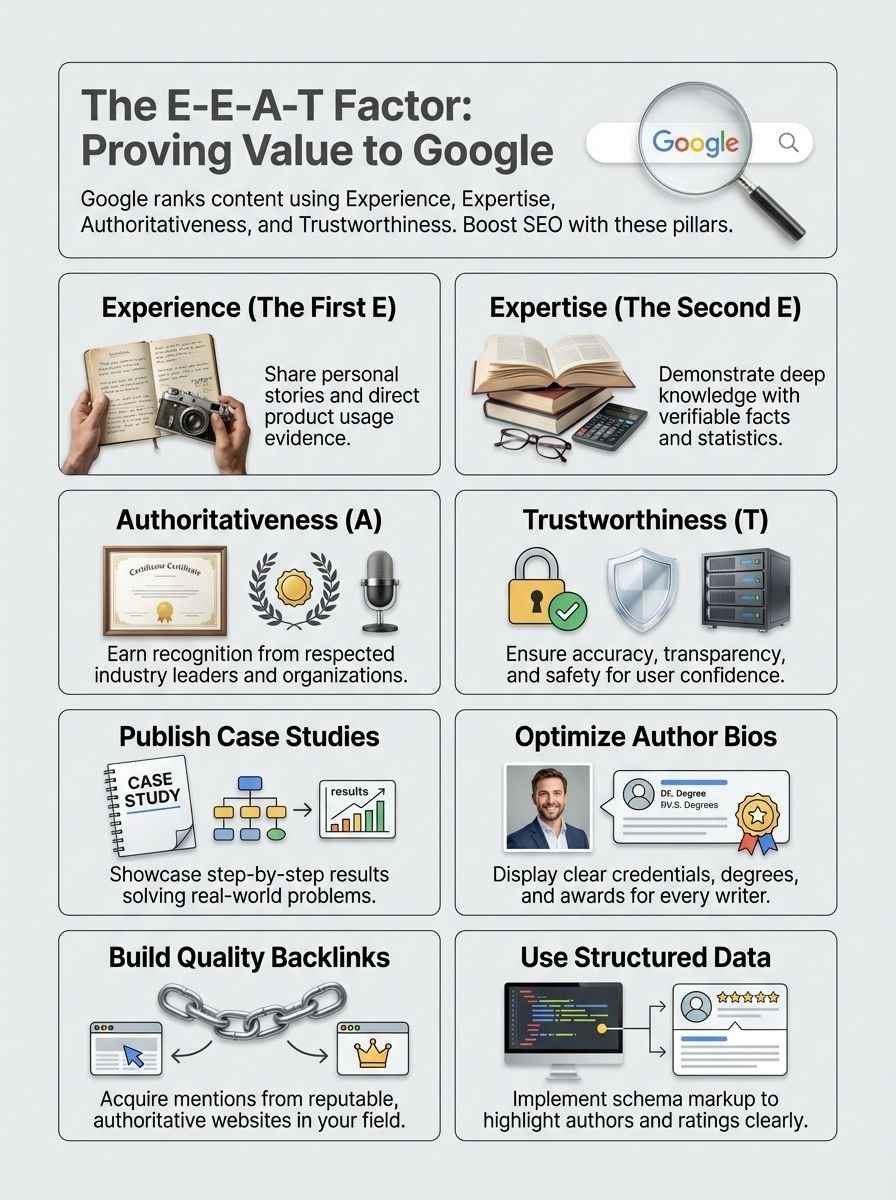
Experience: Demonstrating direct knowledge
Sharing your own story or a real-life case study paints a clear picture for Google. If you have used a product, tried a service, or solved a problem yourself, describe that process in detail. Write about the steps you took and what results came from them.
This shows both the evaluation guidelines and your authentic knowledge to readers and search engines alike. A detailed experience page boosts user trust and search engine confidence in your content quality.
Show photos, results, testimonials, or outcomes to back up what you claim. Google values content creators who offer helpful evidence of actual use or understanding. This can lift your credibility and online reputation faster than just quoting textbooks or repeating facts from other sites.
Expertise: Proving subject matter expertise
Google checks for subject matter expertise to see if you really know your stuff. Show knowledge by including facts, statistics, and practical tips that are easy to check.
- Add degrees, certifications, or years of work experience on the topic in your author bio.
- Use clear language so readers can trust your advice.
- Cite credible sources like academic journals or government reports.
Sites with true experts often rank higher because Google values reliable information. Stuff like publishing helpful guides or answering tough questions shows skill and deepens content quality. Keep details updated since Google looks for fresh evidence of knowledge and reliability when evaluating authority online.
Authoritativeness: Building recognition and reputation
Experts with a long track record get noticed. Readers trust sites linked to respected names or organizations. Sites that appear in top news sources often enjoy higher authority too.
For example, an article on medical advice written by a board-certified doctor holds more weight than one from an unknown blogger. Facts show Google uses these signals to judge who stands out for quality knowledge and credibility.
Mentions from trusted websites boost your digital reputation quickly. High-quality backlinks tell search engines you are recognized within your field. Awards, positive reviews, and expert profiles help build authority and sharing credentials and proof of achievements does as well.
Trustworthiness: Establishing reliability and credibility
People look for content they can count on, and Google agrees. Trustworthiness sits at the heart of E-E-A-T helping decide what lands near the top of search rankings. To win trust, websites should show clear contact details and privacy policies so visitors feel safe sharing information.
Adding real author names and detailed bios boosts credibility too. It shows there are real humans with actual experience or credentials behind every word.
Websites rise in credibility by using facts backed up by evidence like case studies from 2024 or user reviews that come off as authentic instead of staged. Authority signals such as backlinks from respected sites also matter here. They work like digital thumbs-ups in Google’s eyes.
How to Prove Experience in E-E-A-T
Showing real stories, sharing what you know, and adding your background helps Google see you’re the real deal. Here is how you can do it.
Publish first-hand case studies and examples
Case studies and real examples help prove to Google that your site’s content comes from real-world knowledge. If you describe how you solved a problem or share proof of your success, it boosts credibility and shows genuine experience.
For example, a digital marketing blog can show step-by-step results with numbers. You could show how monthly visitors grew from 2,000 to 6,500 in six months using an SEO strategy focused on E-E-A-T factors. Google values proof such as:
- Screenshots of analytics or dashboards.
- Data tables showing before-and-after metrics.
- Photos of the actual process or product in use.
- Direct quotes from happy customers.
Use dates and clear details to make stories easy for readers to trust. This approach underlines both content quality and user experience while helping build authority online.
A local health site boosted its Google ranking in 2023 by sharing real patient recovery stories using the E-E-A-T framework. Each blog showed clear author bios with medical credentials and cited direct quotes from patients.
A tech reviewer saw a jump in page views after posting videos that walked readers through gadget tests step-by-step. These true accounts proved real use and reliability making content trustworthy for both users and Google’s evaluation guidelines.
Another example is a finance blogger who shared her journey saving $10,000 in one year. She supported each tip with receipts and bank statements. Such transparent evidence built credibility quickly. Sites that show people-centered content strategies often earn higher SEO scores because they offer expertise, authority, and authenticity backed by proof.
Detailed author bios with credentials help Google see real experience and expertise. For example, list relevant degrees or years in the field right below the author’s name. Add job titles, awards, certifications like “Google Certified Marketer,” or recognition from trusted organizations.
Use simple language to tell readers what makes this person credible. “Dr. Amy Xu has written about digital marketing since 2016” works perfectly. Readers want proof that writers know their stuff.
Showcase published work on other sites to highlight authority and trustworthiness. If someone helped launch a startup in 2020 or spoke at an SEO conference last year, mention it with dates for clear evidence. Well-organized bios make it easier for both humans and Google to judge credibility quickly.
Tools and Strategies to Improve E-E-A-T
Simple steps can help you shine brighter in Google’s eyes. Grab your readers’ attention with clear proof, then use a few smart tricks to boost trust fast.
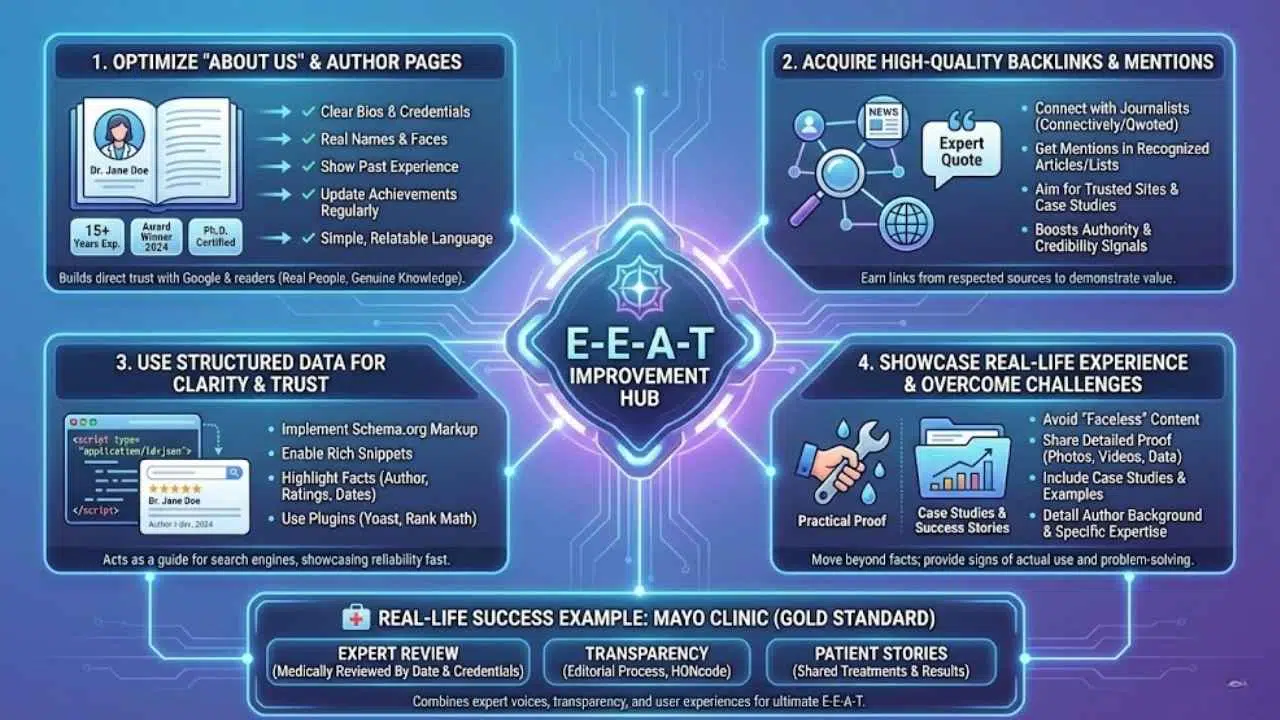
Clear “About Us” and author pages build trust with both Google and your readers. List facts like awards won in the last year, years of industry work, or partnerships with trusted groups.
Add real names, faces, and short bios that share past experience and education. Show proof of your team’s expertise to boost credibility. Keep the content up-to-date by adding new achievements or recent projects. Use simple words so everyone can understand who writes the articles and why they are credible sources.
This helps Google link each article to real people with genuine knowledge. This is an important step for better search engine ranking under E-E-A-T guidelines.
Acquire high-quality backlinks and mentions
Google looks for trusted voices. Backlinks from respected sites boost your site’s authority and trustworthiness. For example, if a top digital marketing blog links to your content about E-E-A-T or SEO, Google sees you as more reliable on those topics.
You can use tools like Connectively (formerly HARO) or Qwoted to connect with journalists who need expert quotes. Getting mentions in expert articles or recognized industry lists shows that others value your knowledge and experience.
Building credibility takes effort but pays off in better rankings. Aim for backlinks from pages with strong reputations in your field like case studies from leading companies or interviews published by major news sources.
Use structured data for clarity and trust
Structured data acts as a guide for search engines like Google. It gives clear labels to your content such as author names, ratings, and publish dates. This helps showcase facts about expertise, trustworthiness, and authority right in the search results.
Using Schema.org markup can boost user experience by showing rich snippets. People can spot high-quality details before even clicking. For example, adding “Person” or “Review” tags highlights credible sources and reliable information. You can implement this easily using plugins like Yoast SEO or Rank Math.
By following Google’s evaluation guidelines, you make it easier to prove content quality and reliability. Sites with structured data often see better ranking since Google quickly understands their authenticity and credibility signals fast.
Common Challenges with E-E-A-T and How to Overcome Them
Writers struggle to show real-life experience in their content. Google wants more than just facts. It looks for signs that someone actually did or used what they talk about. Many websites fall short here.
“The most common mistake I see is ‘faceless’ content. If a reader can’t tell who wrote the advice, they have no reason to trust it.”
They use generic advice, skip case studies, and forget to add proof like photos, videos, or data from real events. A plumber writing about fixing leaks can post pictures of the tools he uses or describe a time he solved a tricky problem for a customer last week. Readers and Google both want this level of detail before thinking you are reliable.
Having strong expertise is another hurdle. Some pages talk about big topics but do not name the author or share their background at all. That hurts trustworthiness and authority scores right away especially with health or money topics where credibility matters most.
Adding detailed bios helps fix this fast. Just mention years of work, degrees earned from well-known schools, industry awards, or even guest spots on podcasts people know by name. High-quality backlinks boost credibility too because respected partners signal your value to Google’s algorithms.
Real-Life Example of Strong E-E-A-T in Action
The Mayo Clinic stands tall as a leader in Google’s eyes. Their website shares health information written by doctors using clear language. They don’t just post articles. They prove their value in specific ways.
- Expert Review: Each article includes the doctor’s name, credentials, and a “Medically Reviewed By” date.
- Transparency: They display their editorial process and HONcode certification (a standard for trustworthy health info).
- Patient Stories: Patients share stories about their treatments and results on dedicated experience pages.
Google uses this effort as a gold standard for content quality and credibility. The site features detailed author bios, trustworthy medical facts, lots of research citations, plus structured data that helps search engines verify source authority fast.
Backlinks flow in from universities and health groups. These are signs of strong online reputation and reliability. Mayo Clinic’s mix of expert voices, true patient experiences, constant updates, and full transparency checks every box for E-E-A-T.
Final Thoughts
To boost content quality in Google’s eyes, showing your experience, expertise, authority, and trustworthiness is key. Simple methods like sharing real success stories, adding author bios with credentials, and updating “About Us” pages help build credibility fast.
These steps are quick to apply and also make your site more reliable for readers and search engines alike. How can you start proving your own experience today? Will you add a case study or update your bio? Every bit of effort here pays off in better rankings and stronger trust.