

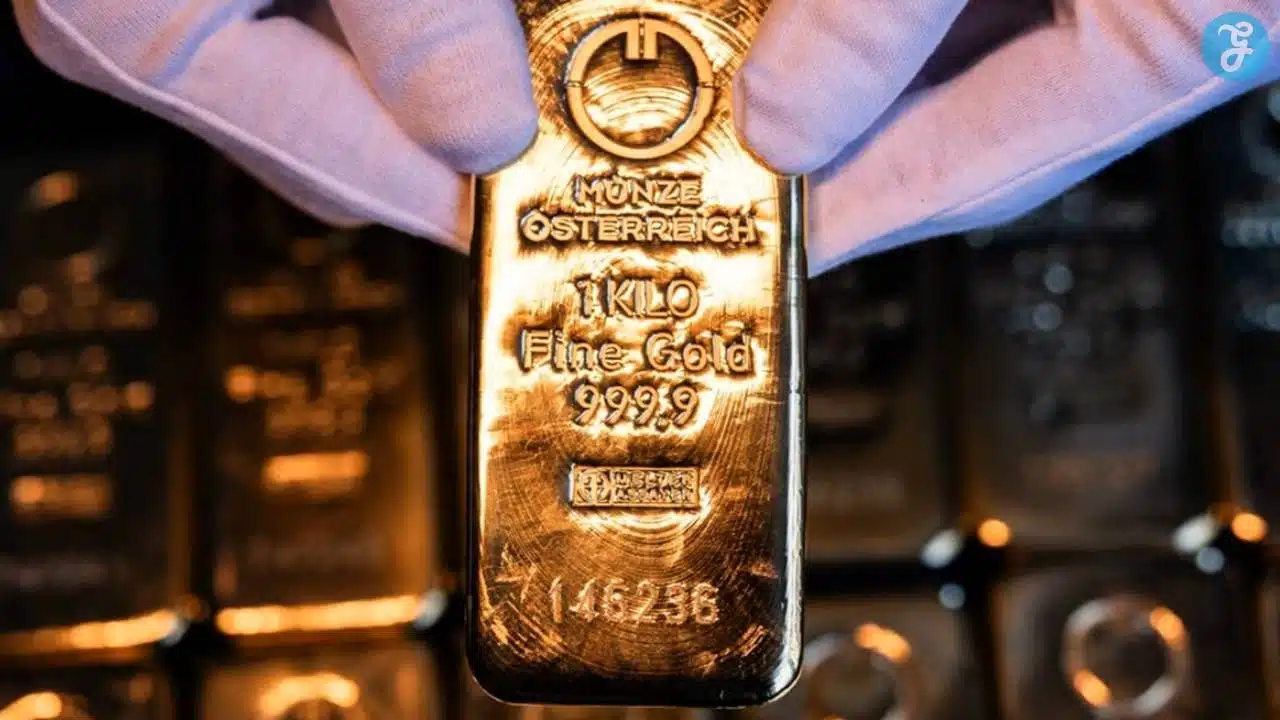
Gold climbs past 4290 as spot prices hover near $4,320 on Dec. 15, 2025, even after a central-bank report flagged bubble-like conditions in bullion and U.S. stocks. Investors are weighing rate-cut bets, central-bank buying and softer yields.
Gold pushed through the $4,290-per-ounce mark again in Monday trading, extending a year of extraordinary gains and keeping bullion near record territory. The move has drawn attention because it comes days after the Bank for International Settlements (BIS) warned that gold and U.S. equities are simultaneously flashing “bubble-like” signals—an unusual combination for two assets that often move in opposite directions.
“Gold climbs past 4290” refers to spot bullion trading above $4,290 per troy ounce. Spot is the cash-market price for immediate delivery, while futures are standardized contracts that reflect expectations and hedging demand on exchanges such as COMEX.
Where gold sits now: prices, records, and 2025 gains?
Spot gold traded around $4,320 per ounce on December 15, while the most-active U.S. futures contract was near $4,354. Gold’s 2025 run has been steep: the BIS noted bullion has risen about 60% since the start of the year, with recent months showing “accelerating” price behavior that can resemble bubble dynamics.
Key price levels at a glance
| Metric (USD/oz) | Level | Why it matters |
| Spot gold (Dec. 15) | ~4,320 | Global cash-market reference |
| U.S. gold futures (Dec. 15) | ~4,354 | Reflects hedging and rate expectations |
| “4290” threshold | 4,290 | Psychological/technical milestone |
| Recent record area | ~4,380 | Late-2025 peak zone referenced in market data |
| 2025 performance | ~+60% to +64% | One of the strongest yearly gains in decades |
Prices move throughout the day; levels are snapshots from the latest session.
Why the bubble warning didn’t stop the rally?
The BIS warning is not a call on where gold will trade next week. It is a risk signal built on statistical tests that look for “explosive behavior”—rapid, accelerating rises that have often been followed by corrections in the past.
The BIS stresses a key limitation: these tests can flag bubble-like conditions without telling when a reversal may happen. That helps explain why a warning can coexist with higher prices—momentum can carry markets further before sentiment changes.
What the BIS says is different this time?
The BIS highlighted that this is the only period in at least 50 years in which gold and U.S. equities have simultaneously entered “explosive territory.” It also pointed to a typical symptom of developing bubbles growing influence from retail investors chasing trends, sometimes driven by media hype and “fear of missing out.”
The ETF premium signal, explained
One detail in the BIS analysis stood out since the beginning of 2025, gold exchange-traded fund (ETF) prices have been consistently trading at a premium relative to net asset value (NAV).
- ETF price: what investors pay in the market.
- NAV: the value of the gold the fund holds (per share).
- Premium: when price stays above NAV, suggesting unusually strong demand and limits to arbitrage.
The BIS notes that persistent premiums can signal strong buying pressure—especially when retail interest is rising.
What’s driving gold in late 2025?
Gold does not pay interest or dividends, so it often benefits when investors expect lower rates, slower growth, or higher risks elsewhere. Several forces are reinforcing one another.
1) Fed policy and the opportunity cost of holding gold
The Federal Reserve lowered the target range for the federal funds rate by 0.25 percentage point on December 10, setting it at 3.50% to 3.75%. Lower rates can support gold by reducing the return on cash and many bonds—lowering the “opportunity cost” of holding a non-yielding asset.
The decision also highlighted disagreement inside the central bank. In the days after the meeting, officials publicly discussed concerns about inflation staying too high and the challenges of making decisions with delayed or incomplete data.
2) A softer dollar and lower yields
On December 15, bullion rose alongside a weaker U.S. dollar and lower Treasury yields, conditions that often make dollar-priced gold more attractive globally.
3) Central bank demand remains a major support
Beyond daily trading, official-sector demand has been one of the strongest structural supports for gold. Reported net central bank purchases totaled 53 tonnes in October, up 36% month over month and the strongest monthly net buying of 2025 to date.
Year-to-date reported net buying through October stood at 254 tonnes—still solidly positive, but slower than the pace of the previous three years, which the World Gold Council said may reflect the impact of higher prices.
Central bank buying leaders in October (reported net purchases)
| Buyer (reported) | October net purchases (tonnes) | Notes |
| Poland | 16 | Re-entered the market after pausing since May |
| Brazil | 16 | Second consecutive month of additions |
| Uzbekistan | 9 | Continued accumulation |
| Indonesia | 4 | Added to reserves |
| Turkey | 3 | Added to reserves |
| Czech Republic | 2 | Added to reserves |
| Kyrgyz Republic | 2 | Added to reserves |
| Other reported buyers | ~1+ each | Included China, Kazakhstan, Ghana, Philippines |
The same update noted that 95% of surveyed central banks expected global official gold reserves to rise over the coming year—suggesting gold still plays a strategic role in reserve planning.
4) Safe-haven demand tied to uncertainty
Longer-term research links gold demand to periods of elevated geopolitical risk and policy uncertainty. A World Bank analysis described 2025’s precious-metals surge as being driven by geopolitical tensions and economic uncertainty, projecting prices to remain elevated into 2026 even if they ease from peaks.
Separately, an ECB financial stability analysis explains why gold is often treated as a safe haven: it is not someone else’s liability (no default risk) and its supply is relatively inelastic.
What “gold climbs past 4290” means beyond traders?
Consumers and jewelry prices
Higher global spot prices typically flow through to higher retail prices for jewelry, coins and bars, although local currency moves, taxes and dealer premiums can amplify or soften the impact.
Market stability and volatility risk
The BIS warning focuses on market dynamics rather than fundamentals. It cautions that if retail-driven inflows accelerate and then reverse, herd-like behavior can amplify price swings—particularly if “fire sales” occur.
That does not mean a crash is imminent. It does mean volatility risks may be higher than usual—especially if interest-rate expectations shift quickly, the dollar rebounds, or risk appetite changes.
What to watch next?
Gold’s move above 4,290 underscores how strong the 2025 rally has been—strong enough to keep rising even as official institutions raise bubble flags. The next catalysts are likely to be:
- U.S. economic data and Fed signals, which can shift rate expectations fast.
- Dollar and yield direction, which often sets the tone for bullion demand.
- Demand indicators, including central bank reporting and signs of retail “trend chasing”.
For now, the headline remains straightforward: gold climbs past 4290—and the debate has shifted from whether the rally is real to how long it can stay this hot.































