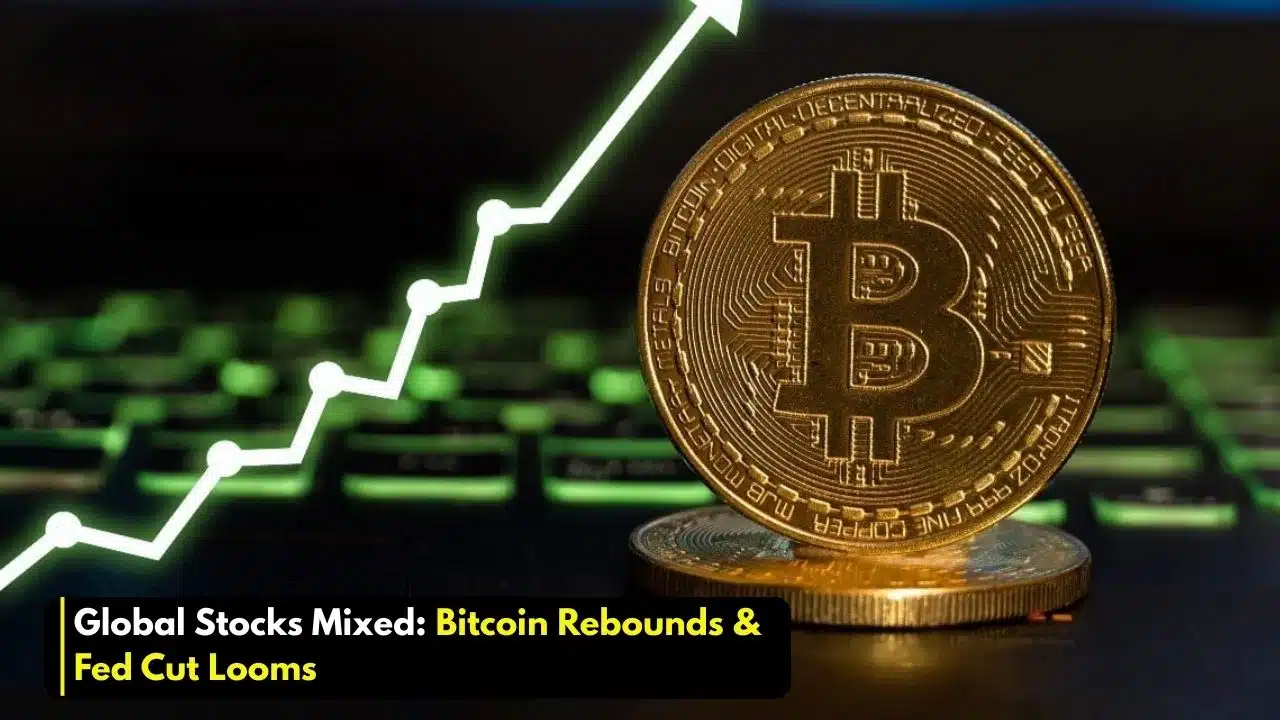
Global stock markets delivered a mixed performance in early December 2025, as investors weighed the implications of a likely Federal Reserve rate cut against a volatile rebound in Bitcoin and shifting sentiment across major asset classes. While equities in the United States and parts of Asia saw modest gains, concerns over global growth, sector-specific risks, and the ongoing crypto rollercoaster have kept traders cautious. This article provides a comprehensive analysis of the current market environment, focusing on the interplay between macroeconomic developments, cryptocurrency movements, and investor expectations heading into the final weeks of 2025.
Market Overview: Stocks Show Resilience Amid Uncertainty
Global equities ended November with little net change, as early sell-offs due to AI bubble concerns were largely unwound by renewed optimism over the prospect of a U.S. rate cut. In December, markets have shown resilience, with major indices advancing following a pause in earlier volatility. The S&P 500, for example, has historically performed well in December, averaging a gain of over 1% for the month, and is on track to repeat this trend in 2025. Value and core stocks outperformed growth stocks in November, with the Morningstar US Value Index rising 3.06% and the US Core Index up 2.32%, while the US Growth Index fell 2.37%.
Despite these gains, the broader picture remains mixed. Australian equities lagged, reflecting higher local bond yields and less optimism for rate cuts in that region. European and Asian markets also saw uneven results, with some indices benefiting from the weaker dollar and expectations of looser monetary policy, while others were dragged down by sector-specific issues and concerns over global demand.
Bitcoin’s Volatile Rebound: A Signal of Risk Appetite
Bitcoin’s price has been one of the most talked-about stories in December 2025. After a challenging November, where the cryptocurrency plummeted from $110,000 to a low of $80,600, Bitcoin has staged a notable rebound, surging by more than 10% in the past week and reclaiming the $90,000 mark. The rally, however, remains fragile, with analysts warning that sustained gains will require stronger ETF inflows and improved liquidity. The recent recovery has been attributed to renewed risk appetite among investors, supported by the likelihood of a Fed rate cut and the easing of broader market volatility.
Bitcoin’s rebound has also had ripple effects across financial markets. While the cryptocurrency does not directly influence major stock indices, its recovery signals that investors are once again willing to take on risk. This shift has been particularly evident in technology and growth stocks, which have benefited from the improved sentiment. However, the underlying volatility in crypto markets continues to pose risks, with analysts cautioning that the “crypto winter” may not be over just yet.
The Fed Rate Cut: What Markets Expect
The upcoming Federal Reserve meeting, set for December 9 and 10, is the focal point for global markets. Traders are now pricing in a 90% chance of a 25-basis-point rate cut, with Bank of America and other major brokerages forecasting a reduction in the federal funds rate. The Fed’s decision is being driven by a combination of sluggish labor market conditions, cooling inflation, and recent policy signals from central bank officials. A rate cut would mark the third reduction in 2025, following earlier moves in June and September, as the Fed seeks to balance growth and inflation objectives.
The impact of a rate cut would be felt across asset classes. Lower rates generally support risk assets, including equities and cryptocurrencies, by reducing borrowing costs and making yield-bearing investments less attractive. The U.S. dollar has weakened in anticipation of the cut, which tends to benefit non-U.S. markets and commodities. However, the effect on bond yields has been more muted, with global yields broadly steady as markets await further data on inflation and employment.
Sector Performance: Winners and Losers
The latest market movements have highlighted notable divergences across sectors. Value and core stocks have outperformed, reflecting investor preference for companies with strong balance sheets and steady earnings in a period of economic uncertainty. Technology stocks, while still benefiting from the AI boom, have shown more volatility, with some semiconductor firms like Credo posting impressive gains but others lagging behind. The Nasdaq-100, for example, pulled back by 1.6% in November, as concerns over valuations and regulatory scrutiny weighed on sentiment.
Healthcare and gold miners have also been standouts, with global health care ETFs gaining 8.2% and gold miners surging 15.4% in the past month. These sectors have benefited from their defensive qualities and the prospect of lower rates, which tend to boost demand for safe-haven assets. By contrast, sectors tied to interest rates, such as financials, have seen more mixed results, with banks and insurers facing headwinds from the decline in yields.
Global Economic Landscape: Uneven Growth and Policy Shifts
The global economic backdrop remains uneven, with some regions showing signs of resilience while others face headwinds. In the United States, a combination of declining manufacturing activity, stable consumer spending, and easing inflation has created the ideal conditions for a rate cut. In Europe, bond yields have also been easing, reflecting similar expectations of looser monetary policy. Meanwhile, Japan is gradually moving away from ultra-loose rates, signaling a shift in the global policy mix.
Commodity markets have also been affected by these trends. Gold prices have risen further on the back of rate cut expectations, while industrial metals have been more subdued due to concerns over global demand. The weaker dollar has provided a boost to non-U.S. markets and commodities, but the overall picture remains one of cautious optimism.
Investor Sentiment and Risks Ahead
Despite the recent rally in stocks and Bitcoin, investor sentiment remains cautious. The prospect of a Fed rate cut has provided a boost, but markets are still sensitive to economic data, geopolitical risks, and the ongoing volatility in crypto markets. Analysts warn that while December is historically a strong month for equities, the risk of sudden volatility remains high, particularly if economic data disappoints or geopolitical tensions escalate.
Key risks to watch include the pace of inflation, the strength of the labor market, and the direction of global trade. Any surprise in the upcoming economic reports could shift market expectations and trigger a new wave of volatility. In the crypto space, the sustainability of Bitcoin’s rebound will depend on institutional demand and the broader risk environment.
Navigating a Complex Market Environment
Global markets are entering the final stretch of 2025 in a state of cautious optimism, supported by the prospect of a Fed rate cut and a tentative rebound in Bitcoin. While equities have shown resilience and some sectors have delivered strong performance, the overall environment remains complex and volatile. Investors must navigate a mix of macroeconomic uncertainty, sector-specific risks, and the ongoing evolution of the crypto market. As the year draws to a close, the focus will remain on the Fed’s next move, the trajectory of economic data, and the sustainability of the current rally in risk assets.