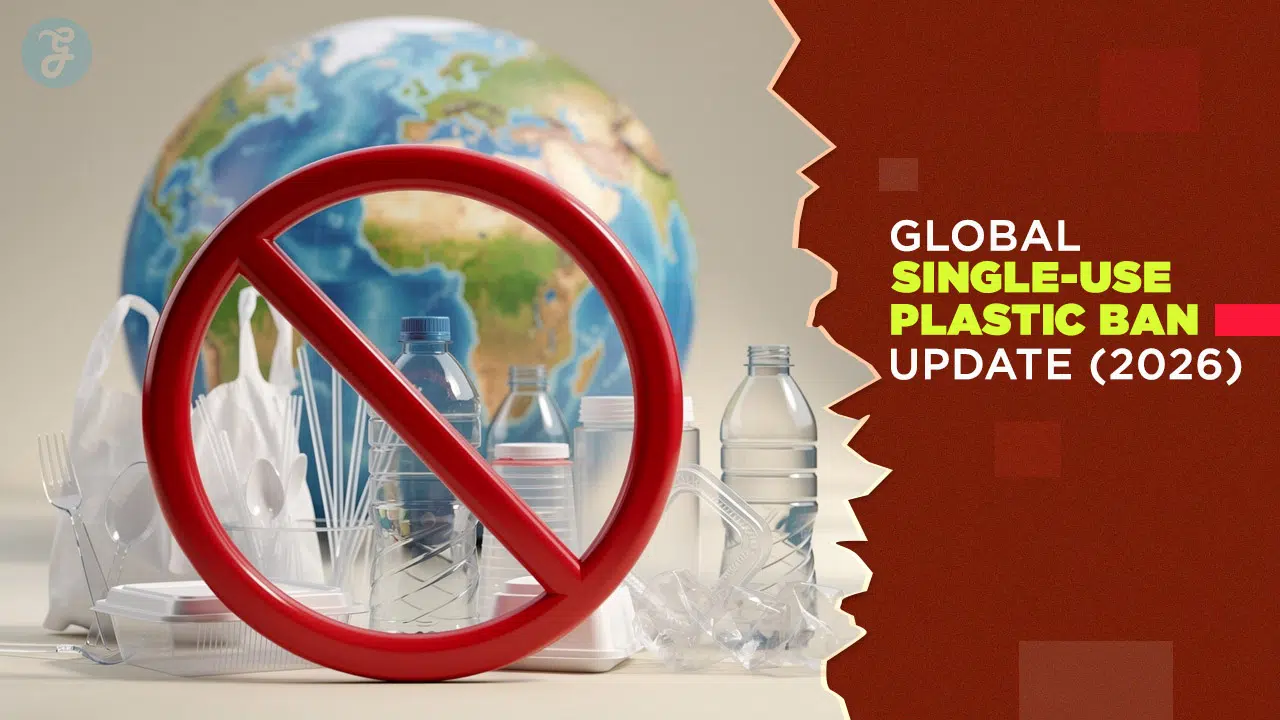
Have you noticed that your local grocery store feels a bit different lately? If you live in states like California, you might have seen those thick “reusable” plastic bags disappear from checkout lanes as of January 1, 2026. You aren’t imagining it. The push for cleaner streets and safer parks is shifting from a distant goal to a daily reality.
The problem is clear: single-use plastics are everywhere, and for a long time, it felt impossible to escape them. Did you know that 85% of folks support banning single-use plastics? People around the world see this as a major issue for our planet’s future. I will walk you through the current status of the “Plastic Treaty” and how the events of late 2024 and 2025 have set the stage for a historic decision this year.
Grab a coffee and let’s break down exactly what this means for your weekly shopping trip.
What Is the Global Plastics Treaty?
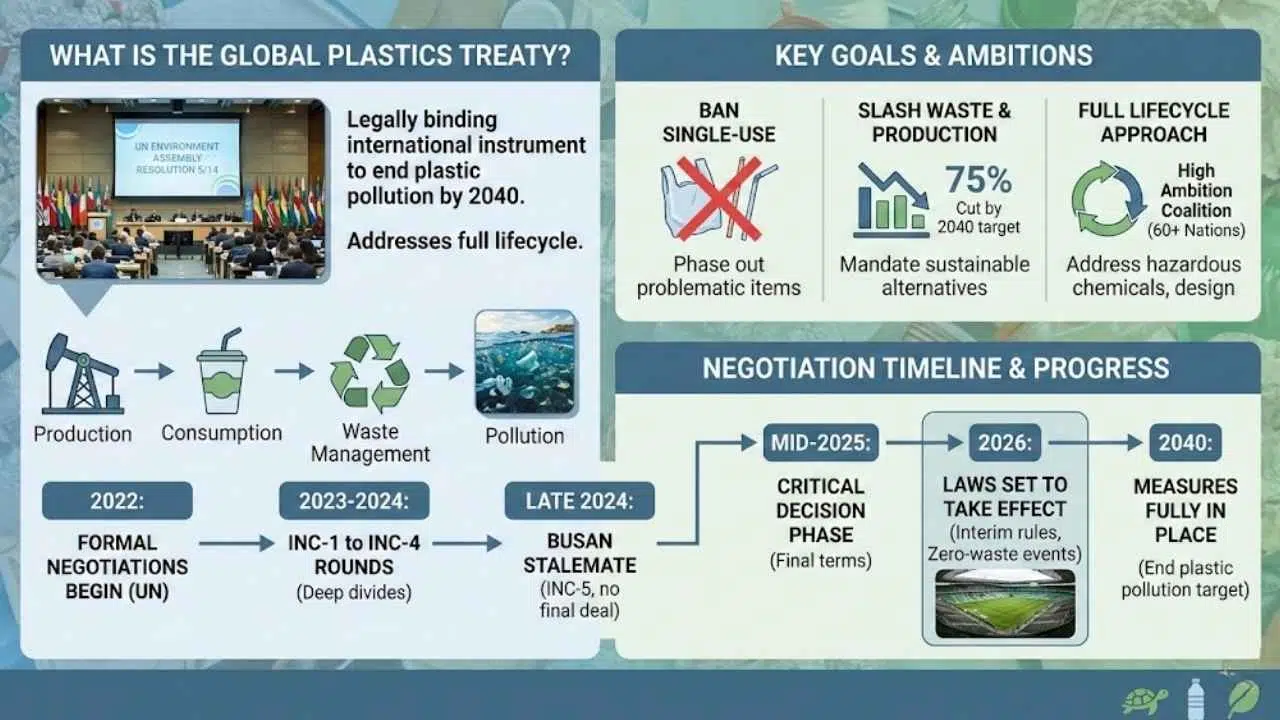
The Global Plastics Treaty has sparked intense debate and high hopes for cleaner oceans. After the tense negotiations at the INC-5 meeting in Busan, South Korea, in late 2024, world leaders are back at the table to finalize the rules.
Goals of the treaty
The primary goal is to create a legally binding international instrument to end plastic pollution by 2040. The treaty aims to ban problematic single-use items, slash global waste, and mandate that countries adopt sustainable alternatives. The “High Ambition Coalition,” which includes over 60 nations, is pushing for rules that address the full lifecycle of plastic—from the oil well to the recycling bin.
About 90% agree on banning hazardous chemicals found in many plastics.
Governments are discussing cutting plastic production by up to 75% before 2040. While the “Busan stalemate” delayed the final signature, strict interim laws are already taking effect in 2026. Major events like the Super Bowl or FIFA World Cup are now serving as testing grounds for zero-waste protocols to prevent piles of trash from single-use wrappers and cups.
Countries also look at deposit-return laws for bottles and cans so less ends up littering streets or beaches. The big picture is cleaner air, safer water, and better health for everyone through strong environmental policy.
Timeline of negotiations
Global leaders and experts are working fast to hammer out the details of the Plastic Treaty. Talks focus on curbing plastic pollution, cutting waste, and phasing out single-use items.
- In early 2022, countries began formal negotiations through the United Nations, aiming to create a binding global treaty (resolution 5/14).
- Over 175 nations joined these efforts, highlighting shared concerns about hazardous chemicals in plastics and their impact on public health.
- Multiple negotiation rounds (INC-1 through INC-4) happened in 2023 and 2024, revealing deep divides between the “High Ambition Coalition” and oil-producing nations.
- Major events like the Super Bowl became examples used in meetings to show how much waste comes from single-use plastics at large gatherings.
- The European Union took charge by targeting ten of the most common single-use plastic items found on beaches with strict regulations that started in 2021.
- In November 2024, the INC-5 meeting in Busan ended without a final agreement on production caps, pushing the critical decision phase into 2025 and 2026.
- By mid-2025, countries aim to agree on final terms for banning or limiting single-use plastics globally as support for this tops 85%, according to recent surveys.
- The push is to set laws by 2026 so that bans take effect quickly, pressing manufacturers to adopt ecofriendly alternatives sooner rather than later.
- Negotiators want all measures in place before 2040; targets include a massive cut of up to 75% in new plastic production within this timeline.
- Throughout talks, environmental organizations have raised awareness about chemical safety and climate change links, keeping pressure high on leaders for real action before the deadline hits.
The Global Impact of Single-Use Plastics
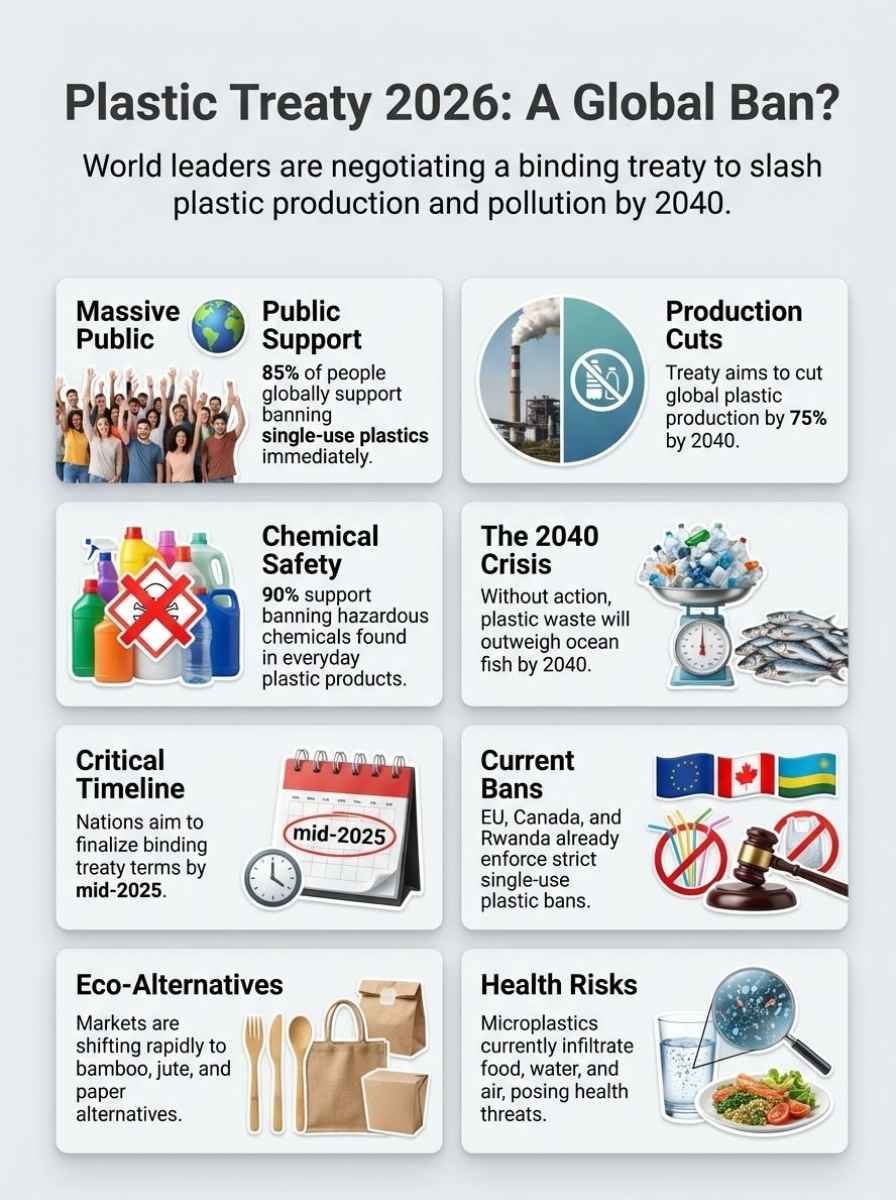
Single-use plastics often end up in rivers and oceans, harming wildlife and making a mess of beautiful places. But beyond the litter, we now have data showing the massive economic and health costs hitting families right here in the US.
Environmental consequences
Plastic pollution fills beaches, rivers, and oceans across the globe. Birds, fish, and turtles often mistake small pieces of plastic for food. This causes injuries or death. The chemicals in plastics leach into water and soil.
They harm animals and disrupt plants’ growth cycles.
Cities now struggle to keep up with waste management demands as more single-use items pile up in landfills each year. A 2025 report from Duke University estimated that the social cost of plastic pollution—including cleanup and health impacts—costs the United States alone over $1.1 trillion annually.
Several countries already restrict common single-use products like straws and bags; the EU targets its ten most-found beach litter items to slow this crisis down.
Public health concerns
Hazardous chemicals in single-use plastics can seep into food and drinks, posing a risk to people’s health. Studies show that 90% of people want these dangerous chemicals banned for good reason.
Some plastics contain substances linked to cancer, hormone problems, and even birth defects.
Tiny plastic particles called microplastics end up in the air we breathe and water we drink. A landmark study published in the *New England Journal of Medicine* in March 2024 found that patients with microplastics in their arterial plaque had a significantly higher risk of heart attack or stroke compared to those without.
The Plastic Treaty aims to tackle these issues by cutting down on single-use items and pushing safer alternatives forward with urgency.
Key Proposals in the Plastic Treaty
World leaders are rolling up their sleeves to tackle single-use plastics. They’re also eyeing bold steps, making waves that could shape our shopping carts and kitchen shelves for years.
Banning single-use plastics
Banning single-use plastics could change daily life. Plastic straws, bags, cups, and food wrappers may soon be hard to find. The Plastic Treaty aims to put strict laws in place that will cut these items out of stores and restaurants worldwide.
By some counts, over 85% of people now support such a ban. Japan has cracked down on plastic shopping bags while the European Union targets the top ten plastic trash culprits littering beaches.
Countries like France have already banned plastic plates and cups at big events such as soccer matches. Deposit-return programs for bottles are spreading in states across America too; this means you pay a little more upfront but get it back when you recycle empty containers—like getting cash for your trash.
With backing from nine people out of every ten against hazardous chemicals in plastics, governments feel heavy pressure to act fast before waste piles up further or public health takes another hit.
Reducing plastic production by 75% by 2040
Cutting global plastic production by 75% by 2040 sounds like climbing a giant mountain, but experts say it is possible. This step targets the main source of plastic pollution and helps slow climate change.
Treaty negotiators plan to push strict limits on how much new plastic factories can make each year worldwide. Imagine fewer single-use water bottles, food wrappers, and shopping bags everywhere from small towns to big cities.
The public backs this move in a huge way—85% want single-use plastics out and 90% call for getting rid of hazardous chemicals used in making them. Countries across Europe have already tackled items that pile up on beaches or clog rivers.
The goal is simple: less waste in landfills and oceans means safer communities, cleaner air, and better health for all people today and tomorrow.
Promoting sustainable alternatives
Cups made from bamboo, bags crafted from jute and straws using paper are starting to pop up in stores worldwide. These ecofriendly alternatives work hard to fill the gap left by single-use plastics.
Several countries have started phasing out items like plastic cutlery and foam containers. The European Union is now targeting the ten most common junk items found on its beaches with strict rules.
Support for this push is strong; 85% of people favor banning single-use plastics while 90% back stopping hazardous chemicals in them. Big events such as the Super Bowl and FIFA may soon serve drinks in compostable cups or reusable bottles under new treaty plans.
All these steps aim to help curb waste before it chokes cities and oceans, striving for a cleaner world by 2040.
Challenges in Reaching an Agreement
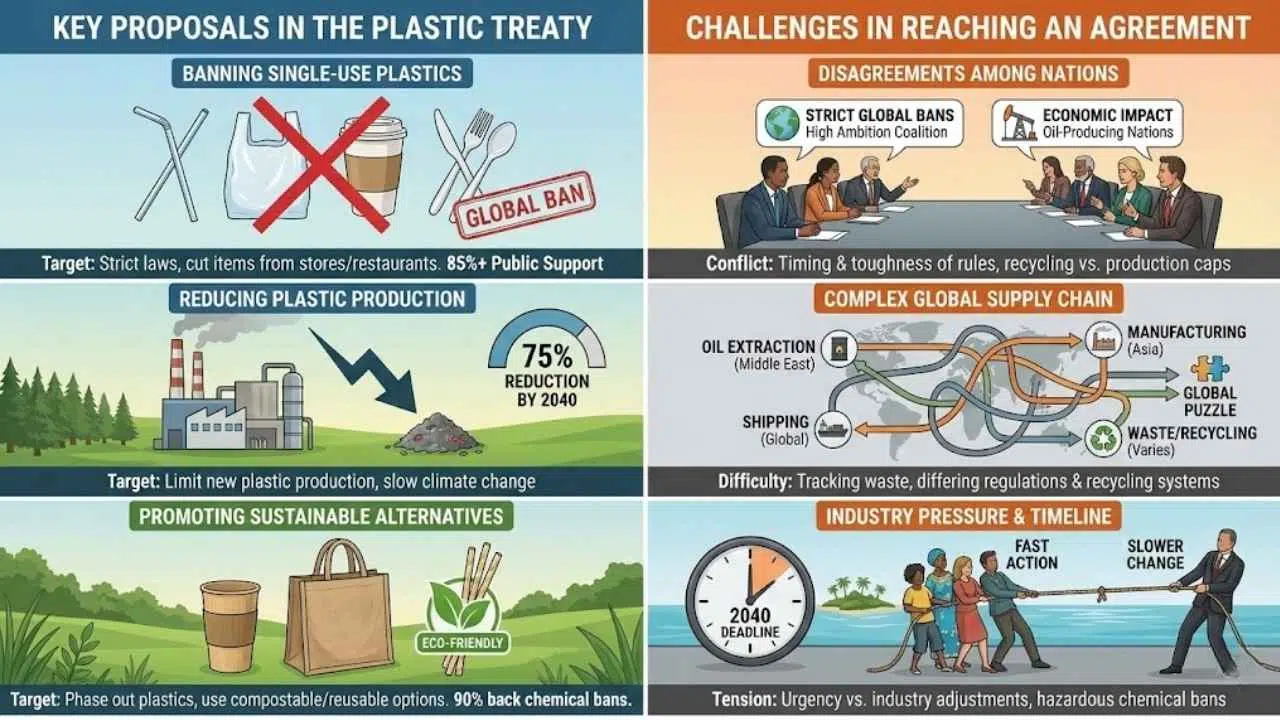
Many countries argue about who should cut back the most. Sorting out these issues often feels like untangling a giant ball of yarn—slow and tricky.
Disagreements among nations
Countries wrestle with big differences at the table. Some nations, like those in the “High Ambition Coalition” (including the EU and Rwanda), push hard for strict global bans. Others, particularly major oil-producing nations, worry about the economic hit from capping production.
Several countries already restrict single-use plastics, but not all agree on how tough to get or when new rules should bite.
Leaders debate whether to cut plastic output by 75 percent before 2040 or give industries more time. Issues of recycling, waste management, and hazardous chemicals spark even louder arguments; 90 percent back chemical bans yet some governments drag their feet due to industry pressure.
Large producers want slower change while small island states urge fast action—rising sea levels fill their beaches with trash daily. The world’s wish list gets tangled as each nation reads “sustainability” through its own lens.
Complexities in the global plastics supply chain
Plastic production spreads across many countries. Oil from the Middle East, manufacturing in Asia, shipping to Europe and America—the supply chain covers the globe. Negotiators face a puzzle of moving parts: some nations want strict environmental regulations, while others rely on plastic for jobs or profit.
The process is not quick or simple.
Mix in single-use items—think straws at Super Bowl events or cups used during FIFA games—and things get tricky fast. Not all governments agree on banning plastics, especially with 85% of people supporting action but key industries pushing back hard.
Chemicals make it even stickier; nearly 90% support a ban on toxic ingredients found in plastics. Tracking waste is tough when recycling systems differ so much between places; what counts as trash in one country could be recycled gold somewhere else.
Progress Made So Far
Several countries have stepped up, rolling out strict rules on how plastic is used and thrown away. Big names in environmental groups are also cheering these efforts, hoping for real change soon.
Actions by leading countries
Countries are leading the fight against plastic waste with bold laws. Action speaks louder than words, and these nations show it.
- France banned plastic straws, plates, cutlery, and even cotton swabs in 2021 to reduce single-use plastics.
- India pledged to eliminate all single-use plastics by 2022 and enforces strict penalties for violations.
- The European Union targeted the top 10 single-use items found on European beaches, rolling out bans across member countries since 2021.
- Canada announced a ban on harmful single-use plastics such as checkout bags, stir sticks, and six-pack rings that took effect in December 2022.
- Rwanda outlawed plastic bags back in 2008, making border checks for smuggled bags a part of daily life.
- Kenya follows suit with one of the world’s toughest bans since 2017; offenders can face hefty fines or jail time for producing or using plastic bags.
- Chile became the first country in Latin America to ban plastic bags nationwide as early as 2018.
- Germany uses deposit-return programs so shoppers get cash back for returning bottles and cans to recycling points across the country.
- The United States has state-level deposit-return schemes with states like California and Oregon running bottle bills aimed at ramping up recycling rates.
- Japan separates waste into over ten categories and relies heavily on recycling infrastructure rather than bans but still pushes strong waste reduction policies.
- South Korea restricted disposable cups and cutlery in cafes and fast-food outlets starting in April 2022 to promote reusable options during daily routines.
- Australia plans to phase out problem plastics including lightweight shopping bags and microbeads by 2025 as part of its ambitious national targets.
Each step is fueling momentum for global action under the Plastic Treaty 2026, keeping sustainability high on every agenda from small towns to major sports events like FIFA matches or Super Bowls worldwide.
Support from environmental organizations
Groups like Greenpeace and the World Wildlife Fund are pushing hard for strict plastic bans. They highlight that 85% of people support banning single-use plastics, while 90% back a ban on hazardous chemicals found in plastics.
Many environmental organizations share real stories from communities suffering due to plastic pollution or unsafe waste management. They use pictures of polluted beaches and animals harmed by trash to raise awareness.
Their pressure has helped shape treaty talks. In Europe, their campaigns supported new rules tackling top polluting single-use items found on beaches. Globally, these groups encourage leaders to promote sustainable alternatives and recycling programs as part of international agreements.
Their voices echo through protests at events like the Super Bowl and FIFA, demanding action for healthier public spaces and improved environmental policy worldwide.
The Role of Local and Regional Policies
Local action can light a fire under bigger change, showing what’s possible on a small scale. Sometimes, one clever idea from your own backyard can ripple out and spark global solutions.
Plastic bag bans and deposit-return programs
Rules and small changes can shape habits fast. In the US, California’s Senate Bill 1053, which took full effect on January 1, 2026, closed a major loophole by banning even the thick plastic bags that were previously allowed at grocery stores.
- Over 50 territories now ban or restrict single-use plastic bags, cutting waste at the source.
- The EU targets the top ten plastic items trashing its beaches, with bag bans leading the charge since 2018.
- Deposit-return laws for bottles and cans are gaining traction in U.S. states like California and Oregon.
- These laws let people swap empty containers for cash, driving up recycling rates and keeping plastics out of landfills.
- Major events, such as the Super Bowl and FIFA, may soon face stricter rules to prevent mountains of single-use packaging.
- Action isn’t only top-down; cities like New York have already banned thin grocery bags, proving local steps make a dent.
- Support from environmental organizations helps push these policies across borders, making them less of an uphill battle.
- With most people—about 85 percent—supporting a ban on single-use plastics, leaders sense public pressure to act fast.
- Governments use these bans not just to clean up city streets but also to protect water supplies from toxic microplastics.
- Such efforts mesh with global treaty goals aiming to curb waste by 2040 and push ecofriendly alternatives into every store aisle.
Encouraging innovation in sustainable materials
Many cities now offer rewards for using reusable items. Some states roll out deposit-return programs to boost recycling and spark new ideas in ecofriendly alternatives. Scientists, startups, and even big companies race to create plant-based packaging or bio-plastics that break down faster than old plastics.
Countries such as those in the EU ban single-use items found on beaches and push businesses to try sustainable materials instead.
Big events like the Super Bowl now look for ways to cut waste by testing compostable cups or plates. With 85% of people cheering for action against single-use plastics, support remains high for fresh solutions.
Every step forward pushes global agreements closer toward real sustainability and less plastic pollution touching our land, air, or water.
What Happens If the Treaty Fails?
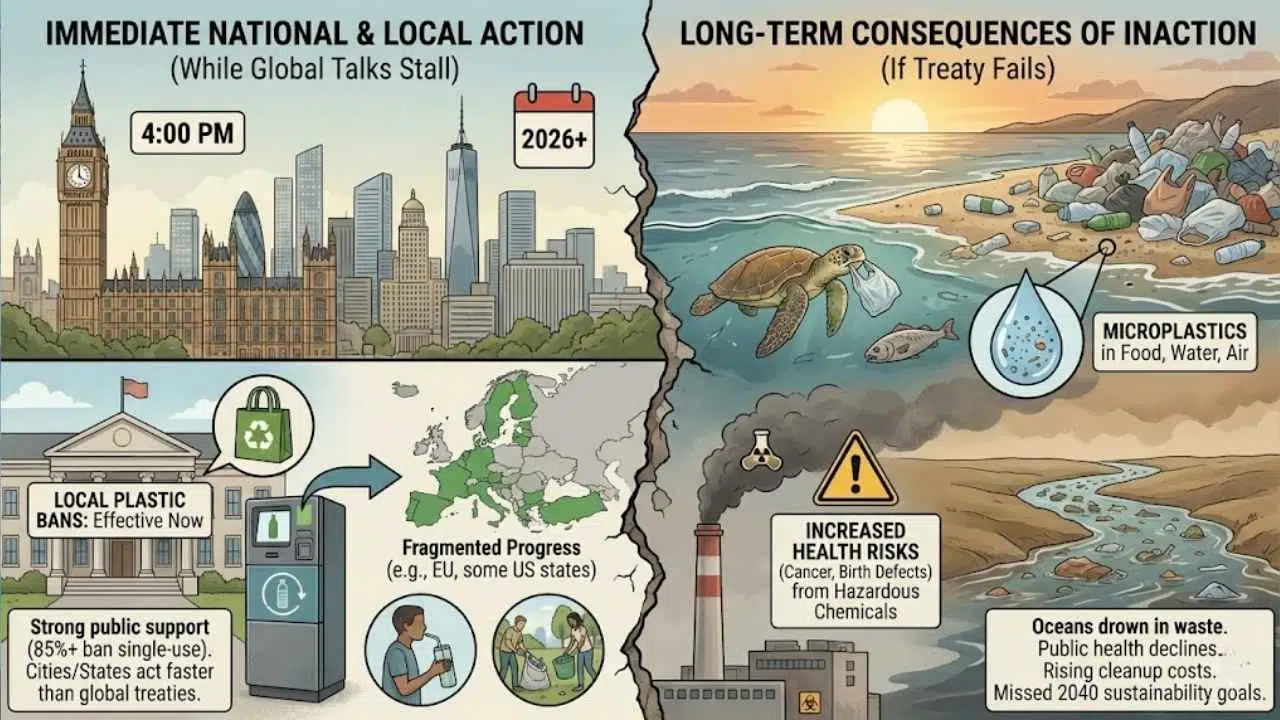
If talks break down, oceans may drown in even more plastic trash. Local leaders might need to step up fast or watch clean spaces vanish like ice cream on a sunny day.
The need for immediate national and local action
Plastic Treaty negotiations can take years. Some countries, like those in the EU, have already banned single-use plastics such as straws, cutlery, and plates to reduce plastic pollution.
Over 85% of people support banning single-use items right now. Deposit-return laws for bottles are making waves at the state level too.
Hazardous chemicals hiding in plastics spark health worries, with 90% of people backing a ban on them. Big events from the Super Bowl to FIFA aim to avoid waste by acting fast locally even while global talks continue through 2026.
Cities and states moving first show that quick action works better than waiting for a worldwide green light.
Long-term consequences of inaction
Sea turtles eating plastic bags will not be the only tragedy. Oceans will drown in waste, and beaches may look more like a landfill than a vacation spot. Kids today could grow up breathing air filled with tiny particles from single-use items that never break down.
Scientists warn these microplastics get into our food, water, and even the rain we drink. The EU has already started targeting the ten most common throwaway items on their shores for a reason—those same products hurt people and wildlife across all continents.
Cities may spend huge chunks of money cleaning up mountains of trash but still fall behind as production keeps rising. Every year, companies pump out billions of tons more plastic.
If laws covering hazardous chemicals in plastics stall past 2026, cancer risks and birth defects might increase worldwide; public health would take a back seat while pollution fills rivers and lungs alike.
Missing this chance to act means tossing away both public support—85 percent want bans—and hope for curbing toxic pollution by 2040 or ever reaching real sustainability.
Final Thoughts
The Plastic Treaty 2026 is working hard to cut down single-use plastics, ban dangerous chemicals, and make room for eco-friendly choices. Countries are debating, but some have already started real change with bans and smart recycling ideas.
These steps are practical; anyone can start using fewer plastic bags or choose reusable bottles today. Can you imagine how different your neighborhood would look if everyone acted now? Each small effort matters—cleaner parks, safer food, a healthier earth for our kids.
For more tips or stories on living with less plastic, check out local green groups or follow updates from treaty supporters online. Change begins at our doorsteps; who will take that first step in your family?