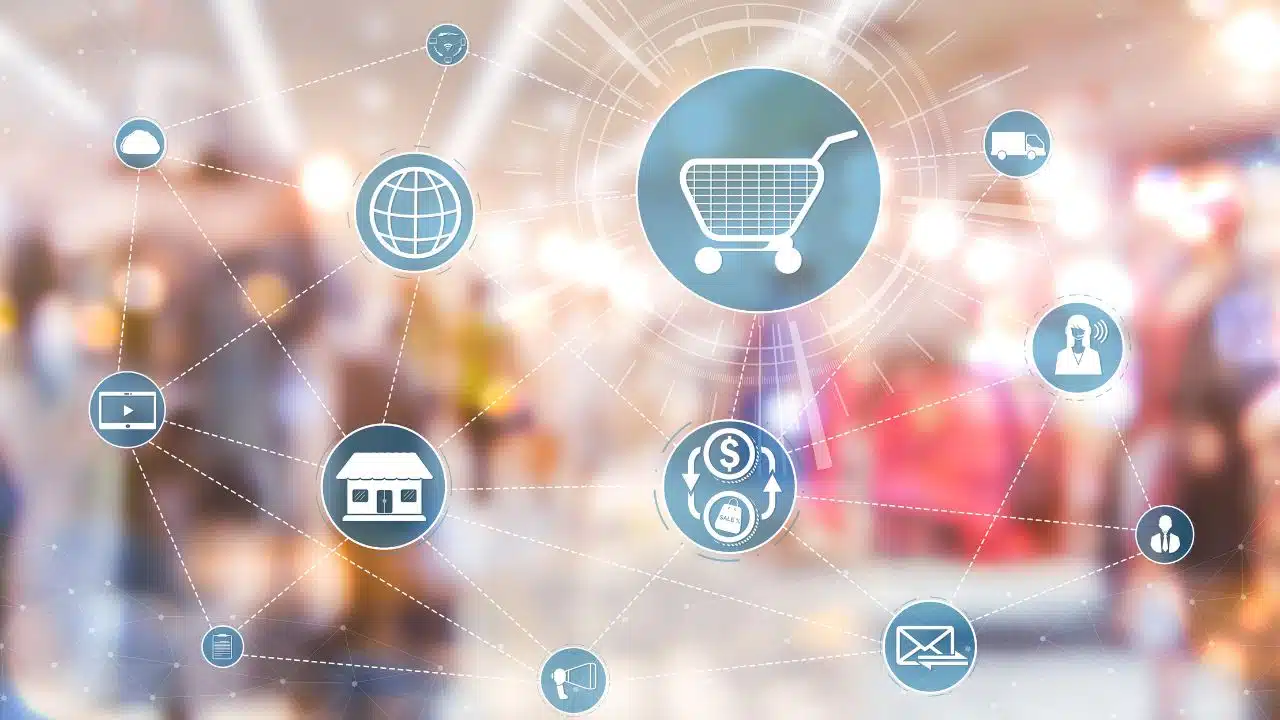
The retail industry knows all too well about seasonal spikes in demand. From festive sales to flash discounts, peak shopping seasons are both times of opportunity and crises for retail. The rush in traffic promises record revenue, but this sudden ramp-up often pushes the digital platforms to their limits. Slow websites, crashes at checkout steps, and cart abandonment all become nightmares for retailers during these crucial times. To compete, many businesses are now taking digital commerce solutions powered by containerization and Google Kubernetes Engine.
Why Do Traditional Systems Fail?
Most retailers still use legacy monolithic applications and infrastructure. These systems are rigid, slow to update, and adverse to any sudden surge in traffic. Consider a sales event on Black Friday- it may get ten times the user traffic in just a few hours. Being unable to scale dynamically puts the system on downtime; downtime means losing out on revenue, and customers end up frustrated.
Containerization: The Revolution
Containerization serves the purpose of breaking down an application into lightweight autonomous units known as containers. Each container has everything it needs to run, so it works the same way everywhere. This conversely means their applications get updated, tested, and deployed faster than before. More importantly, containers provide easier scaling to the application in independent parts.
From the above example, if the product search feature happens to be experiencing heavy traffic, then only that microservice can be scaled up, not the entire application. This saves operational resources, lowers cost, and guarantees excellent functionality during seasonal peak times.
The Role GKE Plays in Retail
GKE takes the concept of containerization to an advanced level by providing a hosted, managed Kubernetes service. For the retailer, this means:
- Auto-scaling: GKE automatically adds or removes compute resources depending on the traffic. Whether it is the midnight hour on a usual weekday or the prime hour of a festive sale, the systems know when to adapt.
- Resilience and uptime: GKE allows the running of workloads across multiple clusters, minimizing downtime in cases of component failure.
- Secure at scale: Retailers handle customers’ private data, and GKE keeps it safe with Google’s security.
- Acceleration of Innovation: Developers can deploy updates to individual services—such as payment gateways or inventory checks—without requiring the entire system to go down.
Benefits That Real Retailers Are Experiencing
Using Kubernetes and containerization makes it easier for retailers to grow while experiencing the chaos that is peak season. Amongst others, some of the top advantages are:
- Consistent Customer Experience: Slow checkouts and crashing sites become a thing of the past during rush hours.
- Cost Efficiency: Making the most of your IT resources and only paying for what you actually use.
- Agility: Quick release of brand-new features such as personalized recommendations or loyalty rewards.
- Scale On Demand: Handle big traffic surges smoothly without your site going down
Takeaways
Rapidly changing trends in retail, and peak shopping seasons are only getting more competitive. The companies continuing to rely on antiquated systems are at risk of being left behind, whereas those contending in containerization using GKE have an edge on the competition.
By investing in a flexible, secure, and scalable digital commerce solution, retailers will be able to turn every blast of demand into a success story instead of a meltdown. Unpredictable seasonal pressures, in this way, become growth avenues through investments in GKE.