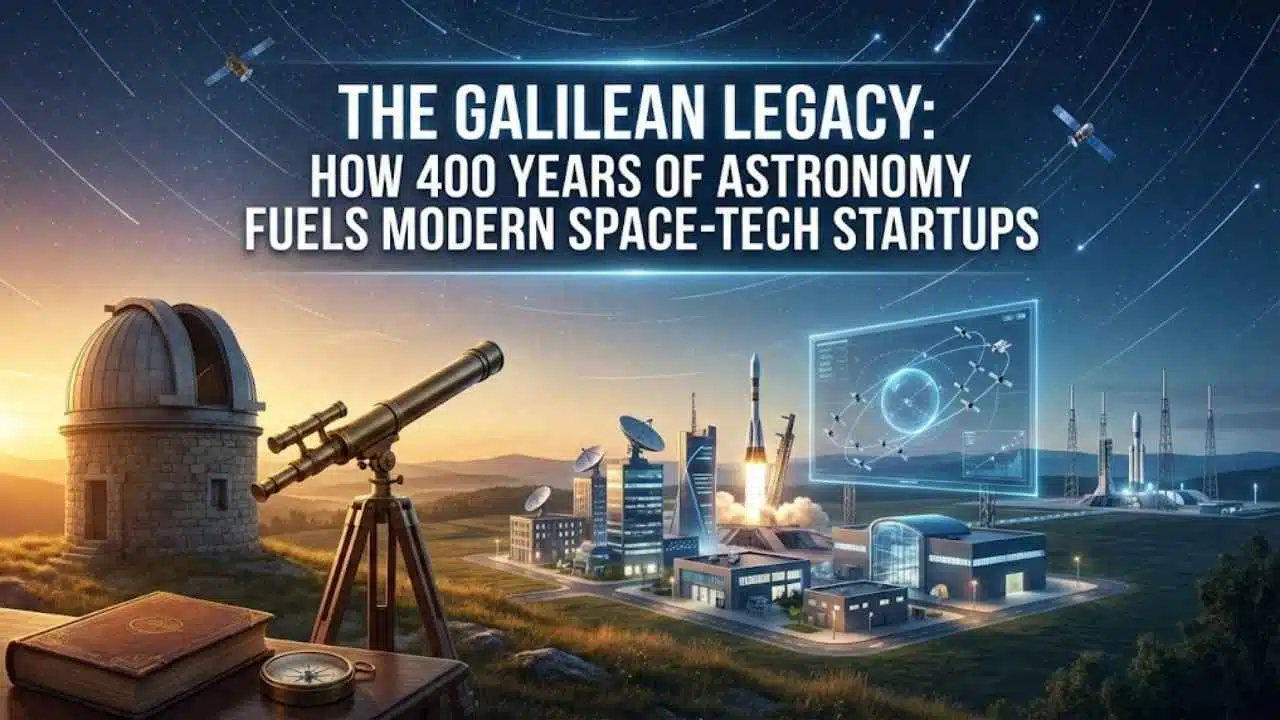
In 1609, Galileo turned a new kind of instrument toward the sky and made a simple idea unavoidable: if you can see better, you can think better, and if you can prove what you see, you can change what everyone believes is possible. Four centuries later, the space economy is living through a similar hinge moment. This time, the “telescope” is a stack of cameras, sensors, software, and spacecraft that can validate breakthroughs in the harshest test environment available: orbit itself.
That is why the Galilean legacy still matters to space-tech startups in 2026. The modern founders who win are often the ones who treat space like Galileo treated the night sky: not as a distant mystery, but as a measurable system that rewards better instruments, cleaner data, and faster proof.
Key Takeaways
- Space-tech startups are thriving because they can now prove hardware and software in orbit faster and cheaper than earlier generations.
- The most valuable businesses are shifting from “getting to orbit” to “operating in orbit,” including servicing, manufacturing, insurance, and traffic management.
- Recent demonstrations in autonomous rendezvous and in-space manufacturing show how quickly proof points are turning into commercial roadmaps.
- Orbital congestion and debris are no longer abstract risks. They are shaping product design, regulation, and business models right now.
- Public agencies are increasingly acting like market makers, funding demonstrations that pull private capital into the same technology pathways.
Galileo’s Telescope And The Startup Feedback Loop
Galileo is often taught as a hero of discovery, but his deeper contribution was operational. He made observation reproducible, he made claims testable, and he made evidence portable. That trio maps surprisingly well to how today’s space-tech startups build businesses.
Reproducible observation is the heart of modern sensing. Testable claims are the language of flight heritage and mission performance. Evidence that travels is what turns a lab concept into a procurement decision, an insurance model, or a revenue contract.
In other words, the legacy is not nostalgia. It is a method. The moment space became commercially interesting at scale, the Galilean playbook returned to the center.
| Galileo’s Era (1609–1610) | Modern Space-Tech Startups (2025–2026) |
|---|---|
| Built a better telescope | Build advanced sensors, autonomy, and spacecraft systems |
| Observed celestial motion directly | Collect real-time orbital and Earth data |
| Published repeatable findings | Demonstrate flight heritage and performance |
| Challenged existing models | Disrupt legacy space operations |
| Evidence changed belief | In-orbit proof unlocks funding and contracts |
The Galilean Legacy As A Modern Space-Tech Playbook
Startups that succeed in space rarely win by having the boldest press release. They win by shipping proof. In 2025 and early 2026, several high-profile demonstrations underscored how the market now rewards teams that can validate capability in orbit, then iterate.
This is instrument-first thinking. Galileo did not begin with a perfect theory, he began with a tool that made a new kind of evidence possible. Modern space-tech founders often follow the same arc. They build a camera, a sensor package, a guidance stack, a thermal system, a comms link, or a manufacturing module that creates a new class of measurable outcomes.
This is also distribution. Galileo’s results spread quickly because they could be shared, argued over, and independently checked. Today’s distribution is a mix of public milestones, customer pilots, rideshare access, and repeatable mission architectures. The winners are increasingly the teams who make validation routine.
From Lenses To Orbital Platforms: A Straight Line Of Technology
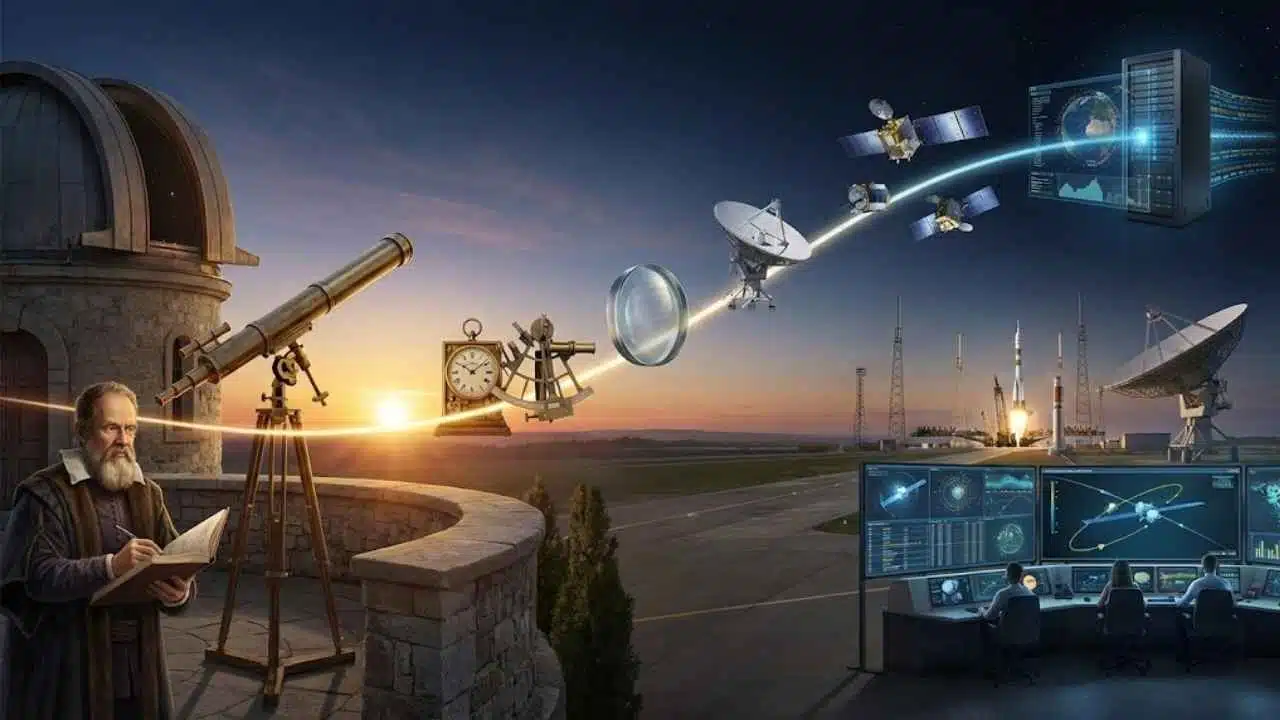
If you draw a line from 1609 to 2026, it runs through a few recurring themes.
Optics and imaging sit at the center. Early telescopes expanded the reachable universe. Modern Earth observation and space situational awareness expand the reachable market, because they convert physical reality into data products that customers can buy.
Precision measurement and timekeeping also persist. Astronomy demanded better measurement, and measurement demanded better clocks and better models. Today, navigation, rendezvous, docking, and autonomous operations depend on that same obsession with accuracy.
Then there is cataloging. Astronomy advanced by turning the sky into an index. Modern space operations are now doing the same to Earth orbit, mapping satellites, debris, and risk corridors so that insurance, regulation, and maneuvers can be priced and planned.
Finally, there is computation. The move from hand calculations to modern simulation is one of the biggest quiet revolutions in space. Startups now sell “digital mission capability,” where software and models are not accessories but the product.
| Astronomy Foundation | Modern Space-Tech Application | Commercial Outcome |
|---|---|---|
| Optical lenses | Earth observation satellites | Geospatial analytics revenue |
| Star catalogs | Space situational awareness | Collision avoidance services |
| Precision timing | Autonomous navigation | In-orbit servicing |
| Orbital mechanics | Mission simulation software | Lower mission risk |
| Sky mapping | Debris tracking | Insurance & compliance tools |
Why The Space-Tech Startup Moment Looks Different In 2026
What changed is not only technology. The market structure changed.
Access to orbit is more available, and iteration cycles are shorter. Rideshare opportunities allow smaller payloads to fly earlier in a company’s life. That compresses the gap between prototype and proof, which compresses the gap between proof and revenue.
At the same time, orbits are more crowded, and risk has become a product driver. Congestion is forcing new services: better tracking, better coordination, better collision avoidance, and better end-of-life disposal. In the last year, multiple close-approach incidents and public debates have made it clear that “space traffic” is now part of the business model, not an externality.
The biggest shift, though, is that value is moving from launch to operations. Launch remains essential, but it is increasingly a cost line. The differentiator is what you can do after you arrive, how reliably you can do it, and how defensible that capability is against copycats.
| Past Constraint | What Changed | Startup Advantage |
|---|---|---|
| Expensive launches | Rideshare & reusability | Faster iteration |
| Long validation cycles | Frequent demo missions | Quicker proof |
| Government-only customers | Commercial operators | Diverse revenue streams |
| Low orbital traffic | Crowded orbits | New safety-driven markets |
A News Signal: Proof Points Are Arriving Faster
A useful way to understand the current wave is to look at recent proof points that changed how investors and customers talk.
In December 2025, Starfish Space and Impulse Space publicly described the successful completion of “Remora,” an autonomous rendezvous and proximity operations demonstration in low Earth orbit. What matters here is not only that a rendezvous occurred, but that autonomy and lightweight sensing were emphasized as the enablers. That is a direct echo of Galileo: better instruments and better interpretation can collapse complexity into a repeatable capability.
In late December 2025, Space Forge reported a milestone that reads like science fiction but behaves like a product roadmap: operating a high-temperature furnace in orbit that reached around 1,000°C. The story is not that “chips in space” is inevitable tomorrow. The story is that core process steps are being validated in the environment where the advantages are supposed to exist, which is how ambitious industrial narratives become investable.
These two signals, autonomy in orbital operations and industrial process validation in microgravity, illustrate a broader theme. The frontier is moving from “can we get there” to “can we run a system there.”
The New Space-Tech Startup Stack
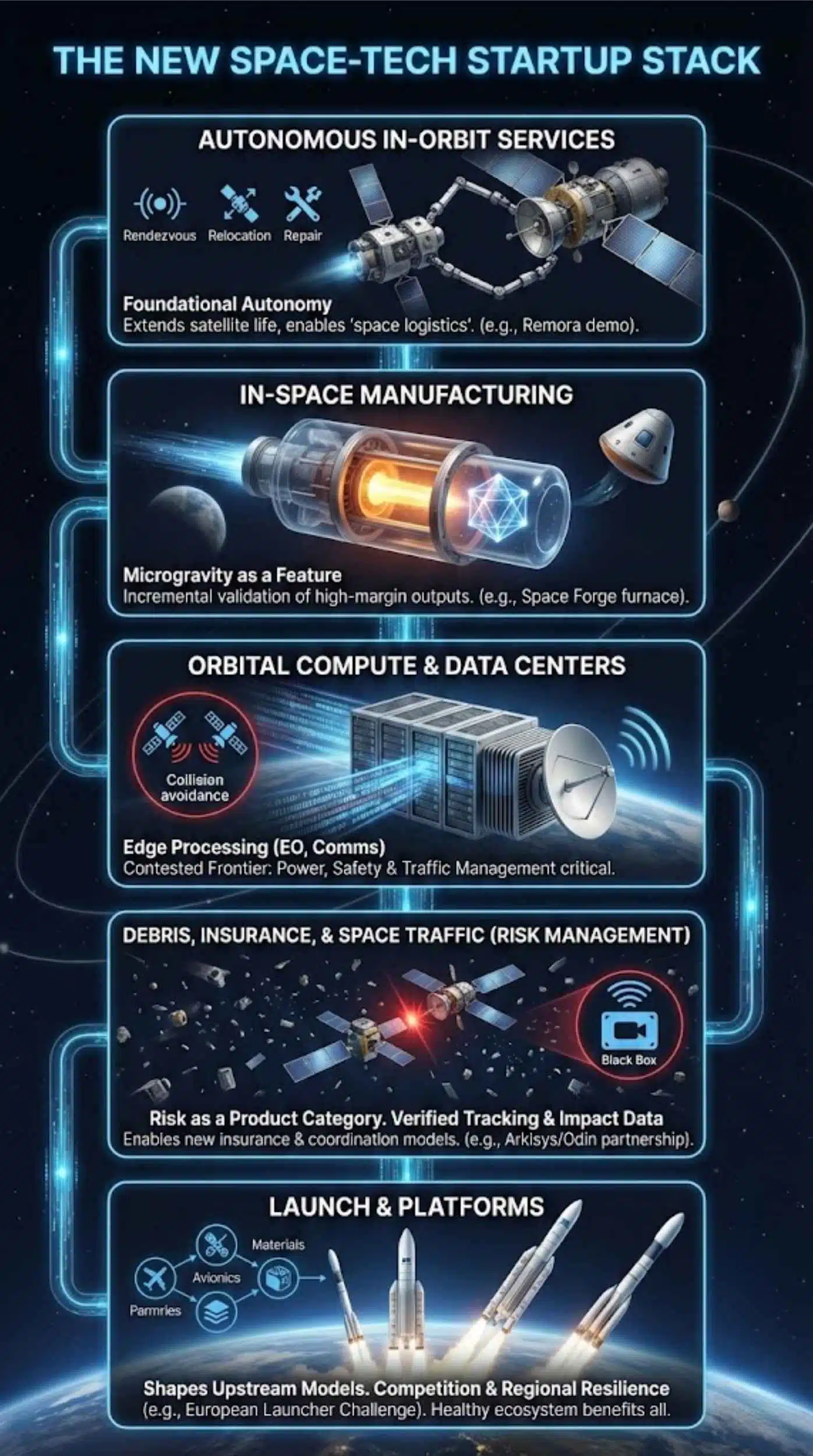
The most useful way to cover the market is by verticals that map to near-term revenue.
Autonomous In-Orbit Services: Rendezvous, Relocation, Repair
In-orbit services are becoming the maintenance layer of an orbital economy. The logic is simple. Satellites cost money to build and launch. Extending their working life, upgrading them, or repositioning them can be cheaper than replacement.
Autonomous rendezvous and proximity operations are foundational. If you can safely approach another object in orbit, you can inspect it, dock with it, move it, refuel it, or deorbit it. The December 2025 Remora demonstration matters because it signals that autonomy is crossing a threshold where fewer sensors and smarter software can reduce mission complexity.
The business implication is direct. Every step toward routine rendezvous expands the addressable market for servicing contracts, end-of-life management, and even “space logistics” the way trucking expanded terrestrial industry. Startups in this category are not only building hardware, they are building confidence. In space, confidence becomes pricing power.
In-Space Manufacturing: Microgravity As A Feature, Not A Location
In-space manufacturing is often framed as distant. That framing is outdated. The modern approach is incremental: validate one process step, then chain steps into a manufacturable system.
The Space Forge furnace milestone is a good case study because it is not a vague promise. Heating, thermal control, power stability, and operations in orbit are real constraints. Demonstrating that a furnace can reach target temperatures is a prerequisite to any credible manufacturing thesis.
The investment story here is not only “make semiconductors in orbit.” It is “create materials or components that are difficult or costly to make on Earth, then return high-value outputs.” That return step remains a major engineering and regulatory challenge, but startups are increasingly treating it as a designed subsystem rather than an afterthought.
Over the next two years, expect more “micro-factory” demonstrations that focus on one high-margin output. The winners will pick narrow targets, prove yield, then expand the envelope.
Orbital Compute And Data Centers: A Contested But Revealing Frontier
Space-based computing is one of the most debated frontiers because it sits at the intersection of power, cooling, data sovereignty, and orbital safety.
In late 2025, reporting around a proposed “Project Suncatcher” concept, described as an orbital data center approach, helped surface the real constraint. It is not only whether computing in orbit can be efficient. It is whether it can be operated safely in crowded sun-synchronous corridors, with credible collision avoidance and end-of-life planning.
That debate is useful for founders because it sets a bar. If you want to build compute infrastructure in orbit, you will need to treat space traffic, debris mitigation, and autonomous maneuvering as first-class requirements. Customers, regulators, and insurers will demand it.
Even if some of the boldest orbital data center visions prove premature, the core market is real: edge processing for Earth observation, comms, and defense applications. The near-term path is likely to be specialized compute nodes tied to specific data streams, not giant general-purpose “space server farms.”
Around this point in the article, it helps to restate the Galilean legacy for modern audiences: the Galilean legacy is about making new systems measurable, then making them routine. That is what will separate serious orbital compute from speculative headlines.
Debris, Insurance, And Space Traffic: Risk Is Becoming A Product Category
The fastest-growing category in practical urgency is orbital risk management.
A near miss reported around December 9, 2025, involving a Starlink satellite and a recently launched Chinese satellite object, drew attention because the separation was reported to be on the order of hundreds of meters. The details of any single incident matter less than what it represents. The operational reality of low Earth orbit now includes frequent avoidance maneuvers, cross-operator coordination problems, and a growing premium on verified tracking.
This is where new startup business models are emerging.
In December 2025, Arkisys and Odin Space described a partnership centered on sensors designed to record debris impacts, effectively providing verified “black box” data. That is more than a technical novelty. Verified impact data can change how insurance is priced and how accountability is assigned. It moves the market from inference to evidence.
It also creates a new product layer: sub-centimeter debris intelligence and verification services. Many dangerous objects are too small to track routinely. If startups can reliably detect and record impacts, they can build risk maps, improve fleet design, and offer insurers new ways to structure coverage.
Here is a simple way to describe the emerging stack.
| Problem | What Customers Need | What Startups Are Building |
| Congested orbits | Better prediction and coordination | Tracking analytics, automated conjunction workflows |
| Untracked small debris | Evidence, not guesses | Impact sensors, “black box” verification |
| Collision costs | Pricing and coverage clarity | New insurance products, parametric-style models |
| Sustainability pressure | Credible mitigation | Deorbit tech, servicing, removal planning |
This is the most immediate area where the astronomy-to-startup lineage is visible. Astronomy taught us to model motion precisely. Now the commercial market is paying for that precision because the cost of being wrong is rising.
Launch And Platforms: Europe’s Competitive Push Matters For Startups
Launch is not the whole story, but it still shapes everything upstream. When launch availability and pricing shift, business models that were marginal can become viable.
Europe’s European Launcher Challenge, with preselected challengers announced in 2025 and a focus on launch services in the 2026 to 2030 period, signals a broader institutional change. Agencies want more competition and more flexible procurement. For startups, that can mean more frequent options, more predictable timelines, and more regional resilience.
This also matters for supply chains. Launcher competition pulls in avionics suppliers, materials providers, testing infrastructure, and operational talent. Even startups that never build rockets benefit when the surrounding ecosystem is healthy.
| Startup Vertical | What They Do | Revenue Model |
|---|---|---|
| In-orbit servicing | Repair, refuel, relocate satellites | Service contracts |
| In-space manufacturing | Produce materials in microgravity | High-value product sales |
| Orbital compute | Process data in orbit | Usage-based pricing |
| Debris tracking | Monitor collision risk | Subscriptions |
| Launch platforms | Provide access to orbit | Per-mission fees |
The Role Of Agencies: From Patronage To Market Making
Public agencies are increasingly acting like market makers rather than only mission owners.
NASA’s Space Technology programs use a concept often described as a “tipping point,” where a demonstration investment can mature a technology enough to increase the likelihood of infusion into commercial space applications. The practical effect is that NASA can fund the riskiest validation step, which unlocks private capital for scaling.
ESA’s Commercialisation Gateway and related networks, including investor matchmaking and incubation pathways, reflect a similar strategy. The goal is not only research. It is to turn space capability into companies that can sell.
In an earlier era, founders had to align tightly to government missions or accept long timelines. In 2026, many founders can still work with agencies but pursue commercial customers in parallel. That parallelism is one reason the market is moving faster.
What Investors Actually Price In Space-Tech Now
The space-tech pitch has matured. Investors increasingly care about a few hard questions.
Can you demonstrate in the real environment within a realistic budget and timeline. Can you repeat that demonstration, not just once, but as a reliable system. Can you turn the capability into recurring revenue rather than one-off contracts.
Flight heritage has become a moat. In software, you can ship an update overnight. In space, a single successful mission can create defensibility for years, because competitors have to match not only your design, but your validated operational knowledge.
Data advantages also compound. If your satellites, sensors, or impact detectors produce unique datasets, you can build models that competitors cannot easily copy. That turns an engineering achievement into a platform advantage.
Just as important, investors now understand that the “space market” is really several markets. Earth observation, communications, servicing, manufacturing, insurance, and defense-adjacent services each have different sales cycles and margin profiles. The most credible startups are the ones who choose a lane early and prove it.
The Biggest Headwind: The Kessler Shadow And Governance Reality
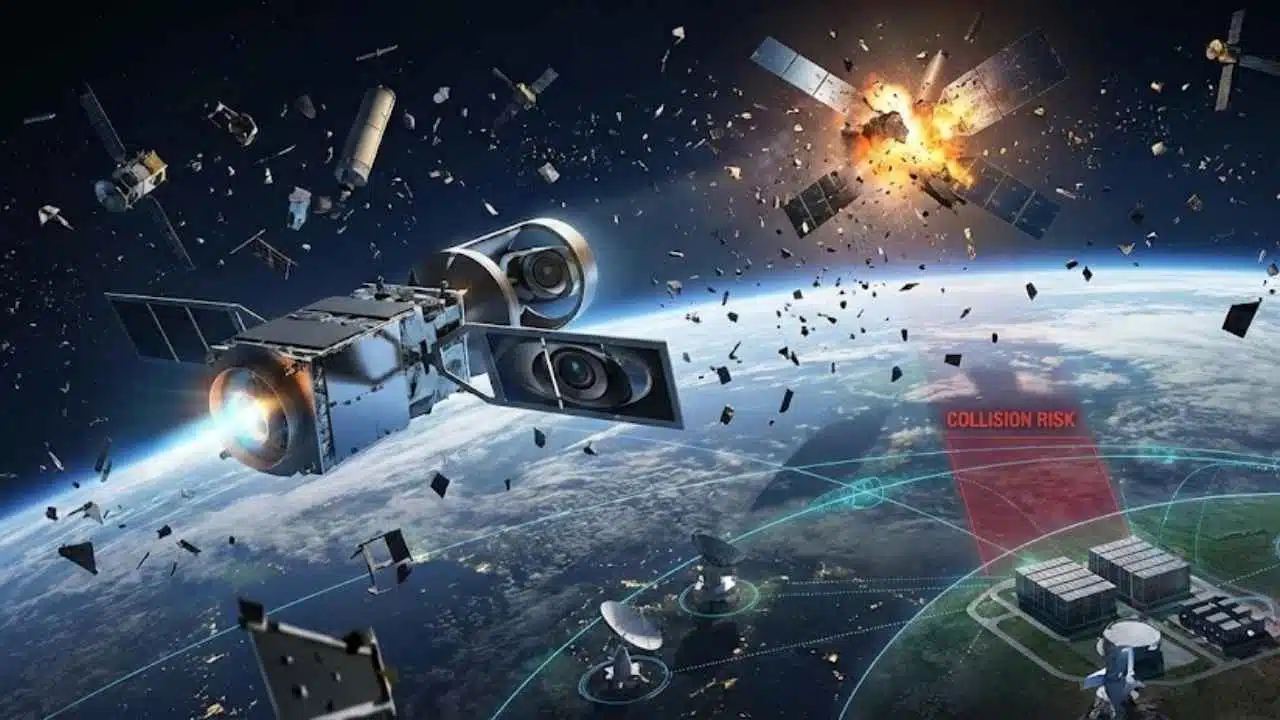
The most serious long-term constraint on growth is not imagination. It is orbital sustainability.
The Kessler syndrome idea, a cascading collision risk, is no longer treated as purely theoretical in some corridors. Analysts and engineers point to specific altitude bands where collision risk increases rapidly as traffic grows. The implication for startups is straightforward.
If your business depends on putting more objects into orbit, you will be asked how you avoid contributing to the risk. Customers will ask. Insurers will ask. Regulators will ask. The public will ask.
This pressure is already changing product requirements. Autonomous collision avoidance, reliable tracking integration, and credible end-of-life disposal plans are turning into baseline expectations. That is painful for teams that want to move fast, but it also creates opportunity for startups that build the tools everyone else needs.
Around here, it is worth repeating the core theme because it ties history to the news cycle: the Galilean legacy is not only about discovery, it is about disciplined measurement that makes complex systems governable. Orbit is now a system that needs governance, and governance needs measurement.
The Next Five Years: Where The Galilean Legacy Points Next
If you want to forecast where startup energy is likely to concentrate, look for areas where a single validated capability unlocks multiple business lines.
Autonomous operations are one. Once rendezvous and proximity operations become routine, they enable inspection, servicing, removal, and logistics. Each of those can be sold as a service.
In-space manufacturing is another. Once process steps are validated and return pathways are credible, the market shifts from “is it possible” to “what is profitable first.” Expect narrow, high-margin targets before any broad industrial vision.
A third is the “space operations layer.” This includes space traffic coordination, risk analytics, verification sensors, and insurance innovation. As orbits fill up, this layer becomes as essential as air traffic management on Earth.
Finally, expect more integration between Earth and space markets. Space data will increasingly be sold as outcomes, not imagery. “Better yield forecasts,” “verified infrastructure monitoring,” “faster disaster assessment,” and “sovereign communications resilience” are easier to buy than a pile of raw pixels.
The startups that win will treat Galileo’s lesson as practical engineering guidance. Build the instrument. Prove the claim. Make it repeatable. Then scale.
Final Thoughts
The modern space-tech boom is not powered by romance about exploration. It is powered by a very old and very commercial idea: better measurement creates new markets. Galileo’s telescope did not only reveal moons and phases. It revealed a method for turning observation into confidence.
In 2026, confidence is what customers buy when they sign a servicing contract, insure a constellation, or bet on a micro-factory in orbit. The space-tech founders building the next decade are not just inheriting a history of astronomy. They are inheriting a discipline of proof.
That is the Galilean legacy in its most relevant form. It is the engine that turns the sky from an inspiration into infrastructure.