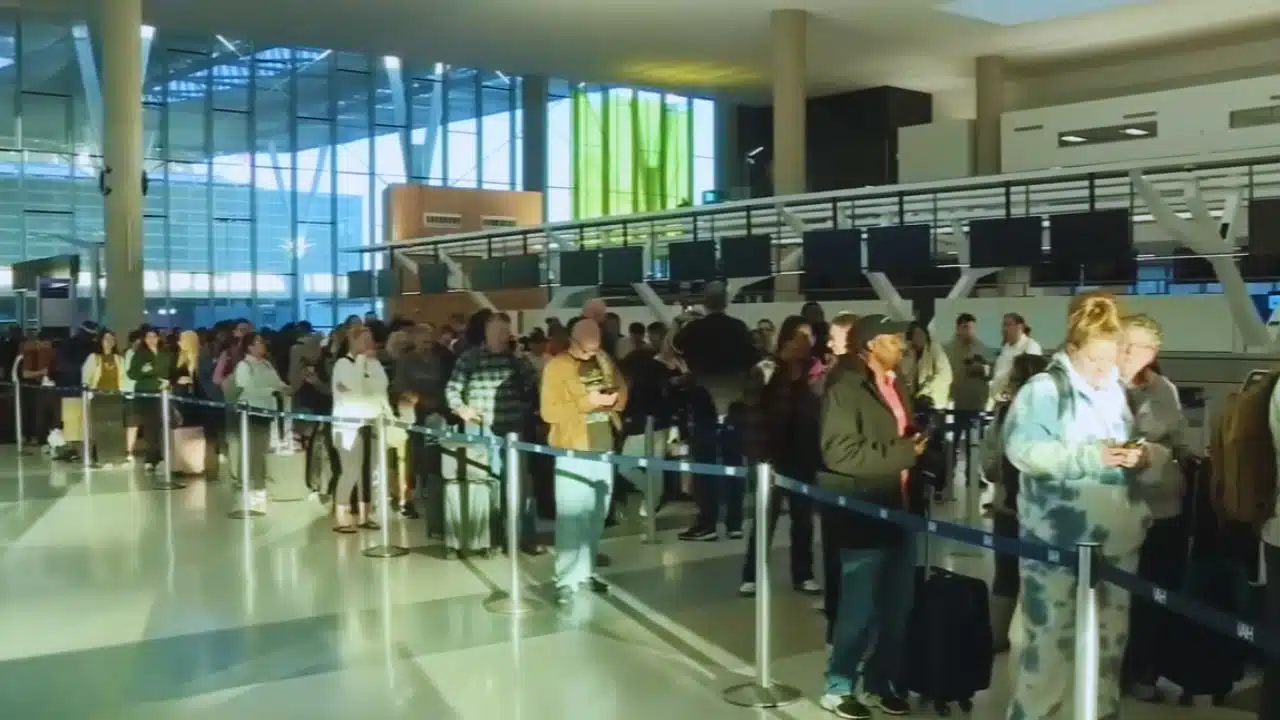
As the U.S. government shutdown stretches on, travelers are becoming increasingly concerned about the safety and reliability of air travel. With air traffic controllers and TSA workers continuing to show up for work without pay, anxieties about flight delays and security risks are rising. So, is it still safe to fly? Here’s what aviation experts are saying.
Strained Workforce and Delayed Flights
Since the government shutdown began over 34 days ago, essential aviation workers—such as air traffic controllers and TSA screeners—have been required to do their jobs without pay. While these workers are still on the job, the uncertainty around their compensation is leading to increased stress, and in some cases, workers are seeking second jobs just to make ends meet.
Air traffic controllers, who are responsible for keeping flights on track, are particularly vocal about the pressures they face. Nick Daniels, president of the National Air Traffic Controllers Association, spoke out about the growing concerns: “Every single day that this goes on, tomorrow is now less safe than today,” he told . “We’re supposed to go to work and be 100%, 100% of the time. But right now, I’m thinking about how to pay my rent.
The impact of the shutdown has been felt across major airports, with long TSA lines and rising flight delays. According to Transportation Secretary Sean Duffy, the delays are a direct result of controllers intentionally slowing flights to manage the limited staff available. If we thought that it was unsafe… we’d shut the whole airspace down,” Duffy said. “We’re not there yet. It’s just significant delays.”
Increased Risks and Less Predictability
Erik Hansen, Senior Vice President of Government Relations at the U.S. Travel Association, highlighted a critical issue: while safety remains the top priority, the reliability of air travel has been significantly compromised. The system is never going to compromise safety, but we’re absolutely compromising predictability,” he said. With the ongoing shutdown, the ability for passengers to arrive on time has become much less certain.
There have been widespread staffing shortages at key airports like Chicago, Denver, Houston, and Newark, leading to increased ground delays and disruptions for passengers. Travelers in these areas can expect longer waiting times and unpredictability in their schedules.
Should You Be Concerned About Safety?
While the situation is frustrating, aviation experts, including Mike McCormick, an assistant professor of Air Traffic Management at Embry-Riddle University, argue that the system remains largely safe. McCormick stated that if controllers find themselves unable to focus on their duties due to the pressures of the shutdown, they should call out sick, which could actually help prevent safety risks. “If controllers are recognizing their limitations and not reporting to work, that actually helps to keep the system safe,” McCormick added.
However, experts caution that the stress and distractions caused by the shutdown could impact the efficiency of the system. Keith Jeffries, Vice President of K2 Security Screening Group, emphasized that while flying remains safe, the focus of TSA workers could be compromised. Are they thinking about the next bill that’s due and how they can’t afford to pay it, or are they focused on looking for dangerous items?” Jeffries explained. It’s a tough question, but one that speaks to the broader stress felt by front-line workers.
Long Lines and Airport Staffing Challenges
One of the most immediate impacts for travelers has been longer TSA lines. Houston’s Bush Intercontinental Airport has warned passengers that wait times could reach up to three hours due to staffing shortages. Long lines have been reported at other major airports as well, adding to the frustration of travelers.
As Keith Jeffries pointed out, call-outs will likely continue to rise among TSA workers. With these employees facing financial strain, some may be less likely to show up for their shifts, further exacerbating the delays.
Despite these challenges, most experts agree that the solution is simple: Congress needs to end the shutdown. Union leaders and major airlines alike have called for swift action to ensure that air traffic controllers and TSA workers are paid for their critical work. Our message is simple, open the government, and it has to open now,” said Nick Daniels.
Until the shutdown is resolved, passengers should expect delays, but experts reassure that air travel remains safe. The aviation system is designed to manage these kinds of disruptions, but the ongoing stress on workers is taking a toll. If you’re planning to travel during the shutdown, be prepared for delays and longer wait times, but rest assured that safety continues to be the primary concern of all involved.
The Information is Collected from CNN and CBS News.