Ever watched a serious anime battle scene, only to have the camera suddenly zoom in on… well, something that definitely wasn’t the sword? It can be jarring. One minute you’re invested in a hero’s journey, and the next, you’re wondering if the director just wanted to show off a swimsuit design. You aren’t the only one asking if this is just “part of the culture” or something that holds the medium back. Is anime finally growing out of these habits?
There is a massive debate happening right now about sexualization and objectification on screen. It stirs up strong feelings for everyone, from casual viewers to die-hard collectors. We are going to look at what fan service really means, how it changes what we watch, and if the industry is actually maturing.
Grab a snack and get comfortable. I’m going to walk you through exactly what’s happening beneath the surface.
What Is Fan Service in Anime?
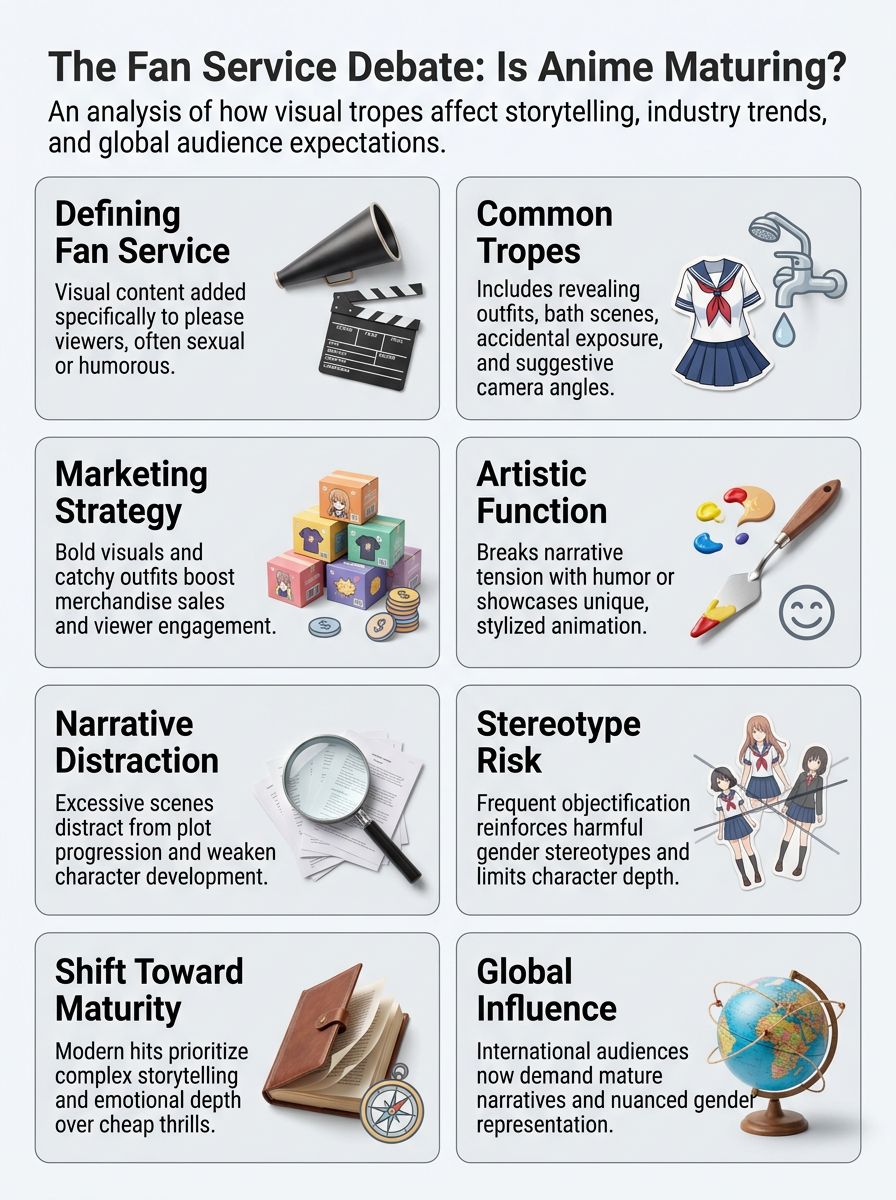
Fan service is exactly what it sounds like: material added specifically to please the fans, often at the expense of the story. While it can refer to cool robot cameos or callbacks, it almost always refers to racy visual content today.
Definition and Purpose
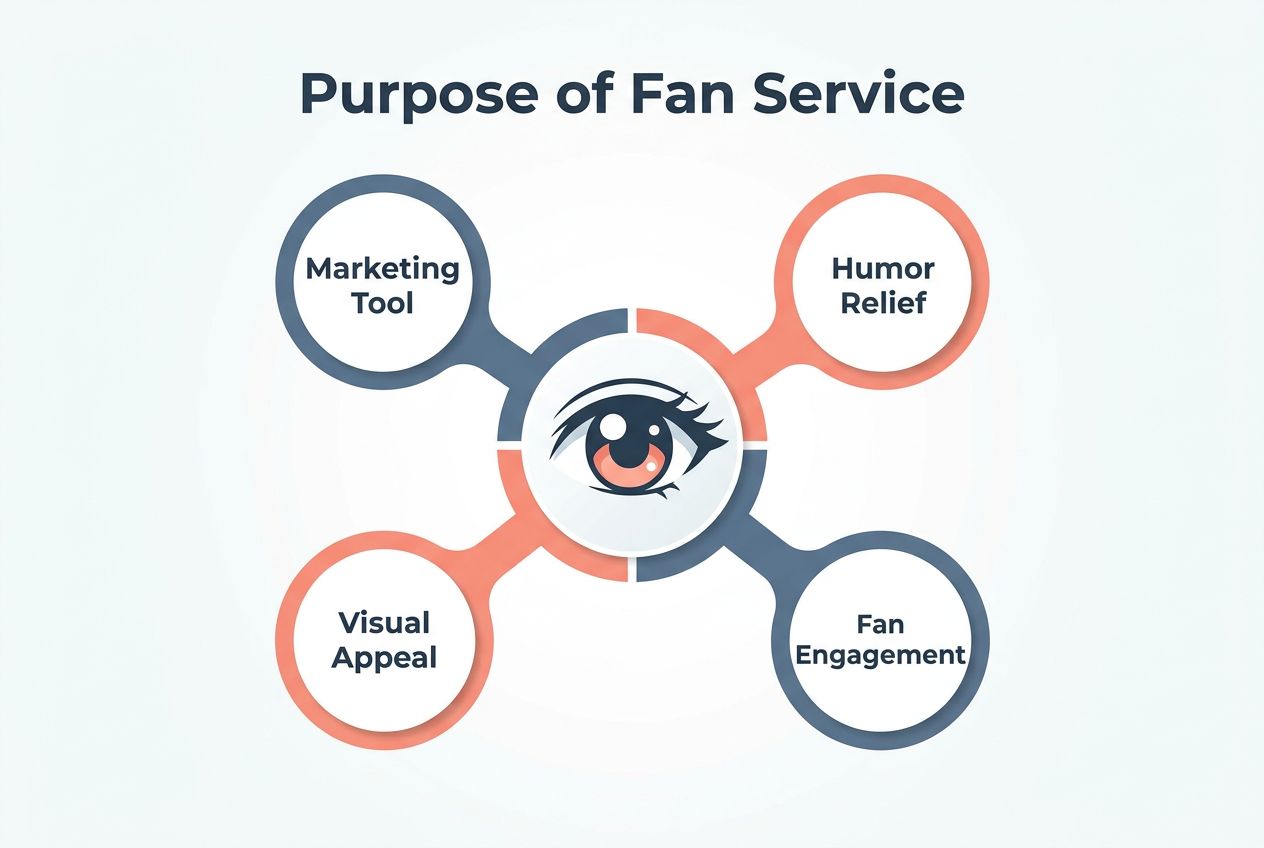
In the strictest sense, fan service is the inclusion of scenes designed to titillate or amuse the audience, usually through sexualization or humor. Studios use it as a calculated tool to boost audience engagement.
Think of it like a “bonus track” on an album, but one that plays in the middle of a song. For example, the term “ecchi” is often used to describe shows that tease the audience without crossing the line into full adult content. Studios know that a well-timed “beach episode” (often occurring around Episode 7 or 8) can spike ratings and merchandise sales, even if it pauses the main plot.
It creates a visual flair that can attract viewers who might not be interested in the dialogue. However, it shapes how the world sees gender representation in Japanese media.
Common Types of Fan Service
Anime has developed a specific vocabulary for these moments. Some are subtle winks to the audience, while others are impossible to miss.
- The “Gainax Bounce”: Named after the studio Gainax, this refers to exaggerated physics applied to female characters’ chests. It originated from the Daicon IV opening animation in 1983, a legendary fan project that set the standard for otaku culture.
- Sexualization: This is the most direct form. Female characters might wear armor that protects nothing vital, or male characters might be shirtless for no narrative reason. It targets specific demographics to drive figure sales.
- Bath or Hot Spring Episodes: A staple trope where the cast takes a break to bathe. These scenes offer a convenient excuse to show skin while delivering exposition or comedy.
- Accidental Exposure: Often seen in romantic comedies. A character trips, the wind blows, and suddenly clothes defy gravity. It’s a gag used so often that it has become a cliché.
- The “Male Gaze” Angles: Directors often frame shots to focus on legs, chests, or posteriors, even during serious dialogue. This technique prioritizes the viewer’s pleasure over the character’s perspective.
- Suggestive Poses: Characters might sit or stand in ways that are physically impractical but visually “appealing.” You see this frequently in promotional posters to grab attention on streaming platforms.
- Romantic Tension: Blushing, accidental touches, and the “will they, won’t they” dynamic. This keeps shippers engaged without resolving the relationship.
- Cross-dressing: Used to challenge norms or, more often, for comedic misunderstandings. It creates situations where characters are forced into awkward, revealing scenarios.
- Cosplay within the Story: Characters dressing up as maids, nurses, or bunny girls. It allows the show to cycle through popular fetishes without changing the setting.
- Transformation Sequences: Popularized by shows like Cutie Honey and Sailor Moon, these scenes highlight the body during a costume change. They balance empowerment with visual appeal, inviting constant debate about maturity and consent.
These tropes are tools in a creator’s box. Some use them to build a fun, flirty atmosphere, while others rely on them to mask a thin plot.
The History of Fan Service in Anime
Fan service didn’t just appear overnight. It evolved alongside the Japanese economy and the changing demographics of fandom. What started as quick gags in the 1960s turned into a billion-dollar industry strategy.
Early Examples and Evolution
In the 1960s, Astro Boy would occasionally feature a character losing clothing for a quick laugh, but it was innocent by today’s standards. The real shift happened in the late 1970s and 1980s. Shows like Cutie Honey (1973) introduced the idea that a heroine could be both strong and sexy.
The 1980s OVA (Original Video Animation) boom changed everything. Because these tapes were sold directly to consumers rather than aired on strict TV, creators had more freedom. This era gave birth to the “otaku” consumer who would buy tapes specifically for these mature visuals.
By the 1990s, Neon Genesis Evangelion (1995) inadvertently revolutionized the market. While the show itself was a psychological deconstruction, the merchandise sales of its female leads, Rei and Asuka, proved that character appeal could earn more than the show itself. This signaled to studios that “moe” (a deep affection for cute characters) was a gold mine.
Influence of Cultural and Industry Trends
Anime always reflects the culture around it. In the 1980s, the “bubble economy” meant plenty of cash for experimental, risky projects. When the bubble burst, studios played it safe by catering to the most reliable spenders: the hardcore fans.
“The industry realized that while casual viewers watch for the story, hardcore fans buy the Blu-rays for the characters. Fan service became a way to secure those sales in a competitive market.”
Today, the influence is global. Western audiences are speaking out against tropes they find uncomfortable, pushing for better gender representation. Streaming giants like Netflix and Crunchyroll have different standards than Japanese late-night TV, creating a push-and-pull effect. Creators are now balancing the demands of local tradition with an international audience that often craves more nuanced storytelling.
How Fan Service Is Used in Anime
Studios don’t just add these scenes for no reason. It is a calculated decision involving marketing, pacing, and art. Think of it as a spice; some chefs use a pinch to enhance the flavor, while others dump in the whole bottle to hide the taste of the ingredients.
As a Marketing Tool
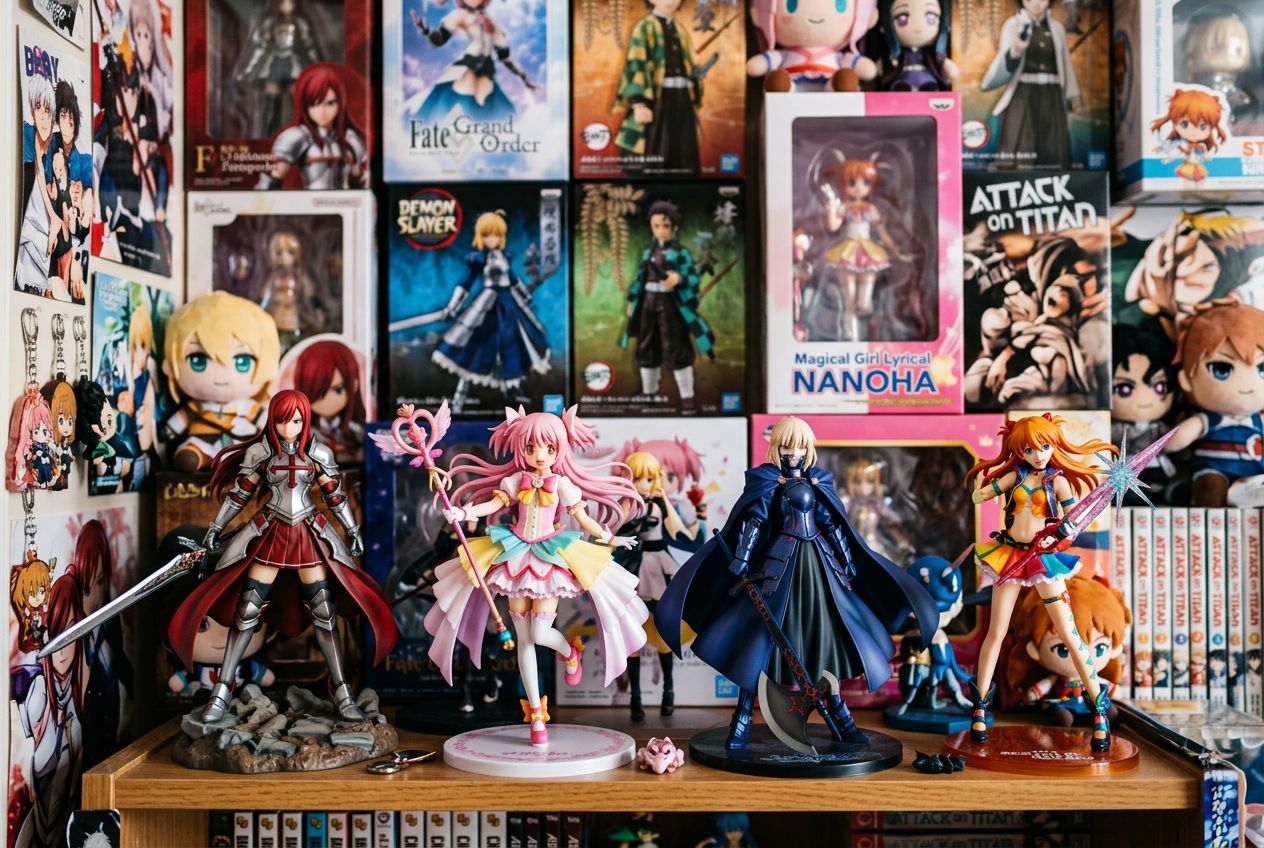
Sex sells, and in the anime industry, it sells merchandise. A 2024 report on the anime market highlighted that merchandise sales often outpace the revenue from the actual broadcast. If a character design is popular, it leads to figures, pillows, and posters.
Companies like Good Smile Company or Alter produce high-quality figures based specifically on “fan service” moments. A show like High School of the Dead might spark controversy, but it also moved units. The “waifu” culture drives fans to support their favorite character financially, and studios feed this by giving those characters ample screen time and “appealing” situations.
To Add Humor or Break Tension
Comedy often relies on the unexpected. Seeing a dignified character slip on a banana peel is funny; in anime, seeing them in a compromising position is often the punchline. It acts as a pressure release valve after a high-stakes battle.
Konosuba: God’s Blessing on This Wonderful World! is a masterclass in this. It uses fan service to mock the characters rather than just objectify them. When the crusader Darkness gets excited about being a human shield, it’s played for laughs, making her quirks part of the joke. It feels like an inside joke you share with the cast, rather than a scene that was forced in by an executive.
For Artistic or Visual Appeal
Sometimes, it really is about the art. Animators love to show off their skills, and dynamic poses or fluid movement can be breathtaking, even if the context is risqué. Bold camera angles can highlight a character’s dominance or vulnerability.
Kill la Kill turns this up to eleven. The show mixes intense, fluid action with incredibly revealing outfits. But the animation is so energetic and stylish that it becomes a visual feast. The art team pours creativity into every frame, using bright colors and dramatic lighting. In these cases, fan service isn’t just “eye candy”—it’s a core part of the show’s visual identity.
Criticisms of Fan Service
While many enjoy the visuals, a growing number of fans and critics argue that fan service is the “junk food” of the medium. It might taste good in the moment, but too much of it can ruin your appetite for the actual story.
Distracting From Plot and Character Development
Imagine watching a tense horror movie, and suddenly the camera cuts to a slow-motion shot of a character’s underwear. It kills the mood instantly. This “tonal whiplash” is the biggest complaint from viewers who want to take a show seriously.
In series like High School of the Dead, the constant interruption of zombie survival tension with “panty shots” makes it hard to fear for the characters’ lives. If the camera is treating them like objects, the audience stops caring about them as people. Viewers often drop shows because they feel insulted that the director thinks they only care about skin, not the plot.
Reinforcing Stereotypes
There is a serious academic critique here as well. In 1975, film theorist Laura Mulvey coined the term “Male Gaze,” which describes how the media depicts women from a masculine, heterosexual perspective. Anime is frequently cited as a prime example of this.
When female characters are consistently framed as decoration, it sends a message that their value lies in their appearance, not their agency. This affects how young viewers perceive gender roles. It’s not just about women, either; men are often pigeonholed into being emotionless perverts or stoic fighters. These repetitive tropes can make the medium feel unwelcoming to a diverse modern audience.
Overuse in Certain Genres
It is important to recognize where this happens most. Shows aimed at teenage boys (Shonen) are the most frequent offenders. Titles like Fire Force faced backlash because a specific character, Tamaki, was constantly stripped of her clothes against her will as a “running gag,” which many fans found frustrating rather than funny.
This heavy reliance on sexualization can push away people who want deeper plots. It creates a barrier to entry, making “anime” synonymous with “cartoons for horny teenagers” in the eyes of the general public, masking the incredible storytelling the medium is capable of.
Does Fan Service Indicate Anime’s Immaturity?
This is the big question. Does a reliance on these tropes mean anime is stuck in the past? The answer isn’t black and white, but looking at the data helps us see the trends.
Examples of Excessive Fan Service
Some shows have become infamous not for their story but for how far they push the envelope. These titles often prioritize shock value over narrative logic.
- Kill la Kill: While stylistically praised, its central mechanic involves fighting in skimpy clothing, which alienates viewers looking for a serious warrior drama.
- Food Wars! Shokugeki no Soma: The “foodgasms”—where clothes rip apart from the taste of good food—are a funny metaphor, but they turn a cooking show into softcore ecchi.
- High School of the Dead: The infamous “supersonic bullet dodge” scene, where a bullet passes between a character’s breasts in slow motion, is a textbook example of physics taking a backseat to titillation.
- Keijo!!!!!!!!: A sports anime where girls fight with their posteriors. It took the premise of fan service and tried to make it a legitimate sport.
- To Love Ru: This series practically invented the “accidental fall” trope, where the protagonist defies gravity to land in compromising positions every episode.
- Fairy Tail: Often criticized for halting emotional battle scenes to strip female wizards of their clothing for “damage” reasons.
- Prison School: It walks a fine line, using extreme BDSM themes and sexual assault as punchlines, which many viewers find deeply uncomfortable rather than edgy.
- Is It Wrong to Try to Pick Up Girls in a Dungeon?: Despite a cool fantasy setting, the marketing focused heavily on the “boob ribbon” outfit of the goddess Hestia, overshadowing the world-building.
- No Game No Life: The use of hyper-sexualized young characters (loli) raises serious concerns about cultural perception and legality in Western markets.
- Harem Tropes (General): The endless parade of girls falling for a generic guy with no personality suggests that romance is about collection rather than connection.
Balancing Fan Service and Storytelling
It is possible to have both, but it requires a deft hand. A show like Chainsaw Man features sexual themes, but they are driven by the protagonist’s naive understanding of intimacy, making them part of his character growth rather than just eye candy.
The “immaturity” label sticks when the fan service adds nothing. When a creator pauses the story to shake a set of keys in front of the audience, it feels cheap. But when the themes of sexuality are woven into the plot, like in Cyberpunk: Edgerunners, it feels like a mature exploration of adult themes rather than a giggle at the back of the class.
Fan Service in Popular Anime Series
Let’s look at the specific shows that have defined this debate. These case studies show how thin the line is between a “cult classic” and a “commercial flop.”
Case Study: Kill la Kill
Kill la Kill is the ultimate litmus test. Director Hiroyuki Imaishi intentionally ramped up the sexualization to satirical levels. The characters’ power comes from their shame (or lack thereof) regarding their bodies.
Fans argue that the nudity is the plot; it’s about shedding societal expectations. However, for a casual viewer just tuning in, it looks like just another show objectifying women. It sparked massive controversy but remains a beloved hit because the action and themes back up the visuals.
Case Study: Food Wars! Shokugeki no Soma
This show took a boring topic, cooking, and made it a thriller. The “foodgasms” were a way to visualize taste.
However, as the series went on, the gag grew stale. Critics noted that while the first season was fresh, later seasons felt like they were leaning on the stripping scenes because they ran out of interesting recipes. It shows the danger of relying on a gimmick; eventually, the shock wears off.
Case Study: High School of the Dead
This is often cited as the “worst offender” by critics but loved by fans for its B-movie energy. It has zero pretense. It promises zombies and skin, and it delivers exactly that.
The problem arises when you try to defend it as “high art.” It’s popcorn entertainment. The debate here is about honesty, at least this show doesn’t pretend to be deep while focusing on camera angles that would make a cinematographer blush.
Case Study: Keijo!!!!!!!!
Keijo!!!!!!!! is a fascinating business lesson. It became a meme online, with millions sharing clips of its ridiculous butt-battling action. But memes don’t pay the bills.
Despite the internet fame, the anime sold poorly on Blu-ray in Japan. The manga author, Daichi Sorayomi, even posted a message apologizing for the cancellation of the manga, citing the anime’s poor commercial performance. It proved that “viral” fan service doesn’t always translate to a sustainable, paying audience.
Evaluating Anime’s Maturation Beyond Fan Service
Here is the good news: the tide is turning. We are seeing a massive shift toward stories that don’t need these crutches to succeed. The biggest hits of the last few years have been remarkably restrained.
Trends Toward Complex Storytelling
Look at the titans of the 2020s. Attack on Titan, Jujutsu Kaisen, and Vinland Saga rely on horror, politics, and philosophy. They trust their audience to pay attention without needing a “beach episode” to keep them awake.
In 2024 and 2025, Frieren: Beyond Journey’s End dominated the conversation. It is a slow, melancholy fantasy about an elf dealing with the passage of time. It has almost zero fan service. Yet, it won major awards and topped charts worldwide. This proves that viewers are hungry for emotional resonance over cheap thrills.
Rise of Subtle Artistic Elements
Studios are realizing that “maturity” means emotional depth, not just adult content. Kyoto Animation (Violet Evergarden) leads this charge, focusing on intricate details like the movement of a typewriter or the reflection in a character’s eyes.
This “Seinen” (adult men) demographic shift is real. Shows like Blue Eye Samurai (a hybrid production) found massive success on Netflix by telling a gritty, violent, and non-sexualized story of revenge. The visual language is evolving from “look at her body” to “look at her pain.”
Spotlight on Recent Anime with Reduced Fan Service
If you want to watch something great without worrying about who walks in the room, try these:
- Spy x Family: A global phenomenon that thrives on wholesome family dynamics. The humor comes from secrets, not skin.
- Ranking of Kings: A heartwarming story about a deaf prince. It proves you can have a “kiddy” art style with a Game of Thrones-level plot.
- Keep Your Hands Off Eizouken!: A love letter to animation itself. The passion here is for creativity, not romance.
- Mob Psycho 100: It explores mental health and teenage awkwardness with empathy, treating its cast as people, not tropes.
- March Comes in Like a Lion: A stunning drama about depression and shogi. It’s heavy, beautiful, and completely respectful of its characters.
- Dr. Stone: While it has character designs that are stylized, the focus is strictly on the “science vs. fantasy” adventure.
- Fruits Basket (2019): The reboot removed some of the dated 90s humor to focus purely on the trauma and healing of the Soma family.
These shows aren’t “boring” because they lack fan service; they are arguably more exciting because every second of screen time is dedicated to the story.
The Future of Fan Service in Anime
So, where do we go from here? With fresh trends and shifting laws, the future looks very different from the past.
Industry Trends Toward Maturity
The money is moving. Netflix revealed in 2026 that over 50% of its global subscribers watch anime. To keep those numbers up, they need content that appeals to everyone, not just the hardcore otaku niche.
This “streaming effect” is smoothing out the rough edges. A show funded by global investors is less likely to include a scene that would get it banned in the US or Europe. We are seeing a “softening” of extreme content in mainstream titles, while the hardcore fan service is moving to niche, age-gated platforms.
Shifts in Audience Preferences
Legislation is also playing a role. In the US, vague laws like Texas Senate Bill 20 have raised fears about “harmful material” in libraries, leading publishers to be more cautious about what they localize. “Soft censorship”, like adding black boxes or “steam” to obscure scenes, is becoming more common to avoid legal headaches.
Ultimately, the audience is voting with their wallets. The massive success of Demon Slayer and Frieren sends a clear message to producers: you don’t need the “Gainax Bounce” to make a billion dollars anymore. You just need a good story.
Final Words
Anime has definitely changed, but the fan service debate isn’t going away anytime soon. We’ve seen how it can drive sales and spark memes, but also how it can alienate viewers and even sink a franchise like Keijo!!!!!!!!.
The medium is growing. With hits like Frieren leading the charge, it’s clear that you can capture hearts without relying on cheap tricks. So, the next time you’re browsing for a new show, ask yourself: are you watching for the plot, or the “plot”? The choice is yours, and thankfully, there are now plenty of amazing options for both.