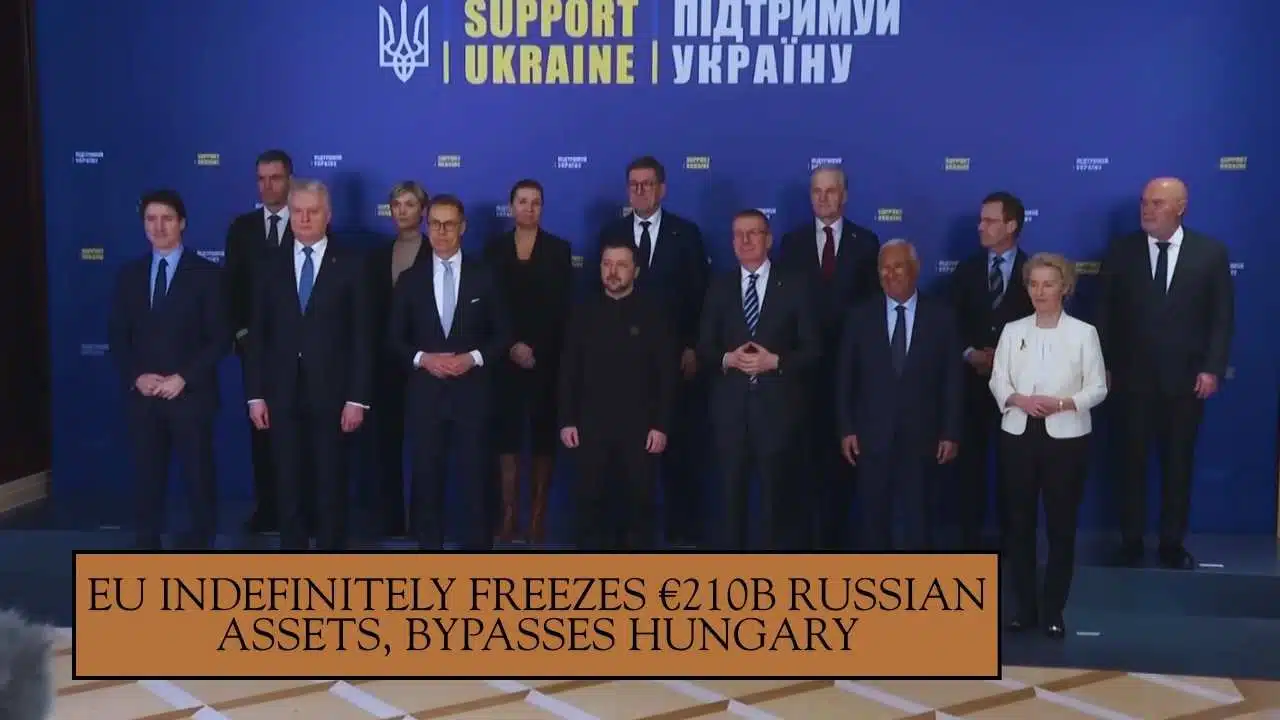
European Union ambassadors made a bold move on Thursday, approving an indefinite freeze on €210 billion in Russian assets. By tapping into emergency powers under Article 122 of the EU treaties, they sidestepped the need for unanimous agreement among all 27 member states. This clever workaround neutralizes potential vetoes from Hungary and Slovakia, two nations often at odds with the bloc’s tough stance on Russia over its war in Ukraine.
The decision flips the script on how the EU has handled these assets since early 2022, when sanctions first kicked in after Moscow’s full-scale invasion. Previously, keeping the freeze in place meant renewing it every six months with full consensus—a process that turned into a political circus, with Hungary repeatedly threatening to block extensions. Now, with just a qualified majority vote, the assets stay immobilized for the long haul, until Russia no longer poses “substantial risks” to Europe’s economy and agrees to pay reparations for the destruction in Ukraine.
Hungarian Prime Minister Viktor Orbán wasted no time reacting. On Friday, he blasted the move as Brussels “stepping over the Rubicon,” a dramatic reference to the ancient point of no return that signals civil war. Orbán labeled it “unlawful” and predicted it would inflict “irreparable damage” on the European Union itself, potentially fracturing unity and eroding trust among members. His outspoken criticism underscores deep divisions within the bloc: Hungary has long positioned itself as a friend to Moscow, often clashing with Brussels over energy deals, migration policies, and Ukraine aid. Slovakia, under its own populist leanings, has echoed similar hesitations, making this qualified-majority tactic a game-changer for EU decision-making.
From Fragile Six-Month Renewals to a Rock-Solid Permanent Freeze
At the heart of this €210 billion haul are €185 billion in assets held at Euroclear, the massive Brussels-based securities depository that acts like a giant safe for bonds, stocks, and cash across Europe. The remaining €25 billion scatters across private banks in France, Germany, Sweden, Cyprus, and Belgium—mostly sovereign holdings from Russia’s central bank, including government bonds and liquid reserves meant for international transactions.
These funds got frozen right after Russia’s invasion in February 2022, as part of a sweeping sanctions package aimed at crippling Moscow’s war machine. Under the old rules, every six months brought nail-biting negotiations: Hungary would leverage its veto to extract concessions, like delays in Ukraine aid or softer energy sanctions. That vulnerability is now history. Article 122, the emergency clause, demands only a qualified majority—typically 55% of member states representing 65% of the EU population. It’s a tool the EU has pulled out before, during the COVID-19 pandemic for rapid vaccine funding and amid the 2022 energy crisis sparked by reduced Russian gas flows.
A senior EU diplomat summed it up plainly this shift puts the immobilization “on a more sustained footing,” eliminating the exhausting cycle of rollovers. The assets won’t budge until two big conditions are met—Russia dialing back economic threats like weaponized energy exports or hybrid attacks, and coughing up reparations estimated in the hundreds of billions for Ukraine’s shattered infrastructure, cities, and economy. This isn’t just punitive; it’s pragmatic, shielding Europe’s financial system from sudden Russian maneuvers while signaling resolve after over three years of war.
Clearing the Path for Massive Ukraine Loans Amid Pushback
This freeze paves a straight road for one of the EU’s most ambitious Ukraine support plans yet: a €90 billion reparations loan proposed by European Commission President Ursula von der Leyen. Slated for final approval at the EU leaders’ summit on December 18, the loan would plug about two-thirds of Kyiv’s projected financing gap for 2026 and 2027—covering everything from military salaries and weapons to rebuilding power grids wrecked by Russian strikes and propping up a war-torn economy facing 30%+ inflation and massive displacement.
Here’s how it works: Ukraine gets the cash now, backed by the frozen Russian assets as collateral. If Moscow ever pays its dues, great—Ukraine repays the loan. If not, the EU could seize the assets outright, turning enemy funds into ally aid. It’s a win-win for supporters, but not everyone is cheering. Belgium’s Prime Minister Bart De Wever has raised red flags, slamming the scheme as “fundamentally wrong” due to fears of legal blowback. His country, home to Euroclear, worries about getting stuck with lawsuits or liabilities if courts rule against the EU. De Wever demands “ironclad guarantees,” like escrow arrangements or international arbitration clauses. EU officials counter that the indefinite freeze directly tackles this, ensuring funds stay locked tight and reducing premature-release risks that could expose Belgian institutions.
Other skeptics include fiscal hawks in Germany and the Netherlands, fretting over adding to the EU’s already ballooning debt pile from pandemic recovery and green transitions. Yet proponents argue the math checks out: Ukraine’s needs are dire, with World Bank estimates pegging reconstruction at €486 billion over a decade, and this loan keeps Western aid flowing without direct taxpayer hits.
Russia’s Fierce Legal Counterattack and Broader Fallout
Russia isn’t rolling over. On Thursday, its central bank fired off a lawsuit against Euroclear in Belgian courts, demanding immediate release of the assets and framing the freeze as brazen theft that violates international law. Moscow has hammered this narrative since day one, with Kremlin officials vowing retaliation through mirrors sanctions on Western holdings and potential asset grabs of their own. They’ve already tested waters with countermeasures, like seizing assets from unfriendly companies operating in Russia.
Legal battles could stretch years, winding through Belgian tribunals, the European Court of Justice, and even international venues like The Hague. Experts point out the EU’s move exploits a gray area in sovereign immunity laws, but Russia’s arsenal includes arguments over property rights and G20 pledges against weaponizing central bank reserves. Meanwhile, the freeze squeezes Russia’s war chest: those assets were meant to stabilize the ruble, fund imports, and back global trade amid sanctions that have slashed GDP growth and spiked inflation.
Globally, this sets precedents. It bolsters Ukraine’s hand in peace talks, pressures Putin economically as oil revenues wane, and tests EU cohesion under fire. For everyday Europeans, it means steadier energy markets and lower inflation risks from Russian volatility, but also higher defense spending and aid commitments. As the December 18 summit looms, watch for tweaks to the loan package—perhaps phased disbursements or stricter repayment safeguards—to win over holdouts and keep the momentum.