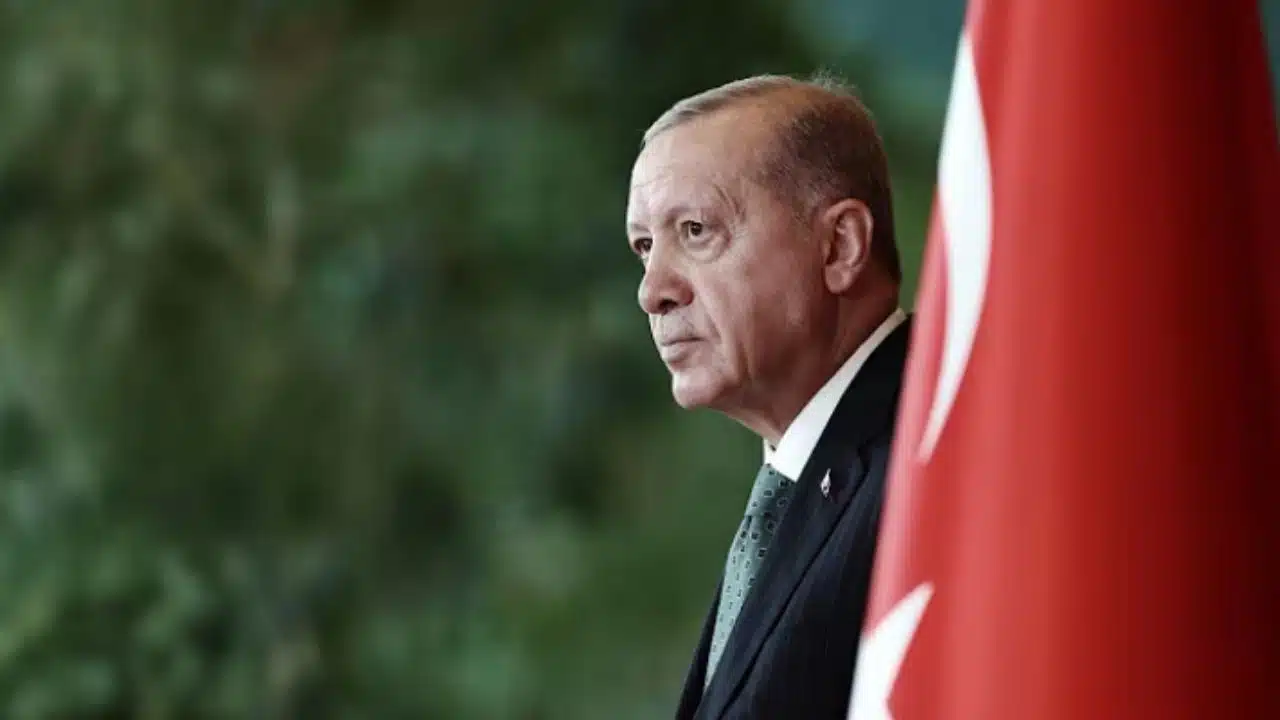
Turkish President Recep Tayyip Erdoğan warned that attacks on tankers inside Türkiye’s Black Sea economic zone risk widening the Russia-Ukraine war at sea, threatening trade routes, safety, and the environment.
What Happened In Türkiye’s Black Sea Zone?
Türkiye raised its alert level after two commercial tankers were hit in the Black Sea within Türkiye’s Exclusive Economic Zone (EEZ). An EEZ is a maritime zone where a coastal state has special rights related to resources and certain economic activities. While it is not the same as territorial waters, incidents in an EEZ can still carry serious legal, environmental, and security consequences.
According to Türkiye’s Foreign Ministry, the attacks targeted the Gambian-flagged tankers Kairos and Virat on November 28, 2025. Ankara said the incidents posed “serious risks” to safety of navigation, human life, property, and the environment. Türkiye said it started contacts with relevant parties to prevent further escalation across the Black Sea and to protect Türkiye’s economic interests and activity in the region.
Public statements from Turkish authorities and reporting around the incident indicated the ships were rocked by explosions off Türkiye’s northern coast. One of the tankers was also reported to have been struck again in the hours that followed. Türkiye treated that detail as a key signal that the risk could persist, not just as a one-time event.
The maritime security picture intensified again days later, when Türkiye’s maritime authority reported another tanker incident in the Black Sea involving the Russian-linked vessel Midvolga-2. In that case, Turkish authorities said the ship came under attack about 130 kilometers (80 miles) off Türkiye’s coast while carrying sunflower oil from Russia to Georgia, and that the crew did not request assistance. These incidents strengthened Ankara’s concern that offshore targeting was spreading beyond the northern Black Sea and into wider waters used by international commercial shipping.
Key Incident Snapshot
| Date | Vessel | Flag | Reported Cargo/Route | Reported Location | Immediate Outcome |
| Nov 28, 2025 | Kairos | Gambia | Tanker voyage toward Russian ports | Within Türkiye’s EEZ | Explosion damage reported, safety and environmental concerns raised |
| Nov 28–29, 2025 | Virat | Gambia | Tanker voyage toward Russian ports | Within Türkiye’s EEZ and off Türkiye’s coast | Explosion damage reported, later hit reported again |
| Dec 2, 2025 | Midvolga-2 | Russia-linked | Sunflower oil to Georgia | ~130 km (80 miles) off Türkiye’s coast | Crew unharmed, no assistance requested |
Why Erdogan Issued A Warning?
Erdoğan’s message focused on stopping the conflict from expanding into a sustained maritime confrontation. He described attacks on commercial ships as unacceptable and warned all related sides. For Türkiye, the danger is not only the immediate damage to a ship, but what follows after the first hit.
When commercial tankers become targets, risks spread quickly across several layers of civilian life. Crews face direct danger, ports face operational disruption, and coastal communities worry about fire or pollution incidents that can reach shore. Even if an attack causes limited damage, the wider market response can be immediate as insurers, ship owners, and cargo planners reassess whether routes remain viable.
Erdoğan also framed these incidents as a broader escalation that can reduce predictability at sea. Maritime traffic depends on stable expectations: ships file routes, ports schedule arrivals, and insurers price risk based on patterns. Drone-style attacks, especially those claimed or denied in competing narratives, introduce uncertainty that pushes costs upward.
Türkiye’s warning also reflected geography. The Black Sea is enclosed and heavily trafficked. Shipping lanes, energy routes, and port approaches can overlap with military movement, drones, and surveillance activity. That raises the chance of accidental confrontation or mistaken targeting, especially if unmanned systems operate across long distances or in poor weather.
Türkiye has repeatedly positioned itself as a state that wants the Black Sea to remain open for trade and as calm as possible. Ankara’s public stance after these incidents signaled that it sees maritime security as a red line that cannot be allowed to deteriorate further.
What The Attacks Say About The War At Sea?
The Russia-Ukraine war has included a long contest over ports, sea access, and export revenue. While the conflict started on land, both sides have treated the maritime space as strategic. Ports matter because they are economic lifelines. Tankers matter because oil revenue shapes a state’s ability to finance war.
In late 2025, the tanker incidents near Türkiye’s coast highlighted a shift in perceived operational reach and intent. Public claims around the strikes pointed to the use of naval drones or unmanned systems to hit vessels traveling toward or linked to Russia. The emphasis, from Kyiv’s perspective, has been to disrupt energy shipments and pressure revenue streams that support Russia’s war effort.
These incidents also put attention on what many governments and analysts describe as Russia’s “shadow fleet.” The term generally refers to older tankers and shipping structures that rely on opaque ownership and operational practices that reduce exposure to sanctions controls. Western policies tied to the oil price cap and sanctions enforcement have increased scrutiny of these vessels, while Russia has sought alternative routes and shipping arrangements to keep exports moving.
For Türkiye, the urgent issue is not only the politics of sanctions. It is maritime safety. Ankara can support enforcement measures in principle while still insisting that commercial sea lanes should not become a battleground. In practice, the two themes collide when tankers linked to sanctions disputes travel through the same waters used by other civilian cargo.
In mid-December 2025, Türkiye cited a related concern from a different angle when it said a foreign-flagged vessel owned by a Turkish company was damaged during an attack on Ukraine’s Chornomorsk Port. Ankara said the incident validated earlier warnings that the war’s effects were spreading into the Black Sea and impacting maritime security and freedom of navigation. Even when a strike happens in port rather than open sea, the message is similar: commercial activity is increasingly exposed.
How Maritime Risk Can Escalate?
| Risk Channel | What Changes On The Ground | Why It Matters For Trade |
| Targeting expands offshore | Strikes occur farther from front lines | More ships and routes become “high risk” |
| Insurance repricing | War-risk premiums rise | Freight costs climb, some voyages get delayed or canceled |
| Port disruption | Loading schedules slip, inspections increase | Supply chains slow and costs rise |
| Environmental hazard | Fire or spill risks increase | Coastal economies and fisheries face threat |
| Miscalculation | Unmanned systems create uncertainty | Accidents can trigger wider confrontation |
Why Black Sea Trade Is Highly Sensitive?
The Black Sea connects multiple economies and supply chains. It is also the gateway to the Turkish Straits, which link the Black Sea to the Mediterranean. That geography gives Türkiye a direct interest in preventing any drift toward routine attacks on commercial shipping.
The Black Sea’s importance is also tied to food and energy flows. Earlier in the war, the UN-backed Black Sea Grain Initiative demonstrated how disruptions in this region could ripple into global food markets. That specific arrangement later ended, but the underlying reality did not change: when Black Sea logistics get disrupted, prices and availability can shift quickly for importers.
Energy shipping adds another layer. Even when oil cargoes do not move through Türkiye’s own ports, tankers traveling near Türkiye’s coast still create risks for navigation and the environment. A fire at sea can force rescue operations, strain emergency resources, and create pollution threats that drift across maritime borders.
This is why Ankara emphasizes freedom of navigation and maritime security in its statements. Even limited incidents can raise the baseline risk level for the entire sea, making normal commerce more expensive and less predictable.
There is also a domestic economic angle. Higher risk in the Black Sea can affect Turkish maritime services, insurance and finance exposure, port operations, and coastal economic activity. It can also increase pressure on Türkiye’s coast guard and naval patrol responsibilities. None of that requires a direct military clash for the costs to climb.
Timeline Of Key Black Sea-Related Signals From Türkiye
| Date | Event | Why It Drew Ankara’s Attention |
| Nov 28, 2025 | Tankers Kairos and Virat attacked | Incidents occurred inside Türkiye’s Black Sea EEZ |
| Nov 29, 2025 | Türkiye issues official warning | Ankara highlights navigation, life, property, and environmental risk |
| Dec 1, 2025 | Erdoğan condemns attacks | Türkiye signals escalation risk and warns related sides |
| Dec 2, 2025 | Midvolga-2 incident reported | Maritime risk appears to extend beyond the initial tanker strikes |
| Dec 12, 2025 | Turkish company-linked vessel damaged in Chornomorsk Port attack | Türkiye cites growing impact on maritime security and navigation |
What Comes Next?
Erdoğan’s warning amounts to a push for de-escalation in a space where mistakes can be costly. Türkiye is signaling that the Black Sea cannot become an open arena for repeated strikes on commercial shipping, regardless of the political arguments surrounding sanctions, oil revenue, or wartime pressure tactics.
The most realistic next steps are likely to be practical rather than dramatic. Türkiye can keep urging restraint, strengthening maritime monitoring, and expanding contact channels to reduce the chance of miscalculation. Shipping companies and insurers will keep watching whether attacks remain isolated or become part of a sustained pattern.
If the pattern continues, several outcomes become more likely. War-risk premiums could rise further. Some routes might shift, especially for higher-risk cargo. Port security could tighten, slowing turnaround times. Coastal states may also increase patrols and surveillance, which can reduce risk but also raise political tension if incidents occur near sensitive waters.
The central message from Ankara is clear. A war that spreads offshore can harm more than military targets. It can put civilian crews in danger, raise the risk of environmental damage, and destabilize trade lanes that multiple countries depend on.