Feeling worried or even scared about the changing climate is becoming increasingly common. News stories about western wildfires, melting ice, and unusual local weather can trigger stress, sadness, or even a sense of helplessness.
This type of concern has a name: eco-anxiety.
Doctors are observing a growing number of people affected by this form of climate-related worry. Eco-anxiety is now recognized as one of the emerging mental health challenges linked to a changing climate.
This article explains what Climate Change and Mental Health: Eco-Anxiety means, how it appears in everyday life, and offers practical strategies to cope when feelings become overwhelming.
Guidance is provided for finding calm and balance while remaining mindful of the planet’s well-being.
What is Climate Change And Mental Health: Eco-Anxiety?
Eco-anxiety is a deep worry about the state of our planet. This kind of fear can feel very different than regular stress, pulling your thoughts in all directions.
Definition and origins
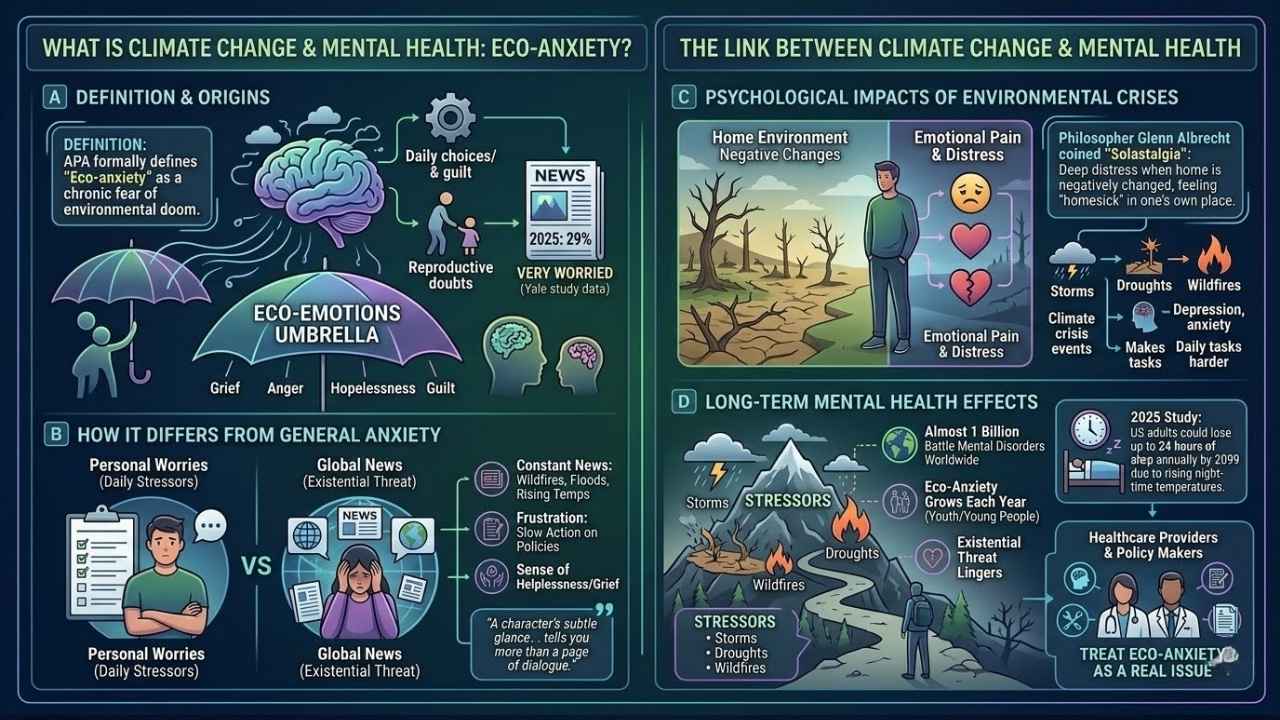
People use the term “eco-anxiety” to describe ongoing fear, worry, and sadness about climate change. The American Psychological Association formally defines it as a chronic fear of environmental doom. Young folks feel this eco-distress deeply. It often comes with guilt over daily choices or doubts about bringing kids into our changing world.
The phrase began popping up as doctors and scientists noticed more people struggling with mental health issues tied to the environment. According to a 2025 survey by the Yale Program on Climate Change Communication, 29 percent of Americans are now “very worried” about global warming. It acts like an umbrella for all eco-emotions like grief, anger, and hopelessness.
As climate change gets worse, these feelings grow stronger and spread across society. Medical experts are now treating environmental anxiety as a real issue that needs attention from both healthcare providers and policy makers.
How it differs from general anxiety
Eco-anxiety is tangled up with real threats from climate change, not just personal worries like general anxiety. It often shows itself as a deep fear, sadness, or guilt about the future of our planet.
This feeling can hit hard for young people who see climate change as an existential threat to their lives. Many experience worry over bringing children into a world facing so much environmental distress. Unlike general anxiety which usually centers around daily personal stressors, eco-anxiety grows out of global news. It specifically focuses on:
- Constant news updates about wildfires, floods, and rising temperatures.
- Frustration over slow action on national and global climate policies.
- A deep sense of helplessness and grief for lost nature and vanishing habitats.
Climate scientists and activists feel this even more because they face these facts every day in their work. Medical educators now recognize these impacts are spreading fast throughout society as climate change worsens worldwide mental health concerns already affecting nearly one billion people.
The Link Between Climate Change and Mental Health
The stress from climate change seeps into daily thoughts, leaving some feeling restless or worried. These feelings can shape moods and even impact how people view the future.
Psychological impacts of environmental crises
Feelings of environmental anxiety and psychological distress are common as people face climate change. The threat to daily life, homes, and the future can spark fear, anger, helplessness, or deep sadness. Psychologists now use the term “solastalgia” to describe this specific pain. Coined by philosopher Glenn Albrecht, solastalgia is the deep emotional distress people feel when their home environment is negatively changed by forces they cannot control.
Many young people call it an existential threat. It makes them question the safety of bringing children into this world. Scientists see eco-anxiety growing across all ages, not just among activists.
Nearly one billion people already live with mental health conditions around the globe. Climate crisis events worsen depression and anxiety in many communities. Eco-anxiety is a rising tide that leaves some tired and worried for days or weeks on end. For some folks, these feelings pile up over time and make normal daily tasks harder than before.
Long-term mental health effects of climate change
Climate change acts like a weight on the mind, dragging many into long-term psychological distress. Depression and anxiety rise as storms, droughts, and wildfires become more frequent.
Almost one billion people already battle mental disorders worldwide, and climate threats make these battles even harder. Eco Anxiety grows each year, especially for young people who worry about their future or feel fear over starting families in an uncertain world.
A 2025 study from the University of Southern California found that by 2099, US adults could lose up to 24 hours of sleep each year due to rising nighttime temperatures, creating long-term health risks and worsening existing mental health struggles.
Doctors are now seeing more patients brought low by environmental anxiety and ecopsychology issues. Sadness sets in when forests burn or rivers dry up. Anger mixes with helplessness after each headline about melting ice caps.
Climate scientists report deep frustration while watching years of warnings go unheard. Activists struggle with guilt if efforts seem too small against such a huge crisis. The existential threat of climate change lingers everywhere, shaping daily moods and dreams as much as temperatures outside do.
Signs and Symptoms of Eco-Anxiety
Sometimes, worries about the climate can sneak up and settle in your mind like an unwanted guest. These feelings might show themselves in surprising ways, taking a toll on both your mood and body.
Emotional symptoms: fear, helplessness, and sadness
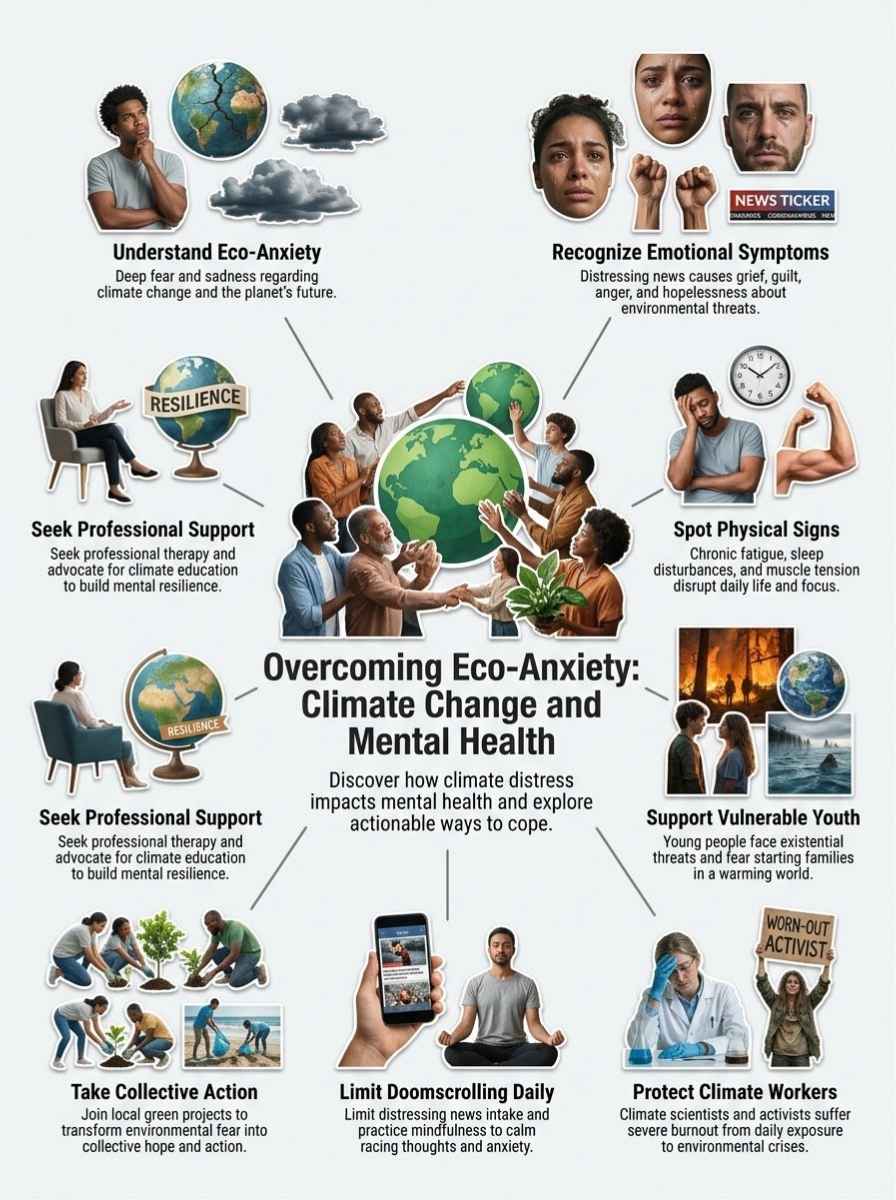
People across the globe are feeling heavy emotions as climate change grows worse. This intense emotional state is called eco-anxiety and affects mental health in deep ways.
- Fear often shows up as a constant worry about the future of Earth, rising sea levels, storms, or wildfires. Many young people say they feel scared for their own safety and that of their families.
- Helplessness appears when actions seem too small to make a real difference against global climate threats. This powerlessness can trap people in cycles of guilt and frustration.
- Sadness weighs heavily on those who see natural spaces vanish. Seeing forests burn, animals disappear, or beaches erode creates grief known as ecological grief, which experts like the World Health Organization first described in 2017.
- Guilt can creep in for parents who wonder if it is safe or fair to bring children into a warming world. Global surveys show more than 60 percent of youth experience this kind of environmental anxiety.
- Anger sometimes boils over when leaders ignore calls for action. Activists and scientists, often at the frontlines since 2020, report both burnout and rage from seeing slow progress.
- Hopelessness sets in after hearing nonstop distressing news about melting ice caps or droughts. Constant exposure can drain motivation and lead to depression or sleep troubles.
- Emotional exhaustion makes it hard to focus at work or home. Researchers found almost one billion people worldwide feel mentally strained by climate distress today.
- Joy gets squeezed out as worries pile up. Celebrations get overshadowed by thoughts of existential threat and fear for future generations’ wellbeing.
Physical symptoms: fatigue and sleep disturbances
Many struggle with physical symptoms from eco-anxiety. These can make daily life feel even heavier to handle.
- Fatigue can set in quickly from ongoing worry and stress about climate change, draining energy and motivation.
- Climate anxiety often keeps minds racing at night. Falling asleep or staying asleep feels almost impossible for many youth and adults.
- Disturbed sleep, shown in studies after big disasters like the 2023 wildfires, leaves individuals feeling groggy, scattered, and on edge the next day. A 2025 University of Southern California study noted that West Coast residents are already losing significant sleep during hot summer months.
- Medical experts say these sleep problems can lead to mood swings, trouble focusing at school or work, and even headaches.
- Some notice a heavy feeling in their bodies. This weight does not always show up as sadness, sometimes it just makes simple tasks seem massive.
- Activists and scientists who face distressing climate news every day have reported more muscle tension and tiredness than before.
- Over time, chronic fatigue linked to climate distress may contribute to depression or worsen existing mental health conditions.
Populations Most Affected by Eco-Anxiety
Some groups feel the weight of climate stress more than others, almost like carrying an umbrella in a hurricane. Their worries run deep, shaping daily thoughts and future dreams.
Youth and future generations
Young people carry a heavy weight on their shoulders because of climate change. Many feel an existential threat looming over their future, which leads to deep eco-anxiety. In 2021, almost one billion people lived with mental disorders, and worsening climate crises worsen this burden for youth.
Kids today grow up hearing constant warnings from scientists about environmental disasters and rising temperatures. Social media feeds get flooded with stories of species disappearing or extreme flooding in places like Texas or California.
A massive 2024 survey published in The Lancet Planetary Health looked at over 15,000 young people ages 16 to 25 across all 50 US states. The results were striking. Exactly 85 percent of those young Americans said they were at least moderately worried about the climate crisis, with over half reporting they are very or extremely worried.
This steady stream of bad news brings psychological distress that sticks around much longer than a pop quiz or lost homework assignment. For future generations facing more severe weather events and changes to daily life, mental health challenges could become just as serious as the physical dangers from climate disaster.
Climate scientists and activists
Climate scientists face eco-anxiety almost every day. Many of them study facts that show how climate change is getting worse. Sometimes, they even feel depression or guilt for not being able to stop the damage fast enough.
Some worry about an existential threat to humanity and nature itself. A 2021 survey found that many researchers report high levels of psychological distress after working on climate reports. Organizations like the US-based Climate Mental Health Network are actively working to provide support for these frontline workers.
Activists see the same problems up close and often carry heavy emotional burdens. Greta Thunberg, a well-known youth activist, has spoken openly about her fears for the planet’s future.
Activists sometimes battle anger or sadness while fighting for change in a world slow to act. Both groups may suffer from exhaustion, lack of sleep, and even physical symptoms. Environmental anxiety does not shut off at night like a light switch, it lingers day after day, year after year.
Coping Strategies for Managing Eco-Anxiety
Everyone feels worried sometimes, but you are not alone in this. Small steps can help calm your mind and spark hope for the future.
Limiting exposure to distressing climate news
Many people feel a flood of eco-anxiety after scrolling through climate news. Stories about wildfires, floods, and threats to our planet fill social media every day. Nearly one billion people face mental health struggles linked to tough world events like these.
For young folks, fears about the future and even guilt over bringing children into this environment can make anxiety worse.
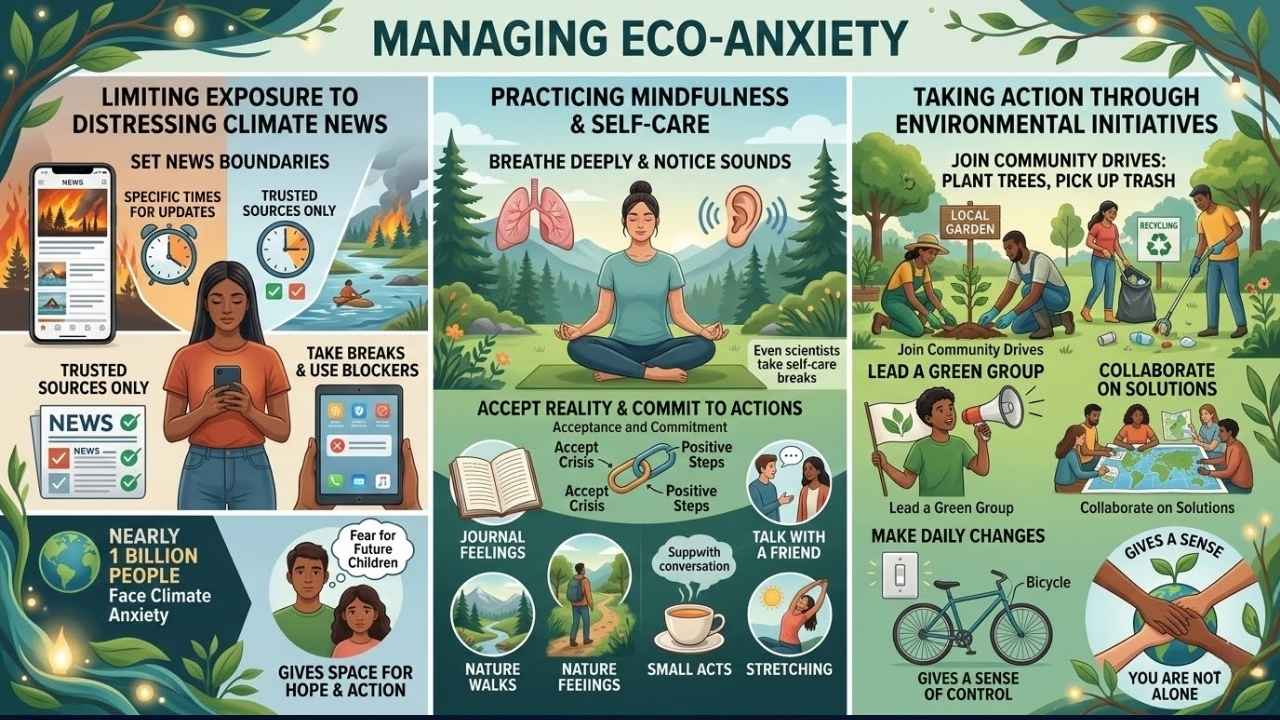
Setting clear boundaries with news helps protect your mind from overload. You might set a specific time each day for updates or pick certain sources you trust for accurate information without scare tactics.
Some doctors suggest taking breaks from constant alerts or using apps that block distressing content during rest hours. This strategy gives space for hope and action instead of endless environmental anxiety and fear.
Practicing mindfulness and self-care
Breathing deeply, noticing each sound outside, and feeling the air move against your skin, helps steady anxious thoughts. Eco-anxiety shows up as worry or fear about climate change.
It affects almost one billion people already living with mental health struggles worldwide. Taking moments to pause can stop those racing thoughts before they spiral out of control. Many climate-aware therapists in the US now use Acceptance and Commitment Therapy (ACT). This approach helps patients accept the difficult realities of the climate crisis while still committing to actions that improve their own lives.
Journaling feelings about environmental anxiety often makes them feel lighter. Small acts like walking in nature or talking with a friend let the mind rest. Savoring warm tea or stretching after waking can ground you during stressful days.
Mindfulness practices may not solve big problems like climate change, but they help calm psychological distress linked to eco-anxiety and depression. Even scientists dealing with climate crisis research take breaks for self-care because even small steps count for emotional wellbeing.
Taking action through environmental initiatives
Joining a local tree-planting event or helping with recycling projects can lift your mood fast. Actions like these give you a sense of control, which helps ease eco-anxiety and climate distress. Here are some simple ways to get involved:
- Join Community Drives: Schools and neighborhoods often host events to pick up trash or plant native gardens.
- Lead a Green Group: Many young people are starting their own local groups to tackle the existential threat from climate change directly.
- Collaborate on Solutions: Climate scientists and activists report less emotional strain when working side by side with others on real projects.
- Make Daily Changes: Even small steps, like turning off unused lights or biking instead of driving, add up over time.
These actions help the Earth and improve mental wellbeing for those feeling anxiety about climate change’s psychological impact. Taking part in climate action shows us we are not alone in facing this challenge.
The Role of Community and Support Systems
Sharing worries with others can lighten the load, like many hands making work easier. Sometimes, talking to the right people sparks hope and lifts your spirits.
Finding solidarity in collective action
Standing together can ease the weight of eco-anxiety. People join groups to clean parks, plant trees, or protest for stronger climate policy. Kids and teens work with friends, teachers, and parents on green projects.
Many youth feel less helpless in these moments, even as climate change brings deep psychological distress.
Scientists like Dr. Lise Van Susteren raise their voices beside activists such as Greta Thunberg. They push leaders to listen and act before mental health suffers more damage. Climate action turns worry into energy. It transforms fear about environmental anxiety into hope for real change.
Each person’s effort counts. No one has to face this burden alone in silence or sadness.
Seeking professional mental health support
Doctors and mental health professionals are stepping up as eco-anxiety grows. Nearly a billion people already suffer from mental disorders, and climate change is making things worse.
Talking to a therapist about your worries can help lift the weight of environmental anxiety. For specialized help, the Climate Psychology Alliance North America offers an online directory with over 400 climate-aware therapists across the US. These professionals are specifically trained to validate climate fears rather than dismiss them.
Climate scientists and young people feel eco-anxiety most strongly, but anyone can ask for expert help. A professional might use stress coping strategies or mindfulness techniques that fit your needs.
They may suggest group sessions too, where shared stories can mend lonely feelings tied to climate distress. You are not alone in facing the psychological impact of this global crisis. Skilled care offers hope even when news feels all doom and gloom.
The Rise of Climate Cafes
A new community-based solution is growing across the United States. They are called Climate Cafes. Started around 2019, these gatherings offer a safe, informal space for people to discuss the emotional toll of global warming.
| Support Type | What It Offers | Best For |
|---|---|---|
| Clinical Therapy | One-on-one sessions with a trained professional using clinical methods like ACT. | Severe eco-anxiety or depression affecting daily life. |
| Climate Cafes | Free, informal 90-minute group conversations over coffee or tea. | Shared emotional processing, community building, and finding local support. |
These cafes provide a wonderful starting point for anyone looking to connect with neighbors who share the same concerns.
Implications for Mental Health Policy
Mental health services must rise to this new challenge, shaping support that meets the needs of a changing planet. Climate education and stronger community networks offer hope for brighter minds in tough times.
Addressing eco-anxiety in healthcare systems
Doctors, nurses, and mental health experts are seeing more people with environmental anxiety. Nearly one billion people already experience mental disorders, and climate change is making things worse.
Hospitals now face a rising tide of eco-anxiety. Patients share worries about the future, their children’s safety, or guilt over lifestyle choices. Clinics must equip staff to spot signs like fear, sadness, or hopelessness linked to climate distress.
At the federal level, the US Department of Health and Human Services (HHS) has taken steps to build climate-resilient healthcare systems. To meet these new needs, healthcare systems are adopting several key strategies:
- Federal Guidance: The CDC’s Climate and Health Program now provides specific fact sheets to help doctors communicate climate risks to patients.
- Staff Training: Medical educators are training doctors on how to discuss climate change without causing extra stress.
- Group Support: Clinics are hosting group therapy sessions to help patients process ecological grief together.
- Safe Spaces: Support services now include mindfulness workshops and open discussions on existential threat fears.
Healthcare systems also need resources for young people who feel overwhelmed by bad news and helplessness tied to global warming.
Promoting climate education and resilience-building
Climate education gives people tools to understand climate change. It helps youth, families, and communities find hope instead of only fear. Schools can teach about eco-anxiety as a real mental health concern that affects almost one billion people worldwide.
Learning about climate action and sustainability builds confidence in handling bad news, not just hiding from it.
Resilience-building teaches coping skills for strong emotions like sadness or guilt linked with climate anxiety. Support groups, mindfulness lessons, and green therapy can help kids and adults alike manage feelings sparked by the threat of climate crises.
By gaining knowledge and practicing new habits, folks start to see themselves as part of the solution instead of just witnesses to harm.
Final Thoughts
Eco-anxiety is real, and it affects many people each day as they struggle with fear, sadness, or guilt about our changing climate. Quick steps like limiting overwhelming news, practicing self-care, and joining local green efforts can help ease that anxiety.
These tips are simple to start and do not need special skills. Anyone can try them today for better peace of mind. Caring for your mental health has a ripple effect. It helps you support others too while making smart choices for the environment.
For those seeking more tools or guidance, plenty of mental health hotlines and eco-support groups are just an online search away. Small changes matter. Even one mindful action might brighten someone’s outlook on tomorrow, mine included when I plant my tiny balcony garden every spring. By prioritizing the topic of Climate Change And Mental Health: Eco-Anxiety, we can build a healthier future together.