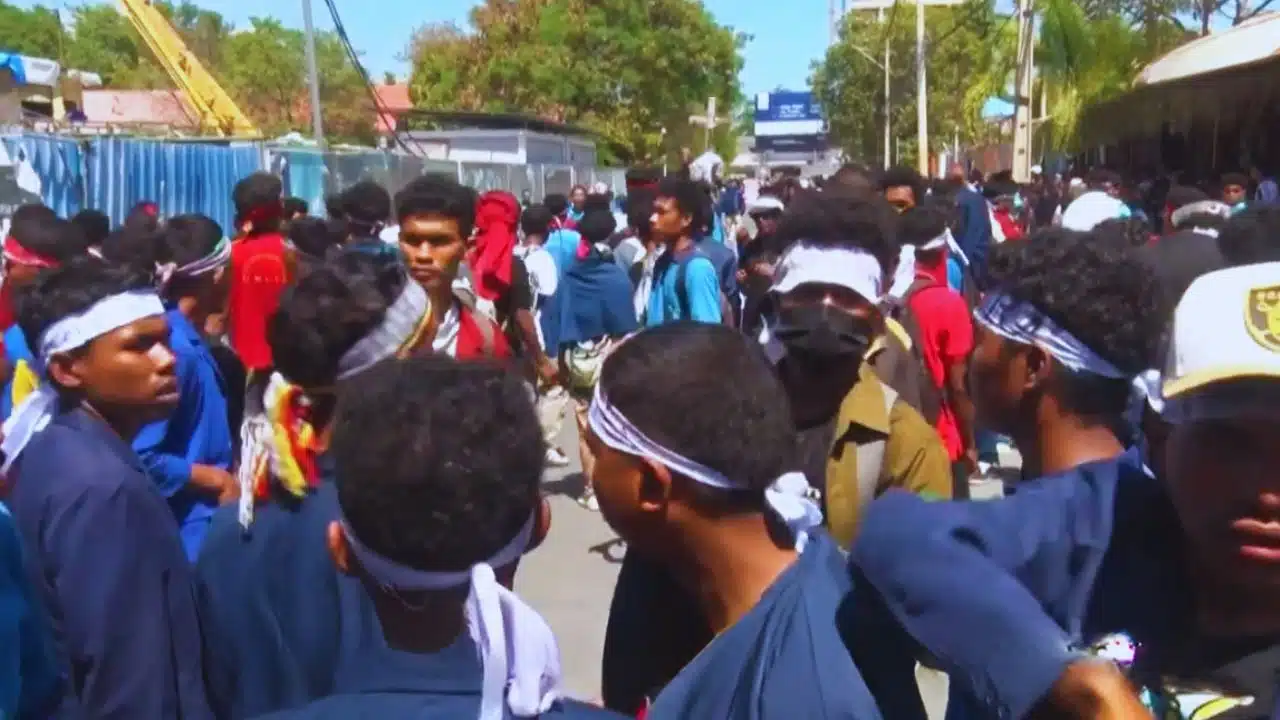
East Timor, officially known as Timor-Leste, is once again facing a political storm as university students in the capital Dili launched mass protests against a controversial parliamentary decision. Lawmakers had approved the purchase of 65 new Toyota Prado SUVs—vehicles worth millions of dollars—for members of parliament.
The decision immediately triggered backlash because East Timor remains one of the poorest nations in Southeast Asia. Protesters argued that the plan symbolized government privilege and indifference to the suffering of ordinary citizens who continue to struggle with poverty, unemployment, and a fragile economy.
Protests Turn Heated in Dili
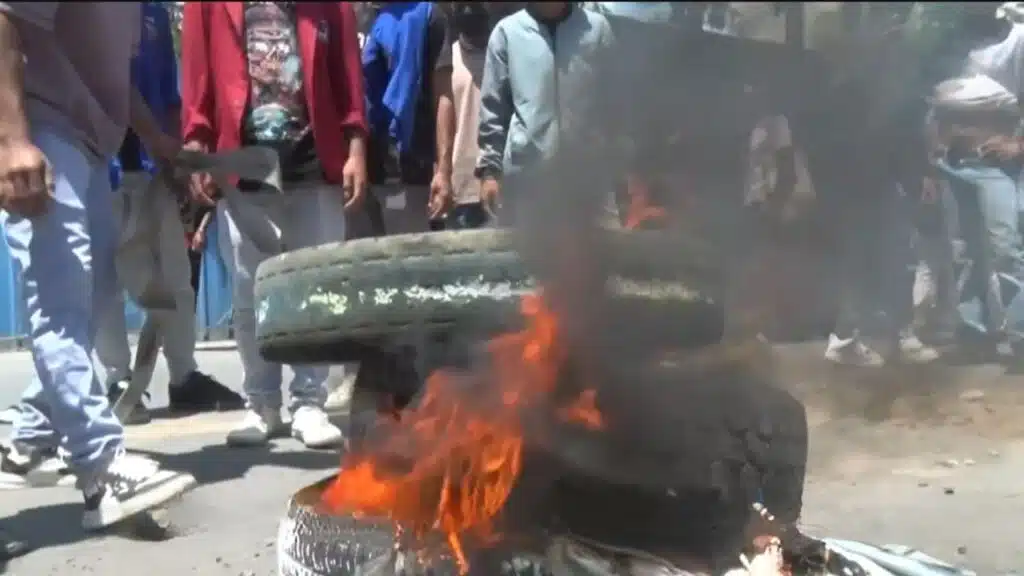
According to reports from AFP News Agency and regional outlets, the demonstrations began on 15 September 2025 and continued for several days. Around 2,000 university students joined the rallies near the National Parliament building. The protests, initially peaceful, escalated when demonstrators set fire to government vehicles and hurled stones at security forces.
Police attempted to disperse the crowds using tear gas, leading to violent confrontations. Images circulating on local media showed students carrying banners with messages such as “Stop the thieves”, accusing lawmakers of prioritizing personal luxuries over the country’s urgent needs.
Most participants were young people from Dili’s universities, reflecting a growing frustration among the educated youth over corruption, privilege, and inequality.
Government Backtracks After Pressure
The political backlash was swift. As the protests gained intensity and public sympathy, East Timorese political parties announced that they would seek to cancel the vehicle procurement plan.
By 17 September, parliament officially reversed the decision, declaring that the SUV purchase would not go ahead. Lawmakers also faced new demands from the protesters—particularly the abolition of lifetime pensions for former MPs, another issue widely seen as wasteful and unjustified.
Following negotiations, parliament agreed to scrap both the vehicle plan and the pension scheme, a rare concession that highlights the growing power of public pressure in East Timor’s politics.
President Calls for Peaceful Protest
President José Ramos-Horta, a Nobel Peace Prize laureate and one of East Timor’s most respected leaders, addressed the unrest by stressing that protests are a democratic right and a valid way to express dissatisfaction when the government makes mistakes. However, he also warned that violence undermines the cause and risks destabilizing the fragile nation.
The government reiterated its commitment to handling unrest firmly, particularly acts of arson and destruction of public property.
Why the Protests Matter: Poverty and Inequality in East Timor
The outrage over luxury cars for lawmakers struck a deep nerve because of East Timor’s economic conditions:
- Poverty: Around 40–42% of the 1.41 million population lives below the national poverty line.
- Unemployment: Young people face limited job opportunities, fueling discontent among students and graduates.
- Inequality: Wealth distribution is uneven, with rural communities suffering from malnutrition and lack of infrastructure.
- Economic Dependence: The country relies heavily on oil and gas revenues, which are declining as reserves run low.
For many citizens, the purchase of expensive SUVs for MPs symbolized misplaced priorities when basic services—such as healthcare, education, and rural development—remain underfunded.
Regional Wave of Protests
The East Timor demonstrations are part of a wider regional trend in Asia, where citizens are increasingly protesting against corruption, inequality, and political privilege:
- Indonesia: Protests against parliamentary perks turned violent last month, spreading nationwide. Riots left 10 people dead and at least 20 missing, with incidents of arson and looting reported.
- Nepal: Anti-government protests earlier this month resulted in 72 deaths and more than 2,100 injuries, pushing the country into a political crisis that forced changes in government leadership.
These examples reflect a pattern where citizens—especially students and young people—are rejecting political elites’ privileges in countries struggling with economic hardship.
A Critical Moment for East Timor
For East Timor, which only restored its independence in 2002 after years of conflict and occupation, the protests underline the fragility of democratic institutions and the urgent need for better governance.
Analysts say the parliament’s decision to backtrack shows that public pressure is effective in holding leaders accountable. However, the use of violence and destruction could also deepen divisions if not managed carefully.
The incident may serve as a wake-up call for East Timorese leaders to redirect resources toward addressing poverty, unemployment, and inequality instead of spending on political privileges.
The Information is Collected from France 24 and BBC.