Drone Racing Champion Defeated by AI for First Time

Drone Racing Champion Defeated by AI

As first-person (FPV) drone racing becomes more popular, AI implementations have improved their performance versus human pilots. While there is still much unexplored land in this field of research, it has the potential to impact a variety of real-world applications for autonomous drones.

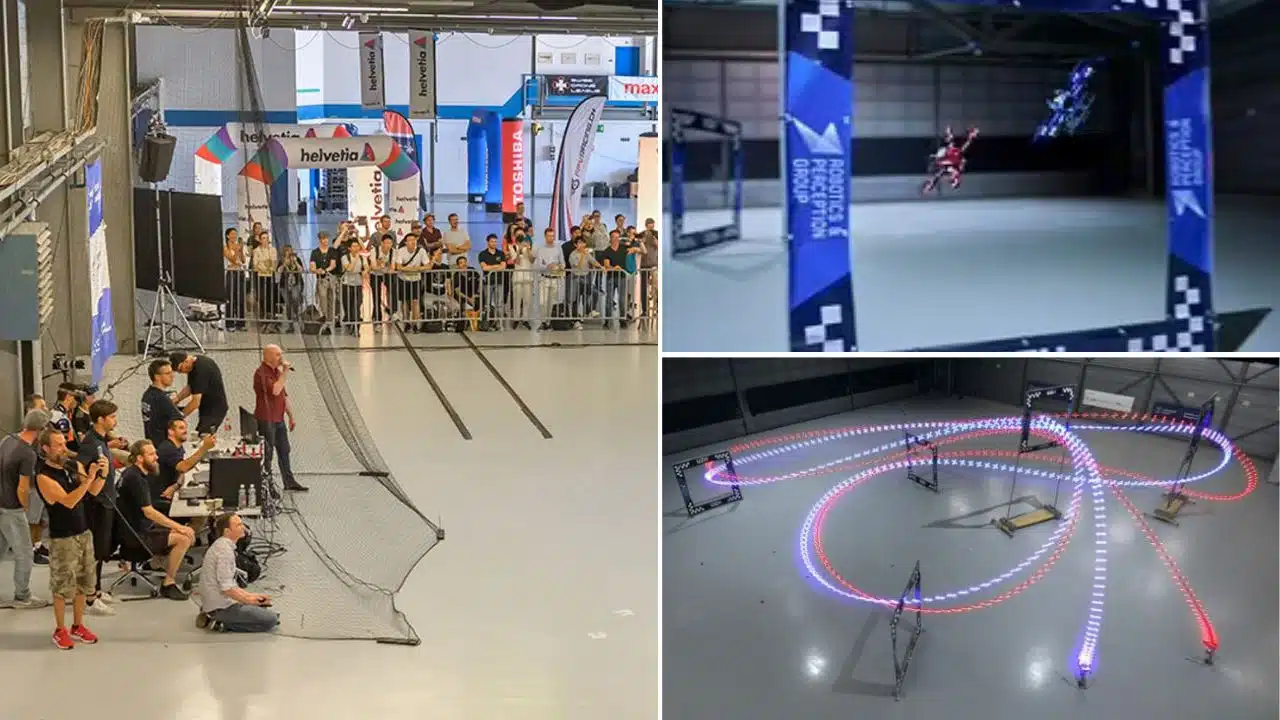
Researchers from the University of Zurich revealed an autonomous drone control system capable of outflying human pilots on race circuits in 2021. They’ve created a successor in the two years since, claiming to have defeated three world-champion FPV drone racers.

The new sport requires contestants to fly a small drone through a series of gates as rapidly as possible, with the video feed from the drone’s camera attached to the pilot’s goggles. Racers’ quick reflexes and high level of expertise test the boundaries of drone mobility, making them an appealing subject for research into autonomous control systems.

Swift’s AI was trained using a neural network and data from an onboard computer, a camera, and an inertial sensor. Swift set track records during the test, defeating three international world champions, owing to its ability to take much tighter corners than the human pilots. Autonomous racing system research is almost as ancient as drone racing, but recent achievements from the University of Zurich have taken it to a new level.

The most noticeable difference is that, although the human racers spent a week training on the test course, the artificial intelligence (AI) training procedure took only about an hour on a regular workstation desktop. The drone may have two advantages over the racers’ brains: it analyzes information faster and perceives inertia in a manner that humans do not. Swift’s video stream, on the other hand, was only 30Hz, whereas the pilots’ cameras refreshed at 120Hz, providing them much more visual data.

Swift has only been tested on one indoor circuit, whereas drone races are done in a variety of indoor and outdoor venues. It’s unknown how self-driving systems like Swift would handle things like wind or changing lighting conditions, so there’s definitely potential for additional research.

The findings of these and other tests could have far-reaching effects beyond drone racing. They could aid in the improvement of how self-flying drones navigate real-world settings for applications such as deliveries, search and rescue, combat, and others.



Subscribe to Our Newsletter

Related Articles

Top Trending

On This Day March 30
On This Day March 30: History, Famous Birthdays, Deaths & Global Events
Capital gains tax Canada
17 Key Facts About Capital Gains Tax in Canada
AI Bias
The Rise of AI Bias: Why It Matters To Everyday Consumers
The Basics of Inventory Management for Growing Businesses
Streamline Profits with The Basics Of Inventory Management for Growing Businesses
Critical Minerals Developing Nations
The Minerals That Could Change Everything — If the Developing World Acts Now

Fintech & Finance

Ai In Financial Services
How AI Is Making Financial Services More Accessible: Unlocking Opportunities
crypto remittances New Zealand
17 Critical Facts About How New Zealanders Are Using Crypto for International Remittances
Smart Contracts
Smart Contracts Explained: Real-World Applications Beyond Crypto
Tokenization Of Real-World Assets
Tokenization Of Real-World Assets: The Next Big Crypto Trend!
how to spot Crypto Scam
How to Spot a Crypto Scam Before It's Too Late: Protect Your Investment!

Sustainability & Living

Green Building Certifications For Schools
Green Building Certifications For Schools: Boost Learning Environments!
Smart Water Management
Revolutionize Smart Water Management In Cities: Unlock the Future!
Homesteading’s Comeback Story, Why Americans Are Turning Back To Self Reliance In Record Numbers
Homesteading’s Comeback Story: Why Americans are Turning Back to Self Reliance In Record Numbers
Direct Air Capture_ The Machines Sucking CO2
Meet the Future with Direct Air Capture: Machines Sucking CO2!
Microgrid Energy Resilience
Embracing Microgrids: Decentralizing Energy For Resilience [Revolutionize Your World]

GAMING

Geek Appeal of Randomized Games
The Geek Appeal of Randomized Games Like Pokies
Best Way to Play Arknights on PC
The Best Way to Play Arknights on PC - Beginner’s Guide for Emulators
Cybet Review
Cybet Review: A Fast-Growing Crypto Casino with Fast Withdrawals and No-KYC Gaming
online gaming
Why Sign-Up Bonuses Are So Popular in Online Entertainment
How Online Gaming Platforms Build Trust
How Online Gaming Platforms Build Trust With New Users

Business & Marketing

The Basics of Inventory Management for Growing Businesses
Streamline Profits with The Basics Of Inventory Management for Growing Businesses
Vendor Negotiation Strategies to Cut Costs Fast
How to Negotiate Better Deals With Vendors
Strategic Sourcing vs Tactical Purchasing Key Differences
Strategic Sourcing Vs Tactical Purchasing: Key Differences
How AI Is Transforming Procurement and Sourcing
Top Procurement Software Platforms Compared

Technology & AI

AI Bias
The Rise of AI Bias: Why It Matters To Everyday Consumers
AI Voice Assistants
How AI Voice Assistants Are Getting Smarter Every Year?
AI In Entertainment
AI In Entertainment: How Algorithms Decide What You Watch
Ai In Financial Services
How AI Is Making Financial Services More Accessible: Unlocking Opportunities
How AI Is Transforming Procurement and Sourcing

Fitness & Wellness

Regenerative Baseline
Regenerative Baseline: The 2026 Mandatory Standard for Organic Luxury [Part 5]
Purposeful Walk Spaziergang
Mastering the Spaziergang: How a Purposeful Walk Can Reset Your Entire Week
Avtub
Avtub: The Ultimate Hub For Lifestyle, Health, Wellness, And More
Integrated Value Chain
The Resilience Framework: A Collaborative Integrated Value Chain Is Changing the Way We Eat [Part 4]
Nutrient Density Scoring
Beyond the Weight: Why Nutrient Density Scoring is the New Gold Standard for Food Value in 2026 [Part 3]