Google Local Service Ads (LSAs) help service businesses stand out by placing them at the top of search results with the trusted Google Guarantee badge. This prime positioning creates immediate visibility and trust, making LSAs essential to local marketing strategies. When implemented correctly, these ads can deliver exceptional results with higher conversion rates than many other digital marketing channels.
The effectiveness of LSA marketing hinges on understanding client needs and creating a customer-centric approach that resonates with the target audience. Businesses that address client pain points and preferences consistently outperform competitors on this platform. The following strategies outline practical approaches to optimize LSA campaigns with customer-centric methods that drive measurable conversion improvements.
-
Precision Targeting for Qualified Leads
The foundation of successful LSA marketing begins with precise targeting parameters that match services with the most appropriate audience. Many businesses make the mistake of casting too wide a net, resulting in less qualified leads and wasted ad spend.
Effective targeting strategies include:
- Defining service areas based on profitability data rather than arbitrary distances
- Selecting specific service categories that align with core competencies
- Implementing dayparting to focus budgets during peak conversion periods
- Adjusting bids based on demographic insights and historical conversion data
- Refining geographic targeting based on previous client acquisition patterns
Businesses with narrowly defined service areas and specialized category selections tend to outperform others in conversion rates. This approach often results in significantly better performance compared to those with broader parameters.
-
Crafting Compelling Service Descriptions
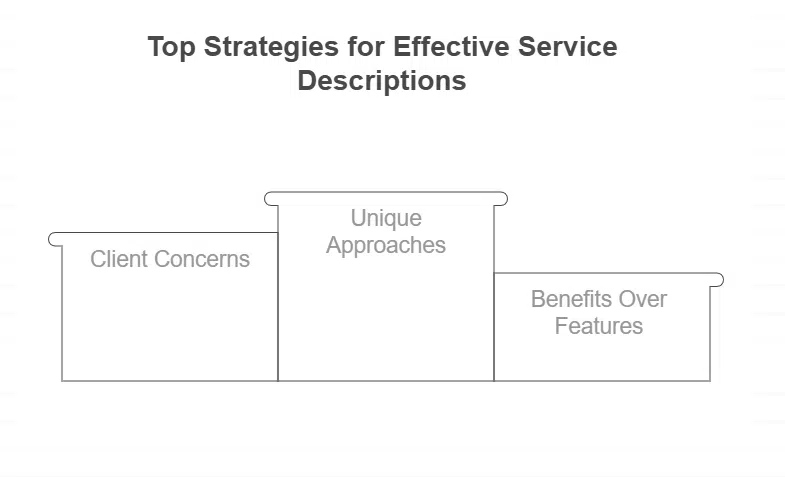
An effective service description in an LSA profile can significantly boost conversions. Top-performing profiles focus on addressing specific client needs and pain points. Key elements include:
- Highlighting unique approaches that set the business apart
- Addressing common client concerns
- Emphasizing benefits over features
- Using industry-specific terminology to demonstrate expertise
- Showcasing expected results or outcomes
Service descriptions with these elements can more effectively engage clients, leading to higher interaction and conversions than generic ones.
-
Strategic Review Management
Reviews directly within LSA placements greatly influence conversion rates. Effective review management includes:
- Implementing a system to request reviews post-service
- Using templates to guide clients on key feedback areas
- Prioritizing reviews from high-value service categories
- Responding thoughtfully to all reviews
- Analyzing reviews for service improvement insights
The best LSA campaigns consistently feature fresh reviews, avoiding over-reliance on older feedback.
-
Response Time Optimization
The speed and quality of lead response dramatically impact LSA conversion rates. Google tracks response metrics and factors them into future ad placement decisions, making this an essential component of ongoing LSA marketing success.
Implementing response time optimization includes:
- Establishing notification systems that alert multiple team members simultaneously
- Creating templated initial responses that can be quickly customized
- Developing 24/7 response capabilities through team scheduling or automation
- Setting clear response protocols for different inquiry types
- Tracking response times and conversion correlations to identify optimal practices
Responding quickly to leads significantly increases the likelihood of higher conversion rates compared to businesses that delay their responses.
-
Performance Measurement Beyond Cost-Per-Lead
Customer-centric marketing goes beyond cost-per-lead metrics, focusing on the entire customer journey. Key areas for analysis include:
- Lead quality scores based on client criteria
- Conversion variations across customer segments and service types
- Client acquisition cost versus lifetime value
- Seasonal conversion patterns for budget adjustments
- Conversion rate differences across service categories
Businesses implementing these advanced practices often experience a significant boost in conversion rates while maintaining stable ad spend.
Implementing customer-centric LSA marketing strategies creates sustainable competitive advantages that extend beyond immediate lead generation. Businesses can dramatically improve conversion rates by focusing on precision targeting, compelling service descriptions, strategic review management, response time optimization, and comprehensive performance measurement. Companies that embrace these customer-centric principles position themselves for sustained growth and market leadership through this powerful advertising platform.