Consumers read ingredient lists and still feel lost, they fear hidden toxins in their clean beauty products. They want health-conscious beauty items, but see parabens, sulfates, phthalates or synthetic fragrances on labels.
It feels like a maze and both skin and mind suffer.
Clean beauty could reach $22 billion by 2024, a sign that users want better, safer items. Top brands share clear ingredient lists, follow US FDA rules, and work with the Environmental Working Group.
This guide will show you how to spot eco-friendly packaging, pick products with natural ingredients, and trust brands with ethical sourcing. Stay tuned.
Key Takeaways
- Clean beauty could hit $22 billion by 2024. The EU bans 1,300+ toxins, but the US FDA bans only 11. People avoid parabens, sulfates, phthalates, and synthetic fragrances. Brands use lab tests like gas chromatography to prove safety.
- Sustainable packaging was worth $310 billion in 2022 (Fortune Business Insights) and may grow 6.7% annually to $518 billion by 2030 (Statista). Brands add refill stations, take-back programs, and circular designs. Many swap plastic for glass, aluminum, or PCR materials.
- Brands spent $150 million on clean beauty R&D in 2023. They use enzyme extraction, mass spectrometry, and fermentation to craft natural actives. They launch waterless shampoo bars and plant-clay makeup sticks. These steps cut waste and boost potency.
- Indie Lee, Tower 28, and Oak Essentials list every ingredient online and on packs. They add QR codes that link to safety charts. They earn Leaping Bunny, PETA, and fair-trade seals. L’Oréal and Estée Lauder buy indie brands to spread cruelty-free standards.
- In 2023, the US updated green marketing rules, while the EU Green Claims Code and UK label law demand proof for eco claims. No legal definition for “clean beauty” fuels greenwashing and consumer confusion. Brands now need stricter audits and clearer labels.
Key Drivers of the Clean Beauty Movement
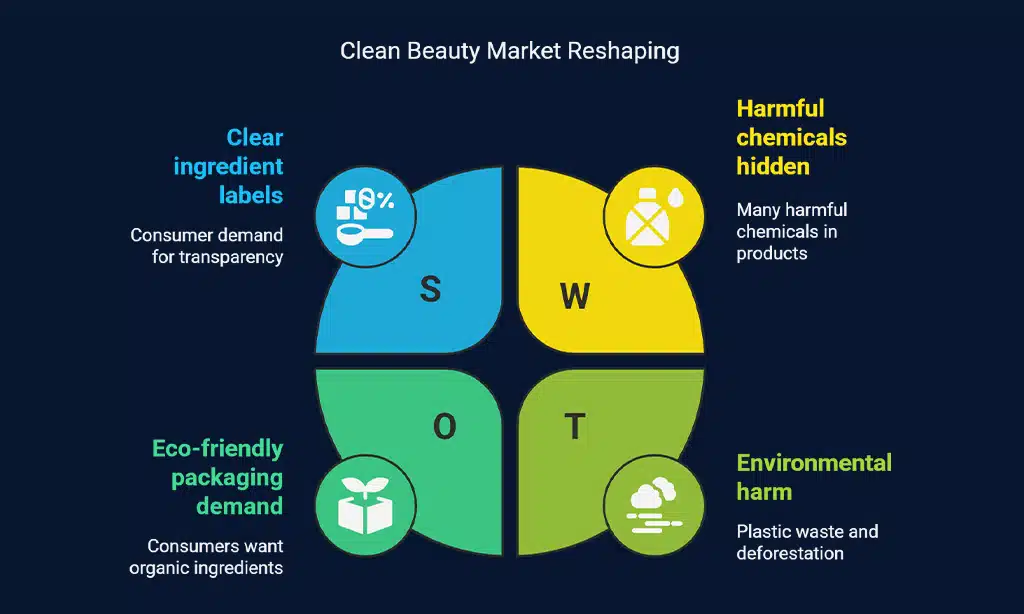
Health fears, from worries over endocrine disruption tied to synthetic fragrances, push health-conscious consumers to demand clear ingredient labels. Brands run gas chromatography and lab analyses on their supply chains to back up clean beauty claims.
Health and Safety Concerns
Cosmetic products can hide many harmful chemicals. They often contain parabens, sulfates, phthalates, and synthetic fragrances. These substances link to endocrine disruption, allergy flares, and even cancer risk.
The EU bans more than 1,300 toxins in beauty items, but the U.S. FDA lists just 11 banned ingredients.
Today’s health-conscious consumers scan labels for allergen warnings and toxin-free tags. Shift in demand also stems from desire for organic ingredients and eco-friendly packaging.
Major beauty industry players adopt fair trade practices and cruelty-free standards to compete in the global clean beauty market. New voluntary rules help brands follow EU bans and fill U.S. gaps in regulation.
Environmental Awareness
Plastic bottles in your bathroom often outlive you. Brands tap palm oil from distant forests, cutting down trees, harming wildlife. That shampoo jar might sit in a landfill for centuries, clog rivers, choke birds.
A 2022 report from Fortune Business Insights valued the sustainable packaging sector at $310 billion. Analysts expect a 6.7 percent annual climb to $518 billion in 2030. Statista projects the sustainable plastic packaging segment at $143.7 billion.
Eco friendly packaging, refill options, and recyclable materials now top consumer wish lists. Green beauty labels aim for a circular economy.
Customers flip ingredient lists like they binge a new show. They quiz brands on fair trade sourcing, demanding no hidden harms. Dropper bottles made of glass, not plastic, catch their eye.
Indie lines roll out take back programs, scoop up old tubes for rewards. Gen Zers flood TikTok with zero waste selfies, they tag retailers over climate crisis pledges. That buzz drives brands to trim carbon footprints, swap synthetic fragrances for clean beauty formulas.
Consumers insist on organic ingredients, cruelty free certifications, and recycled materials.
Demand for Ingredient Transparency
Shoppers scroll ingredient lists on labels with growing care. Users note terms like parabens, sulfates, and synthetic fragrances. People ask brands for clear labeling guidelines and proof of sustainable beauty.
Fans share tips on social media about harmful chemicals. This shift shows a hunger for ingredient transparency.
Indie Lee posts full ingredient lists on product pages. Each oil, extract, and color additive appears in plain terms. Brands chase health-conscious consumers with organic ingredients and cruelty-free certifications.
This push fuels the global clean beauty market to reshape fast.
How the Industry Is Responding
Firms take on circular design and swap plastics for greener materials. They stamp packs with welfare seals and add label readers for curious shoppers, who now play detective in each aisle.
Adoption of Sustainable Practices
Indie Lee started a carbon neutral program in 2022. It sells refill packs, cutting plastic use by 50%. The brand sources natural ingredients from fair trade farms. Brands wrap items in recycled paper and glass.
Apps and social posts show ingredient safety and eco-facts.
Consumers now favor sustainable beauty over clean beauty. Skincare brands offer take-back programs at over 100 stores. Refill stations cut bottle waste and boost recycling. Shops reuse glass jars, and labels circle back to makers.
Consumer apps share hazard scores and carbon data. Honest lists, cruelty-free seals, and fair trade marks build trust.
Innovation in Product Formulations
Brands pour over $150 million into R&D in 2023 to craft natural, non-toxic products. Researchers use enzyme extraction, lab vessels, and chromatography tools to find green actives.
This clean beauty push cuts harmful chemicals and wins smiles from health-conscious consumers. Teams run tests with mass spectrometers to boost sustainability and potency.
Shampoo bars ditch water, they last longer and cut shipping weight. Moisturizers skip talc, they use plant starch or silica for silky texture. Developers craft waterless, plant-based gels to seal in natural ingredients.
Make-up sticks use plant clays over synthetic color additives, for pure apply-and-go fun. These formulas shrink carbon footprints for brand loyalty among eco-aware buyers.
Ethical and Cruelty-Free Standards
Leaping Bunny marks brands that skip animal tests in safety trials. PETA’s badge shows that no bunnies lost at work. Consumers scan ingredient lists to dodge harmful chemicals and synthetic fragrances.
Those labels mean vegan formulas and ethical sourcing. It feels good to buy green beauty that honors animal welfare.
L’Oréal and Estée Lauder are buying indie brands to boost sustainable beauty and ethical practices. Each deal spreads cruelty-free certifications and fair trade practices across the beauty industry.
Big firms now highlight eco-friendly packaging and recycled materials. More shoppers demand organic ingredients and climate neutral claims. That shift lifts the global clean beauty market and nudges the Food and Drug Administration and EU regulators to ban animal tests.
The Role of Notable Clean Beauty Brands
Hear me out: an indie label hosts clear ingredient lists, skips synthetic fragrances, earns cruelty-free certifications, and folds eco-design and circular economy ideas into its refill options—read on to learn more.
Pioneering Ingredient Transparency
Tower 28 labels every lotion with full ingredient lists. Indie Lee highlights each natural ingredients and lab-grade element on its site. Oak Essentials shares clear data on plant-based formulas.
These brands cut hidden harmful chemicals and boost consumer awareness.
The cosmetics industry now follows EU legislation that demands open ingredient information. QR code tools link skincare and cosmetics items to safety charts. Shoppers spot synthetic fragrances and choose organic ingredients.
This surge feeds the global clean beauty market and pushes sustainable sourcing practice.
Commitment to Eco-Friendly Packaging
Indie Lee uses sleek aluminum tubes for eco-friendly packaging. Aluminum allows infinite recycling and looks cool. Brands use mono-material jars and PCR plastics. These paths cut plastic waste and aid the circular economy.
Rising consumer demand drives fresh refill options. Some companies offer pouches, others launch store take-back programs. Fans swap empty containers for small perks. Such moves shape green beauty habits.
Emerging Trends in Clean Beauty

Brands now tap blockchain systems and barcode scanner apps to track recyclable materials and spark fresh green beauty breakthroughs—read on.
Advanced Technology in Sustainable Formulas
Labs push sustainable beauty with biotechnology. They grow microalgae and plant cells in fermentation vessels to craft natural extracts. Enzymes break down raw material without water, so formulas stay waterless and potent, like a desert bloom at dawn.
That process cuts waste and raises the clean beauty movement’s profile.
Teams test compounds using spectroscopy and high-throughput screening for safety and purity. Microbes ferment sugars to yield lipids that mimic natural oils. Manufacturers swap talc for plant-based clays to keep skin soft and avoid dust.
Consumers favor eco-friendly packaging, refill options and take-back programs for eco-friendly disposal.
Regulatory Changes Driving Accountability
New rules in the U.S., EU, and UK curb greenwashing in the beauty industry. They target vague claims on eco-friendly packaging and natural ingredients. A federal agency updated environmental marketing guidelines in 2023, it now demands proof for green terms.
The bloc’s Green Claims Code and Britain’s label law push brands to back each claim. The council predicts eco-design principles will rise in 2024.
Brands now trace every step in their supply chain. Makers log ingredient lists, fair trade audits, and animal welfare checks. They use tools like blockchain ledgers and QR codes to boost traceability.
Clean beauty fans scan labels to see each farm, plant, or lab, they feel more trust. Companies juggle audit logs and dye tests, they earn consumer awareness and ethical sourcing praise.
Inclusive and Diverse Product Offerings
Brands stretch their lines to fit all skin tones and types. Major African brands like Epara Skincare, Skin Gourmet and Nokware Skincare lead by example. These teams cast a wide net, covering every hue like a painter’s palette, and use natural ingredients such as shea butter and moringa oil.
Young shoppers from Gen Z and Millennials drive consumer demand for clean, sustainable products. Top teams source ingredients ethically through fair trade practices, to support local farms.
Many labels show full ingredient lists, which read like open books. This tool builds consumer awareness and trust. Some makers paint shade ranges on swatches for websites and in-store demos.
Other firms provide refill options, take-back programs and recycled materials in eco-friendly packaging. Those efforts slash harmful chemicals, ditch synthetic fragrances and keep formulas sustainable.
Glass jars boost recyclability and fuel circular economy goals in the clean beauty movement.
Challenges Facing the Movement
The movement hits roadblocks with greenwashing claims that confuse health-conscious consumers and stall market growth. It also struggles to scale circular economy tactics, like refill options, recyclable materials, and supply chain traceability across global markets.
Balancing Affordability and Accessibility
Affordable green beauty feels like chasing rainbows for many. Indie Lee cut prices on her serums in 2022. Chain stores added sustainable labels under fifteen dollars. Brands still choose eco-friendly packaging built from recycled materials.
Those moves bring natural ingredients to a wider audience.
This clean beauty movement faces greenwashing in ads that tout harmless lotions. Brands skip fearmongering around synthetic fragrances, and share clear data. They print ingredient lists on jars.
Adding refill options and take-back programs cuts waste and trims bills. These steps help health-conscious consumers stretch dollars, and push the circular economy forward.
Consumer Confusion Over Labeling
Labels such as “clean” or “green” lack firm rules. U.S. law does not define clean beauty like it does for organic or vegan claims. Many brands slap vague badges on jars, and shoppers struggle.
Some firms tout “toxic-free” lines using greenwashing tactics. Cosmetics ship fast via Cosmopak, but speed-to-market often cuts label checks. Buyers then spot harmful chemicals hidden under fancy names.
Confusion grows when readers face ingredient lists full of INCI codes. They see “fragrance” and wonder which synthetic fragrances hide inside. Health-conscious consumers flip through apps from the Environmental Working Group, but results vary.
This clash of terms and tools shakes consumer awareness. They eye eco-friendly packaging or cruelty-free certifications, but they still spot green beauty claims that lack proof.
Takeaways
Brands ban parabens and phthalates. They swap them for aloe vera or jojoba oil. They ship products in paper tubes or glass jars. They stamp Leaping Bunny and Fair Trade Cocoa Butter.
This wave boosts health goals and cuts landfill loads. It pushes labs to offer refill options and clear ingredient lists. It fuels the circular economy, and it sparks indie stars to join.
The outcome looks bright for skin, planet, and profit.
FAQs
1. What is the clean beauty movement?
The clean beauty movement moves the beauty industry away from harsh stuff. It drops harmful chemicals. Brands now use natural ingredients and ethical sourcing. It sparks sustainable beauty and boosts environmental sustainability.
2. How do brands use eco-friendly packaging and recycled materials?
Brands swap plastic for eco-friendly packaging made with recycled materials. They roll out refill options and take-back programs. This cuts waste and fuels a circular economy.
3. Why do health-conscious consumers love green beauty?
Health-conscious consumers scan ingredient lists in a heartbeat. They steer clear of synthetic fragrances. They seek cruelty-free certifications and animal welfare in every product. They back sustainable beauty with a clear conscience.
4. How do refill options and take-back programs work?
Refill options let you top off your bottle at home. Take-back programs collect your empty jars with ease. Brands reuse or recycle them in no time. They shrink waste, like snapping your fingers.
5. Can the clean beauty movement reshape the global market?
Consumer demand fuels the global clean beauty market. Online advertising shines a light on green products. Brands launch ethical initiatives to keep pace. They study consumer behaviour to stay in the lead.
6. What steps can beauty brands take to join the movement?
Brands list organic ingredients, they drop harmful chemicals. They ditch synthetic fragrances at the drop of a hat. They pack products in eco-friendly packaging with recycled materials. They join the circular economy, boosting environmental impact.