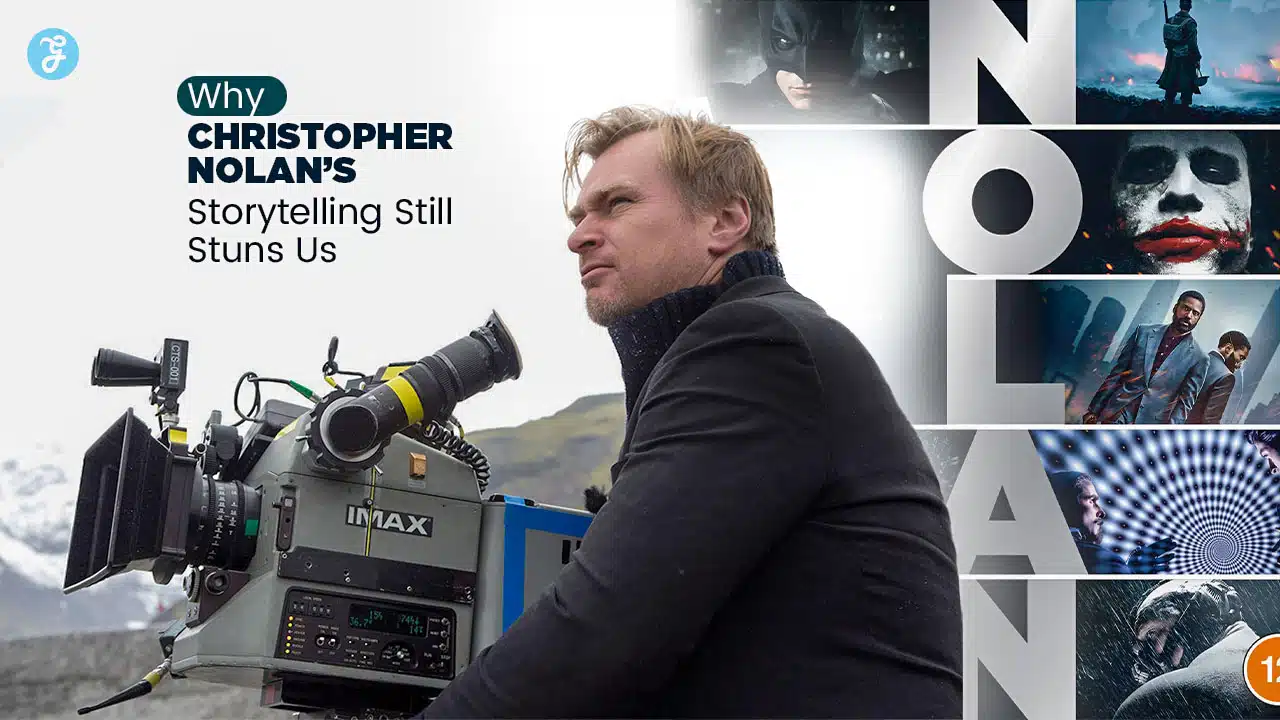
July 30, 2025, marks the 55th birthday of Christopher Nolan, a name synonymous with mind-bending plots, thought-provoking cinema, and visual brilliance. Over the past two decades, Nolan has redefined modern storytelling, pushing the boundaries of narrative structure, time, and human psychology.
From indie masterpieces to box office giants, his films have never shied away from complexity. But why, even after 55 years, does Christopher Nolan’s storytelling continue to captivate audiences across generations?
The answer lies in his unique ability to blend blockbuster spectacle with philosophical depth. Whether it’s through a nonlinear crime thriller like Memento, a dreamscape like Inception, or the moral reckoning in Oppenheimer, Nolan has mastered the art of crafting cinematic puzzles that leave viewers stunned long after the credits roll.
The Signature Nolan Touch—What Makes His Storytelling Unique?
Nolan’s love for fractured timelines isn’t a gimmick—it’s an intentional narrative device that makes the viewer an active participant. Memento told a murder mystery backwards, placing us in the unreliable shoes of a memory-impaired protagonist. Tenet played with time inversion, introducing a new form of action storytelling.
Even Dunkirk, a war epic, used three interwoven timelines—land, sea, and air—each progressing at a different pace. The result? Stories that demand attention, analysis, and multiple viewings.
Philosophical and Moral Dilemmas
Beyond the timelines and technicalities, Nolan’s films ask big questions. What defines reality? (Inception) Can science replace faith? (Interstellar) Does the pursuit of knowledge justify destruction? (Oppenheimer). These aren’t just plot points—they’re the philosophical cores of his narratives. Nolan explores the gray areas of morality, often presenting characters who must make impossible choices.
Realism Mixed with Spectacle
While other directors might rely heavily on CGI, Nolan insists on practical effects. He flipped an actual truck in The Dark Knight, blew up a Boeing 747 for Tenet, and recreated nuclear explosions without using CGI for Oppenheimer. His dedication to authenticity enhances immersion and grounds his otherwise cerebral stories in a physical reality the audience can feel.
His Characters Are Complex, Flawed, and Timeless
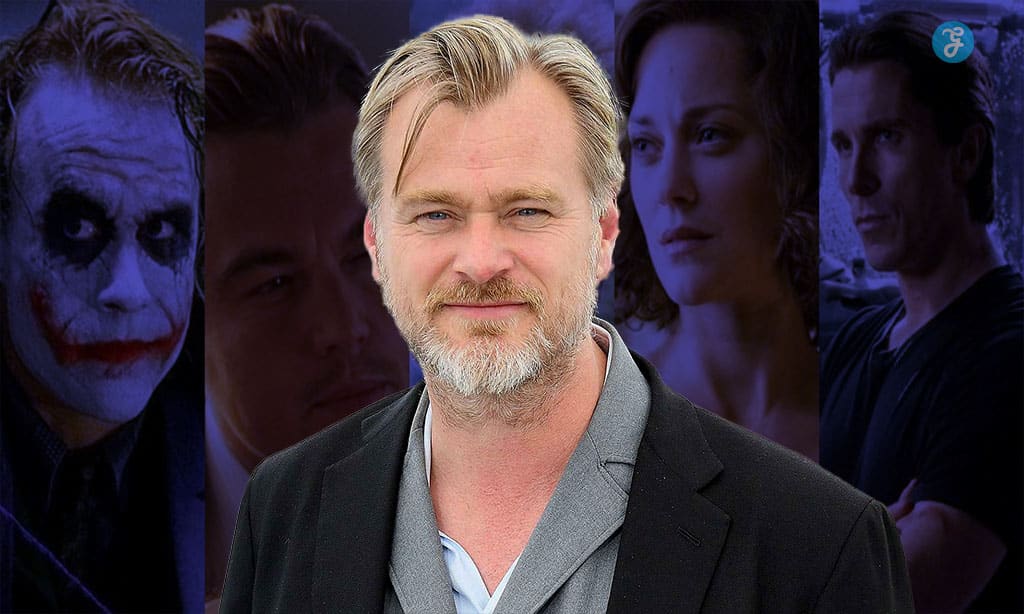
Most of Nolan’s protagonists are flawed geniuses driven by obsession. Think of Dom Cobb (Inception), Robert Angier (The Prestige), or J. Robert Oppenheimer (Oppenheimer). These aren’t traditional heroes—they’re haunted, morally ambiguous individuals consumed by guilt, ambition, or grief. Their flaws don’t make them weak; they make them relatable and human.
Minimalist Dialogue, Maximum Impact
Nolan prefers showing over telling. His screenplays are known for minimal yet impactful dialogue. In Dunkirk, there’s barely any speaking, yet the tension is palpable. In Interstellar, a father’s tearful goodbye says more than a monologue ever could. This restraint lets performances, music, and visuals carry the emotional weight of the story.
Mastery Over Structure—Nolan’s Most Mind-Bending Narratives
Time is perhaps Nolan’s favorite narrative toy. In Tenet, time is literally reversed and manipulated. In Dunkirk, a one-hour dogfight, a one-day escape, and a one-week rescue mission all unfold simultaneously. This isn’t just a flex of creative muscle—it’s a means to immerse the audience in the urgency, disorientation, or inevitability of the events.
| Film | Time Structure | Narrative Effect |
|---|---|---|
| Memento | Reverse and forward intercuts | Builds suspense and mirrors protagonist’s confusion |
| Inception | Time dilation across dream levels | Adds emotional intensity to high-stakes scenes |
| Dunkirk | 1 week (land), 1 day (sea), 1 hour (air) | Creates urgency and narrative convergence |
| Tenet | Forward & inverted time loops | Forces audience to piece the puzzle |
| Oppenheimer | Interwoven perspectives (color vs B&W) | Presents internal conflict and political layers |
Layered Storytelling in Inception and The Prestige
In Inception, dreams within dreams force the audience to question what is real. In The Prestige, the structure mimics a magic trick: the pledge, the turn, and the prestige. Nolan’s films often contain multiple layers of storytelling that reflect their themes, encouraging deep analysis and rewatchability.
Real vs. Perception—Playing with Reality
Nolan blurs the line between reality and illusion. In Inception, we never quite know if Cobb is dreaming. In The Prestige, the audience is misled, just like the magician’s audience. Nolan uses misdirection and narrative framing to make his viewers experience the same uncertainty his characters feel.
Christopher Nolan Storytelling Impacts
Unlike most big-budget filmmakers, Nolan creates smart blockbusters that satisfy both the brain and the heart. Viewers walk away with deep questions and emotional resonance. For example, the fifth-dimensional love between Cooper and Murph in Interstellar isn’t just sci-fi; it’s a father’s desperate longing to return home.
Elevating Blockbusters into Art
With The Dark Knight, Nolan didn’t just make a superhero movie—he made a sociopolitical thriller that examined chaos, justice, and moral ambiguity. He showed that blockbusters could be intelligent, philosophical, and even Oscar-worthy, paving the way for future filmmakers to aim higher.
Sound, Score, and Silence—Storytelling Beyond the Script
Nolan’s collaboration with Hans Zimmer and Ludwig Göransson created some of cinema’s most iconic soundscapes. From the organ in Interstellar to the ticking stopwatch in Dunkirk, music is not background—it’s storytelling. Even silence, like in Oppenheimer‘s climactic test explosion, is used to jolt the senses and deliver emotional shock.
Nolan vs Tarantino vs Scorsese: Who Defines 21st Century Cinema
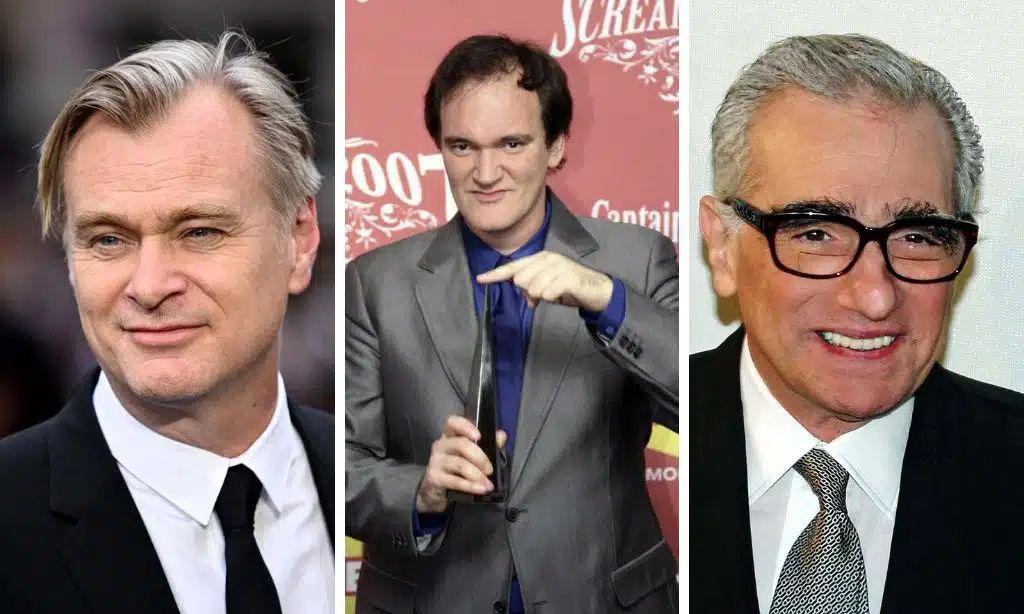
| Category | Christopher Nolan | Quentin Tarantino | Martin Scorsese |
|---|---|---|---|
| Signature Style | Non-linear storytelling, mind-bending narratives, emotional depth | Sharp, witty dialogue, non-linear storytelling, genre mash-ups | Realism, historical narratives, strong character studies |
| Notable Films | Inception, Interstellar, The Dark Knight Trilogy, Oppenheimer, Memento | Pulp Fiction, Kill Bill, Inglourious Basterds, Once Upon a Time in Hollywood, Reservoir Dogs | Goodfellas, Taxi Driver, The Irishman, The Departed, The Wolf of Wall Street |
| Influence on Genre | Revolutionized sci-fi, superhero, and thriller genres with complexity and depth | Redefined the action genre with dark humor and violence, blending genres | Redefined crime dramas and historical films, focusing on character and social commentary |
| Key Themes | Time, guilt, obsession, human condition, perception vs reality | Violence, revenge, pop culture, redemption, history | Power, corruption, guilt, morality, immigrant experience |
| Visual Style | Practical effects, IMAX cinematography, dark, moody tones | Stylish, retro visuals, excessive violence, vibrant colors | Gritty realism, intricate framing, iconic use of music |
| Dialogue & Script | Minimal but impactful, often technical and philosophical | Fast-paced, sharp, iconic dialogues, playful and exaggerated | Realistic, often verbose, capturing deep human emotions |
| Impact on Modern Cinema | Elevated blockbuster filmmaking to an intellectual and artistic level | Created a unique cinematic language that blends violence with humor | Established the modern American crime film, and mentor to emerging directors |
| Critical Acclaim | Multiple Academy Award nominations; Oppenheimer‘s win for Best Director | Consistently praised for boldness and risk-taking; Pulp Fiction Best Picture nominee | Multiple Academy Awards including Best Director; praised for longevity in the industry |
| Audience Appeal | Appeals to both mainstream and intellectual audiences, often requiring active engagement | Has a dedicated cult following; known for boundary-pushing cinema | Broad appeal, with a focus on historical, social, and emotional storytelling |
| Legacy & Future | Continues to innovate and influence younger filmmakers; expanding into historical drama | Pushing the envelope with unconventional narratives and unpredictable style | Still relevant with The Irishman and maintaining mentorship for new filmmakers |
55 and Still Evolving—Nolan’s Recent Work
Nolan’s latest film, Oppenheimer, won him long-overdue Oscars. It blends courtroom drama with psychological biography and scientific history. Told from conflicting perspectives in color and black & white, it’s arguably his most complex film yet. The storytelling is both intimate and epic, illustrating how one man’s brilliance led to the most destructive weapon known to humanity.
What’s Next for Nolan?
Though Nolan remains secretive about future projects, speculation includes:
-
An original sci-fi epic involving artificial intelligence
- The Odyssey, an action fantasy film is planned to release in 2026
-
A political thriller with time-bending elements
-
Possibly another historical narrative in the vein of Oppenheimer
Regardless of genre, fans can be sure of one thing: it will challenge, surprise, and stay with you.
Why Nolan’s Stories Will Outlive Generations
Today’s young directors—from Denis Villeneuve (Dune) to Robert Eggers (The Lighthouse)—cite Nolan’s influence. His unique blend of intelligence and spectacle has shaped modern cinema, making it cool to be cerebral.
Fan Theories, Academic Papers, and Global Fandom
Nolan’s storytelling invites obsession. Reddit threads dissect Inception’s ending, universities teach Memento in film theory classes, and YouTube is full of breakdowns, theories, and timeline explanations. His films don’t just entertain—they inspire discussion and build communities of thinkers.
Quote Box: Fan Tweets & Critical Quotes on Nolan’s Storytelling
“Nolan is a master of storytelling. His films make you think, feel, and question reality. #Inception was a dream come true.”
— @Cinephile_89“Christopher Nolan’s ability to manipulate time and narrative structure is unmatched. Memento will forever be a mind-bending classic.”
— @MovieGeek101“In every Nolan film, time is a character in itself, and that’s something only he can pull off. Interstellar will make you feel things you didn’t think possible.”
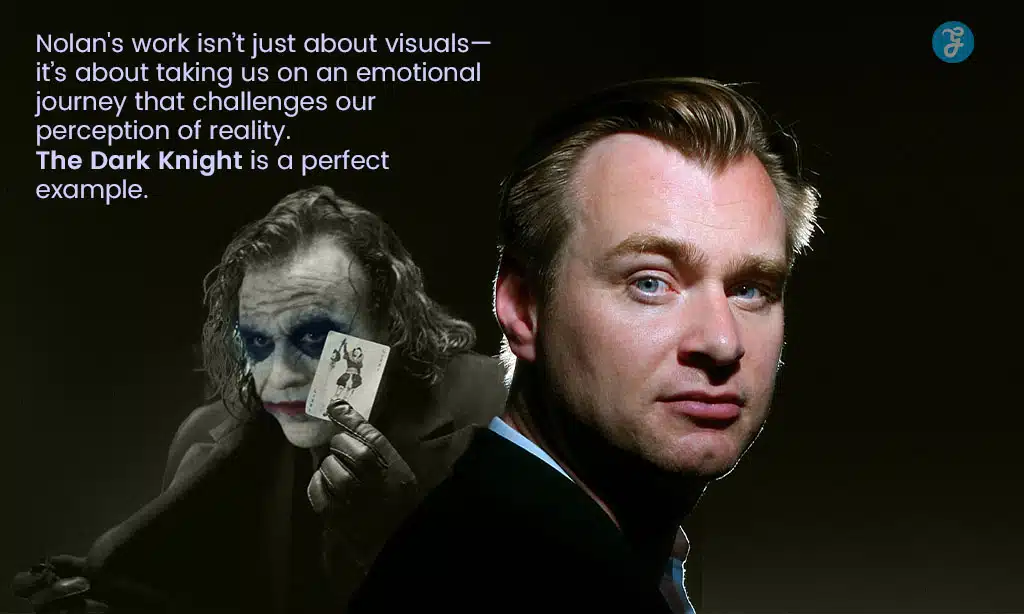
— @FilmBuff4Life“Nolan’s work isn’t just about visuals—it’s about taking us on an emotional journey that challenges our perception of reality. The Dark Knight is a perfect example.”
— Film Critic, Mark Kermode“Christopher Nolan’s films blur the line between spectacle and philosophy. Oppenheimer is an exploration of legacy, guilt, and the pursuit of knowledge. Incredible!”
— @CinephileCritic“Nolan doesn’t just make movies; he makes experiences that demand to be unpacked. Every time I rewatch Inception, I discover something new.”
— @TheMovieMuse
Takeaways: 55Years of Genius, and Still Surprising Us
At 55, Christopher Nolan storytelling remains as powerful, profound, and pioneering as ever. He has given us more than just movies—he’s gifted us with cinematic puzzles, emotional epics, and philosophical reflections that stand the test of time.
Whether he’s twisting timelines, redefining genres, or exploring the depths of human consciousness, Nolan continues to leave audiences stunned. And as long as he’s behind the camera, one thing’s certain—we’ll keep watching, thinking, and feeling every frame.
Happy Birthday, Christopher Nolan. Here’s to many more masterpieces ahead.