Assess your need first, list if you plan to buy equipment, expand space, or cover cash flow gaps. A clear road map shows how extra funds will boost sales. Share credit rating, balance sheet snapshots, and bank statements to back your case.
Modern apps speed up your loan application, yet small business loans remain tough to get.
Tap into mortgage or auto loan cash if your credit rating holds strong. You can also borrow from friends or family, but that route carries risk. Some founders use online fundraiser sites like Kickstarter or Indiegogo, but most startups still run out of funds.
Compare interest rates, loan terms, SBA loans, and other tools for your business loan. Traditional bank loans suit firms with profit history and stable working capital.
How Can I Check My Credit Score and History?
You need a credit report to apply for a business loan. It guides your strategy.
- Use Credit Karma to view your personal credit score at no cost; it pulls a soft credit check that does not harm your profile.
- Order a business credit report from Experian or Equifax for about $35 per company; it shows your payment history with vendors and any defaults.
- Verify your FICO score on major card statements or through issuer portals; lenders often rely on that score for a business loan.
- Keep your card utilization under 30 percent on each card; high balances can drag down your rating even if you pay on time.
- Check for errors in your credit history with TransUnion, Equifax, and Experian; you can dispute wrong listings to raise your score.
- Limit hard credit pulls when you shop lenders; soft checks let you get preapproval without multiple records.
- Ask majority owners to join your application if you own less than half; joint filings cut rejection risk due to low ownership.
- Monitor your bank statements and financial records regularly; spotting unseen issues can save you in the long run.
What Types of Loans Can I Apply For?
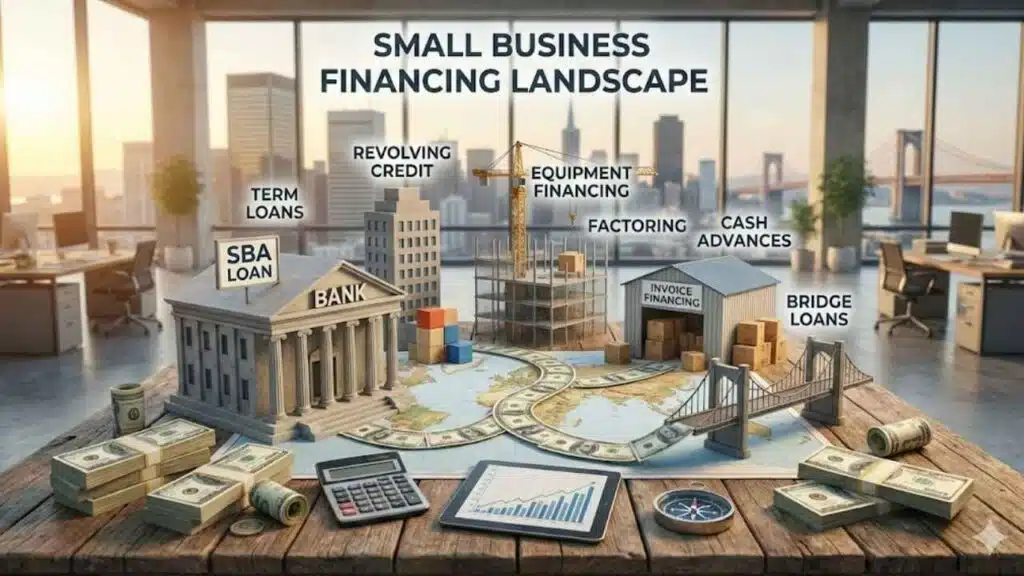
Term loans deliver a set sum up front. They fund equipment or cover construction. Revolving credit lines let you borrow as you need. Tapped for working capital, they flex with sales swings.
Small Business Administration (SBA) loans come with a federal backstop. They offer low APRs to firms that file taxes on time and hold assets. Gear financing buys machines without a big down payment.
Factoring, also called invoice financing, uses unpaid bills as collateral.
Commercial loans bind you to a lender who checks bank statements and credit scores. Online lenders push cash advances to new ventures, but underwriting can crush a start-up. Loan rejection rates jumped after the 2008 financial crisis, even as interest rates fell.
Merchant cash advances draw money from card sales. Bridge loans fill short gaps before long haul funding kicks in. Review loan terms, fees, annual percentage rates, and prepayment penalties.
Talk with a loan officer or CPA, compare offers, and pick the best match for your business plan.
How Do I Evaluate My Business’s Financial Health?
Sort out your cash flow, profit margins, and balance sheet data. Lenders will check at least three months of account statements, or six months for seasonal sales. Clean records, with every cash sale in the bank account, boost your odds of a business loan.
Scan your profit and loss sheet to spot trends in revenue and expenses.
Talk to a CPA or financial advisor for a fresh view on your finances. Ask vendors to stretch payment terms, and offer customers a bonus for early invoices. Never falsify your records; lending officers may log into your online bank portal to confirm.
False documents stop your loan and hurt your credit score.
How Much Loan Amount Do I Actually Need?
Calculate your Debt Service Coverage Ratio, or DSCR, on your balance sheets, and keep it at or above 1 to prove you can handle repayments. List your working capital needs in account ledgers and profit and loss sheets.
Plug those figures into your business plan to pinpoint the exact sum. Pick a line of credit, term loan, or SBA loan that matches that amount, and steer clear of taking the top offer just because it sits there.
Project monthly or weekly payments over the loan term to spot any shortfalls. Use your revenue forecast and DSCR to verify you can clear each due date without tapping a credit card or invoice financing.
Check interest rates and prepayment penalties in the loan terms; bring a CPA on board if the math bites. Borrow only what you need, so you dodge crushing debt and protect your credit score for future small business loans.
Comparing Loan Options From Different Lenders
Use your financial statements to check how each rate and fee will hit your cash flow. Then pull credit data from a reporting agency, and line up term loans, lines of credit, or a government loan side by side in the next section.
What Should I Look For When Comparing Lenders?
Check if a lender has clear loan terms, no application fees, and ample capital. Ask about interest rates, prepayment penalties, and hidden fees. Confirm they offer a single submission process to cut down credit checks at major credit bureaus.
See if they use secure portals and never sell sensitive data. Skip brokers who bill you upfront; healthy banks or online lenders earn commissions after loan closing.
Verify service coverage in your state and read any updates to loan terms. Compare U.S. Small Business Administration loan offers, term loans, invoice financing, and lines of credit.
Ask CPAs to spot warnings on bank statements, financial statements, or credit reports. Check for personal guarantee demands and collateral requirements in case of defaulting on a business loan.
Lean on insights from angel investors or venture capital firms only after your business plan and net worth look solid. Original Funding connects borrowers with vetted partners and keeps your data private.
How Do Interest Rates and Fees Affect My Loan Choice?
High interest rates and steep fees can slice into your business loan budget fast, so watch out for daily rates that climb above 70 percent on merchant cash advances. A government-backed loan often carries APR near single digits, while online lenders hike rates, tack on origination fee, processing fee for extra profit.
An early payoff fee can punish quick wins, and daily or weekly repayments can drain working capital, leaving no room to breathe.
Sketch a cash flow plan or use a simple tool like a spreadsheet to compare total repayment cost, not just APR. Fixed loans and invoice funding look friendly at first glance but may hide extra bills.
After you finish payments, ask bankers to lift any lien, so your bank statements and financial statements show clear credit.
What Documents Do I Need to Prepare for a Loan Application?
You need key files before you fill out a loan application. Lenders look at your paperwork quickly and thoroughly.
- Provide proof of ownership, your Employer Identification Number, valid business licenses, and articles of incorporation to confirm your legal rights and business structure.
- Submit two years of personal and business tax returns, as most lenders need these to verify income and avoid loan rejection on your small business loans.
- Attach a detailed business plan with financial projections, cash flow estimates, and working capital analysis to support your loan terms and interest rate talks.
- Hand over three to six months of business bank statements so lenders can review your deposits, withdrawals, and overall cash flow for loan applications.
- Offer collateral documentation for any assets you pledge, including title deeds, equipment valuations, or property appraisals to secure term loans or mortgages.
- Gather records of any outstanding liens or judgments and proof of their resolution to prevent immediate denial of your bank loan.
- Include a business credit score report and recent financial statements so online lenders or traditional banks can assess your credit score and business finances.
What Are the Terms, Conditions, and Costs of a Business Loan?
Loan terms spell out repayment schedule, interest rates, total repayment amount, and collateral rules. Online lenders demand daily or weekly pulls from your checking account. SBA loans and term loans more often ask monthly transfers.
Scan all bank statements and financial statements before signing any documents. Check if any prepayment penalties hide in the fine print.
Some business loans need a personal guarantee or a lien on equipment or accounts receivable. Reputable networks charge commission only after the loan closes, not at application. Avoid deals that hit your working capital with hidden fees.
After the last payment, ask for a lien release so your assets stay clear.
What Are Collateral and Personal Guarantee Requirements?
Lenders often require collateral to secure a business loan. Equipment financing uses the equipment itself as collateral, while invoice financing uses outstanding invoices. SBA loans ask for specific assets or property, and each lender lists its own rules.
You must show clear titles and bank statements or financial statements that prove no liens or judgments exist. This step helps avoid loan rejection at the underwriting stage.
Founders usually sign a personal guarantee so they share the risk on a term loan or working capital line. If you own less than half the venture, you must apply with majority partners.
After full repayment, ask the lender to release liens on your assets. Keep collateral documents up to date and read every clause in your loan terms, including prepayment penalties.
This habit boosts your business credit score and eases future financing or refinancing moves.
How Will the Loan Impact My Cash Flow and Repayments?
A simple cash flow forecast lets you test repayment plans. You can measure your debt service coverage ratio with net operating income and debt payments. A DSCR of one or more shows you can cover a term loan.
Bank statements and profit and loss reports help you fill the forecast. Projected sales figures and expense estimates warn you about shortfalls. Tools like a DSCR calculator link directly to your spreadsheet.
Credit score monitors and financial statements together paint a clear view.
Frequent payments, for example daily or weekly schedules, can stretch working capital. Short amortization terms on small business loans may spike your interest rates. Some term loans charge prepayment penalties if you pay ahead.
You should borrow only what fits your planned cash flow. Over-borrowing can force you to miss accounts payable or payroll. Consistent repayments build a stronger business credit score.
A positive history can open doors to sba loans, invoice financing, or a personal loan in future.
When Should I Seek Advice From Financial Experts?

First-time founders often see loan terms as a maze. Complex interest rates and prepayment penalties can hide high costs. A CPA or financial advisor can spot these hidden costs and check your business credit score.
SCORE mentors guide business planning and SBA loan prep. CDFIs and the NCRC Community Development Fund run workshops on business financing. Experts help you choose between term loans, invoice financing, or online lenders.
Accurate bank statements and working capital forecasts matter. Business counselors review your financial statements before you file a loan application. They match your cash flow needs to a fitting business loan.
A consultant flags tough collateral or personal guarantee clauses. This step cuts risk of loan rejection and predatory lenders. You gain confidence in your borrowing decision.
How Do I Set Up Meetings With Potential Lenders?
You need to plan your lender meetings. Good prep saves time.
- Identify lenders that fit your small business loan needs. Browse bank loan sites, SBA loan hubs, and online lenders.
- Confirm eligibility rules match your business credit score, revenue, and industry. Check each lender’s posting before you call.
- Schedule conversations using a secure portal or Google Calendar. Block 30 minutes for each talk.
- Gather key documents like a business plan, bank statements, and financial statements. Upload them through the lender’s secure tool.
- Formulate questions on loan terms, interest rates, fees, prepayment penalties, and working capital impact. Write them in a doc for easy reference.
- Verify that the lender joins a network that charges no upfront application fees. This saves your cash flow from surprise premiums.
- Discuss the lender’s loan approval process and typical response timeline. Ask for dates, steps, and staff contacts.
- Clarify any collateral needs and personal guarantee demands. Know what assets you will pledge.
- Invite a consultative approach like Original Funding’s to gain industry insights and extra resources. This talk can reveal partnership tips.
How Can I Confirm My Borrowing Decision Before Applying?
These checks will lock in your borrowing choice. Each step will prove that your loan fits your goals.
- Align your loan with your business plan and revenue targets. Show how extra working capital will boost sales beyond current cash flow.
- Calculate your debt service coverage ratio, aim for at least 1.25. Use a loan calculator or spreadsheet to test different interest rates.
- Match loan size to actual needs. Compare sum against your cash flow projections and repayment capacity.
- Pull your credit score from Equifax or Experian. Fix any errors on that report before you start your loan application.
- Compare loan terms on SBA loans, term loans, invoice financing, and online lenders. Watch out for prepayment penalties and hidden fees.
- Gather bank statements, financial statements, tax returns, and personal guarantee forms. Confirm all documents look accurate and up to date.
- Talk with a CPA, SBA advisor, or business counselor. Get advice on corporate tax impact and credit profile management.
- Build a clear repayment strategy with a backup plan. Include a buffer in case cash flow dips or customers delay payments.
Takeaways
First-time founders can feel like they are learning the ropes while juggling bowling pins. You now know how to check your credit score and review bank statements. You can weigh loans side by side.
Map out cash flow and nail down your working capital needs. Gather financial statements and refine your business plan. You stand ready to talk with loan providers and build a solid pitch.
The path to a business loan no longer feels like climbing a mountain at night.
FAQs
1. What do I need in a business plan?
You need clear goals, budgets, and a cash flow forecast. Show how you will use working capital and invoice financing. Include financial statements and recent bank statements. This helps with business financing and shows you have your ducks in a row.
2. How can I boost my credit score and business credit score?
Always pay bills on time, watch your bank credit balances, and avoid big swings in your social security number use. A solid payment history can raise both your personal and business credit score. Think twice before you sign a personal guarantee; it ties your name and money to the loan.
3. What is the difference between SBA loans and online lenders?
An SBA loan often comes with low interest rates and long term loans, but takes more time to get approved. Online lenders move fast, but rates can be higher and you might face prepayment penalties. Compare loan terms and pick what fits your cash flow and business plan best.
4. How do I manage cash flow and working capital?
Keep track of every dollar, like a hawk. Use invoice financing to get paid faster, and build a small cash cushion for lean times or a financial crisis. That way, you do not run dry when sales slow.
5. What loan terms and interest rates should I watch?
Read every line in the loan terms section. Look for hidden fees, prepayment penalties, and variable interest rates. Decide if you need a fixed rate for peace of mind. Small business loans, term loans, and bank loans all play by different rules.
6. My loan application got rejected. What can I do next?
First, ask the bank why they said no, then tweak your business plan and loan application. Seek other financial resources, like angel investments, venture capitalists, or partnerships. You can also try a smaller bank loan, invoice financing, or an SBA loan. Leverage your network, boost your stake, and keep your options open, don’t put all your eggs in one basket.