Navigating time zones can be a real challenge, especially regarding the ever-changing California Time Zone. Did you know that California is in the Pacific Time Zone and switches between Pacific Standard Time (PST) and Pacific Daylight Time (PDT)? This article aims to clarify all your confusion about California’s time zone with updated information, including recent changes and future adjustments.
Ready for a simplified journey into understanding everything about the California Time Zone? Let’s go!
Content Highlights
- California is in the Pacific Time Zone, which follows daylight saving time and switches between Pacific Standard Time (PST) and Pacific Daylight Time (PDT).
- Los Angeles, in California, observes time changes during daylight saving time, where clocks are moved forward by one hour in the spring and set back by one hour in the fall.
- The time difference between California and Hawaii is three hours.
- Efforts are being made to end daylight saving time in California, with discussions about making it permanent. However, current U.S. law only allows a switch to standard time, not year-round daylight saving time.
Understanding the California Time Zone
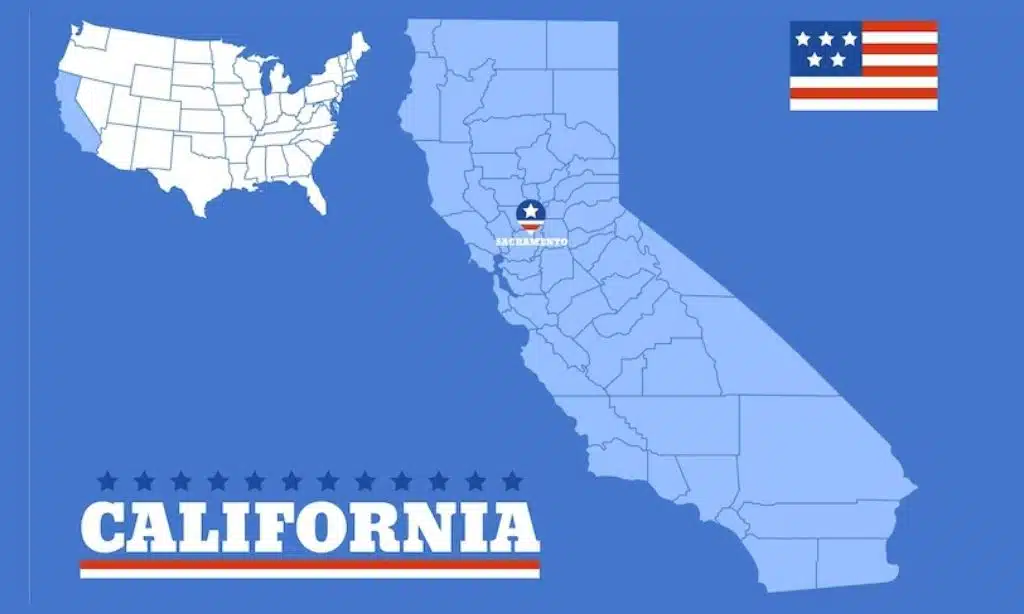
The California Time Zone is known as the Pacific Time Zone, and it follows the standard time changes observed in Los Angeles.
As of September 18, 2023, California is in the Pacific Time Zone (PST) during standard time and Pacific Daylight Time (PDT) during Daylight Saving Time (DST).
PST UTC-8h PDT UTC-7h
California observes Daylight Saving Time, which means that clocks are set forward one hour in the spring and back one hour in the fall. DST begins on the second Sunday in March and ends on the first Sunday in November.
In 2024, DST begins in California on March 12 and ends on November 5.
Pacific Time Zone
California is in the Pacific Time Zone. California uses this time zone along with Canada’s west parts and Mexico’s west. This includes all states and cities on America’s West Coast.
This zone has two main times: Pacific Standard Time (PST) and Pacific Daylight Time (PDT). PST is eight hours behind Coordinated Universal Time (UTC-8:00), while PDT is seven hours behind (UTC-7:00).
Time changes in Los Angeles
Los Angeles, in California, sees time changes each year.
- Daylight saving time starts in spring. People move their clocks forward by one hour.
- In fall, daylight saving time ends. People turn their clocks back by one hour.
- These changes happen because Los Angeles follows the Pacific Time Zone rules.
- The U.S. started using daylight saving time in Los Angeles and California in 1918.
- Every year, residents adjust their clocks twice.
- Staying updated on these changes is very important for Los Angeles and California people.
- There are talks about making daylight saving time last all year in California.
- A law was passed in 2018 on this topic, but daylight saving time still happens as usual.
- Making daylight saving time permanent could end these twice-yearly changes.
- A new bill aims to make daylight saving time last all year round in California.
Read Also The Dallas Time Zone: A Must-Know for Travelers
Daylight Saving Time in California
California takes part in Daylight Saving Time. Each year, clocks spring forward one hour to Pacific Daylight Time. This change lets people use more daylight in the evening hours.
Trying to stop this time change is a hot topic. Voters have said yes to a plan that could end it. But as for now, nothing has changed, and California still observes Daylight Saving Time every year.
Current Local Time in California
The current local time in California can be easily determined using various time zone tools, including time zone maps and online clocks.
Here are some of the major cities in California:
- Los Angeles
- San Diego
- San Francisco
- Oakland
- San Jose
- Fresno
- Sacramento
- Long Beach
- Bakersfield
- Santa Ana
- Anaheim
- Riverside
- Irvine
- Glendale
- Oxnard
- Santa Clarita
- Garden Grove
California is the most populous state in the United States, with over 39 million people. It is also one of the most diverse states, with people from all over the world calling California home.
Time Zone Map
The time zone map of the United States shows the different time zones across the country. It helps us understand how time varies from one region to another. In California, the state is located in the Pacific Time Zone, along with cities like Los Angeles and San Francisco.
This means that California is 8 hours behind Greenwich Mean Time (GMT-8). So if it’s 12:00 PM in GMT, it would be 4:00 AM in California. The Pacific Time Zone extends from Canada to Mexico and includes states like Washington, Oregon, and Nevada as well.
So when planning travel or scheduling virtual meetings with people from different parts of the United States, it’s important to check the time zone map to avoid confusion.
Time Zone Tools
Time zone tools are useful resources that can help you determine the current local time in California. These tools take into account the specific time zone, which is the Pacific Time Zone for most of California.
Using these tools lets you quickly find out what time it is in different cities and towns across the state. This is especially helpful if you need to schedule meetings or coordinate with people in different locations.
In addition, these tools can also be valuable for teams working across different time zones, allowing everyone to stay connected and ensure effective communication. By leveraging communication platforms like Slack and Zoom and time zone tools, managing work across various regions becomes more efficient and seamless.
The Battle to End Daylight Saving Time in California
Efforts to remove Daylight Saving Time in California have been ongoing, with the current status of the time change still up for debate. Nationwide initiatives are also taking place to end Daylight Saving Time altogether.
Read More: Stay Ahead with our Latest Guide to UTC Time Zone
Efforts to remove Daylight Saving Time
Efforts are currently underway to remove Daylight Saving Time in California. Despite a ballot measure that gave lawmakers the power to end the seasonal time change, California still observes daylight saving time.
A bill hasn’t yet been introduced during this current Congress regarding daylight saving time. However, lawmakers in California and other states are considering getting rid of the biannual time switch and making daylight saving time permanent instead.
It’s part of an ongoing battle to eliminate this practice and keep one consistent time throughout the year.
Current status of Daylight Saving Time in California
California currently observes Daylight Saving Time despite ongoing efforts to make it permanent. In 2018, a ballot measure was passed allowing lawmakers the option to stop observing Daylight Saving Time, but it is still in effect.
However, there have been recent developments on a national level. The U.S. Senate has passed a bill to make daylight saving time permanent, and California voters have approved a ballot initiative allowing it as well.
It’s important to note that before states can make the change, Congress would need to act on this issue. Hawaii and most of Arizona already observe permanent standard time and do not change their clocks.
Nationwide efforts to end Daylight Saving Time
Many states across the country are actively working to put an end to Daylight Saving Time. California and other states are considering getting rid of the practice of changing clocks twice a year.
In fact, lawmakers in 25 states have already attempted to switch to either permanent standard time or daylight saving time. Currently, more states are leaning towards adopting permanent daylight saving time.
The battle is also ongoing in California, with efforts being made to make the change to permanent time observation.
Latest Updates on California Time Zone
Recent time changes in California have brought about new updates to the state’s time zone regulations. By reading more, you can stay updated with the latest information on Daylight Saving Time and other time adjustments in California.
Recent time changes in California
In recent times, there have been discussions about time changes in California. While California still observes Daylight Saving Time, there has been a push to end this practice. However, current U.S. law only allows for a switch to standard time and not year-round daylight saving time.
Despite these discussions, the latest update is that Daylight Saving Time will continue in California for now. In 2024, clocks will be moved forward, leading to sunsets happening after 6 p.m.
This can affect daily schedules and routines for people in the state.
Read Also: The Pacific Time Zone: A Look at the Cities and States
Updates on Daylight Saving Time
California has been in discussions about the future of daylight saving time. Efforts have been made to eliminate the seasonal time change, and recent updates have focused on these initiatives.
One proposal suggests making daylight saving time permanent starting in 2024. This means California would no longer switch between standard and daylight saving time each year.
These ongoing discussions will be interesting to see how they develop in the coming years.
Impact of Time Zone Changes in California
Time zone changes in California can significantly impact daily schedules, routines, and the economy. Discover how these changes affect various aspects of life in the Golden State.
| Time Zone | UTC Offset | Adjacent Time Zones | Daylight Saving Time |
|---|---|---|---|
| California Time Zone (PST) | UTC-8 | Pacific Standard Time (PST), Pacific Daylight Time (PDT) | Yes, begins on the second Sunday in March and ends on the first Sunday in November. |
| Mountain Time Zone (MST) | UTC-7 | Mountain Standard Time (MST), Mountain Daylight Time (MDT) | Yes, begins on the second Sunday in March and ends on the first Sunday in November. |
| Arizona Time Zone (MST) | UTC-7 | Mountain Standard Time (MST) | No. |
Table: Differences Between California Time Zone with Pther Adjacent Time Zones
Read more to stay informed about California’s time zone updates.
Effects on daily schedules and routines
Time zone changes can have significant effects on daily schedules and routines in California. Even small changes can throw off our internal body clocks, leading to difficulties in sleeping, waking up, and adjusting to meal times.
This can result in feelings of fatigue and disorientation. Larger time zone changes of more than six hours can have an even greater impact, causing jet lag-like symptoms such as headaches, difficulty concentrating, and decreased productivity.
Daylight Saving Time (DST) adds another layer of disruption by shifting the clock forward or backward by an hour twice a year. This further increases the discrepancy between our body’s natural sleep-wake cycle and the social clock.
Economic implications
The California time zone has significant economic implications. For example, when Hollywood strikes occur, it can devastate the state’s economy, costing billions of dollars.
The film and television industry is a major contributor to California’s economy, so any disruptions in production can lead to job losses and decreased revenue. Additionally, living on the wrong side of a time zone boundary can negatively affect businesses that rely on coordinating with partners or clients in different time zones.
This can result in missed opportunities and reduced productivity. It’s essential for California to prioritize maintaining a stable and efficient time zone system to ensure economic growth and success.
California Time Zone and Travel
Planning travel to or within California can be made easier by understanding the local time zone and any potential changes due to Daylight Saving Time. Adjusting to time zone differences may impact your travel arrangements, so staying informed is important.
Read on to learn more about California’s time zone and how it can affect your travels in the Golden State.
Planning travel arrangements
Planning travel arrangements in California requires considering the time difference and adjusting schedules accordingly. California is in the Pacific Time Zone, which is eight hours behind Coordinated Universal Time (UTC-8) during standard time.
If you’re traveling from a different time zone, factoring in this time difference when booking flights or making plans is important. Additionally, remember that California observes Daylight Saving Time, where the clocks are adjusted forward by one hour to Pacific Daylight Time (PDT).
This means that during DST, there will be an additional hour of daylight in the evening. To manage your travel plans efficiently, you can use tools like Google Calendar that allow you to schedule events and reminders across different time zones.
Adjusting to time zone differences
Adjusting to time zone differences can be a challenge when traveling. It’s important to allow your body enough time to adapt gradually. Whether you’re driving, taking a bus, or traveling by train, these methods provide an opportunity for your body to adjust at its own pace.
Jet lag is a common issue that occurs when our internal biological clock is disrupted due to crossing multiple time zones quickly. This temporary sleep problem affects those who travel across three or more time zones, especially when going east or west.
By understanding the effects of jet lag and adopting strategies like getting plenty of rest before your trip and adjusting your schedule gradually upon arrival, you can make the transition smoother and enjoy your travels without feeling too tired or disoriented.
Time Zone FAQs
Why do we have Daylight Saving Time? What is the reason behind still having it? Find out the answers and more in this section. Explore California’s time zone and all its details.
Why do we have Daylight Saving Time?
Daylight Saving Time was introduced in the United States in 1918 to use daylight during warmer months better. It allows for more daylight hours in the evening, which many people find beneficial for outdoor activities and conserving energy.
The idea originated from a New Zealand entomologist and was influenced by improvements in transportation. Daylight Saving Time helps establish a standard time system within existing time zones, making it easier for businesses and individuals to coordinate schedules across different regions.
By moving the clock forward by an hour during warmer months, we can enjoy longer days and potentially save energy as well.
Also Read: Mastering GMT Time Zone
Why do we still have Daylight Saving Time?
Daylight Saving Time is still observed because it was initially implemented to take advantage of more daylight during the warmer months. The main idea behind Daylight Saving Time is to align waking hours with daylight hours and reduce energy usage for lighting.
Although California has given lawmakers the power to end this seasonal time change, they continue to observe Daylight Saving Time. In fact, Proposition 7 in California passed a yearlong Daylight Saving Time, which the state currently follows.
Frequently Asked Questions (FAQs)
Here, we answered some commonly asked questions about the California time zone. Check the answers if you have any queries.
1. What is the time difference in California compared to Greenwich Mean Time (GMT)?
California is usually 8 hours behind GMT during Pacific Standard Time (PST) and 7 hours behind during Pacific Daylight Time (PDT).
2. Does California observe Daylight Saving Time?
Yes, California observes Daylight Saving Time. Clocks are set forward by one hour on the second Sunday of March and set back by one hour on the first Sunday of November.
3. What are the current Pacific Standard Time (PST) and Pacific Daylight Time (PDT) dates?
Pacific Standard Time (PST) is observed from early November to early March, while Pacific Daylight Time (PDT) is observed from early March to early November each year.
4. Are there any exceptions or changes to California’s time zone rules?
While most parts of California follow the same time zone rules, there may be some exceptions within certain tribal lands or small communities that have their own local ordinances regarding time observance.