
Dreaming of owning a cozy bed and breakfast in Italy, but feeling lost on where to start? Buying property abroad can be a tricky maze, with local laws and rules often changing. Don’t worry, my friend; this guide on “10 Steps To Buying A Property In Italy For A Bed-and-Breakfast” will walk you through every bit, step by step.
Hang on tight; let’s begin!
Key Takeaways
- Research the Italian real estate market using platforms like Gate-Away.com, which lists about 25,000 properties for B&B investors.
- Set a clear budget, knowing that Italy’s B&B industry earns around 270 million euros yearly, and factor in taxes like the 21% flat rate on single property income.
- Pick a prime location like Civita di Bagnoregio, attracting 642,000 tourists yearly, but watch for strict rental rules in cities like Florence and Venice.
- Hire a trusted real estate agent and get legal help from firms like Studio Legale Metta, with experts such as Antonio Cammarano and Raffaella Cuomo.
- Follow legal steps, including getting licenses like SCIA and CIR, and be ready for fines up to 10,000 euros for rule violations in places like Venice.
Research the Italian Real Estate Market

Now that we’ve set the stage with an intro, let’s jump into the first big step of buying a property for a bed and breakfast in Italy. Digging into the Italian real estate market is where your journey truly starts, and trust me, it’s like hunting for treasure in a vast, beautiful land.
Start by exploring platforms like Gate-Away.com, which lists nearly 25,000 properties perfect for B&B investors. That’s a goldmine of options, right at your fingertips. Check out homes in Central Italy or other regions that catch your eye.
Look at prices for real estate in Italy, and see what fits your vision for a cozy holiday let. Did you know Italy has about 25,000 B&Bs already, employing around 40,000 folks? That shows the market is buzzing, so you’ve got to act smart.
Study trends in short-term rentals, and chat with locals or online forums to get the real scoop on hot spots. It’s like getting insider tips before placing a bet, and it can save you a heap of money and stress.
Determine Your Budget and Financing Options
Let’s get serious about purchasing a property in Italy for your bed-and-breakfast vision. Determining your budget and financing is a crucial first step, so let’s break it down.
- Start by figuring out what you can afford to spend on real estate in Italy. Review your savings and any available cash. Decide how much you’re ready to invest as a down payment. Don’t overextend yourself, folks, because unexpected expenses can sprout up like weeds in a garden. A smart approach is to reserve some extra funds for surprises.
- Evaluate your income to gauge what kind of loan you might qualify for. Lenders will examine your revenue and debts before approving. If you have consistent earnings, that’s a strong point in your favor. Keep in mind, a bed-and-breakfast can generate income, with annual earnings in Italy around 270 million euros, so emphasize that potential to banks. Show them this B&B is a serious venture.
- Investigate financing options to strengthen your financial position. Reach out to local Italian banks or international lenders familiar with the market. Interest rates can sting, so compare offers to secure the best terms. Inquire about conditions and how they align with managing a rental property. You need a strategy that supports your cash flow.
- Get familiar with the taxes associated with owning a B&B in Italy. There’s a flat tax rate of 21% on income from a single property. If you acquire additional properties, the rate increases to 26% on the others. These tax rates can impact your profits, so include them in your budget. Consult a tax professional to steer clear of unpleasant surprises.
- Look into obtaining a partita IVA, which serves as a business ID for tax purposes. It assists in handling VAT receipts and keeping everything compliant. Operating a bed-and-breakfast means you’re running a business, so this step is essential. Mishandling taxes isn’t just a hassle; it can lead to significant costs. Address it from the beginning.
- Factor in the cost of a B&B insurance policy to safeguard your investment. Accidents occur, and guests can be as careless as a bull in a china shop. This coverage can protect you from losing everything over a minor incident. Include this in your budget, even if it seems like an added expense. The security it provides is invaluable.
- Account for property renovation costs from the outset. Many properties in Italy require updates to transform into a welcoming bed and breakfast. You might need to install an en-suite bathroom or repair aging walls. Allocate funds for these improvements, as they can define your guests’ experience. Cutting corners here isn’t a wise choice.
Choose the Right Location for Your Bed-and-Breakfast
After sorting out your budget and financing options, the next big step is picking the perfect spot for your bed and breakfast in Italy. Location can make or break your B&B dream, so let’s chat about how to nail this choice with a keen eye.
Think about a place like Civita di Bagnoregio in Lazio, pulling in around 642,000 tourists yearly. That’s a gold mine for a B&B, right? Or consider Santo Stefano di Sessanio in Abruzzo, a medieval gem brought back to life by the Sextantio Albergo Diffuso project.
These spots scream charm and draw crowds. Yet, watch out for rules in big cities. Florence has banned short-term rentals in UNESCO zones, while Venice demands a special register and SCIA license for rentals over 120 days a year, with fines from 1,000 to 10,000 euros if you slip up.
Pick a location that matches your vibe, fits regional legislation, and keeps guests rolling in for your bed and breakfast.
Hire a Reliable Real Estate Agent
Moving from picking the perfect spot for your bed and breakfast, let’s chat about the next big step. Finding a solid real estate agent in Italy is key to snagging the right property for your B&B dream.
You need someone who knows the ins and outs of real estate in Italy, and can guide you through the maze of property deeds.
A good agent saves you time, stress, and even money. Look for pros who get the local market and have ties to experts for legal help. Firms like Studio Legale Metta offer great support for B&B property buyers.
Plus, they provide free 30-minute chats with specialists like Antonio Cammarano, Raffaella Cuomo, and Alessandro Iacovazzi. Tap into their know-how to make your purchase smooth and set up your bed and breakfast with confidence.
Understand Legal Requirements and Zoning Laws
Getting a grip on the legal side of owning a bed and breakfast in Italy is essential. You’ve got to understand the rules before you start exploring real estate in Italy. Begin with zoning laws, as they determine if a property can operate as a B&B.
Some areas might not permit short-term rentals at all. Condominium regulations can also create obstacles in your plans. They often limit B&B operations in residential areas. Overlook these, and you might face fines of €100 per day, as courts have deemed this reasonable for violations.
So, review those condo documents with careful attention.
Going further, you’ll need specific licenses like SCIA, which stands for Segnalazione Certificata di Inizio Attività. Don’t overlook CIR, the Codice Identificativo Regionale, and CIN as well.
These are essential for running a legitimate B&B. On top of that, verifying guest identity documents is critical. Miss this step, and you risk arrest for up to 3 months or fines as high as €206.
Contact the local SUAP, or Sportello Unico Attività Produttiva, for assistance with regional legislation. Oh, and speak with staff at the local office about partita IVA for tax matters.
It’s like balancing on a tightrope, but you’ve got this!
Inspect the Property Thoroughly
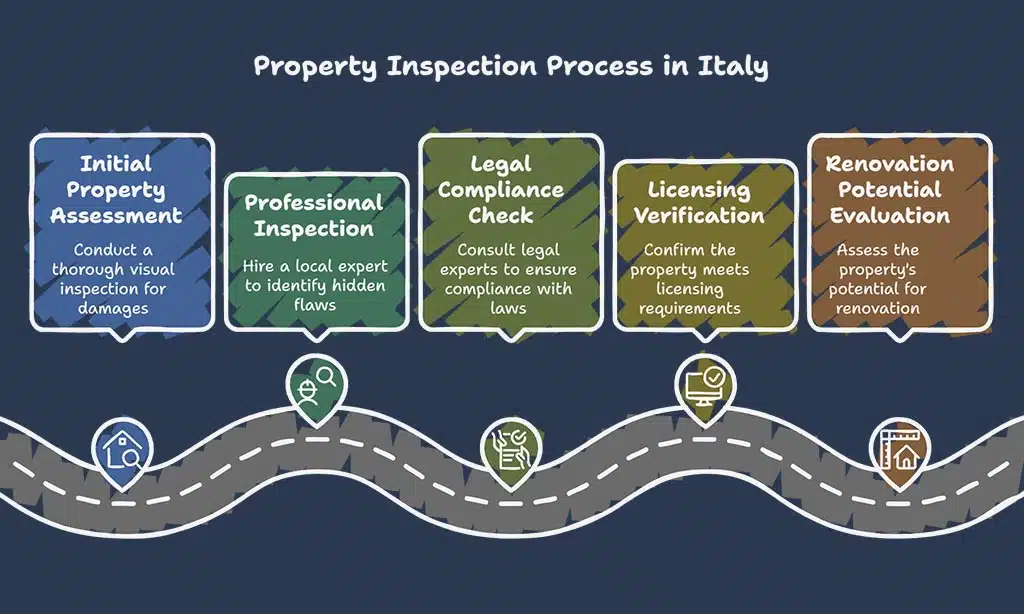
Let’s talk about a key step in buying a property in Italy for your bed and breakfast. Checking the place out, with a sharp eye, is a must before you sign anything.
- First off, take a good, long look at the building for any damage or wear. Check the walls for cracks, the roof for leaks, and the plumbing for issues. A shaky foundation can turn your B&B dream into a money pit faster than you can say “arrivederci.” Don’t skip this; it’s your chance to spot problems that could cost big bucks later.
- Next up, bring in a pro to inspect the property with you. Hire a local expert who knows real estate in Italy inside and out. They can point out hidden flaws, like bad wiring or damp spots, that might mess up your plans for a cozy bed and breakfast. Their know-how is worth every penny.
- Also, dig into the legal side with help from experts like Studio Legale Metta. They review condo rules and zoning compliance to make sure your B&B fits local laws. Did you know increased condo fees for B&B owners need unanimous consent from other owners? Missing this detail could land you in hot water, so get that guidance early.
- Pay attention to licensing needs for short-term rentals too. A thorough check ensures the property meets regional legislation for running a bed and breakfast. If it doesn’t match up, you might face fines or delays in opening your doors to guests. Stay ahead by confirming every rule is followed.
- Lastly, scope out the space for renovation potential. Think about how property renovation can turn a fixer-upper into a charming B&B spot. Walk through each room, picturing where guests will sip coffee or relax. A clear vision now saves headaches when you start hammering away.
Now that you’ve got the inspection covered, let’s move on to securing a property purchase agreement.
Secure a Property Purchase Agreement
After inspecting the property with a keen eye, it’s time to lock in the deal with a solid purchase agreement. This step is your ticket to owning that dream spot for a bed and breakfast in Italy.
Get this right, and you’re one giant leap closer to opening your B&B doors.
Start by working with your real estate agent to draft the property deeds. This contract seals the agreement between you and the seller, covering the price, terms, and any conditions.
Make sure it accounts for local laws, especially since court decisions show condo rules might limit short-term rentals. Check if the building’s condominium rules could restrict your B&B operations in a residential space.
Also, confirm that the property meets safety standards, like having fire extinguishers, smoke detectors, and gas or carbon monoxide detectors. Dot every i, cross every t, and you’ll avoid headaches down the road when planning your B & B.
Complete the Necessary Paperwork and Permits
Hey there, let’s tackle the nitty-gritty of buying a property in Italy for your bed-and-breakfast. Getting the paperwork and permits sorted is like crossing the finish line, so hang tight!
- First off, gather all property deeds for your place. These papers prove you own the spot, and they’re a must for any B&B deal in Italy. Without them, you can’t move forward with other steps. Make sure they’re legit by checking with a local notary.
- Next up, apply for the SCIA, which stands for Segnalazione Certificata di Inizio Attività. This tells the local folks you’re starting a business like a bed and breakfast. It’s a key step to stay legal, and missing it could land you in hot water.
- Don’t skip the CIR, or Codice Identificativo Regionale, for your B&B. This code is your regional ID for short-term rentals. Every area in Italy has its own rules, so grab this to show you’re following regional legislation.
- Also, snag the CIN if your region asks for it. It’s another ID tag for your spot, tying into local laws. Check with your city office to see if it’s needed for your bed and breakfast setup.
- Be ready to pay registration costs, ranging from 30 to 150 euros. This fee gets your B&B on the books with local authorities. It’s a small price for staying on the right side of the law, trust me.
- Head to the SUAP, or Sportello Unico Attività Produttiva, for help. This one-stop shop handles business permits in Italy. They’ll guide you through the maze of rules for real estate in Italy, making life easier.
- Think about a Partita IVA if your B&B grows big. It’s like a tax ID for businesses, linked to income tax rates. Chat with a tax pro to see if this fits your plan, as progressive tax laws apply.
- Install safety gear like fire extinguishers, smoke detectors, and gas or carbon monoxide alarms. These are mandatory for any B&B under Italian law. It’s not just about rules; it’s about keeping guests safe.
- Finally, look into a B&B insurance policy for protection. It covers mishaps at your place, giving peace of mind. With varying local laws, this step can save you from a financial mess.
Now, let’s roll into planning those renovations and interior design for your dream spot!
Plan for Renovations and Interior Design
Moving on from sorting out the paperwork and permits, let’s jump into the fun part of turning your Italian property into a dreamy bed-and-breakfast. Get ready to roll up your sleeves, because planning renovations and interior design is where your vision comes to life!
- Start by checking the room size rules for your B&B, since Italian laws say double rooms must be at least 14 square meters, and single rooms need 8 square meters. This isn’t just about comfort; it’s about meeting legal standards. If your spaces are too small, you’ll need to knock down walls or rethink layouts. Grab a tape measure and map it out early.
- Look at how many bedrooms you’re allowed, typically between 3 to 6 for a bed-and-breakfast in Italy. This limit shapes your renovation plans. You can’t cram in extra rooms without approval, so focus on making each space inviting. Think cozy nooks and warm vibes for guests.
- Consider if you’ll live on-site, as some regions might require owner residency at the property. This could mean carving out a private area during property renovation. Don’t just slap up a divider; make it feel like home for you too. A little personal touch goes a long way.
- Budget wisely for fixes and style upgrades, since transforming real estate in Italy can get pricey fast. Factor in costs for plumbing, wiring, or even historical building rules if your place is old. Don’t skimp here; a solid foundation saves headaches later.
- Design with your guests in mind, creating a welcoming bed-and-breakfast that stands out. Pick furniture that fits the Italian charm, maybe rustic tables or colorful tiles. Add local art to walls for that authentic feel. It’s like painting a picture of Italy in every corner.
- Plan for practical stuff, like enough bathrooms or a shared kitchen if your B&B layout needs it. Guests shouldn’t feel squeezed or lost. Keep paths clear and spaces functional. Small tweaks can turn chaos into calm.
- Research holiday rental needs, because short-term rentals often tie into VAT and other fees. Your design might need extra durability for high turnover. Think sturdy beds or easy-to-clean floors. It’s all about keeping things running smooth.
- Don’t forget to check regional legislation while planning your property renovation in Italy. Some areas have strict rules on colors, materials, or even window styles. Call up local offices to avoid fines. Better safe than sorry, right?
Register Your Bed-and-Breakfast with Local Authorities
Let’s get your bed-and-breakfast officially on the map, folks. Registering with local authorities in Italy is a key step to make your B&B legit and ready for guests.
- First up, grab the SCIA form, short for Segnalazione Certificata di Inizio Attività, and fill it out with care. This document tells the local government you’re starting a bed and breakfast, or B&B as we call it. Make sure to attach all supporting papers they ask for. Submit this to the SUAP office, known as Sportello Unico Attività Produttiva. It’s your gateway to getting approved.
- Next, be ready to pay a small fee for processing the SCIA. This cost can range from €30 to €150, depending on where you are in Italy. Think of it as a tiny investment to keep your B&B dream rolling. Keep some cash handy for this step.
- Also, stick to local B&B guidelines like glue. Following these rules helps you avoid VAT headaches and keeps taxes simpler. It’s like dodging a financial pothole while setting up shop in the real estate in Italy scene. Stay sharp and read up on regional legislation.
- Don’t skip guest ID verification, pals. Italian law says you must check and record guest identification for every stay. It’s not just a formality; it’s a must for safety and compliance. Have a system to log this info without a fuss.
- Finally, look into getting a CIR, or Codice Identificativo Regionale, for your place. This code is like a badge for short-term rentals, showing you’re fully legal. Contact your local authorities to snag this number. It proves your B&B is above board and ready to welcome travelers.
Develop a Marketing and Guest Strategy
Crafting a solid plan to attract guests to your bed and breakfast in Italy starts with knowing your crowd. Think about who you want to welcome, maybe families or solo travelers seeking a cozy stay.
Use social media to show off your charming B&B with pretty pictures and fun stories. Share a quick peek of your sunny terrace or fresh breakfast spread. Did you know Italy has around 25,000 B&Bs employing about 40,000 folks? That’s a big market, so stand out by highlighting what makes your place special.
Post regularly on platforms like Instagram and Facebook to build a following fast.
Now, let’s chat about building trust with awesome guest experiences for your short-term rentals. Team up with local guides or businesses to offer cool perks, like guided tours or discounts at nearby cafes.
Set up a simple booking system on your website, making it easy for guests to reserve a spot. Don’t forget to ask for reviews after their stay; kind words go a long way online. Also, tap into advice from experts like Gareth Horsfall from The Spectrum IFA Group for tips on financial leverage.
Meeting the rising demand for flexible accommodations can put your B&B on the map, so keep tweaking your approach with every guest.
Takeaways
Hey there, you’ve made it through the journey of buying a property in Italy for your bed-and-breakfast dream! Isn’t that a big win? Setting up a cozy B&B takes grit, but with these 10 steps, you’re on solid ground.
Just keep an eye on local rules, like zoning laws, to dodge any nasty fines. Drop us a thought, how’s this Italian adventure shaping up for you?
FAQs on Buying A Property In Italy For A Bed-and-Breakfast
1. What’s the first step to snagging a property for a bed and breakfast in Italy?
Well, my friend, start by hunting for the right real estate in Italy. It’s like finding the perfect slice of pizza; you’ve gotta know the area and what fits your B&B dream.
2. Do I need special permits to run a B&B in Italy?
You bet! You’ll need to file a SCIA, which stands for Segnalazione Certificata di Inizio Attività, through the SUAP, or Sportello Unico Attività Produttiva, to kick off your bed and breakfast legally.
3. What’s this CIR thing I keep hearing about for short-term rentals?
Ahh, the CIR, or Codice Identificativo Regionale, is your golden ticket for running short-term rentals in Italy. It’s a must-have code to show you’re following regional legislation. Think of it as your B&B’s ID card, proving you’re on the up and up.
4. How do I handle taxes and property deeds for my Italian B&B?
First off, grab those property deeds to seal the deal on your new place. Then, get yourself a Partita IVA, which is basically your tax ID for business in Italy. It’s not a walk in the park, but it keeps the tax folks off your back while you build your cozy bed and breakfast empire.