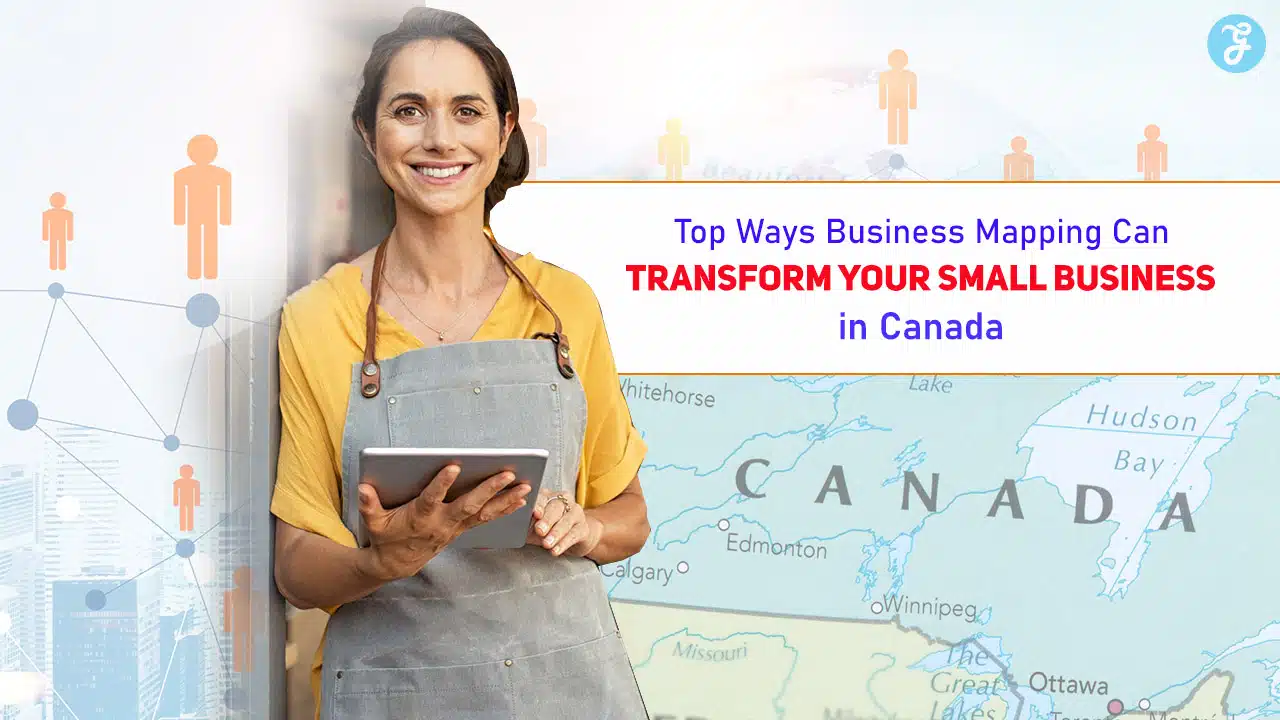
Running a small business in Canada’s competitive market requires careful planning, strategic decision-making, and a deep understanding of local dynamics.
Business mapping, or geographic information system (GIS) mapping, can be a powerful tool for small businesses aiming to improve efficiency, attract new customers, and grow sustainably.
By visualizing and analyzing location-based data, small businesses can make better-informed decisions, increase productivity, and gain a competitive edge.
This article explores 10 ways business mapping can transform your small business in Canada, helping you leverage this valuable tool to optimize your business operations and maximize your potential.
Why Business Mapping is Essential for Small Businesses in Canada?
In a country as vast and diverse as Canada, understanding regional markets, customer demographics, and geographic trends is essential.
Business mapping enables you to visualize data in a geographical context, making it easier to identify patterns, trends, and opportunities specific to different areas.
By using business mapping tools, small businesses can gain insights that help with location-based marketing, efficient route planning, and better understanding of the competition—all factors that are critical for success in a competitive market like Canada.
10 Ways Business Mapping Can Transform Your Small Business in Canada
Let’s take a look.
1. Identify Ideal Locations for Business Expansion
One of the most powerful ways business mapping can transform a small business is by helping identify ideal locations for expansion.
- Location Analysis: Business mapping allows you to analyze factors such as foot traffic, proximity to competitors, and local demographics. This data is invaluable for choosing new locations that have a high potential customer base.
- Proximity to Suppliers and Partners: Business mapping can show where suppliers and potential partners are located, helping reduce logistical costs and simplify inventory management.
- Avoiding Over-Saturation: In densely populated areas, business mapping can help identify locations where there is less competition, providing opportunities to attract a unique customer base.
In Canada’s major cities like Toronto, Vancouver, and Montreal, using location analysis helps businesses avoid overly competitive locations and target underserved markets with high potential.
2. Visualize and Optimize Delivery Routes
For businesses that rely on delivery services, efficient route planning is essential, especially given Canada’s vast geography and sometimes harsh weather conditions.
- Route Optimization: Business mapping can help you create efficient delivery routes, reducing fuel costs and saving time. Mapping tools can analyze traffic patterns and suggest the quickest routes.
- Real-Time Adjustments: Some mapping tools offer real-time traffic and weather updates, allowing you to adjust routes dynamically based on current conditions.
- Reducing Fuel Costs: Optimized routes reduce fuel consumption and vehicle wear-and-tear, resulting in long-term cost savings.
For businesses in sectors like food delivery or e-commerce, optimizing delivery routes can help ensure timely delivery, improve customer satisfaction, and reduce operational costs.
3. Understand Local Market Demographics

Canada is known for its diversity, and different regions have unique demographics. Business mapping can help small businesses understand local markets and tailor their products and services accordingly.
- Demographic Segmentation: Mapping tools can help identify where certain demographics, such as age groups or income levels, are concentrated. This allows you to target specific customer groups with tailored marketing messages.
- Income and Spending Analysis: Business mapping can provide insights into average income levels in different areas, helping you gauge the purchasing power of local customers.
- Lifestyle Analysis: By understanding the lifestyle preferences of residents in a particular area, businesses can offer services and products that resonate with their target audience.
By understanding the demographic makeup of Canadian cities and regions, small businesses can make data-driven marketing decisions and develop offerings that appeal to local consumers.
4. Enhance Sales Territory Management
For small businesses with sales teams, managing territories efficiently is critical for maximizing sales opportunities. Business mapping helps streamline territory management, ensuring balanced workloads and high productivity.
- Defining Sales Territories: Mapping software allows you to define clear sales territories, ensuring each sales representative has a manageable area to cover.
- Balancing Workloads: By visualizing territory data, managers can assign territories in a way that balances workloads and avoids overlaps or underserved areas.
- Tracking Sales Performance: Business mapping can track sales performance by territory, allowing managers to identify high-performing regions and focus efforts on underperforming areas.
Efficient territory management with mapping tools helps sales teams improve productivity, increase sales coverage, and better serve customers in diverse regions of Canada.
5. Conduct Competitor Analysis
Competitor analysis is essential for small businesses looking to position themselves effectively. Business mapping allows small businesses to assess the competitive landscape in their area.
- Identifying Competitor Locations: By mapping competitor locations, small businesses can determine where competitors are most concentrated and identify areas where competition is less intense.
- Market Saturation: Mapping tools can reveal the level of market saturation in specific areas, helping businesses avoid overcrowded markets.
- Finding Gaps in the Market: Business mapping can identify underserved areas with few or no competitors, providing an opportunity to establish a presence and capture new customers.
For small businesses looking to gain an edge, competitor analysis through mapping is a valuable strategy for understanding market dynamics and positioning effectively.
6. Optimize Marketing Campaigns with Location-Based Targeting
Business mapping allows small businesses to execute location-based marketing campaigns, targeting specific audiences based on geographic data.
- Geotargeted Advertising: Business mapping tools can help you identify high-potential areas for targeted advertising, whether through online ads or local promotions.
- Localized Promotions: Use mapping to plan promotions tailored to specific areas, such as offering discounts in neighborhoods with high foot traffic or near local events.
- Optimizing Social Media Ads: Many social media platforms allow for geotargeted ads. Business mapping can help pinpoint which regions to focus on, improving ad relevance and conversion rates.
Location-based marketing enhances campaign effectiveness, allowing small businesses to maximize their return on investment and reach customers where they are most likely to engage.
7. Streamline Supply Chain and Inventory Management
For small businesses with complex supply chains, efficient management is essential for minimizing costs and ensuring timely delivery. Business mapping can improve various aspects of supply chain and inventory management.
- Identifying Warehouse Locations: Business mapping helps identify ideal locations for warehouses based on proximity to suppliers and customers, reducing shipping time and costs.
- Tracking Inventory Demand by Region: Mapping allows businesses to monitor demand for products in different areas, helping optimize inventory distribution.
- Minimizing Shipping Costs: Mapping helps identify the most cost-effective shipping routes and warehouse locations, reducing overall logistics expenses.
In a vast country like Canada, where distances can affect logistics costs significantly, business mapping is crucial for optimizing supply chain efficiency and controlling inventory effectively.
8. Analyze Foot Traffic for Optimal Retail Locations
For brick-and-mortar small businesses, understanding foot traffic patterns is essential to choosing the best retail locations. Business mapping provides insights into foot traffic data that are invaluable for location-based businesses.
- Foot Traffic Analysis: Mapping tools can help you analyze foot traffic patterns, allowing you to identify areas with high potential customer presence.
- Understanding Peak Hours: By mapping foot traffic data, businesses can understand peak hours and optimize staffing and inventory for those times.
- Store Layout Planning: Foot traffic analysis can also provide insights into the best store layout, such as positioning popular products near high-traffic areas within the store.
For retailers and restaurants, business mapping offers valuable data for optimizing location choice, layout, and peak-hour planning to maximize customer engagement and sales.
9. Develop Data-Driven Customer Segmentation
Customer segmentation is critical for creating personalized marketing strategies. Business mapping helps small businesses identify and target specific customer segments more effectively.
- Geographic Segmentation: By mapping customer data geographically, businesses can identify where their customers are located and tailor marketing efforts accordingly.
- Behavioral Segmentation: Mapping tools can reveal patterns in customer behaviors across different areas, such as shopping preferences or response to promotions.
- Personalized Marketing: Geographic segmentation allows for highly personalized marketing, which improves customer satisfaction and brand loyalty.
With business mapping, small businesses can develop more precise customer segmentation strategies, leading to improved customer relationships and more effective marketing campaigns.
10. Monitor and Adapt to Market Trends

Business mapping enables small businesses to stay updated on market trends, allowing them to adapt and remain competitive. By analyzing data visually, businesses can anticipate shifts and respond proactively.
- Identifying Emerging Markets: Mapping tools can reveal areas with emerging demand for specific products or services, helping businesses target new markets.
- Adapting to Demographic Changes: By monitoring demographic trends, businesses can adjust their products, services, or marketing strategies to meet changing customer needs.
- Responding to Competitor Movements: Business mapping allows you to track competitor expansions or contractions, providing insights into changing market dynamics.
For small businesses in Canada’s dynamic market, monitoring and adapting to trends through business mapping ensures they remain competitive and relevant, positioning them for sustainable growth.
Conclusion
In Canada’s diverse and competitive business landscape, business mapping offers a significant advantage for small businesses seeking growth, efficiency, and customer engagement.
From selecting optimal retail locations and optimizing delivery routes to conducting competitor analysis and executing targeted marketing, the benefits of business mapping are wide-ranging and transformative.
To harness the full potential of business mapping, consider how each of the 10 strategies above can align with your business objectives. Whether you’re looking to expand, streamline operations, or enhance customer targeting, business mapping provides the insights needed to make informed, data-driven decisions that drive success.
Investing in business mapping tools is more than just a technological upgrade—it’s a strategic decision that empowers small businesses in Canada to reach their full potential.