You wake up tired. It does not matter if you slept for eight hours or ten. Your to-do list keeps growing, and frankly, you feel like screaming into your pillow most mornings. If this sounds familiar, you are in good company.
A 2025 report found that 72% of U.S. employees now face moderate to high stress levels at work. It sneaks up quietly and can leave you feeling worn out, sad, or even angry at small things.
Did you know that recovering from burnout starts with spotting the signs early? This step is key to stopping things from getting worse for your mental health.
Below is a clear breakdown of how to spot these warning signs and take meaningful action. Guidance is provided on strengthening boundaries and creating healthier habits for ongoing Burnout recovery.
What is Burnout?
Burnout feels like your battery is always running low, even after a good night’s sleep. Job burnout especially hits hard in places with lots of stress, long hours, or little support. It is more than just having a bad day.
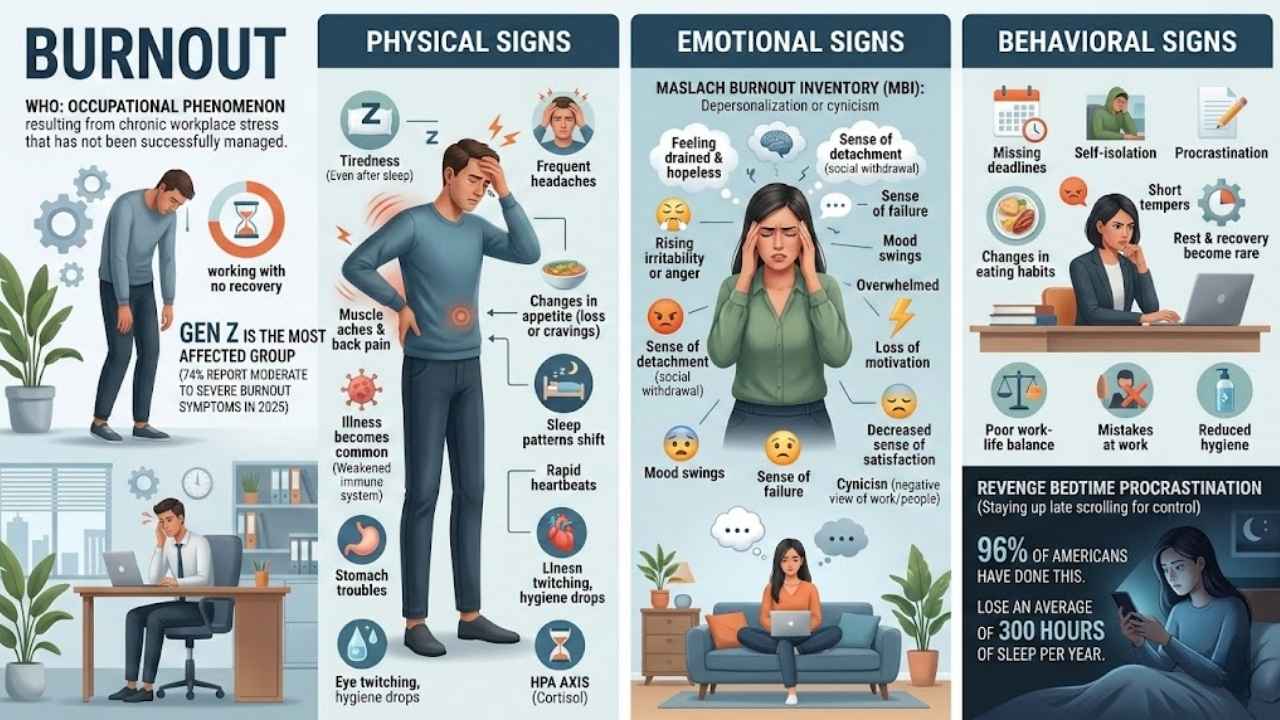
Doctors first began calling it “burnout” back in the 1970s. Today, the World Health Organization (WHO) officially defines it as an occupational phenomenon resulting from chronic workplace stress that has not been successfully managed. It leaves people feeling tired not just in their body but also deep down in their heart and mind.
Many folks notice they start dreading work or simple tasks that used to be easy. Burnout can show up as headaches, stomachaches, tears on the drive home, or snapping at loved ones without meaning to.
“Burnout is not just about working too hard. It is about working with no recovery. Recent data shows Gen Z is the most affected group, with 74% reporting moderate to severe burnout symptoms in 2025.”
Studies link burnout to jobs where demands never seem to end and praise rarely comes around. Think of nurses during flu season or teachers juggling big classes every year. Small breaks during the day help a lot. So does setting clear boundaries for both work and family life.
Selfcare stops being a luxury and becomes a must-have part of any recovery plan if you want energy and joy again.
Signs and Symptoms of Burnout
Burnout sneaks in quietly. It often catches you off guard like a frog in slowly warming water. These signs can come out of nowhere and make daily life feel heavy and hard.
Physical signs
Stress can take a toll on your body. Many people see the clues before they even feel mentally drained. This often happens because chronic stress disrupts your HPA axis (hypothalamic-pituitary-adrenal axis). This system controls your stress hormones like cortisol.
- Tiredness hits hard. Even after a full night’s sleep, you drag yourself through the day.
- Frequent headaches signal something is off. These are sometimes daily and often pound behind your eyes.
- Muscle aches or back pain appear out of nowhere. Each movement feels stiff and slow.
- Changes in appetite stand out. Some stop feeling hungry while others crave junk food all day long.
- Sleep patterns shift. Maybe you cannot fall asleep or you wake up again and again throughout the night.
- Illness becomes more common. Stress chips away at your immune system. Colds, sore throats, and stomach bugs keep coming back.
- Stomach troubles pop up too. Nausea, cramps, heartburn, or sudden trips to the bathroom make life unpredictable.
- Heartbeats might race. This can be scary but is often a sign of mental overload.
- Eyes may twitch. Skin breaks out more easily and hair can thin or fall out faster than usual.
- Hygiene habits drop. Some people lose interest in physical self-care like showering or brushing teeth because every task seems huge.
Spotting these symptoms early helps with burnout recovery and stress management before things get worse.
Emotional signs
People often feel helpless and empty during burnout. Emotional symptoms can sneak up on you and make daily life hard to manage. The Maslach Burnout Inventory (MBI), a leading scientific tool, identifies “Depersonalization” or cynicism as a major red flag.
- Feeling drained and hopeless takes over. It becomes almost impossible to find joy in things once loved.
- Growing irritability or anger surfaces. Even at small problems or minor annoyances, simple tasks turn into mountains.
- Rising sense of detachment. You might pull away from friends, family, and coworkers. People start isolating themselves from the support systems they need most.
- Sense of failure sets in. People begin doubting their value at work or home as if their efforts never measure up.
- Mood swings strike without warning. Feelings change quickly from sadness to frustration.
- Feeling overwhelmed by ordinary responsibilities. This often causes tears, outbursts, or shutting down emotionally.
- Loss of motivation is common. Even a favorite hobby no longer brings comfort or relaxation.
- Anxiety grows stronger. As deadlines approach or new tasks appear, overthinking takes center stage instead of calm thinking.
- Decreased sense of satisfaction sneaks in. Achievements seem hollow rather than worth celebrating.
- Cynicism starts coloring thoughts. You might feel negative about bosses, clients, colleagues, or even trusted friends. Everything seems pointless.
These emotional signs are serious red flags. Mental health needs attention right away in any recovery plan for burnout.
Behavioral signs
Behavior changes can give strong clues about burnout. They are often the red flags that something is off with your mental health or stress levels.
One specific behavior to watch for is “Revenge Bedtime Procrastination.” This is when you stay up late scrolling on your phone just to feel a sense of control over your time. A recent survey showed that 96% of Americans have done this. They lose an average of 300 hours of sleep per year because of it.
- Missing deadlines. You might find yourself forgetting tasks at work or home. Even simple ones slip through the cracks.
- Self-isolation sneaks in. It becomes harder to keep up with friends or loved ones. This sometimes leads to skipped social events.
- Procrastination rises. Even small jobs feel like mountains you just cannot climb. The to-do list grows.
- Changes in eating habits pop up. This includes overeating snacks late at night or skipping meals completely due to exhaustion.
- Short tempers and mood swings. Patience wears thin with coworkers and family alike.
- Rest and recovery become rare. You may stay up too late trying to catch up or wake early feeling unrested.
- Coping mechanisms change. Binge-watching TV for hours on end replaces healthier daily routines like exercise or reading.
- Work-life balance crumbles. You answer emails after hours or bring job worries into every corner of your day.
- Mistakes multiply at work. Focus drops and attention fades fast. Important facts slip away despite effort.
- Personal hygiene drops. Simple acts like showering or keeping living spaces tidy start slipping through the cracks.
Spotting these behaviors early helps support recovery plans and self-care routines before burnout spirals further out of control.
Causes of Burnout
Many daily habits can light the match that leads to burnout. Take a peek at what really fuels the fire.
Work stress can sneak up on anyone. Some jobs take more than they give back. This leaves people drained and unhappy. A 2025 study found that managers are 36% more likely to burn out than the people they manage.
- Heavy workloads push people to their limits. This leads to exhaustion and burnout if stress management is ignored.
- Long hours at the office. Skipping breaks cuts rest and relaxation time short. This makes recovery harder.
- High demands with little control. Being unable to make decisions creates feelings of powerlessness and frustration.
- A lack of support. When managers or coworkers are absent, tough days feel even longer and lonelier.
- Job expectations that keep changing. This leads to confusion, wasted effort, and a sense that nothing is ever enough.
- Unclear roles. Tasks pile up or overlap. This sparks tension between team members and causes further mental fatigue.
- Poor communication at work. Small misunderstandings turn into big problems before anyone notices.
- Fear of losing the job. Not meeting targets keeps people on edge around the clock. Sleep suffers along with well-being.
- No recognition for hard work. This saps motivation fast. Staff feel invisible despite their efforts.
- Workplaces with few chances to grow. This forces talented people into a rut. It robs them of joy and purpose day after day.
Each point highlights how easy it is for burnout to creep in. Selfcare practices are often skipped or ignored in busy jobs.
Daily habits and choices can fan the flames of burnout. Small routine problems stack together to exhaust your mind and body over time.
Nutrition plays a bigger role than you might think. Research from 2024 indicates that diets high in ultra-processed foods (UPFs) are linked to higher risks of anxiety and depression. Since over 50% of the average U.S. diet comes from these foods, what you eat could be draining your mental battery.
- Lack of sleep chips away at energy. Sleeping less than 7-9 hours nightly prevents recovery and worsens exhaustion.
- Skipping meals or eating junk food. This leaves you feeling tired and sluggish. Your brain needs good nutrition just like a car needs fuel.
- Avoiding exercise. Stress builds up in your body with nowhere to go. Even a short walk can help clear your head.
- No time for hobbies or fun. Life feels gray and draining when joy disappears from daily routines.
- Neglecting self-care. Regular selfcare acts like a pressure valve for mental health. Reading or listening to music can help.
- Saying yes to every request. This overloads you fast. Setting boundaries protects your energy and gives guilt-free space to recharge.
- Social isolation is sneaky. Too few real connections weaken support systems that keep burnout at bay.
- Endless screen time. This leaves no room for rest or reflection. Blue light keeps your brain buzzing when it should be slowing down.
- Ignoring stress management tools. Skipping deep breathing, mindfulness practices, or therapy lets tension grow unchecked until something snaps.
Each one of these lifestyle pieces fits together like puzzle parts. Creating a recovery plan supports wellness step by step.
Personality traits that contribute to burnout
Some people are more likely to face burnout than others. Certain personality traits can make stress harder to handle and speed up exhaustion.
- Perfectionists work hard for flawless results. They often skip rest which drains their energy and hurts mental health.
- High achievers keep raising the bar. They pile on more tasks until stress feels never-ending.
- People who find it tough to say “no”. They often take on too much. Boundaries feel like unknown terrain.
- Helpers and caretakers put everyone else first. This leaves little time for selfcare or rest and relaxation.
- People who avoid conflict. They might agree just to keep peace at work or home. This leads to hidden stress over time.
- Those with low self-esteem. They may not ask for help or speak up. This leaves them isolated and burdened by exhaustion.
- Individuals who tie their worth to their job. They sometimes ignore warning symptoms of burnout until they hit a wall.
- Worrywarts spend hours thinking. They focus on what could go wrong rather than using positive coping strategies for recovery.
- Overly responsible folks blame themselves. They take on every problem even those outside their control. This adds extra weight during tough times.
Focusing on healthy boundaries and stress management skills helps anyone with these traits find new ways forward in burnout recovery.
The Difference Between Stress and Burnout
Stress feels like a fast-moving river. It rushes through your days and brings short bursts of worry or pressure. Sometimes work stress makes you tired after a busy day or week. However, good rest and selfcare can help you bounce back.
Burnout is different. It is more like standing on dry land after the water has dried up. Job burnout comes from long-term stress that drains you until nothing is left in your tank.
| Feature | Stress | Burnout |
|---|---|---|
| Primary Feeling | Over-engaged, anxious, hyperactive | Disengaged, numb, empty |
| Energy Level | High energy (nervous/frantic) | Zero energy (exhausted/drained) |
| Emotional State | Irritable, worried, urgent | Cynical, hopeless, detached |
| Physical Impact | Adrenaline rushes, tension | Chronic fatigue, weak immune system |
| Recovery | Relieved by a break or time off | Requires long-term lifestyle changes |
Most people with burnout feel exhaustion deep in their bones. They are not just “tired” but completely worn out physically and emotionally. Coping strategies for basic stress might still work early on. Think of taking breaks or doing some mindfulness practices. But these tools often fall flat against real burnout.
Rest and relaxation may not be enough if symptoms have been ignored too long. Recovery requires bigger steps such as setting boundaries at work or building new support systems. Recognizing this difference matters for mental health. Treating simple stress as burnout leads nowhere fast and lets problems grow roots where they should not.
Steps to Recover from Burnout
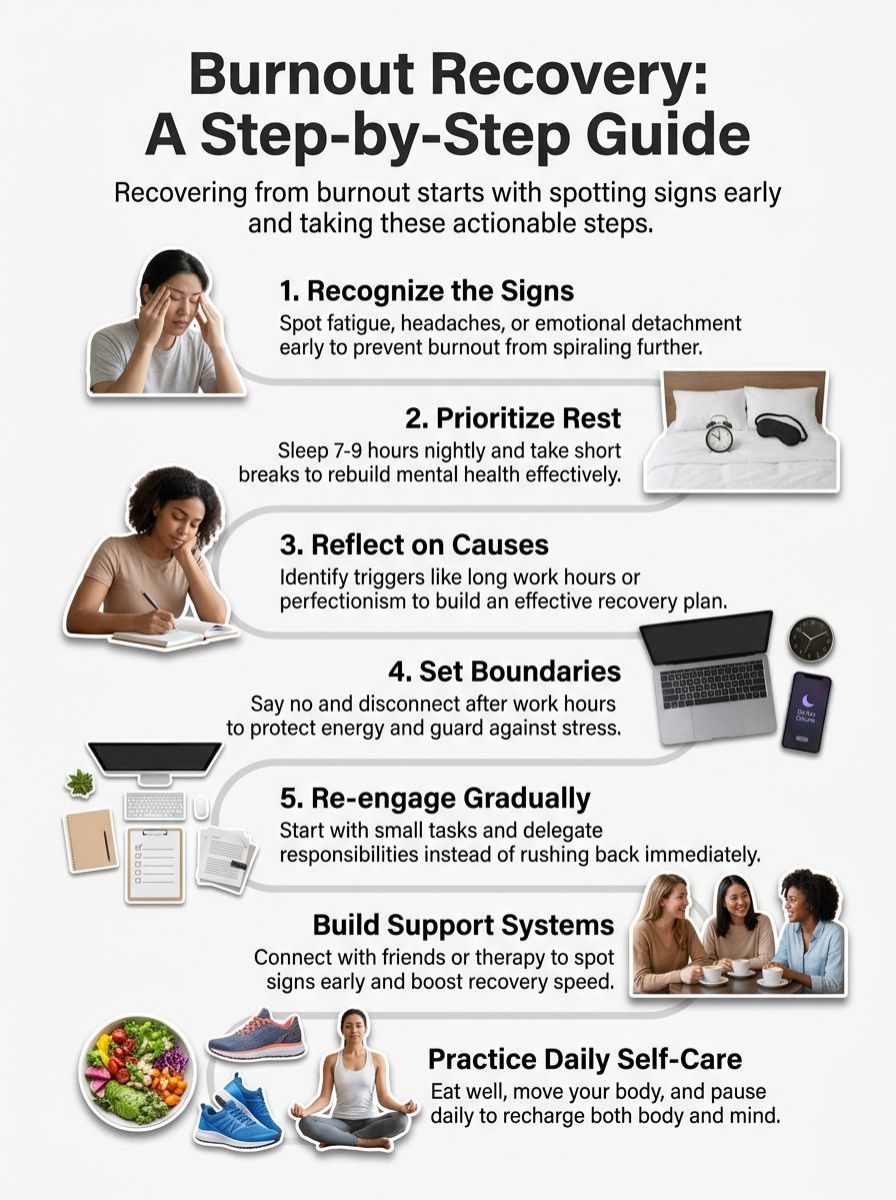
Burnout does not fix itself overnight. Even the strongest person needs a plan. Small steps can move you from feeling stuck to finding your balance again.
Step 1: Recognize the signs of burnout
Fatigue starts to feel like your constant shadow. It trails you from bed to work and back. You might notice headaches that refuse to leave or stomach aches with no clear reason. Zoning out at meetings becomes easier than focusing while simple tasks turn into mountains in your mind.
Snapping at friends or coworkers can happen with little warning. Emotional exhaustion does not just make you tired. It leaves you feeling empty inside.
Some people spot a quick temper rising up for small things. Others lose interest in hobbies they once loved. Missing deadlines, forgetting plans, or having sleep problems are all alarm bells ringing for your mental health.
If even weekends do not help recharge your “battery,” consider this your wake-up call. Early recognition helps prevent burnout from taking control of both work and life before things spiral too far. Recognizing these signs is the first step in any recovery plan.
Step 2: Prioritize rest and recovery
Sleep is the body’s best repair tool. Aim for 7-9 hours each night to help your mind and muscles bounce back from exhaustion. Even short naps in the afternoon can give you a boost if you are feeling drained at work or home.
For a scientifically proven way to recharge, try Non-Sleep Deep Rest (NSDR). This technique (often called Yoga Nidra) involves lying still and following a guided body scan for 10 to 20 minutes. Stanford researchers have found it can help replenish dopamine levels and reduce stress faster than a nap.
Small breaks during the day work magic too. Get up, stretch, and grab some water. Delegate tasks when you feel overloaded. It is not lazy; it is smart stress management. Self-care matters more than ever.
Step 3: Reflect on the root causes
Pull up a chair. Take a breath. Think about what set your burnout in motion. Is it the long hours at work? Maybe skipping breaks or never saying no to an extra task? Some people push too hard because they want everything perfect. Others just find themselves stuck in jobs that drain their energy every single day.
Jot down triggers like poor sleep, endless emails, or always feeling behind. Spot patterns such as skipping meals or dropping hobbies you love. Use this step for honest self-reflection.
A study shows job burnout can leave you feeling both physically and emotionally worn out. Finding these roots makes sense before building your recovery plan.
Step 4: Set boundaries to protect your energy
Saying no can work wonders for mental health. Short breaks of just five minutes add breathing room to a packed day. Delegating tasks at home and work helps avoid feeling crushed by endless requests.
In 2024, California lawmakers proposed a “Right to Disconnect” bill (AB 2751). While it did not become law, it sparked a huge conversation about the need to ignore work emails after hours. You can create your own personal right to disconnect.
If your phone buzzes outside of work hours, silence the notifications. Focus on rest or hobbies instead. Tools like the Opal or Freedom apps can block distracting work apps on your phone automatically during your personal time.
Clear boundaries prevent exhaustion from taking over your life. For example, setting a hard stop after 5 p.m. guards against job burnout linked to constant stress. Explain new limits to friends or coworkers without guilt. People who respect you will understand your need for space and energy protection.
Step 5: Re-engage gradually with responsibilities
Start with small steps. Take short breaks through your workday. Even a five-minute walk can do wonders for your mental health. Try not to jump back into everything at once. Pick one or two simple tasks first.
Slowly add more as you regain confidence and energy.
A great insider tip for this stage is “Body Doubling.” This is a technique popular in the ADHD community where you work alongside someone else who is also working. You do not have to talk to them. Just having another person present (even on a video call) creates a “mirroring” effect that helps you focus and get started without feeling overwhelmed.
Ask for help if things feel heavy. Delegate some tasks to others whether at home or work instead of trying to juggle it all alone. Use coping strategies like stress management breathing or quick self-care routines.
Tips for Preventing Burnout in the Future
Life can throw curveballs. You do not have to catch every single one. Small daily habits might help keep burnout at bay. Give yourself room to breathe and grow.
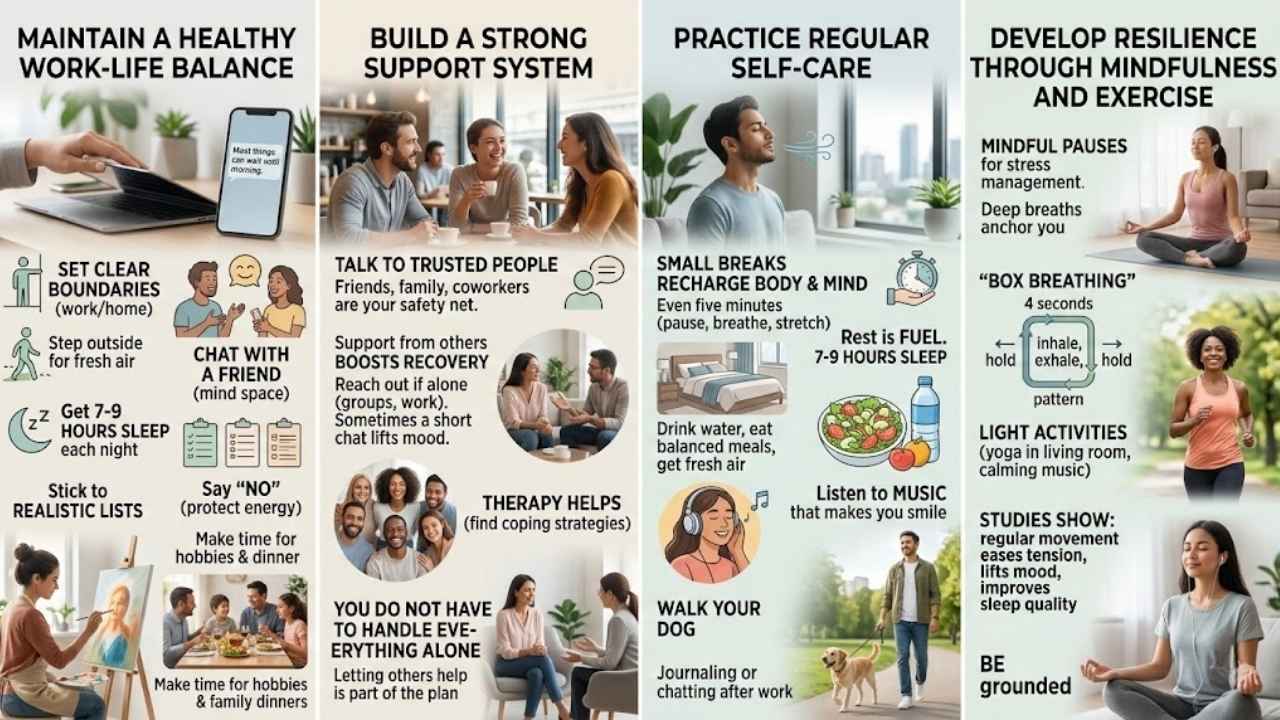
Maintain a healthy work-life balance
Set clear boundaries for both work and home. Shut down your laptop at the end of your shift. Resist that last email late at night. Most things can wait until morning even if it feels tough in a world hooked on “instant.”
Try taking small breaks during the day. Step outside for fresh air or chat with a friend to give your mind space from stress.
Get 7-9 hours of sleep each night to recharge. Rest helps lower exhaustion from job burnout. Stick to realistic lists rather than overloading yourself with tasks you cannot finish before sunset.
Say “no” when you must. Protecting your energy is not selfish. It is smart selfcare and helps in stress management. Fun matters too. Make time for hobbies or family dinners so life does not feel like all work and no play.
Build a strong support system
Good friends, family members, and even coworkers can act as your safety net. Share how you feel with someone you trust. A strong support system helps you spot early signs of burnout before things get worse.
Studies show that people who talk about job stress bounce back faster. Support from others can also boost recovery after emotional or physical exhaustion.
Reach out to groups at work or in your local area if you feel alone. Sometimes a short chat or laugh with someone lifts your mood right away. Therapy also helps many people find coping strategies and manage mental health during tough times such as burnout recovery.
You do not have to handle everything on your own. Letting others help is part of the recovery plan for a better life balance and stronger wellbeing.
Practice regular self-care
Carving out time for self-care is not selfish. It is vital. Small breaks during your day help recharge both body and mind. Even five minutes to pause, breathe, or stretch can keep stress from piling up like dirty laundry in the corner of your room.
Aim for about 7 to 9 hours of sleep each night. Think of rest as the fuel that keeps you going.
Simple daily habits matter more than grand gestures. Drink water, eat balanced meals, and get fresh air whenever possible. Try listening to music that makes you smile or walking your dog around the block. That joy resets your mood better than any energy drink.
Some people swear by journaling before bed or chatting with a friend after a long shift at work. These little things support mental health and make burnout recovery much smoother over time.
Develop resilience through mindfulness and exercise
Deep breaths and mindful pauses work wonders for stress management. Many people, including therapists and recovery coaches, suggest taking small breaks throughout your day to anchor yourself.
For high-pressure moments, try the “Box Breathing” technique used by Navy SEALs. It is simple: inhale for 4 seconds, hold for 4 seconds, exhale for 4 seconds, and hold for 4 seconds. This pattern hacks your nervous system to calm you down instantly.
Building resilience does not mean running marathons or meditating like a monk. Start with light activities like yoga poses in your living room or listening to calming music while you breathe deeply.
Studies show regular movement eases tension, lifts mood, and improves sleep quality. You need seven to nine hours each night during burnout recovery! Mindfulness practices bring selfcare into sharp focus. They keep your mind grounded so daily problems do not wash over you like a tidal wave.
Final Thoughts
Burnout recovery starts with spotting the early signs, choosing rest, and setting much-needed boundaries. Simple steps like taking short breaks, asking for help, and reflecting on your routine make a real difference.
Isn’t it time you put your energy first by making self-care part of each day?
Small changes now can mean big wins later. You will find more joy, better sleep, and stronger connections both at work and home. Check out books or mental health resources if you want to dig deeper into these strategies or need extra guidance. The road back from burnout feels tough some days but keep going. Even a tiny step forward counts as progress!