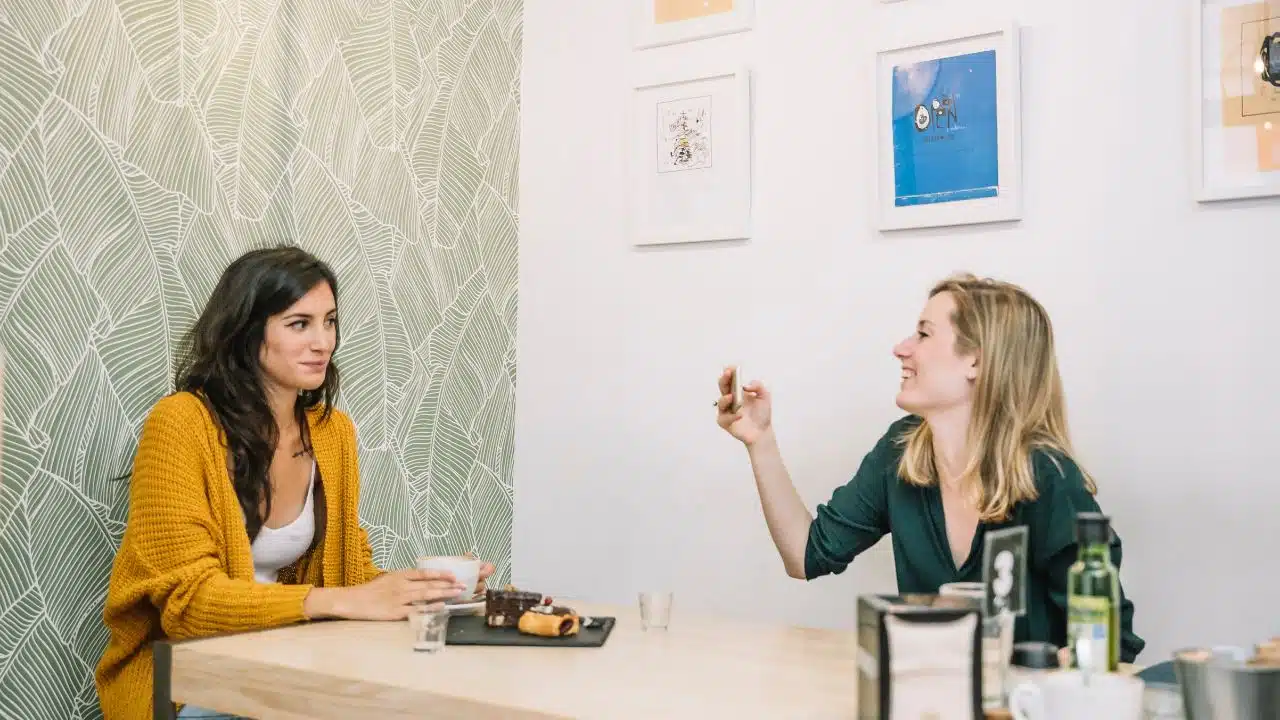
The layout of the booths at a restaurant may significantly affect the mood and flow of the room. Various arrangements accommodate varied group sizes and preferences:
-
SINGLE BOOTH
Single restaurant booths are made for customers who prefer to eat alone or for couples who want solitude. They provide a comfortable and personal dining experience and are frequently positioned along walls or barriers.
-
DOUBLE BOOTH
A small three- to four-person group works well in a double booth. They nevertheless preserve a feeling of solitude while giving diners more room and freedom.
-
L SHAPED BOOTH
L-shaped booths may accommodate more significant gatherings and are adaptable. They are frequently found at eateries that welcome families or large groups.
-
CIRCULAR BOOTH
Also known as banquettes, circular booths have a semi-circular or circular form and are intended for communal dining. They are frequently utilized in upscale and informal restaurants that promote social contact.
-
BACK TO BACK BOOTH
Back-to-back booths are arranged in rows, each with its back facing the back of the booth in front of it. This arrangement makes good use of available space and functions effectively in crowded settings.
-
ISOLATED BOOTH
Booths isolated from the main eating area offer the maximum level of seclusion. For special events or romantic dinners, they are frequently employed.
PSYCHOLOGY OF BOOTH SEATING
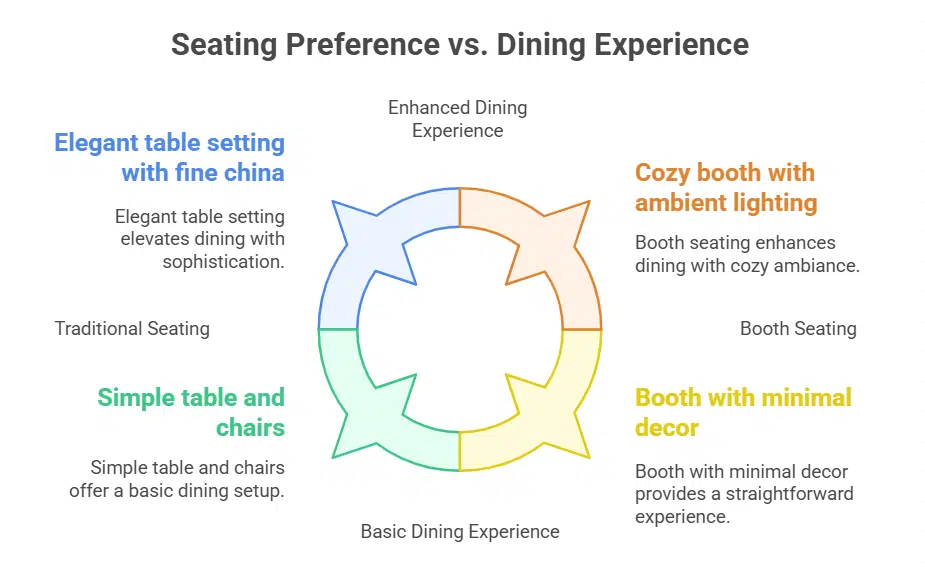
Restaurant operators must comprehend the psychology of seating patterns. The decision between traditional tables and chairs and booths may significantly affect the eating experiences of clients.
-
COMFORT AND RELAXATION
Comfort and relaxation are connected to booths. Customers are enticed to stay and take their time enjoying their meals thanks to the enclosed area and plush furnishings.
-
PRIVACY AND INTIMACY
Booths provide intimacy and seclusion that tables and chairs cannot match. Couples and small groups looking for a more intimate dining experience will find this closeness particularly attractive.
-
SOCIAL INTERACTION
Booths with a circular or communal design encourage social interaction. The likelihood of dialogue amongst diners at following tables increases, establishing a sense of community within the eatery.
-
FAMILIES AND CHILDREN
Families frequently favor booths with young children. It is simpler for parents to control their children because of the contained environment.
-
SOLO DINNER
Booths provide a sense of isolation for lone eaters. Hence, they may also be chosen by them. They can eat their meal without feeling exposed or embarrassed.
ROLE OF BOOTH IN RESTAURANT THEME
The themes and conceptions of the establishment heavily influence the types of booths to be utilized in restaurants. The design of the stalls should complement the atmosphere and message the restaurant wants to project.
-
RETRO RESTAURANT
Retro restaurants frequently include vintage vinyl booths that evoke nostalgia for the 1950s and 1960s. These booths are distinguished by their vivid hues and vintage aesthetic, which provides for chrome elements.
-
FINE DINING RESTAURANT
Fine dining restaurants frequently choose opulent, specially made booths. To provide an elegant eating experience, these booths are designed with quality materials, luxurious upholstery, and fine craftsmanship.
-
CASUAL AND RUSTIC CASUAL
Casual or rustic restaurants may employ wooden banquettes or booths to create a relaxed and friendly ambiance. These booths frequently have basic, modest designs in earthy tones.
-
MODERN AND MINIMALIST
Restaurants that are modern and minimalist favor streamlined, elegant booth designs. A contemporary and sleek appearance is created using simple ornamentation, clean lines, and neutral colors.
-
THEME SPECIFIC
Some eateries feature booths that are designed around a particular theme. For instance, a seafood restaurant may utilize booths that have nautical décor or resemble boat seats.