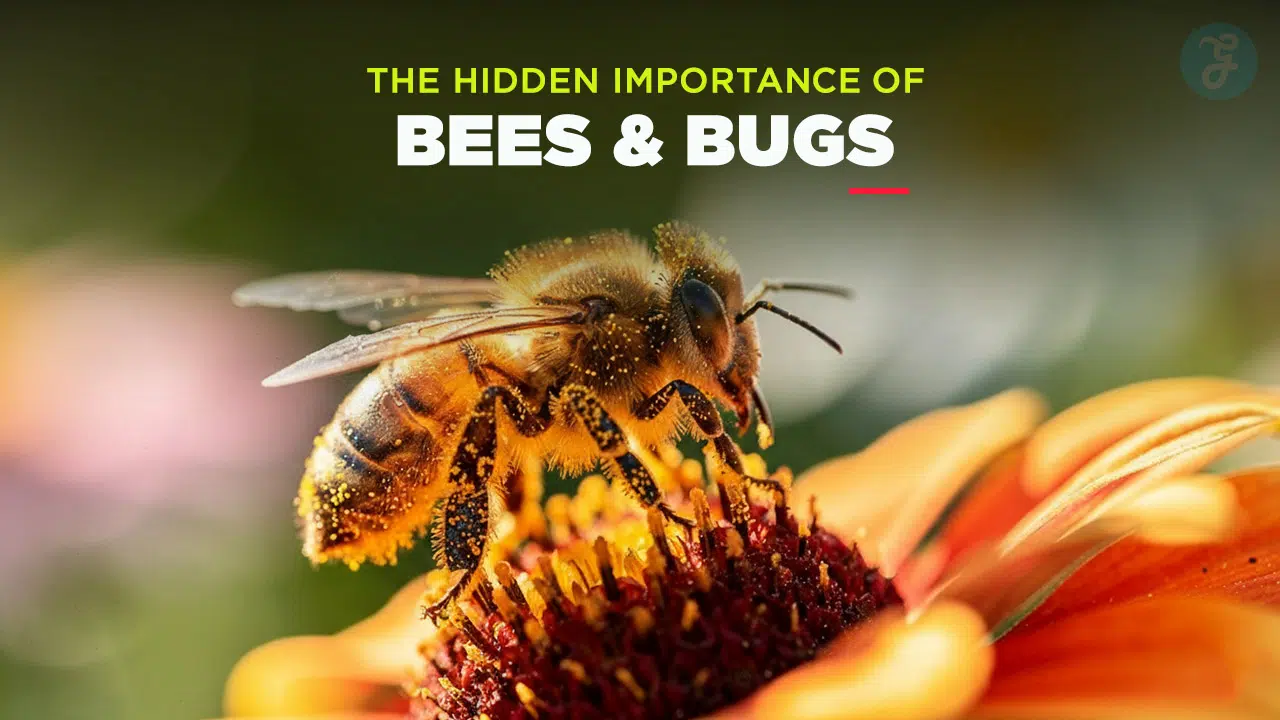
Many people worry about polar bears and other big animals when they hear the word “extinction.” But have you ever noticed how few bees and bugs are buzzing around your garden these days? Scientists call this the “Windshield Phenomenon.” You used to have to scrub dead bugs off your car after a long drive. Now? The glass often stays clean.
The world is losing insects, and this affects more than just picnics or flower beds. A 2025 study from the University of North Carolina found that flying insect populations in some pristine areas have dropped by over 72% in just two years. That is a massive loss happening right under our noses.
Here’s a fact that might surprise you. Over 75% of global food crops depend on pollinators like bees and bugs. If their numbers drop, so does our food supply. In this blog post, I’ll walk you through why these tiny creatures matter more to humans than the famous wild animals we usually see on TV.
So, grab a cup of coffee, and let’s go through it together. I’ll show you exactly why these little guys are the biggest deal on Earth.
What is Biodiversity Loss
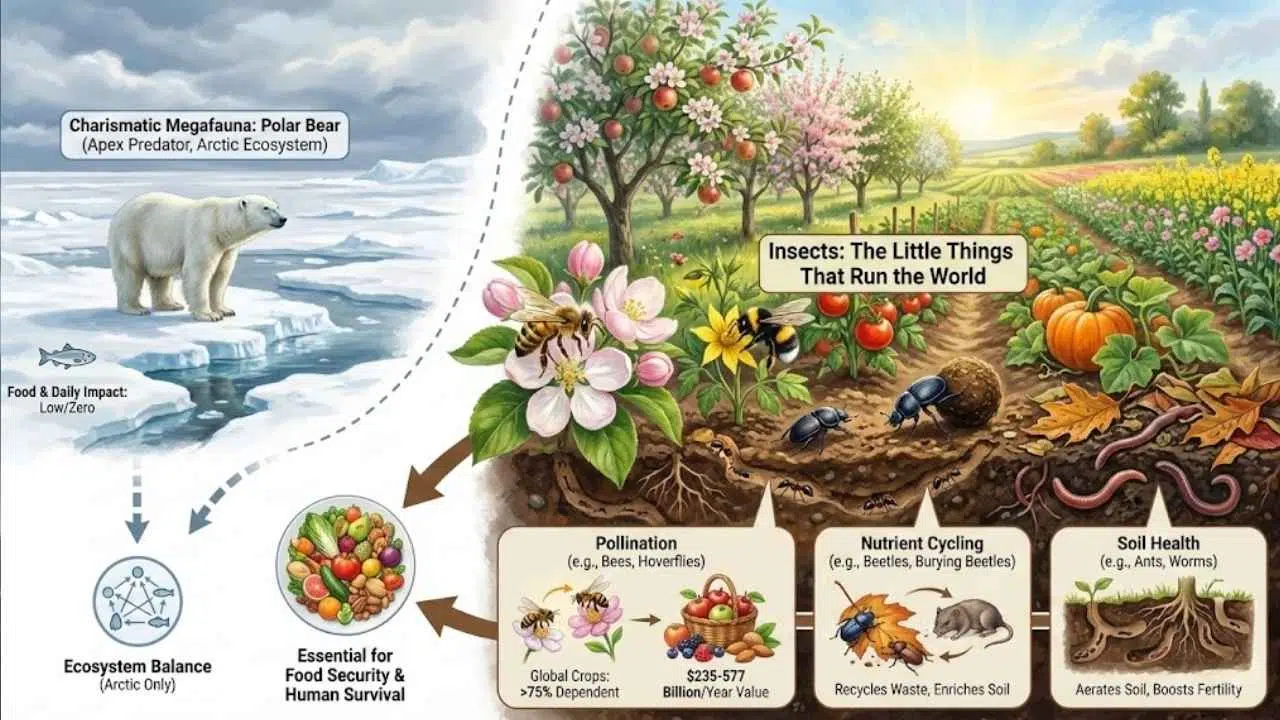
Biodiversity means all living things, big and small, working together in a balanced ecosystem. Plants, insects, animals, and bacteria each have a specific job. While we often focus on the big animals, the tiny ones are doing the heavy lifting. In fact, the famous biologist E.O. Wilson called insects “the little things that run the world.”
Over 85 percent of threats to nature come from agriculture and the global food system. Bees and bugs especially keep life humming along through pollination and building healthy soils. But we are losing them at a scary rate.
Losing species is only part of the problem. Habitats are shrinking, and ecosystems are falling apart bit by bit. Alarm bells are ringing loudly. A 2024 report from the World Wildlife Fund shows that global wildlife populations have declined by an average of 73% since 1970. This affects everyone because food webs get broken. Birds, mammals, and fish suffer too.
More than 75 percent of global crops depend on pollinators like bees and bugs for their very survival. This service is worth up to $577 billion every year worldwide! If we lose the bugs, the whole system struggles to stay afloat.
Why Insects Matter More Than Charismatic Megafauna
Tiny insects pull a lot more weight in our ecosystems than big furry animals do. If we forget the bugs, we risk pulling out the threads that hold nature together. While a polar bear is majestic, it doesn’t help put food on your table. A honey bee does.
Ecological roles of insects
Insects are the backbone of many ecosystems. Bees, beetles, and butterflies help move pollen from flower to flower. This action supports more than 75% of global food crops. Without them, apples, almonds, and tomatoes would not fill our plates as often.
Consider the American Burying Beetle. It might look gross to some, but it recycles dead animals back into the soil. Without cleaners like this, disease would spread much faster. Bugs like ants tunnel through soil and keep it healthy by letting air and water reach plant roots.
Many birds and mammals eat insects for survival. Fish feed on bugs too. Even humans eat them in some countries! Dead leaves or animals do not rot away on their own. Beetles break down waste so nutrients can circle back into the ground. If bugs disappeared tomorrow, food webs would tip over fast. No polar bear could fill that gap.
Importance to pollination and food production
Bees and other bugs keep food on our plates. Over 75 percent of the world’s crops need pollinators to grow, from apples and nuts to coffee and tomatoes. Bees alone help add between $235 billion and $577 billion yearly to global agriculture.
Let’s look at a direct comparison of how different animals affect your grocery list:
| Species | Primary Role | Impact on Your Daily Food |
|---|---|---|
| Polar Bear | Apex Predator | Zero. They are vital for the Arctic, but they don’t grow your food. |
| Honey Bee | Pollinator | High. They are essential for almonds, berries, and apples. |
| Hoverfly | Pollinator & Pest Control | Medium. Their larvae eat aphids that destroy crops. |
Without their tireless work, grocery stores would have fewer choices. Farmers would struggle, and prices could rise. Losing bees or insects is like pulling vital threads out of a safety net for humans and wildlife alike.
Many wild plants also depend on these tiny helpers for making seeds. If bug populations dwindle, so do plant numbers. This shakes up entire ecosystems that include birds, mammals, and fish. Everyone up the chain feels it. This ripple can leave empty bowls in kitchens far from any flower field or buzzing hive.
Contribution to nutrient cycling and soil health
Bugs and insects play a huge part in breaking down dead plants, animals, and waste. Beetles chew through fallen leaves while worms munch on decaying roots. These tiny helpers recycle nutrients back into the soil. This makes it rich for crops and wild plants to grow strong.
Ants dig tunnels that help air move through the dirt. This keeps plant roots happy. Without these microfauna working day and night, fields would become less fertile fast. A healthy bug population builds better soil structure and boosts food production. This helps keep ecosystems stable from top to bottom.
The Decline of Insect Populations
Tiny wings and busy legs are fading fast. If you ever wondered where your next apple or wildflower might go, keep reading. The numbers from recent years are shocking.
Habitat destruction
Farmland spreads out, swallowing forests and meadows. Nearly 85 percent of threats to global biodiversity come from agriculture alone. Cities grow bigger, pushing wild spaces aside bit by bit. Insects lose their homes as grasslands turn into parking lots or monoculture fields.
A prime example is the Rusty Patched Bumble Bee. This bee used to be common across the Midwest and East Coast. Now, it has disappeared from 87% of its historic range. In November 2024, the U.S. Fish and Wildlife Service finally proposed designating 1.6 million acres as critical habitat to save it. Without specific native plants nearby, most insects will not survive.
Over 75 percent of our food crops depend on pollinators like bees and butterflies, who now struggle as habitats vanish. Scientists warn that 40 percent of insect species are at risk of disappearing because their living spaces shrink every year. Each bulldozer roll across a field slices away not just dirt but entire food webs below our feet.
Pesticide use
Pesticide use wipes out far more than just crop-hungry pests. It hits beneficial insects like bees and butterflies, knocking the wind out of their wings. Studies show pesticides are a main cause behind the 40 percent decline in insect populations worldwide.
You may have heard of neonicotinoids, or “neonics.” These are common bug killers used on farms and in home gardens. Research shows they damage a bee’s ability to navigate, making it impossible for them to find their way home. Fields sprayed with chemicals create barren zones for bugs. Friendly pollinators vanish, and so do the birds and mammals that rely on them for food.
Modern farming depends heavily on these chemicals to boost crop yields, but this has a hidden price tag. Bees help pollinate over 75% of global food crops. Their loss crunches both biodiversity and money. It is like tearing stitches from a quilt holding farmland together. The more we spray, the faster vital insects disappear.
Climate change impacts
Rising temperatures and changing rainfall patterns are shifting where insects can survive. This leaves many bees and bugs scrambling to find food or safe places. A big issue is “phenological mismatch.” This happens when bees wake up from hibernation before the flowers they need have bloomed.
Some species of insects already struggle to adapt fast enough. The 2025 study from UNC Chapel Hill I mentioned earlier showed something scary. It found that heat alone was driving insect declines in high-altitude meadows, even where there were no people or pesticides.
Shifts in climate also lead to more severe droughts or floods. These extreme events damage natural habitats. This makes life even tougher for pollinators like bees. Fewer healthy bugs mean less pollination for over 75% of the world’s food crops. Plants fail to reproduce well. Birds and mammals lose key foods. Whole ecosystems start to unravel thread by thread.
Why the Loss of Bees is a Global Concern
Bees may look small, but they help feed the planet. Their shrinking numbers send shockwaves through farms and forests alike. The recent data on Monarch butterflies gives us a clear warning.
Impact on agriculture and crop production
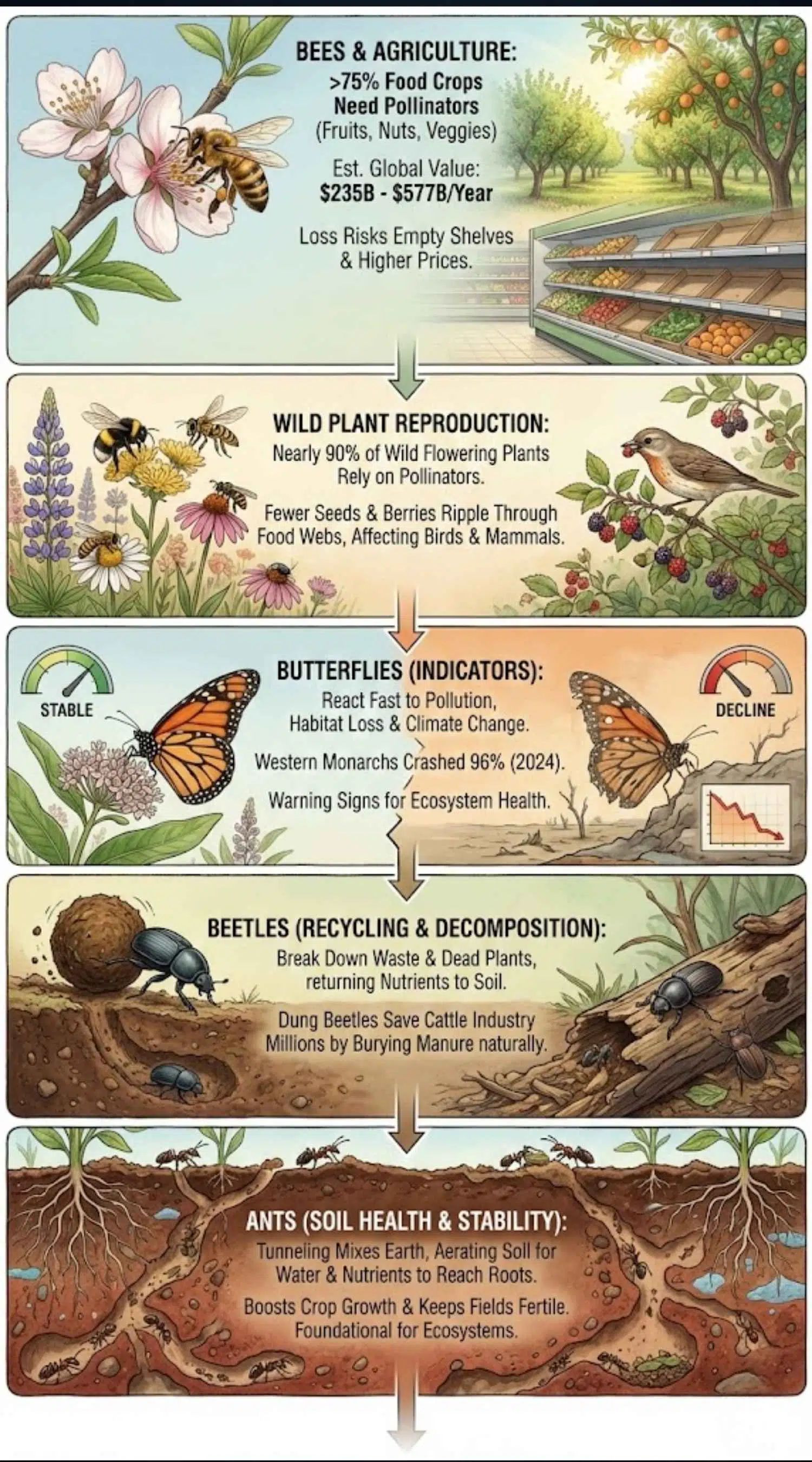
More than 75 percent of crops raised for food need pollinators like bees and bugs. These tiny workers help create fruits, nuts, and vegetables by transferring pollen from flower to flower. Without their help, many shelves at grocery stores would look bare.
Insects make a big impact on the world’s dinner tables and wallets too. Their work adds up to between $235 billion and $577 billion every year in global agricultural value. In the US alone, pollination services were valued at over $400 million in 2024.
Farmers rely on insect-driven pollination for healthy harvests. If insect populations keep dropping, staple foods could shrink or even fail. This hurts not just people but also livestock who eat these plants. Even chocolate comes from cacao trees that depend on small flies to spread pollen around. Crop production stands at risk if bees and other bugs do not bounce back soon. This makes breakfast bowls thinner while grocery bills go up.
Decline in wild plant reproduction
Pollinators like bees and insects buzz from flower to flower, helping wild plants create seeds. With 40 percent of insect species shrinking in numbers, fewer pollinators are at work. Over 75% of all global food crops lean on these little workers too, but wild plants rely on pollination even more than farm fields do. In fact, nearly 90% of wild flowering plants need animal pollinators.
Habitat destruction and pesticides wipe out insect populations fast. Wildflowers vanish as fewer seeds form each year. The loss ripples outward. Birds, mammals, and other creatures that depend on berries or fruits struggle to find food. Nature’s web unravels a bit more with every vanished bee or bug.
Other Bugs and Their Critical Roles
Some bugs go about their work quietly, yet they shape life around us in big ways. Curious about their secret superpowers? Keep reading.
Butterflies as environmental indicators
Butterflies react fast to changes in their ecosystem. If the air or water gets polluted, butterfly numbers drop. Farmers and scientists watch these insects as warning signs for bigger problems.
The Monarch Butterfly is the most famous example. The western population of Monarchs has crashed. In 2024, counters found only 9,119 butterflies along the California coast. That is a 96% drop from the year before. The eastern population saw a small increase in early 2025, but they are still in the danger zone.
These colorful bugs help track climate change, pollution, and habitat loss with their rise or fall in number. Butterflies vanish first when land is destroyed for farming or sprayed with heavy pesticides. Their absence hints at even deeper species decline nearby. Even birds and small mammals that eat butterflies face trouble if these bright-winged insects go missing from fields and gardens.
Beetles in decomposition and recycling
Beetles top the charts in keeping our soils healthy and fertile. These tiny workers break down dead plants, fallen trees, and waste left by animals. By eating decaying matter, beetles speed up the recycling of nutrients back into the ecosystem.
Take Dung Beetles, for instance. They save the US cattle industry huge amounts of money. By burying cow manure, they reduce pests and fertilize the soil naturally. One study in Florida estimated that dung beetles save ranchers in that state alone about $120 million per year.
“If you give dung beetles the ability to do this on their own… you don’t have to waste money.” – Mary Liz Jameson, Entomologist at Wichita State University.
Without beetles handling cleanup duty, forests and fields would drown in plant debris. Over 40 percent of insect species are declining today. If dung beetles vanish from farms or woodlands, crops might suffer too as soils lose their bounce and waste piles up.
Ants in soil aeration and ecosystem stability
Ants march through the soil, building tunnels as they go. These tiny architects mix and turn the earth. This lets air, water, and nutrients reach plant roots with ease. Their work boosts crop growth and keeps fields healthy for food production.
Studies show that 85 percent of threats to biodiversity come from agriculture, which makes ants’ role even more crucial. Soil gets packed down from heavy rains or farm machines, but ants lighten it again by moving grains around. In some ecosystems, ants turn more soil than earthworms do.
Ants also help break down dead plants and return nutrients back into the ecosystem. Birds and mammals munch on them too, keeping food webs strong. Small actions by these bugs hold everything in balance. Sometimes the smallest creatures have giant jobs.
What Can We Do to Reverse This Trend?

Small steps pack a punch, even when they seem simple. Your choices at home and in your yard can shape the future for bees, bugs, and our food. You don’t need a farm to help; a window box works just fine.
Reducing pesticide use
Spraying fewer pesticides can give bees and bugs a fighting chance. Pesticides kill many helpful insects, not just pests. Studies show 40 percent of insect species are dropping in number, with chemicals playing a big part.
Try switching to safer methods like Integrated Pest Management (IPM). If you must treat pests, use organic options like Neem oil, but be careful. Even organic sprays can hurt bees if you spray them while the bees are active. A pro tip is to spray only at dusk when the pollinators are sleeping.
Switching to safer methods helps the soil too. Fewer harsh sprays mean more beetles and ants stick around to keep ecosystems balanced. These tiny helpers break down dead plants and make soil richer. This is good news for crops and birds alike. Cutting back on chemicals is one strong step people can take to halt the loss of vital bugs before it’s too late.
Protecting and restoring natural habitats
Grasslands, forests, and wetlands give insects their food and homes. Saving these places is like fixing a broken bridge in the ecosystem. Over 85 percent of biodiversity loss comes from how people use land for agriculture.
You can help by planting what entomologist Doug Tallamy calls “Keystone Plants.” These are the native plants that support the most caterpillars and bees. Here are the top choices for most US regions:
- Oaks (Quercus): These trees support hundreds of caterpillar species.
- Goldenrod (Solidago): A vital late-season food source for bees.
- Asters (Symphyotrichum): These purple flowers feed migrating Monarchs.
- Sunflowers (Helianthus): Great for specialist bees.
Planting native flowers along roadsides makes highways into bug-friendly zones. Keeping dead trees or brush piles helps beetles and ants keep on recycling nutrients into healthy soil. With more than 40 percent of insect species in decline, each patch of green counts as a lifeline.
Large parks help birds and bees thrive, but even small city gardens can become pollinator hotspots. If we leave space for them to buzz around free from pesticides, they will return. Some say it takes a village. Here, it might take an entire planet rolling up its sleeves to give bugs room to do their essential work.
Supporting sustainable agricultural practices
Farmers play a key role in stopping insect decline. Using fewer pesticides helps bees, bugs, and the whole ecosystem. Over 85 percent of threats to biodiversity come from agriculture itself. That means how we grow our food matters big time.
Supporting farmers who conserve natural habitats makes a real difference for pollinators like bees. These insects keep billions of dollars flowing into global agricultural output each year through pollination alone. Choosing food grown with sustainable practices isn’t just good for your plate. It protects the soil, water, wildlife, and all those unseen helpers buzzing around fields everywhere.
Final Thoughts
Losing bees and bugs means much more than fewer stings or flies at a picnic. It shakes the balance of our entire ecosystem. These tiny workers help grow most of our food, keep soil healthy, and feed countless creatures higher up in the food web.
Simple fixes like planting Goldenrod, cutting back on pesticides, and choosing local foods pack a big punch for biodiversity. Can you imagine your meals without apples or tomatoes? Every small step counts to protect these silent helpers.
The choices we make today shape tomorrow’s fields and forests. For curious minds wanting to learn more, plenty of nature guides can show how to build bug-friendly gardens right in your own space. Keep an eye out for those little wings. They may not roar like polar bears, but their work holds life together better than glue!